
A Universal Test for Early Cancer Detection Has Been Developed

One of the most important challenges in cancer is the lack of a universal blood test for early cancer detection. Recently, liquid (blood-based) biopsies have begun gaining importance, but an effective blood test has still not been developed. In December 2018, Nature published a study developing a test with the potential to diagnose all cancer types by analyzing epigenetic differences in 10 minutes .
The study was conducted at the University of Queensland in Australia. Researchers examined fragments released into the bloodstream after cells die, circulating cell-free DNA . Circulating cell-free DNA has long been studied for cancer detection. Unlike other research, this study, instead of examining DNA mutations , focused on epigenetic marks .
These chemical marks are also called methyl groups . Adding methyl groups to DNA reduces gene activity. In the figure below, epigenetic changes are illustrated.
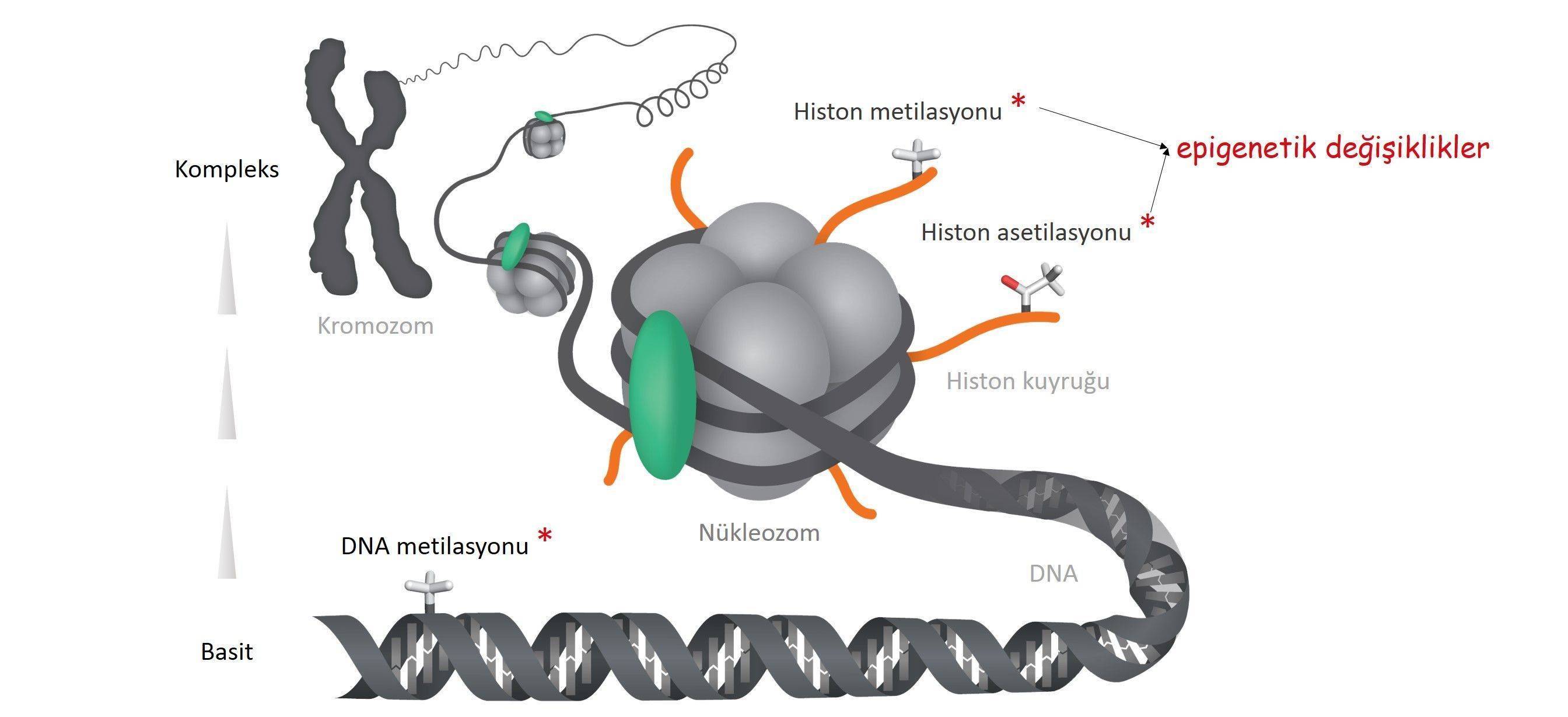
Researchers analyzed epigenetic marks in DNA from cancerous and healthy cells. According to the analysis results;
- In healthy cells, methyl groups were observed to be spread throughout the DNA. In cancer cells, methyl groups were concentrated in specific regions.
- Every breast cancer cell was found to have the same epigenetic marks. Similarly, lymphoma, colorectal and prostate cancer cells were also found to have distinctive epigenetic marks.
- In analyses of more than 200 human tissue and blood samples, with 90 percent accuracy cancer was diagnosed.
The researchers also developed a test capable of distinguishing this distinctive DNA structure. When DNA isolated from a cancer cell is placed in water, its concentrated methyl groups cause it to form 3D (3-dimensional) nanoparticles . These nanoparticles bind very well to the element gold. The test detected cancer DNA using gold nanoparticles. Gold changes color when it binds to 3D cancer DNA nanoparticles. A color change visible to the naked eye occurs with only a drop of liquid.
So What Does This Study Mean for Us?
- This is an important study toward a "universal" blood test for cancer. The study used nanotechnology and epigenetics.
- Detecting cancer with such high accuracy also suggests that the test may produce false-positive results.
- It must be emphasized that the test is still being evaluated. Whether it detects all cancers will be determined through clinical studies in humans.
- For now, the test only only says whether cancer is present or absent, without providing information about cancer type or stage.
- The test's greatest advantage is that it is very inexpensive and fast. In the future, integration into mobile phones is planned to allow such cancer tests to be performed.
- How Is Cancer Diagnosed?
Sources
Epigenetically reprogrammed methylation landscape drives the DNA self-assembly and serves as a universal cancer biomarker.
Nature Communications, 4 December 2018.
Was this article helpful?
Your feedback helps us improve our content.




Reader comments
Share your comment
Your name and comment are published only after administrator approval. Your email address is never shown to visitors.
Be the first to comment.