
Is Eating Bread Unhealthy? What Should a Healthy Bread Be Like?

In this article
Is bread unhealthy?
Bread has very ancient origins. For thousands of years, it has had a place on the table as a staple food in many countries. People continue to eat it for its convenience, portability, nutritional value and taste.
Early humans made the first breads 12,000 years ago by mixing flour and water and baking it in the sun. Today, countless varieties are made, including whole-grain, sweet, cornmeal, sourdough, unleavened and soda bread. Although widely loved and consumed, bread is often described as unhealthy and harmful. Some types may be more nutritious than others, but what should we look for to make a healthier choice? In this article, we will examine the features that make bread more or less healthy.
What is the nutritional value of bread?
Carbohydrate is bread's main component. Fruit, vegetables, legumes and minimally processed grains are among the healthiest sources of dietary carbohydrate.
The white breads we eat daily, however, are generally made from highly processed, simple carbohydrates. They are quick and easy to digest. They are high in carbohydrates but low in protein, fat, fiber and many vitamins and minerals. Processed carbohydrates contain very little fiber. As a result, people do not feel fully satisfied after eating. In particular, blood sugar soon falls, creating a desire to eat more.
The amounts of fat, salt and sugar in every 100 grams of certain bread types are as follows:

Consuming large amounts of simple carbohydrates, such as packaged white bread, can cause weight gain. It may increase the risk of diabetes, heart disease and many chronic conditions.
However, bread's nutritional profile depends on its type. A high-fiber bread, such as whole-wheat bread, has greater nutritional value. The Whole Grains Council says that, for bread to qualify as whole grain, 100% of the original kernel (all the bran, germ and endosperm) must be present.
The American Heart Association describes whole grains as a good source of the following
- B vitamins (including folic acid)
- Iron, magnesium and selenium
- Dietary fiber
A comparison of a slice of several bread types in terms of nutritional content is as follows:

How can I tell whether bread is whole grain?
When choosing shop-bought bread, the first word in the ingredient list should be “whole.” The word "whole" means that all three parts of the grain—bran, germ and endosperm—are present in the product.
The following labels do not guarantee a whole-grain product
- Grain
- Wheat bread
- Organic flour
- Bran
- Wheat germ
- Unbleached wheat flour
- 100% wheat
When is bread not healthy?
Eating whole grains can provide a range of health benefits, such as reducing your risk of heart disease, diabetes, obesity and even colorectal cancer. However, remember that breads made from particles ground into powder have reduced health benefits. The benefits of whole grains such as barley, buckwheat and oats may therefore not apply to refined grains.
NOTE: Buckwheat is also a plant in the grain group, although it belongs to the knotweed family. Its yield is lower than that of wheat. It contains 11% protein and 2% fat. However, it can grow in dry, rugged terrain and cool climates. It reproduces quickly and also prevents weeds from developing. Buckwheat flour alone is unsuitable for making bread. Its structure is more like that of a nut than a grain. Buckwheat contains no gluten and is suitable for people with celiac disease or a gluten allergy. However, neither gluten allergy nor celiac disease is as common in society as exaggerated claims suggest (various studies report a gluten-allergy frequency of 0.4% - 1%). Buckwheat contains other substances that can cause allergies in some people; these are said to be removed by discarding the initial boiling water.
Sometimes even whole-grain breads can contain preservatives, additives and more than 20 ingredients. Not all of these contribute to health. They may keep bread fresh for longer. However, you can store fresh bread containing fewer preservatives in the refrigerator or freezer.
Many types of bread contain sugar substitutes. People should avoid those containing corn syrup or a word ending in "-ose" near the top of the ingredient list, because these are all sugars. Examples include sucrose, glucose and fructose.
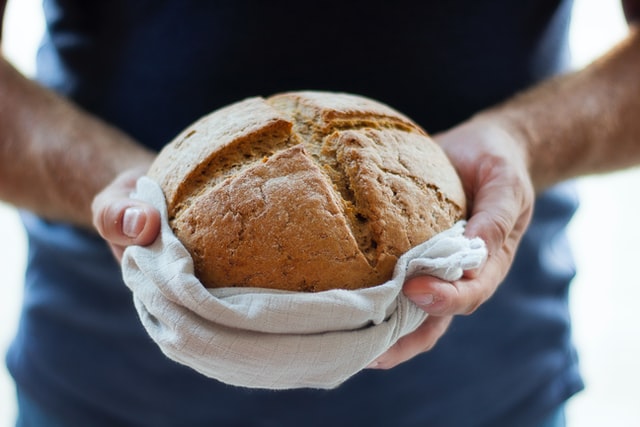
Which are the healthiest types of bread?
For starters, whole-wheat bread is a better option than white bread. It contains more fiber and protein.
Bread made from sprouted grains is a good option. Sprouted bread is made from whole grains that have been allowed to sprout, or germinate, before being ground into flour. When a grain sprouts, its nutrients become easier to digest and use in the body. The process involves repeatedly soaking and rinsing grains over several days. It may be a better source of protein, fiber, vitamin C and folate.
How much bread should we eat?
If you want to lose weight, limiting your calorie intake is a good idea. But carbohydrates are certainly not the only source of calories.
This really depends on a person's nutritional needs, goals and preferences. There is no specific amount that should or should not be eaten. The main point is that UK health guidelines recommend obtaining around half of our daily calories from fiber-rich, starchy carbohydrates, ideally whole grains.
Summary and Conclusion
You can enjoy bread in moderation as part of a healthy diet. It is best to combine healthy choices such as whole-wheat or sprouted bread with a balanced diet.
You can try making bread at home. This way, you know exactly what you are eating. Some people may choose to invest in a bread maker.
In general, whole-grain bread is a healthy product as long as a person eats it in moderation and has no allergy.
Sources
2. Healthline, Is Bread Bad for You, October, 2018
3. Oldways Whole Graıns Council, Definition of a whole grain
4. BBC Food, Is Bread Bad For you
Was this article helpful?
Your feedback helps us improve our content.




Reader comments
Share your comment
Your name and comment are published only after administrator approval. Your email address is never shown to visitors.
Be the first to comment.