
One Treatment, a Long Shadow: What Tumors After Zolgensma Tell Us About Gene Therapy Safety
In this article
One Treatment, a Long Shadow: What Tumors After Zolgensma Tell Us About Gene Therapy Safety
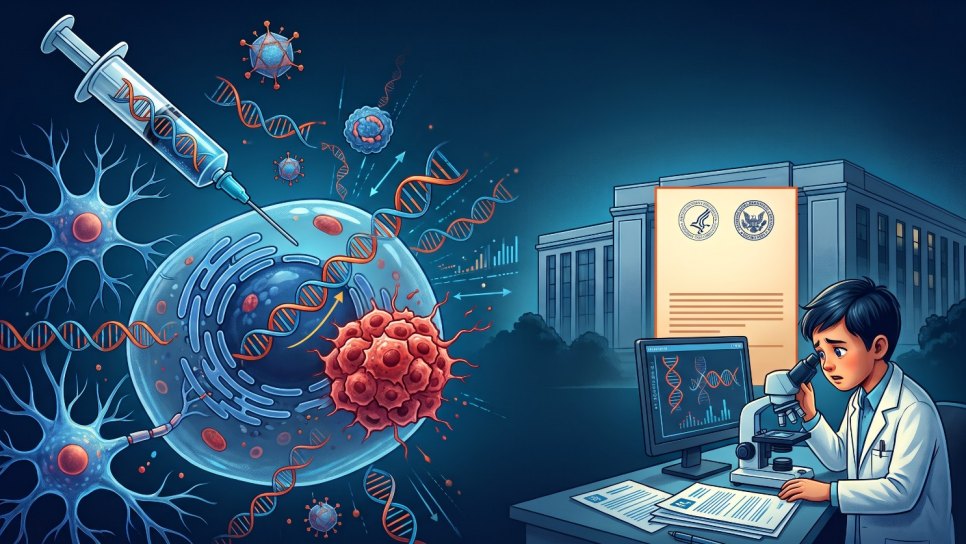
On November 6, 2026, the US Food and Drug Administration (FDA) issued a serious safety communication about Zolgensma, the gene therapy used for spinal muscular atrophy (SMA). After treatment, tumors were reported in the nervous system, around the spine and in the kidney of some children. Three were linked to the tumor-associated gene GLI1, and in two of them the DNA carried by the viral shell used in the treatment (the AAV vector) was shown to have inserted next to or inside the GLI1 gene. The FDA wants the risk to be considered for Itvisma as well, which uses the same vector construct; however, no tumor has been reported so far with Itvisma. The agency stresses that, for approved uses, the benefit still outweighs the risks. In this article we explain what happened, the concept of “cancer through insertion,” and what it means for families and physicians. You can find the basics of how cancer begins in our article on cancer biology (in Turkish).
- What happened? The FDA is reviewing tumors reported after Zolgensma. Three tumors are linked to the GLI1 gene; in two, tissue analysis proved that vector DNA had inserted near or into GLI1. The mechanism of the third is under investigation.
- How common? Unknown. Novartis reported nine tumors and more than 6,000 children have been treated worldwide; however, the true frequency of the risk cannot be calculated from these numbers.
- Itvisma? Because it carries the same vector and gene construct, the risk is considered to apply to it as well; no tumor has been reported after Itvisma.
- What should be done? Treated children should be monitored for tumors; any new mass or symptom should be reported to the physician. According to the FDA, the benefit still outweighs the risks for approved uses.
Why does this matter?
Gene therapies hold the promise of a lasting solution to many severe inherited diseases with a single administration. SMA is one of the strongest examples: most infants with untreated severe SMA need permanent breathing support or lose their lives before the age of two, whereas Zolgensma, when given early, has allowed many children to sit and even walk. But the effects of a “single-dose” treatment, and its possible risks, can last for years. Long-term safety follow-up is therefore an integral part of gene therapy (gene therapy in hemophilia [in Turkish]).
The development is also directly relevant to oncology. It had been seen before with other types of gene therapy that DNA delivered into a cell for treatment can insert in the wrong place, switch on a growth gene and cause cancer (insertional oncogenesis); but such clear evidence in humans with AAV vectors is new. The same vector type is also used for many non-cancer diseases and in some experimental cancer treatments (CRISPR and gene editing [in Turkish]).
What is Zolgensma and how does it work?
Zolgensma (onasemnogene abeparvovec) is a one-time gene therapy that delivers a healthy copy of the SMN1 gene, which is missing or faulty in spinal muscular atrophy, to motor neurons inside a harmless viral shell (the AAV9 vector). In the US it has been given intravenously to children younger than 2 years since 2019. Itvisma, which has the same construct, has been used since 2025 in patients aged 2 years and older, given into the spinal fluid.
SMA results from a shortage of the SMN protein that motor neurons in the spinal cord need to survive. After the AAV9 vector in Zolgensma enters the cell, it releases the SMN1 gene it carries into the nucleus, and thanks to a strong “on switch” (promoter) the gene works continuously. By design, the vector DNA does not insert into the cell's chromosomes; it stays in the nucleus as a separate ring (episome). For this reason, the risk of AAV vectors inserting into a chromosome was considered much lower than for vectors that integrate by nature, such as retroviruses or lentiviruses (structure of DNA [in Turkish]).
Figure 1 · Where does vector DNA sit in the nucleus?
The expected situation and the rare event
What did the FDA announce?
According to the FDA's safety communication dated November 6, 2026, tumors were reported in patients treated with Zolgensma in the post-marketing period. The tumors were seen in the central and peripheral nervous system, the spinal cord and around the spine, and in the kidney. In three cases the tumors were linked to the GLI1 gene. In two of them, examination of the tumor tissue showed that Zolgensma's AAV vector DNA had inserted into the cell's genetic material and that the promoter in the vector had been added just upstream of, or into, the GLI1 gene. In the third case, why GLI1 is overactive is still under investigation.
Figure 2 · The FDA communication in four headings
Reported, proven, unknown and what to do
In its notification to health authorities and patient organizations, the manufacturer Novartis said that nine tumor cases have been reported since 2019, that vector DNA was shown to have inserted into the genetic material in two patients, and that these patients are being treated and monitored. More than 6,000 children worldwide have been treated with Zolgensma. However, as the FDA also stresses, the true frequency of the risk cannot be calculated from these figures, which rest on spontaneous reports: not every tumor may have been reported, not all reported tumors may be treatment-related, and patients' follow-up times differ.
Reported cases: how many were proven?
Tumor reports after Zolgensma as of November 2026; number of cases.
The numbers are based on spontaneous reports; because the total number of treated patients and the follow-up times are not fully known, the true frequency of the risk cannot be calculated from these data. It has also not been shown that all nine reports are treatment-related.
The FDA reminds that the current prescribing information already includes a warning of “theoretical tumor risk due to integration of AAV vector DNA into the genome” and says it is rapidly assessing whether long-term follow-up studies are adequate. No new boxed warning or restriction of use has been announced yet.
How does cancer develop through insertion?
In the nucleus of every cell, genes that speed up growth and genes that brake it work in balance. If a piece of DNA delivered from outside inserts into a chromosome at a random spot, in most cases nothing happens. But if that piece lands right next to a growth gene and the strong promoter it carries keeps that gene permanently switched on, the cell can start to multiply uncontrollably. This process generally turns into a tumor over months or years, together with a few additional genetic changes (DNA damage and cancer [in Turkish], DNA repair (in Turkish)).
Figure 3 · Cancer development through insertion
Insertional oncogenesis in five steps
Why does GLI1 matter?
GLI1 is the final link of a signaling pathway called “Hedgehog,” which governs tissue growth during embryonic development. This pathway is largely silent in adults; when it is left on by mistake, it is associated with basal cell skin cancer, some childhood brain tumors such as medulloblastoma, and some soft-tissue tumors. Gene changes that make GLI1 overactive have also been described in some rare soft-tissue tumors. For this reason, tumor development in cases where the vector inserted right next to this gene is a biologically explicable picture (basal cell carcinoma [in Turkish], brain tumors (in Turkish)).
Is this specific to Zolgensma?
No. In 2026, similar events were reported in two different experimental gene therapies using AAV vectors. In a five-year-old child treated with AAV9 for a metabolic disease called MPS I, the vector DNA was shown to have inserted into a growth gene called PLAG1 in a brain tumor that developed four years after treatment; the related studies were halted because of this case. In the FBX-101 program developed for Krabbe disease, the vector was again reported to have inserted into the GLI1 region in a tumor that developed around the spine. These three independent observations suggest that AAV vectors may integrate into chromosomes more often than believed, and that this can, though rarely, have clinical consequences.
Figure 4 · Gene therapy tools and cancer risk
Retrovirus and lentivirus, AAV and gene editing
Figure 5 · Timeline
Insertion-related tumors in gene therapy
Why was Itvisma brought within the scope?
Itvisma contains the same active substance as Zolgensma (onasemnogene abeparvovec), the same AAV9 vector and the same gene construct. The difference is that it is given into the spinal fluid (intrathecally) in children aged 2 years and older and in adults, at a much lower dose than the intravenous route. The FDA stated that, because the two products share the same construct, the tumor risk should be considered valid for Itvisma as well. Itvisma was approved in November 2025 and no tumor has been reported to date; however, the follow-up period is still short.
What can be said about the size of the risk?
Today it is not possible to give an exact figure. Nine tumor reports against more than 6,000 children treated worldwide point to a rough rate of about 1.5 per 1,000; however, this calculation can be misleading. Some tumors may not have been reported, a link to treatment has not been proven for all reported ones, and the follow-up of many children is still short. Because tumors arising through insertion can appear over years, the figure is likely to change over time. This is why the FDA's warning that “the risk frequency cannot be calculated” matters (reading research news correctly [in Turkish]).
Balance of benefit and risk
The course of untreated severe SMA is very grave; Zolgensma, especially when given before symptoms start or very early, has markedly improved children's motor development and survival. This benefit must be weighed against the tumor risk, whose frequency is unknown but appears to be rare. Another serious risk of Zolgensma that is already known is acute liver injury, and for this reason the prescribing information carries a boxed warning. For now, the FDA's assessment favors the benefit.
Figure 6 · Benefit and risk scale
The FDA's November 2026 assessment
In SMA there are also options other than Zolgensma that do not touch the genetic material: nusinersen, given into the spinal fluid at regular intervals, and risdiplam, taken by mouth every day, enable more functional protein to be made from the SMN2 gene. There is no insertion risk with these drugs; however, they require lifelong repeated administration. Which treatment to choose is decided by weighing the child's age, SMA type, SMN2 copy number, access to treatment and the family's preferences together.
What should families and physicians do?
- Children who have been treated: There is no need to panic, but regular follow-up is important. The FDA recommends monitoring treated patients and clinical trial participants for tumors. The follow-up plan should be reviewed together with the SMA team.
- Symptoms: A new mass, unexplained pain, headache and vomiting, abdominal swelling or blood in the urine should be reported to the physician. Because muscle weakness is already present in SMA, newly starting or rapidly increasing weakness is especially important (symptoms of kidney tumors [in Turkish]).
- If a tumor is found: Samples should be kept so that the tumor tissue can be examined for vector DNA, and the case should be reported to the manufacturer and the health authority.
- Families considering treatment: The benefits and risks should be discussed openly, together with the other treatment options.
Figure 7 · New symptoms that call for a physician
What matters is that the symptom is new
What does it mean for oncology?
This development is also an important reminder for genetically modified cell therapies and gene therapies used in cancer treatment. A boxed warning for secondary T-cell cancers had been introduced for CAR-T therapies in 2024; although these cases are very rare, they had shown why long-term follow-up is needed (lymphoma [in Turkish], the story of CAR-T (in Turkish)). Today many studies with genetically modified cells are under way in brain tumors and other cancers (CAR-T in glioblastoma [in Turkish]). The Zolgensma experience shows once more that, even with one-time treatments, years of safety follow-up and genetic examination of tumor tissue are indispensable.
An important point is also this: showing the vector in tumor tissue was possible only because tumor samples were kept and advanced genetic analyses were done. Such findings show that every tumor arising in patients who have received gene therapy should be examined systematically (genome analysis [in Turkish], genetics and cancer (in Turkish)).
The Situation in Türkiye
- Children with SMA are also treated with Zolgensma in Türkiye. Families of treated children should discuss the FDA communication with their follow-up teams and continue regular check-ups.
- The licensing, reimbursement and administration conditions of Zolgensma and Itvisma in Türkiye could not be verified in detail at the time of writing; for the current situation, the treating center should be consulted (access to FDA-approved drugs in Türkiye [in Turkish]).
- Possible side effects and tumors arising after gene therapy should be reported to the Turkish Pharmacovigilance Center (TÜFAM) and to the marketing authorization holder.
- In patients who take part in gene therapy clinical trials, the long-term follow-up protocol must continue even after the trial ends (what is a clinical trial? [in Turkish], phase 1 studies (in Turkish)).
Questions you can ask your physician
- My child received Zolgensma; how and how often should they be monitored for tumors?
- With which symptoms should I contact you without waiting for the follow-up appointment?
- Is a new weakness in my child due to SMA or to another cause?
- If we are considering gene therapy, what are the benefits and risks compared with other options such as nusinersen and risdiplam?
- Is it possible for us to take part in a long-term follow-up study?
- “Every child who receives Zolgensma develops cancer.” No. The reported cases are rare; according to the FDA, the benefit still outweighs the risks for approved uses.
- “The risk percentage is known.” No. The true frequency cannot be calculated from numbers based on spontaneous reports; the picture may change as follow-up lengthens.
- “AAV vectors never insert into chromosomes.” This can no longer be said. Although they mostly stay separate, it has been shown in humans that they can occasionally insert.
- “Tumors were seen with Itvisma too.” No. No tumor has been reported after Itvisma; the risk is taken into account because it shares the same construct.
- “Screening tests should be done right away on a treated child.” There is no established screening program yet; the follow-up plan should be made individually with the physician and new symptoms should be evaluated quickly (common misconceptions about cancer [in Turkish]).
Frequently Asked Questions
- What is Zolgensma and how does it work?
- Zolgensma is a one-time gene therapy that carries a healthy copy of the SMN1 gene, which is missing in spinal muscular atrophy, to motor neurons in a harmless viral shell called AAV9. In the US it is given intravenously to children younger than 2 years.
- What did the FDA announce about Zolgensma?
- On November 6, 2026, the FDA announced that it is examining tumors reported after Zolgensma. Three tumors were linked to the GLI1 gene; in two, vector DNA was shown to have inserted near or into this gene. The FDA stated that, for approved uses, the benefit still outweighs the risks.
- How large is the cancer risk after Zolgensma?
- It is unknown. More than 6,000 children have been treated worldwide and nine tumors have been reported; however, the true frequency of the risk cannot be calculated from these report-based numbers. Regular monitoring of treated children is recommended.
- Is there a risk for Itvisma too?
- Because Itvisma contains the same vector and gene construct as Zolgensma, the FDA wants the risk to be considered for it as well. However, no tumor has been reported after Itvisma to date.
Glossary
- Spinal muscular atrophy (SMA)
- An inherited disease caused by loss of motor neurons in the spinal cord, leading to muscle weakness.
- Gene therapy
- A treatment that replaces the function of a missing or faulty gene by delivering a healthy copy of the gene into cells.
- AAV vector
- A viral shell derived from adeno-associated virus that does not cause disease and carries the therapeutic gene into the cell.
- Episome
- Ring-shaped DNA that sits in the cell nucleus separately from the chromosomes.
- Insertional oncogenesis
- DNA delivered from outside inserting into a chromosome, switching on a growth gene and leading to a tumor.
- Promoter
- A DNA region that acts like an “on switch,” determining how much a gene will work.
- GLI1
- A growth gene, the final link of the Hedgehog signaling pathway, associated with some tumors when overactive.
- Oncogene
- A gene that pushes a cell into uncontrolled multiplication when it is overactive or abnormal.
- Intrathecal administration
- Giving a drug into the spinal fluid through the lower back.
- Post-marketing report
- Side-effect reports made by physicians, patients and the manufacturer after a drug has been approved and put into use.
DROZDOGAN Academy Commentary
Zolgensma is a treatment that has changed the lives of children with SMA. That is why this communication matters not to discredit the treatment, but to recall the principle of “a single treatment, lifelong follow-up.”
⚡ Why it matters
For the first time in an approved therapy, it has been proven at the tissue level that AAV vectors can occasionally insert into chromosomes and that this can lead to tumors in humans. This finding will affect the long-term follow-up plans of all gene therapy programs that use AAV.
✅ Strengths
The site of vector insertion was shown in tumor tissue; this is strong evidence for causality. The manufacturer and the FDA shared the information quickly; Itvisma, which has the same construct, was also brought within the scope as a precaution. Similar findings in two independent AAV programs make the picture consistent.
⚠️ Limitations
The ages of the cases, the timing of tumor onset and the outcomes have not been disclosed in detail. The frequency of the risk cannot be calculated. It is unclear how many of the nine reports are treatment-related.
🩺 In practice
We take every new mass in children who have received gene therapy seriously and, where possible, make sure the tumor tissue is stored in a way that allows genetic examination. We think that informing families openly and honestly, without alarming them, improves adherence to follow-up.
❓ Open questions
Is the risk related to dose, route of administration or age? Could weaker promoters or new vector designs that reduce integration lower the risk? What should the most appropriate follow-up program be for treated children?
Conclusion: The tumors reported after Zolgensma reveal a rare but real long-term risk of gene therapies. According to the FDA, the benefit still prevails; the right response is not to move away from treatment, but careful lifelong follow-up and transparent communication.
- This article was prepared in November 2026.
- The information is taken from the FDA's safety communication dated November 6, 2026, from news reports relaying Novartis's statements, and from case reports published in the NEJM in 2026.
- The ages of the cases, tumor types and time to onset are not given in the article because they have not been disclosed in detail. The rough-rate calculation is only meant to show the scale of the reports; it is not the true frequency of the risk.
- The licensing and reimbursement status of Zolgensma and Itvisma in Türkiye could not be verified. The illustrations are simplified. The Academy commentary is our own.
- This article is not medical advice; make your health decisions together with your physician.
References
- U.S. Food and Drug Administration. FDA investigating serious risk of malignancy linked to Zolgensma gene therapy. November 6, 2026. fda.gov
- Tech Times. FDA confirms gene therapy Zolgensma activated a cancer gene in children, extends investigation to Itvisma. November 7, 2026. techtimes.com
- blue News. Novartis reports nine cases of tumors caused by gene therapy. November 2026. bluewin.ch
- Ahrens-Nicklas RC, et al. N Engl J Med 2026 (case report of PLAG1 insertion after AAV9 gene therapy for MPS I). doi:10.1056/NEJMoa2601608. ocacademy.in
- Vo et al. GLI1 integration event in the FBX-101 program. N Engl J Med 2026 (case cited in the FDA communication).
- Nguyen GN, Everett JK, Kafle S, et al. A long-term study of AAV gene therapy in dogs with hemophilia A identifies clonal expansions of transduced liver cells. Nat Biotechnol 2021;39:47-55. doi.org
- Pharmacy Times. FDA approves gene replacement therapy Itvisma for patients with spinal muscular atrophy. November 25, 2025. pharmacytimes.com
Was this article helpful?
Your feedback helps us improve our content.



