A Vaccine Against a Virus, a Precaution Against a Cancer: The Hepatitis B Vaccine, 1976-1997
In this article
A Vaccine Against a Virus, a Precaution Against a Cancer: The Hepatitis B Vaccine, 1976-1997
Yesterday, on Day 166, we read the three principles that protect the person in research. Today we turn to a very different page of the same era: a vaccine developed against a virus and later associated with the prevention of a cancer. We saw the first links of the chain between viruses and cancer in Rous (Day 97), Burkitt (Day 136), the Epstein-Barr virus (Day 140) and zur Hausen's trail to HPV (Day 161). This time there is a syringe at the end of the chain. As I promised in yesterday's "tomorrow" box, I checked against sources the steps of the vaccine's development, the date of the 1980 trial, the 1981 licensing year and the country from which the data showing cancer prevention come; I also keep "prevention" and "evidence" apart within the article.
From a particle in the blood to the idea of a vaccine
A vaccine story often begins not in a laboratory but in a blood sample. In a chapter published by the US National Academies it is written that in 1969 Blumberg and colleagues reported the substance they called the "Australia antigen" (Au), which became the basis of blood screening, and that volunteer studies by Krugman and colleagues in the early 1970s laid the groundwork for the vaccine (single source). According to the summary on the Nobel website, the 1976 Nobel Prize in Physiology or Medicine went to Baruch Blumberg and Carleton Gajdusek "for their discoveries concerning new mechanisms for the origin and dissemination of infectious diseases"; the prize was for those discoveries, not for a vaccine.
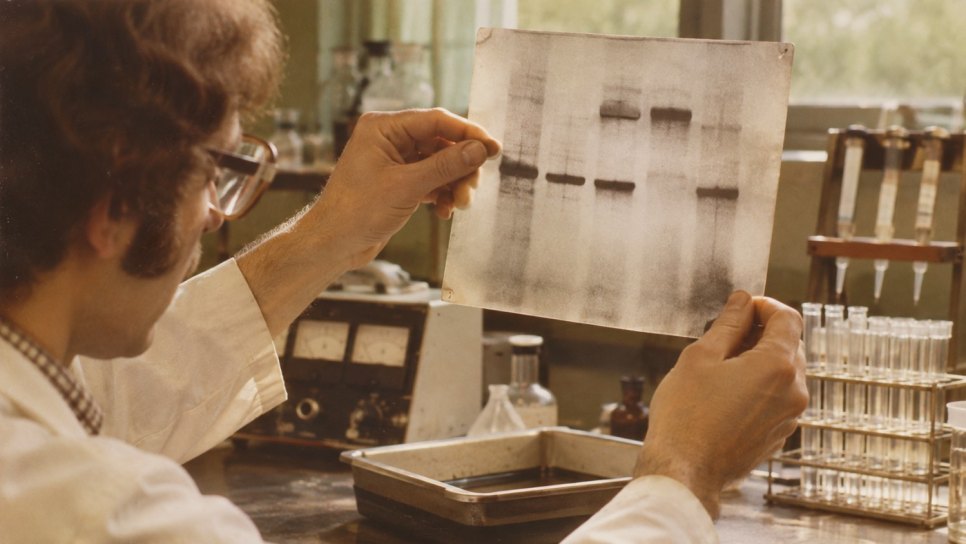
The raw material of the vaccine is startling by today's standards. According to the same Academies chapter, the plasma-derived vaccine was made of inactivated, alum-adsorbed 22-nanometre surface antigen (HBsAg) particles purified from the plasma of chronic carriers; inactivation proceeded through steps of 8 molar urea, pepsin at pH 2 and formalin at a 1/4,000 dilution. In other words, the vaccine was made not from the virus itself but from the surplus shell particles that circulate in the blood.
The work of Philippe Maupas in Tours, France, is another end of this line. According to an article published in 2022 in the Bulletin of the French National Academy of Medicine, in the mid-1970s Maupas developed in Tours the first hepatitis B vaccine, based on purifying surplus envelope particles from the blood of chronically infected people; the first "very encouraging" results appeared in 1976 in a Lancet paper, and the vaccine was marketed in 1981 (the article does not name a country). I relay the word "first" in that article's voice and pass no judgement on it: US sources describe a different line, Merck's vaccine.
A placebo-controlled trial in a high-risk group
The paper by Szmuness and colleagues was published in the 9 October 1980 issue of the New England Journal of Medicine (volume 303, issue 15, pp. 833-841). According to the abstract, it was a randomised, double-blind, placebo-controlled trial of 1,083 men in a group at high risk of hepatitis B infection; the group is described as men who have sex with men. The vaccine was well tolerated. About 77 percent of participants had a high antibody level within two months; after a booster dose this rose to about 96 percent. In the first 18 months, hepatitis B or silent infection occurred in 1.4 to 3.4 percent of the vaccinated and 18 to 27 percent of those given placebo (P<0.0001); the reported reduction reached 92.3 percent. No vaccinated person with a measurable immune response developed clinical hepatitis B or asymptomatic antigenaemia. A significant difference from placebo was visible even within 75 days of randomisation.
The endpoint of this trial was infection, not cancer. I write that here, right next to the numbers, because it is the point on which the rest of the article depends.
Three separate chains: association, vaccine, cancer
The sentence "the hepatitis B vaccine prevents liver cancer" is built not from a single experiment but from the joining of three separate lines of evidence. The first is the association: does carrying the virus raise the risk of liver cancer? The second is the effect of the vaccine: does it prevent infection and the carrier state? The third is the cancer outcome: does liver cancer actually fall in vaccinated generations? The first line was tied to a number by an observational cohort study in 1981, the second by the 1980 trial, and the third only in 1997, with the Taiwan data. In the sixteen years between, "prevention" was an expectation, not evidence.
A number for an association, and a licence
According to its title, the 1981 Lancet paper by Beasley and colleagues was a prospective study following 22,707 men in Taiwan. According to a review that summarises the paper, at the start 3,454 of the men (15.2 percent) were HBsAg-positive; mean follow-up was 3.3 years; the incidence of hepatocellular carcinoma (HCC) was 1,158 per 100,000 person-years in carriers and 5 in non-carriers; the relative risk was reported as 223 (95 percent confidence interval 28-1,479). In absolute terms that corresponds to about 1.2 percent a year in carriers. The width of the interval shows the uncertainty of an estimate resting on only a few cases; the direction, however, was clear.
In the same year the plasma-derived vaccine was licensed in the US. The Academies chapter says "late 1981", the EBSCO reference page only "1981"; neither gives the month. The EBSCO page says the vaccine was Merck's Heptavax-B and that Maurice Hilleman headed the group that developed the hepatitis B vaccine; the Academies chapter mentions Hilleman only as the author of a cited reference and does not describe his role in the plasma vaccine. For that reason I do not write his share in the plasma vaccine.
A country's records
According to a 2020 article in the Taipei Times, the story in Taiwan ran like this: in 1980 Beasley proposed testing the vaccine in children around Taipei; in 1981 the Department of Health approved the programme; in July 1984 babies of carrier mothers began to receive a four-dose vaccine; in 1986 all newborns were brought in. The same article reports that before the vaccine 18 to 20 percent of Taiwan's population were carriers (1 percent in the US) and that a carrier mother had a 70 percent chance of passing the virus to her baby; these are newspaper figures.
The cancer outcome came in 1997. Chang and colleagues reported in the New England Journal of Medicine (volume 336, issue 26, pp. 1855-1859, 26 June 1997) the effect of universal hepatitis B vaccination in Taiwan on the incidence of HCC in children. According to the abstract, the annual incidence of HCC in children aged 6-14 was 0.70 per 100,000 in 1981-1986, 0.57 in 1986-1990 and 0.36 in 1990-1994 (P<0.01). In the 6-9 age subgroup the fall was from 0.52 to 0.13 (P<0.001). In relative terms that is a decrease of about 49 percent from 0.70 to 0.36, and of 75 percent at ages 6-9; in absolute terms it is a difference of 0.34 and 0.39 cases per 100,000 children. Because childhood HCC is very rare, the absolute numbers are small; the value of the study is that it offers a clue to where large vaccinated generations will go in adulthood.
Cost and limits
The first limit is the nature of the numbers. The Taiwan comparison is a comparison between periods, not between randomly assigned groups. I cannot read from the abstract whether other changes occurred in the same years; I did not read the full text, nor did I see details such as the relative risk and the vaccination coverage. That the fall is larger in the 6-9 age group is consistent with these children being closer to vaccinated birth cohorts; that is my inference and should not be read as the paper's claim.
The second limit is who and what was measured. The 1980 trial measured infection; the 1997 study measured only children. No number in this article shows liver cancer falling in adults. The vaccine targets only liver cancer linked to the hepatitis B virus; it is not meant to prevent liver cancer due to other causes.
The third limit is the raw material. A vaccine purified from human blood meant relying on the virus-inactivation steps of the production line. According to the Academies chapter, the first recombinant hepatitis B vaccine was licensed in the US in 1986; according to EBSCO it was granted to Merck in July 1986. The plasma vaccine was used for a few years and then gave way to genetically engineered products.
The fourth limit is ethics. The hepatitis research of the same period is also remembered with a cost we must not look away from: according to a teaching website, in the study that began in 1956 at the Willowbrook State School on Staten Island and lasted 14 years, children with intellectual disability were deliberately exposed to hepatitis; the researchers argued that these children would be infected in the institution anyway, and critics said informed consent was compromised. Krugman is noted as having defended himself in this debate in 1971 letters to the Lancet. I did not verify this study's link to the vaccine work; I mention it only to show the ethical tension of the period. Yesterday's Belmont Report (Day 166) and the Nuremberg Code of Day 121 should be read within this debate.
What remained
- The idea of making a vaccine from the virus's surface antigen particle
- A controlled trial showing that the vaccine prevents infection
- The strong association between carrying the virus and liver cancer
- The idea of a population programme starting at birth
What fell or was limited
- Making a vaccine from human plasma (a recombinant vaccine was licensed in 1986)
- The assumption that "a vaccine that prevents infection also prevents cancer, as shown"; the evidence came in 1997, in children, between periods
- The expectation that the vaccine would prevent all liver cancer
The hepatitis B vaccine and cancer: 1976-1998. The axis runs from 1970 to 2000. Green marks are dates confirmed by more than one record; blue marks rest on a single source. Dates known only by year are drawn mid-year; the date known as "end of year" is drawn at the start of December.
The first dose given at birth
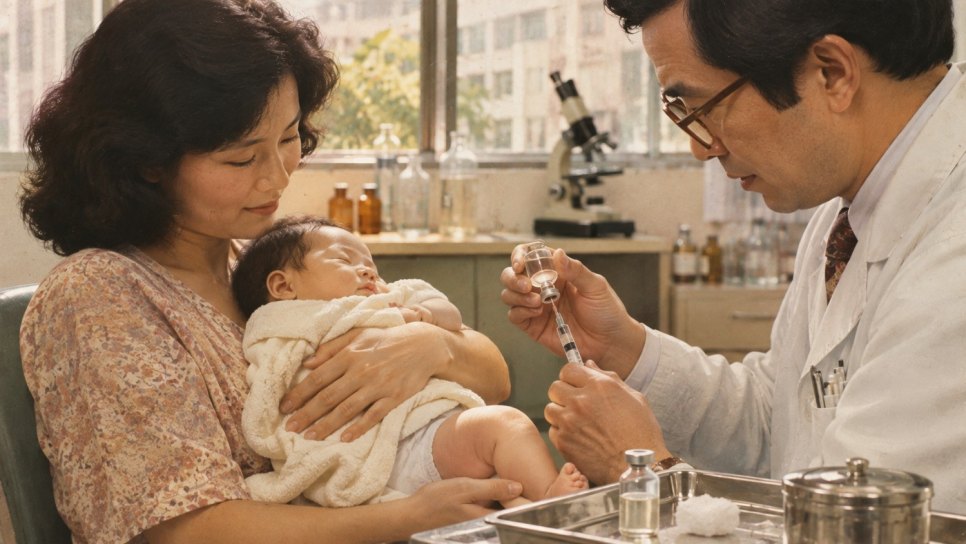
I found a verified link for Turkey. According to a study published in 2006 in Türk Pediatri Arşivi (Özen et al., volume 41, pp. 31-5), the Ministry of Health added the hepatitis B vaccine to the national immunisation programme as of the end of 1998; the vaccine is given to babies from the moment of birth, and those not reached at birth are vaccinated in three doses at 2, 3 and 9 months. This date rests on a single article; I did not separately verify it against a Ministry document. As a general inference: the practical result of the chain of evidence in this article is that the first step of vaccination is taken in the delivery room. A child's vaccination status and whether there is hepatitis B carriage in the family are questions to discuss with a physician.
From 1956 to today
What was verified, what stayed uncertain
- Day 158: Köhler and Milstein have not been written yet; the promise in the "tomorrow" box of Day 157 has not been kept.
- "The first vaccine": The French Academy of Medicine article presents the Tours vaccine as the first; the US source describes Merck's plasma vaccine. I passed no judgement on which was first and wrote them as parallel lines.
- Licensing date: The National Academies section gives the US licence as "late 1981", EBSCO "1981"; the month was not read. Elsewhere the same Academies section speaks of the plasma vaccine's introduction "in 1982"; I could not resolve the conflict. The 1981 marketing of the Tours vaccine appears in the French article without a country being named.
- Australia antigen and Krugman: The year 1969 and "early 1970s" come from a single Academies section. The Nobel motivation is from the Nobel website; Blumberg's prize was not for a vaccine.
- Szmuness 1980: The citation (NEJM 303(15):833-841, 9 October 1980) and the numbers are a summarising tool's rendering of the PubMed abstract; I did not read the full text, and the numbers of people in the arms are not in the abstract. The article title is from the citation in the Academies section: "Hepatitis B vaccine: demonstration of efficacy in a controlled clinical trial in a high-risk population in the United States".
- Beasley 1981: The title and "22,707 men" are from the record itself; 3,454 people (15.2 percent), 3.3 years, 1,158 and 5 per 100,000 person-years, and relative risk 223 (28-1,479) were taken from a PMC review. I did not read the original paper; I could not verify the Lancet volume and page citation.
- Chang 1997: The citation and numbers are from the abstract in the NTU repository; the relative risk and vaccination coverage were not in the abstract. The 49 and 75 percent decreases and the absolute differences are my own calculation from these numbers.
- Taiwan programme: The 1984 and 1986 dates and figures such as 18-20 percent carriage and 70 percent transmission come from a newspaper article (Taipei Times, 2020); secondary and journalistic.
- Hilleman: According to EBSCO he headed the group that developed the hepatitis B vaccine; the Academies section does not describe his role in the plasma vaccine. I did not write his role.
- Maupas: The 1976 Lancet paper and the 1981 marketing are given by the French Academy of Medicine article; I did not find and read the paper itself.
- Willowbrook: The years (14 from 1956) and the consent debate come from a single teaching website; the manner of "deliberate exposure" (feeding or injection) is not on that page. Krugman's leadership is not on that page; it says only that he defended himself in 1971 letters. The link to the vaccine work was not verified.
- Turkey: End of 1998 and the dose schedule come from a single 2006 article (read through a summarising tool). I could not access another journal's 2022 article on HBsAg positivity in pregnant women; no figure was taken from it.
- Scope: This article covers only the data on HCC in children and the association with the virus; a fall in liver cancer in adults was not read in this research.
Doll and Peto, 1981: "The Causes of Cancer" and the argument over a share
Today we saw the prevention of one cancer tied to a single virus; tomorrow I reverse the gaze: which cancer can be put down to which cause? On Day 125 we read Doll and Hill's smoking study; tomorrow the same Doll appears with Richard Peto and the large assessment they published in 1981. Before writing I will verify the publication's citation, the shares given to tobacco and diet, whether those shares were presented as ranges or as a single number, and the criticisms made.
Author's note: What I watched most closely in this article was showing that the sentence "the vaccine prevents cancer" did not come out of a single experiment: the 1980 trial measured infection, the 1981 study the association, and the 1997 study cancer in children. My second concern was to keep plain, next to the 49 and 75 percent relative falls in Taiwan, how small the absolute differences are and that the measurement was in children.
Sources and Further Reading
- Szmuness W, Stevens CE, Harley EJ, et al. Hepatitis B vaccine: demonstration of efficacy in a controlled clinical trial in a high-risk population in the United States. N Engl J Med 1980;303(15):833-841, PMID 6997738 (abstract read through a summarising tool).
- Chang MH, Chen CJ, Lai MS, et al. Universal hepatitis B vaccination in Taiwan and the incidence of hepatocellular carcinoma in children. N Engl J Med 1997;336(26):1855-1859, PMID 9197213 (abstract read from the NTU repository).
- Beasley RP et al. Hepatocellular carcinoma and hepatitis B virus: a prospective study of 22,707 men in Taiwan. Lancet 1981 (title verified; numerical results taken from the review PMC5866222, citation details not verified).
- National Academies Press. Book 2138, chapter 9: history of hepatitis B vaccines, nationalacademies.org/read/2138/chapter/9 (read; 1969, late 1981, 1986 and the Szmuness citation).
- Nobel Prize. The Nobel Prize in Physiology or Medicine 1976, nobelprize.org (read).
- Bulletin de l'Académie nationale de médecine, 2022. Article on the hepatitis B vaccine in Tours, academie-medecine.fr (read through a summarising tool; Maupas, 1976 and 1981).
- Taipei Times. Article on the hepatitis B vaccination programme, 5 July 2020, taipeitimes.com (read; secondary).
- EBSCO Research Starters. FDA Approves a Genetically Engineered Vaccine for Hepatitis B, ebsco.com (read; secondary).
- Özen M, Yoloğlu S, Işık Y, Yetkin G. Turgut Özal Tıp Merkezi'ne başvuran 0-16 yaş grubu çocuklarda AntiHBs seropozitifliği. Türk Pediatri Arşivi 2006;41:31-5 (read through a summarising tool).
- Queensborough Community College (CUNY). Case: Willowbrook Experiments, qcc.cuny.edu (read; a secondary teaching page only).
- Mukherjee S. The Emperor of All Maladies: A Biography of Cancer. New York: Scribner; 2010 (general context; the relevant pages were not re-read for this article).
This article is Day 167 of the "365 Days of Cancer History" series and presents the hepatitis B vaccine as a historical reading. It is historical-popular content; it is not a recommendation on vaccination, diagnosis or treatment. For your vaccination status and hepatitis B carriage, consult your physician. Sources have been verified; details resting on only a single secondary source, a summarising tool or a text that could not be read are marked in the fact-check notes.
Was this article helpful?
Your feedback helps us improve our content.