
Am I hungry or just bored? What are physical and psychological hunger?

Eating is necessary for the human body to perform its functions. However, consuming more calories than needed can lead to weight gain and, consequently, various health problems. Excess calorie intake can often result from emotional hunger caused by stress, boredom, excessive workload, family pressure, or a wish to escape a traumatic event. In this article, we will examine what hunger means, its types, the main causes of weight gain, and recommendations.
What is hunger?
Hunger is a complex process involving hormones, biochemical processes, and physical reactions. In general, hunger is divided into physical and psychological types. Physical hunger can be defined as the body's desire to eat to survive, while psychological hunger is more a voluntary desire to eat. Let us examine physical and psychological hunger in more detail:
Physical hunger
We can say that physical hunger is real hunger. In other words, it is the type of hunger in which the body needs food to produce energy. Physical hunger therefore produces an empty feeling in the stomach and occasional rumbling sounds. Prolonged physical hunger may cause blood sugar to fall, difficulty concentrating, and fatigue.
Psychological hunger
Psychological hunger is hunger in which the body gives no physical signal that it needs food, but there is still a desire to eat. For example, craving dessert despite feeling full after a main meal, or eating to pass the time out of boredom, are entirely signs of psychological hunger.
Psychological hunger is an important factor in weight gain and can be triggered by many different causes.
What causes psychological hunger?
Boredom
Eating out of boredom is one of the most common causes of psychological hunger. People see eating as a distracting activity and usually choose easily accessible foods that are high in calories and low in nutritional value. When this happens frequently, it causes weight gain.
Stress
Chronic psychological stress can change hunger hormone levels and consequently trigger the desire to eat. People whose desire to eat increases with stress may experience stress-related weight gain if they cannot find other ways, such as meditation, to control their stress levels.
Socializing
When people around you eat and drink, you tend to do the same even if you are not hungry. For example:
A small study involving 65 high school students observed that students eating with friends who took a second helping were 65% more likely to take a second helping themselves.
Advertising and social media
Advertisements featuring unhealthy, high-calorie foods play an important role in encouraging eating. A food you see in television advertisements or on social media may trigger psychological hunger. As a result, you may find yourself eating even when you are not hungry.
Seeing someone eating on screen is also thought to be more effective at triggering psychological hunger. Some studies suggest that advertisements showing the marketed product being eaten trigger psychological hunger more than advertisements showing only the product.
Poor-quality sleep
Irregular and short sleep is thought to play an active role in eating habits.
People who sleep less are thought to consume more calories, make less healthy choices, and consequently be more prone to weight gain.
Hyperpalatable “Highly Tasty” Foods
Hyperpalatable foods are foods designed to be tasty and produce a stimulating effect on the brain. Many people therefore find it difficult to limit their consumption even when they are not physically hungry.
How can you tell whether you are really hungry?
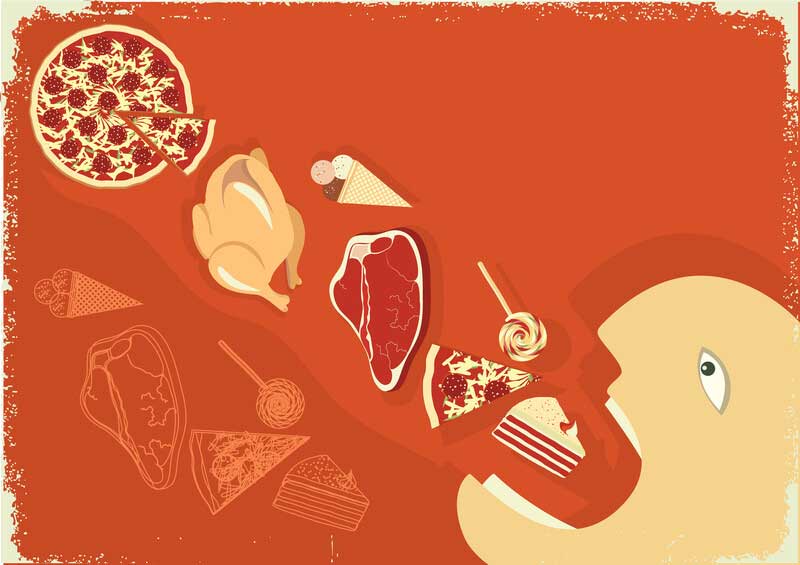
Real hunger and thirst differ from psychological hunger.
To maintain a healthy body, it needs healthy food at regular intervals. Some people skip meals when trying to lose weight, which usually has the opposite effect. Waiting too long between meals can cause intense hunger and lead to high calorie intake. Eating when you feel physical hunger is therefore the best choice.
What are the signs of real hunger and thirst?
Early signs of real hunger may include mild hunger pangs, an empty feeling in the stomach, and stomach rumbling. These signs may vary from person to person.
Real physical thirst may cause a dry mouth and a mild itching sensation in the throat. Any fluid, with water not included, may relieve thirst. Psychological thirst, on the other hand, may appear as a desire for a particular drink, such as soda.
You can try the following techniques to understand whether you are really hungry:
Question Yourself: Monitoring the signs from your body and mind can be helpful. To make this easier, you can try asking yourself the following questions.
- What emotions am I feeling?
- Am I bored, anxious, or sad?
- When did I last have a meal or snack?
- Am I experiencing signs of real hunger?
Drink water: Sometimes thirst can be confused with physical hunger. If you are not entirely sure that you are hungry, you can first try drinking a glass of water. If hunger has not disappeared and the signs continue afterward, you can eat at that point.
What can you do to overcome boredom and prevent unnecessary eating?

Everyone may occasionally eat without being hungry. This is normal. However, if it happens frequently, it will lead to excess calorie intake. Weight gain may consequently be accompanied by various health problems. Let us look together at some tips you can use to prevent this:
Recognize what triggers your desire to eat
With psychological hunger, people generally do not crave healthy foods such as fresh fruit and vegetables. Instead, they want sugary, high-calorie, or highly processed products. Although occasionally eating foods such as chips, ice cream, wafers, and candy is not harmful, consuming them constantly will be very harmful. Keeping packaged foods out of the home and choosing foods such as fruit and vegetables when grocery shopping will therefore help prevent you from suppressing boredom with unhealthy foods.
Eat slowly and mindfully
When you eat slowly, focusing on the taste and texture of your food, you give your brain time to recognize that you are full.
Plan your activities during the day
A regular, scheduled lifestyle may prevent boredom. Try planning your daily activities each morning. You can also try setting specific times for meals and snacks if this will help you overcome eating out of boredom.
Find activities you can do when bored
Instead of eating as a result of psychological hunger when bored, try activities you personally enjoy, such as walking, reading a book, or watching a film.
Wait 30 minutes when you want to eat
If you want to eat but do not feel hungry, wait 30 minutes and see whether the craving passes. Try to keep yourself busy during this time. If this is real hunger, signs of hunger will be felt at the end of the 30 minutes.
Do not hesitate to seek professional help
If you cannot control emotional eating with your own methods, seeking help from a psychologist or dietitian will be very helpful. This is because prolonged, frequent emotional eating may be a sign of more dangerous consequences, such as “binge-eating disorder.” Binge-eating disorder is a psychological disorder in which large amounts of fatty and sugary foods are consumed in a short time for relief.
Therefore, if you often feel out of control while eating and frequently consume large quantities of unhealthy foods even when not hungry, you should definitely seek support from a specialist.
Throughout this article, we have discussed the health problems that may arise from eating because of psychological hunger without real hunger, and how you can bestow this situation. However, conversely, we should not forget that some people are genuinely hungry but have no opportunity to eat. You may need to attend a long work meeting during your lunch break or be stuck in traffic at mealtime.
What should people with no time to eat—those in a hurry—do?

Plan ahead
If you know in advance that you will have a day when there is no opportunity to eat, have a healthy, balanced meal high in protein and fiber before you become busy.
Try chewing gum
If you are unexpectedly busy and have no opportunity to eat, try chewing gum to suppress your hunger at that point. However, remember that this is a short-term, temporary method. If your hunger has reached the point where you feel signs such as abdominal pain or stomach rumbling, chewing gum will not help.
Do not lose control when you have time to eat
When you can eat, do so slowly and carefully. To avoid overeating, stop eating when you feel full.
Comment & Summary
Psychological hunger plays an active role in weight gain. If you think you frequently eat without real hunger, whether out of boredom or for other reasons, you should try to bring this under control. If you find it difficult to suppress this with your own methods and the tips in this article, remember that you should definitely seek help from a specialist.
Sources
Am I Hungry or Bored?
healthline.com/nutrition/am-i-hungry
2. Amanda C Crockett, Samantha K Myhre, Paul D Rokke et al.
Boredom proneness and emotion regulation predict emotional eating.
J Health Psychol, May 2015.
3. Afton M Koball, Molly R Meers, Amy Storfer-Isser, Sarah E Domoff, Dara R Musher-Eizenman.
Eating when bored: revision of the emotional eating scale with a focus on boredom.
Health Psychol, Jul 2012.
4. Rajita Sinha, Peihua Gu, Rachel Hart, J B Guarnaccia.
Food craving, cortisol and ghrelin responses in modeling highly palatable snack intake in the laboratory.
Physiol Behav, Sep 2019.
5. Jon Davis.
Hunger, ghrelin and the gut.
Brain Res, Aug 2018.
Was this article helpful?
Your feedback helps us improve our content.




Reader comments
Share your comment
Your name and comment are published only after administrator approval. Your email address is never shown to visitors.
Be the first to comment.