
Anthracycline, Cyclophosphamide (AC) and Pembrolizumab Treatment Regimen

In this article
What Is AC (Anthracycline + Cyclophosphamide) + Pembrolizumab Treatment?
AC + pembrolizumabis a potent treatment option, particularly for triple-negative breast cancer (TNBC) and other more aggressive tumors, given before surgery . It aims to shrink the tumor, reduce the risk of spread and help make surgery more successful.
What Does AC + Pembrolizumab Target?
This treatment aims to:
- Shrink the tumor as much as possible before surgery,
- Suppress microscopic cancer cells that cannot be seen,
- Reduce the long-term risk of the disease returning (recurrence),
- Extend disease-free and overall survival
. To achieve this, it combines conventional chemotherapy drugs with immunotherapy that strengthens the immune system .
The AC Regimen and Pembrolizumab: What Do the Drugs Do?
1️⃣ Doxorubicin / Epirubicin (Anthracycline): Chemotherapy That Works by Damaging DNA
These drugs are anthracycline chemotherapy agents that work by damaging the DNA of cancer cells. DNA is like the cell's “control center”; damage here prevents normal cell proliferation.
Anthracyclines in brief:
- Bind to cancer cell DNA and disrupt its structural integrity,
- Make it harder for the cell to repair itself and proliferate,
- Particularly target rapidly proliferating cancer cells.
These drugs are known to carry a risk of cardiac adverse effects (cardiotoxicity) with long-term use and high cumulative doses. Doses are therefore planned carefully, and cardiac function is monitored when needed.
2️⃣ Cyclophosphamide: A Drug That Disrupts Cancer Cells' Genetic Structure
Cyclophosphamide is a type of chemotherapy called an alkylating agent . It disrupts cancer cell DNA by adding chemical bonds. This makes cell division and proliferation difficult, eventually leading to cell death.
Cyclophosphamide in brief:
- A “prodrug” activated in the body (particularly in the liver),
- Causes lasting damage to cancer cell DNA, reducing the ability to proliferate,
- May cause adverse effects such as bone marrow suppression (low blood counts), bladder irritation (hemorrhagic cystitis) and effects on reproductive cells (risk of impaired fertility).
3️⃣ Pembrolizumab: Immunotherapy That “Reawakens” the Immune System
Pembrolizumab binds to the PD-1 “brake point” on immune cells and is a monoclonal antibody. Cancer cells may hide by effectively putting immune cells “to sleep” through this PD-1/PD-L1 system.
Pembrolizumab blocks this interaction between PD-1 and PD-L1 on tumor cells. As a result:
- Immune cells become active again,
- They recognize and target cancer cells more effectively,
- It helps generate a stronger and more sustained immune response against the tumor.
How Do AC + Pembrolizumab Work Together?
Immunotherapy–Chemotherapy Synergy
The strength of this treatment comes from the complementary effects of chemotherapy and immunotherapy :
- AC (anthracycline + cyclophosphamide)directly kills cancer cells, releasing many tumor antigens from the cells as they break down.
- These antigens signal to the immune system that “foreign, dangerous tissue is present here.”
- Pembrolizumab then removes the “brake” on immune cells in this environment, helping them mount a stronger, longer-lasting attack against cancer cells.
The aim is therefore to improve control of both the primary tumor and, if present in the body, microscopically disseminated cancer cells . The goal is to reduce disease as much as possible before surgery and lower the long-term risk of recurrence.
- In the neoadjuvant phase: Reduce tumor volume, increase the pathological complete response (pCR) rate and reduce nodal burden.
- Surgical strategy: Enable breast-conserving surgery and more limited axillary dissection where possible.
- In the adjuvant/perioperative phase: Target residual micrometastatic disease to reduce recurrence risk and achieve EFS/DFS and OS benefits.
- According to the degree of neoadjuvant response, provide a basis for individualizing post-neoadjuvant treatments (e.g., additional chemotherapy or targeted agents).
- In selected solid tumors other than TNBC (experimental/protocol-based), apply the immunotherapy–chemotherapy concept .
- 1) High-risk early-stage triple-negative breast cancer (TNBC)
- The KEYNOTE-522 strategy starts with carboplatin + paclitaxel + pembrolizumab (4 cycles), followed by AC + pembrolizumab (4 cycles) . After surgery, adjuvant pembrolizumab continues for a specified period to complete a total treatment duration of ~1 year.
- In addition to increasing the pCR rate, this approach has shown a significant improvement in event-free survival .
- Guidelines such as NCCN and ESMO present this perioperative immunotherapy–chemotherapy schedule as a strong option for high-risk early-stage TNBC patients with appropriate clinical and pathological features.
- 2) Other breast cancer subtypes
- Although anthracycline + cyclophosphamide is widely used as a neoadjuvant/adjuvant regimen in HR+ / HER2− or HER2+ breast cancer, the combination with pembrolizumab has not yet been accepted as a routine standard in these subtypes and is mainly considered in clinical trials/protocols.
- 3) Other solid tumors
- In selected solid tumors (for example, certain sarcoma subtypes or rare tumors), anthracycline + cyclophosphamide with immunotherapy may be under investigation ; however, routine AC + pembrolizumab is generally not standard treatment for tumors other than breast cancer.
- AC components (Doxorubicin/Epirubicin + Cyclophosphamide): These chemotherapy agents have long been used for many solid tumor indications, particularly breast cancer, and are generally covered by SGK . Treatment line, indication, ECOG performance status and the contents of the medical report are important for reimbursement.
- Pembrolizumab: In Turkey, reimbursement has been introduced for various indications, particularly lung cancer and several other tumors. For ECOG performance status 0-1 and a high risk of recurrence (tumor size ≥2 cm or positive axillary lymph nodes), locally advanced/early-stage triple-negative breast cancer in adults is reimbursed with a medical report when used as neoadjuvant treatment combined with anthracycline- and carboplatin-containing chemotherapy. For additional reimbursement conditions: https://www.drozdogan.com/keytruda-pembrolizumab-immunoterapisi-nedir-ne-icin-kullanilir/.
- When planning combinations containing costly immunotherapy, a multidisciplinary tumor board decision and detailed discharge report documentation facilitate SGK processes.
- Pembrolizumab: 200 mg IV, Every 3 weeks (day 1). Some protocols may use 400 mg IV every 6 weeks ; the goal is to complete ~1 year in total across the neoadjuvant + adjuvant periods.
- Doxorubicin (or Epirubicin):
- Standard AC: Doxorubicin 60 mg/m² IV bolus, day 1.
- In alternative regimens, epirubicin 90–100 mg/m² may be preferred.
- Cyclophosphamide: 600 mg/m² IV, day 1.
- Cycle frequency: Generally every 3 weeks for a total of 4 cycles. In selected patients, a dose-dense (2-week) approach (with white blood cell growth factor support) may be preferred.
- Overall sequence: Neoadjuvant phase: 4 cycles of carboplatin + paclitaxel + pembro → 4 cycles of AC + pembro → Surgery → Adjuvant pembro to complete ~1 year of immunotherapy in total.
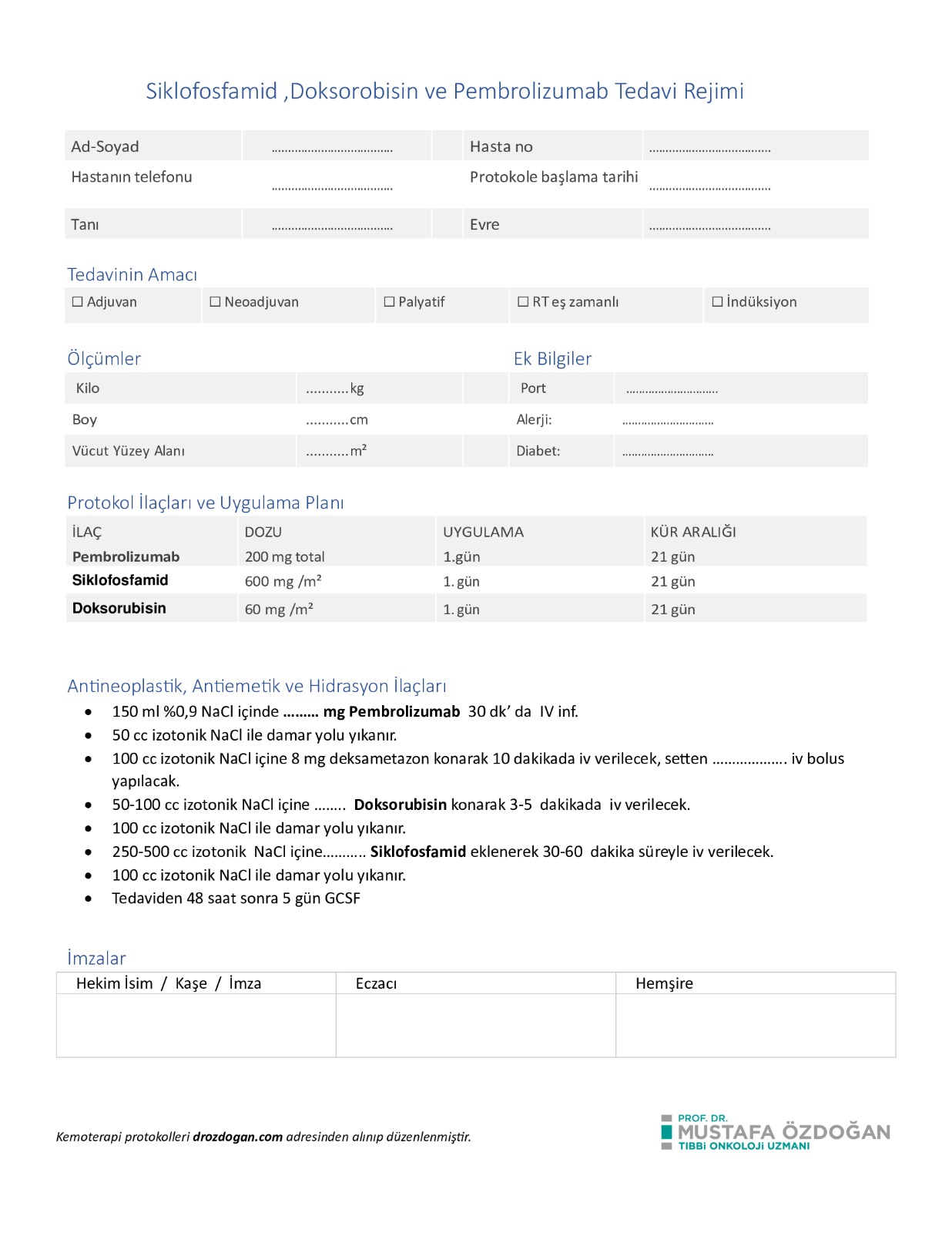
- Antiemetics: The AC regimen carries a high emetogenic risk . A 5-HT3 antagonist + dexamethasone + NK1 antagonist (± olanzapine) combination is recommended.
- G-CSF: Particularly when dose-dense AC is used, primary prophylaxis with G-CSF is considered mandatory.
- Cardiac monitoring: Before anthracycline treatment and after specified cumulative doses, echocardiography is recommended to monitor LVEF.
- Laboratory tests: Complete blood count, kidney function (creatinine, eGFR), liver function tests, electrolytes, fasting glucose, lipid profile and thyroid function tests (TSH, fT4). Screening for chronic infections such as HBV/HCV/HIV is recommended.
- Cardiac assessment: History, physical examination and ECG + echocardiography (LVEF). For patients at high cardiac risk, limit the cumulative anthracycline dose in consultation with cardiology.
- Performance status and comorbidities: ECOG score, diabetes, hypertension, chronic kidney/liver disease and previous chemotherapy/radiotherapy must be assessed.
- Imaging: Appropriate modalities for the breast, axilla and systemic spread (ultrasound, MRI, CT, PET-CT, etc.). Assess response at specified intervals during neoadjuvant treatment.
- Monitoring frequency: CBC + biochemistry before each cycle; thyroid function tests at specified intervals and additional symptom-directed tests; repeat echocardiography/further investigations if cardiac symptoms develop.
- Extravasation risk (Anthracycline): Doxorubicin is a potent vesicant. Establish venous access through large veins if possible, and stop immediately if pain/burning occurs during infusion. If extravasation is suspected, consider local cooling and an appropriate antidote (e.g., dexrazoxane).
- Hematologic toxicity: Leukopenia/neutropenia and anemia are common. Fever ≥38°C with neutropenia is considered febrile neutropenia and requires urgent management.
- Nausea-vomiting control: If control is inadequate in the next cycle, intensify the antiemetic regimen (e.g., add olanzapine, optimize NK1 use).
- Immune-related toxicities: During the pembrolizumab phase, persistent diarrhea, unexplained transaminase elevation, dyspnea/cough, persistent fatigue, headache or polyuria/polydipsia should prompt careful assessment for immune-related adverse effects (colitis, hepatitis, pneumonitis, endocrinopathy).
- Hair loss and body image: Anthracyclines quickly cause marked alopecia. Planning wigs/hats before treatment, psychosocial support and psycho-oncology consultation when necessary are important.
- Doxorubicin/Epirubicin: Eliminated through hepatic metabolism and biliary excretion. Use caution when combined with strongly hepatotoxic drugs (e.g., certain azoles, high-dose paracetamol). With other cardiotoxic drugs (e.g., trastuzumab), cardiac monitoring should be more frequent.
- Cyclophosphamide: Metabolized by CYP2B6 and partly CYP3A4. Drugs inducing or inhibiting these enzymes may affect active metabolite levels. Use caution regarding bladder toxicity when combined with other cystotoxic agents (e.g., ifosfamide).
- Pembrolizumab: No substantial classical CYP interactions are expected; however, caution is needed regarding radiological contrast agents, immunization and concurrent immunosuppressive steroid use . Prolonged high-dose steroids may reduce immunotherapy efficacy (avoid unnecessary steroids outside treatment of immune toxicity).
- Cardiac disease: For patients with pre-existing coronary artery disease, heart failure or severe valvular disease, limit the anthracycline dose and consider alternative regimens (without anthracyclines) if necessary.
- Liver dysfunction: Because anthracyclines and cyclophosphamide are metabolized in the liver, elevated transaminases/bilirubin may require dose reduction or treatment delay.
- Autoimmune diseases: In people with moderate-severe active autoimmune disease, pembrolizumab requires extreme caution and multidisciplinary assessment because of the risk of a flare.
- Older / frail patients: Lower doses or less frequent regimens may be planned according to frailty, comorbidity burden and social support.
- Pregnancy and fertility: Both AC and pembrolizumab pose significant risks during pregnancy; effective contraception is mandatory during treatment and for the recommended period afterward. Fertility preservation options should be discussed before treatment.
| Condition | Recommended Approach | Note |
|---|---|---|
| G3–4 neutropenia or febrile neutropenia | Delay the cycle; in the next cycle, reduce the AC dose by − 20% ; plan G-CSF prophylaxis. | Resume treatment when ANC ≥1500/mm³ and the patient is clinically stable. |
| G3–4 thrombocytopenia | Delay the cycle; reduce doses of the AC components or omit a cycle if necessary. | Supportive treatment (transfusion, etc.) if bleeding is present. |
| G3–4 mucositis / stomatitis | Temporarily interrupt treatment; after recovery, consider a 20% reduction in AC dosing. | Oral care protocol; local/topical support. |
| LVEF decline (e.g., a >10% decrease and LVEF <50%) | Anthracycline treatment should be paused or stopped; decide jointly with cardiology. | Cardioprotective treatment and close follow-up if necessary. |
| G3–4 immune-related toxicity (colitis, hepatitis, pneumonitis, etc.) | Stop pembrolizumab immediately; start high-dose steroids (1–2 mg/kg) and taper slowly. | Pembrolizumab may be permanently discontinued in severe/recurrent cases; consultation with the relevant specialties is essential. |
| G2 prolonged immune-related toxicities | Brief interruption + moderate-dose steroids; carefully restart after recovery. | If toxicity recurs, consider another interruption and alternative treatment options. |
Dose modifications must always follow institutional protocols, current guidelines and the patient's individual characteristics.
Anthracycline + Cyclophosphamide (AC)
| Frequency | Adverse Effect | Practical Tip |
|---|---|---|
| >20% | Nausea-vomiting | Triple/quadruple antiemetic regimen appropriate for highly emetogenic treatment; add olanzapine if control was inadequate in the previous cycle. |
| >20% | Neutropenia, anemia | Regular blood counts; G-CSF use; red blood cell transfusion according to anemia symptoms. |
| >20% | Alopecia | Inform patients and families beforehand; wigs/head covering support; scalp cooling may be considered at some centers. |
| 10–20% | Mucositis / stomatitis | Oral hygiene, alcohol-free mouthwashes; temporary dose interruption and parenteral nutritional support in severe cases. |
| 10–20% | Fatigue | Energy management, physical activity (gentle walking), sleep hygiene. |
| 1–10% | Cardiotoxicity (LVEF decline) | Monitor cumulative dose; prompt cardiology assessment for symptoms; discontinue anthracyclines if necessary. |
| <1% | Secondary hematologic malignancies | Blood counts and clinical assessment during long-term follow-up; explain the risk to the patient. |
Pembrolizumab
| Frequency | Adverse Effect | Practical Tip |
|---|---|---|
| >20% | Mild rash, pruritus, fatigue | Topical steroids or antihistamines; moisturizers; a gentle exercise program. |
| 10–20% | Hypothyroidism/hyperthyroidism | Monitor TSH/fT4; levothyroxine for hypothyroidism, appropriate antithyroid treatment or symptomatic management for hyperthyroidism. |
| 1–10% | Immune-related colitis, hepatitis | Stool tests and imaging for persistent diarrhea or abdominal pain; early steroids; immunosuppression after infection is excluded. |
| 1–10% | Pneumonitis | CT for new/worsening dyspnea, dry cough and infiltrates; steroids and oxygen according to severity; immunotherapy may be permanently discontinued in severe cases. |
| <1% | Endocrine crises (adrenal insufficiency, hypophysitis), neurological irAEs | Urgent multidisciplinary management; intensive care support may be necessary; immunotherapy is permanently discontinued in most cases. |
Conclusion
The anthracycline + cyclophosphamide (AC) + pembrolizumab regimen is a potent option, particularly for high-risk early-stage TNBC , with appropriate patient selection, well-organized neoadjuvant–adjuvant planning and proactive toxicity management, offering perioperative immunotherapy–chemotherapy. For long-term success, surgery, radiotherapy, systemic treatment and supportive care must be coordinated by a multidisciplinary team .
📚 References (Selected)
1) Schmid P, et al. Pembrolizumab for Early Triple-Negative Breast Cancer (KEYNOTE-522). New England Journal of Medicine, 2020 and current follow-up analyses.
2) NCCN Clinical Practice Guidelines in Oncology: Breast Cancer, Version 2025. Neoadjuvant and adjuvant immunotherapy recommendations for early-stage triple-negative breast cancer (TNBC).
3) ESMO Clinical Practice Guidelines: Early Breast Cancer. Systemic treatment approaches and current recommendations in the TNBC subgroup.
4) Product information for the chemotherapy drugs doxorubicin, epirubicin and cyclophosphamide; international chemotherapy protocol guidelines (e.g., eviQ, NCCP).
5) Pembrolizumab (KEYTRUDA) product information. Indications in breast cancer and other solid tumors; sections on management of immune-related adverse effects.
6) National Cancer Treatment Guidelines and SGK/SUT regulations: Systemic treatment and reimbursement policies in breast cancer.
Was this article helpful?
Your feedback helps us improve our content.


Reader comments
Share your comment
Your name and comment are published only after administrator approval. Your email address is never shown to visitors.
Be the first to comment.