
French Dr. Didier Raoult and His Story: The Hydroxychloroquine Malaria-Drug Controversy in Coronavirus Treatment

In this article
Extraordinary times call for extraordinary measures. We therefore continue to research and write about every aspect of COVID-19, the disease caused by coronavirus that has become a new reality in our lives, just as we do about cancer. Only accurate, up-to-date information allows us to take the necessary precautions and overcome our fears... Treatment is naturally one of the first topics that comes to mind with COVID-19. Because there is no treatment specific to this new disease, we try to treat patients with supportive care and methods that are partly experimental. Among the most controversial drugs for COVID-19 are hydroxychloroquine (Plaquenil), used for malaria for many years, and its older form, chloroquine. Hydroxychloroquine came to worldwide attention particularly because French doctors used and fiercely defended it. Let us read what was happening with hydroxychloroquine in France during the pandemic, in the words of French physician Dr. Christian Lehmann:
Part-1
The Elephant in the Room
My pandemic diary began just before social isolation. It has already been 4 weeks, and I have not yet properly addressed the elephant in the room. Our elephant is called Didier Raoult. White-haired, older and seemingly respectable... He has been number one in the press for a while, his name constantly appearing in capital letters in online headlines, inspiring hope and stirring passions. Through Alain Soral and Alexandre Benalla, he has attracted the interest of numerous well-known public-health experts, from Valerie Boyer to Donald Trump!..
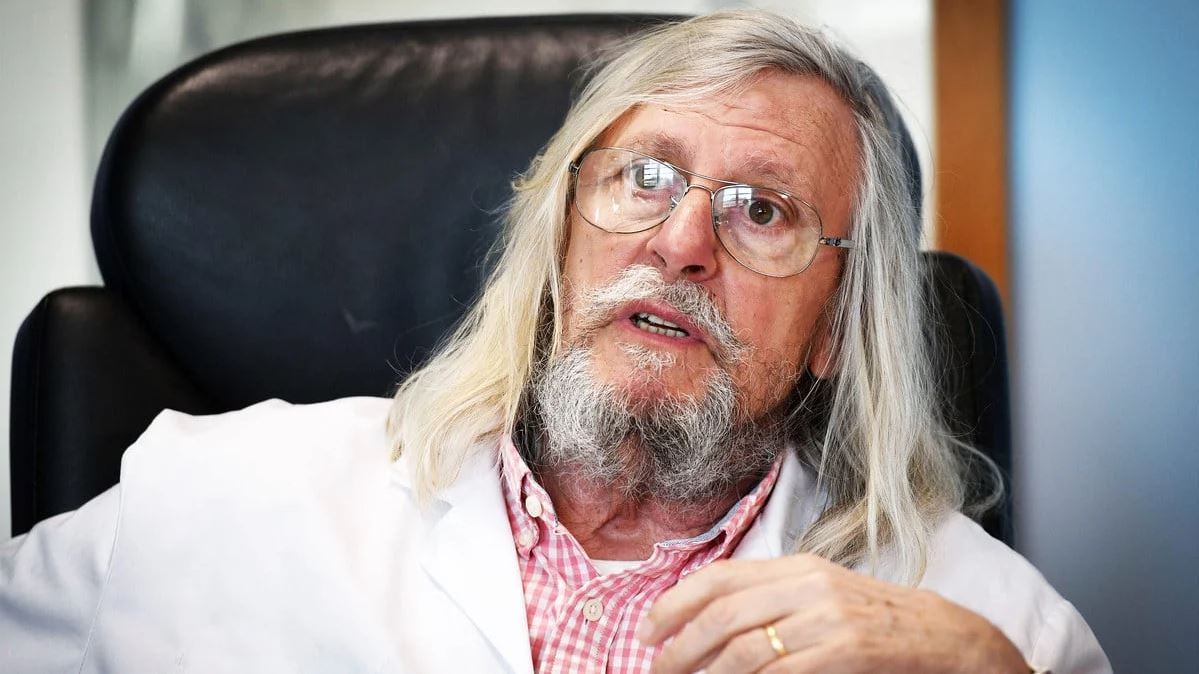
It all began on 25 February 2020, when a French microbiology professor from Marseille shared a video titled "Coronavirus, Game Over!" (the video was recently given a more modest title: ‘‘Is the Coronavirus Crisis Coming to an End?’’).
Standing before a group of students, Didier Raoult faces the cameras and shares what he says is very important news: ‘‘Rather than looking for a new drug or finding a vaccine, the Chinese are working on the approach I suggested: drug repositioning, which involves testing old, well-known drugs without toxicity. Among these, chloroquine has shown efficacy at a daily dose of 500 mg and produced excellent recovery, and it has begun to be recommended for all coronavirus-positive patients. Great news: this will probably be the easiest respiratory infection to treat.’’ A room full of laughter, delight and relief... I remember briefly but completely sharing those feelings. It was 26 February, and, confused like everyone else, I thought the statements of then French Health Minister Agnes Buzyn were groundless and that the virus would pass with a few airport precautions.
I knew Didier Raoult as a columnist in Point. I had read some of his articles and was impressed by his plain language and iconoclastic views, though sometimes also deeply irritated by his affected, grandiose, mandarin-like posture. At the end of February, I shared the video in medical forums and said that, if his claims were true, this magic weapon, chloroquine, would let us escape coronavirus cheaply. That afternoon, between two patient appointments, I watched the video again (‘’Game over!’’). How could such important news reach me through a Youtube video? Where were the international press reports claiming that the much-feared pandemic could easily be controlled with a widely available drug? Where were the Guardian, Reuters and New York Times articles and that much-praised Chinese study? Watching the video a second time, I began to realize that I too had made a mistake. As a physician who had worked in anesthesia a few years earlier, I paused when I heard Didier Raoult say, ‘‘a well-known drug without any toxicity’’ Chloroquine is well known for preventing malaria, but also for fatal, irreversible cardiac toxicity in overdose. Saying chloroquine has no toxicity is a serious error, because, in the absence of any evidence, the dose recommended by the ‘‘Chinese’’ was exactly 5 times the normal dose: 500 mg.
When the video spread on Twitter, deeply troubling arguments arose among my medical colleagues. At that point we knew nothing about Didier Raoult's background or the Marseille Institute: neither the opposition of the Paris intellectual circles represented by Agnes Buzyn and her husband, nor his institute's recent loss of INSERM and CNRS accreditation, the French scientific accreditation bodies, nor his coronavirus statements 1 month earlier, such as ‘‘Coronavirus would never leave China, worries about it were unfounded, and the whole world was going mad because 3 Chinese people had died!’’ and similar statements.
Some of us, general practitioners and emergency-care physicians, knew chloroquine's toxicity well. On Twitter, our constant message was that chloroquine should be approached with great caution. The next day, in a 20-minute interview, Didier Raoult berated those speaking against him and said: ‘‘Malicious gossip—who cares! The whole world is having a nervous breakdown, a drug's efficacy has been shown in 100 people, and some fools come out saying it is not certain! Frankly, not using chloroquine to treat Chinese coronavirus would be medical malpractice. People like me who have lived in Africa take chloroquine every day. Everyone traveling to hot countries has taken it throughout their stay and for 2 months after returning home. Billions of people have used this drug. And it costs very little. It is extremely safe and very cheap. That is why this is great news. Everyone who learns of these advantages should turn to this drug.‘’ What he was saying was no longer a mistake: it was a grave misuse of medicine! No one with even the slightest knowledge of medicines could use such words so casually!
Cardiologists, anesthetists, emergency physicians, family doctors, public-health specialists—in short, all of us—were alarmed. Our initial warnings were rational and firm. We recalled chloroquine's cardiac toxicity and highlighted the enormous, illogical risk Didier Raoult was insisting on taking. Prescribed in boxes of a hundred tablets for long trips to Africa, chloroquine sits in many medicine cabinets. To say ‘‘Everyone should turn to this drug’’ in the midst of this painful pandemic is to encourage uncontrolled self-medication and endanger people's lives. This inconsistent, dangerous statement deeply troubles us. Unbelievable! We do not even want to imagine what Didier Raoult may have unleashed!
Part-2
Misleading Data About Chloroquine
The end of February. We hear that a French citizen who had not recently traveled abroad has died in Oise, near Paris. For doctors worried about events in China, this is a red alert. Despite Health Minister Agnes Buzyn's airport notices, coronavirus has reached France. At this point no one knows how it will spread. Almost no one, apart from those responsible, knows how France exhausted its mask stocks so quickly. Physicians had long known that health services were being kept going on the backs of healthcare workers alone. Meanwhile, some are assessing the scale of what is coming.
Didier Raoult's announcement of the remarkable efficacy of chloroquine, a synthetic antimalarial drug, brought immense relief. But many health professionals soon became increasingly suspicious: he claimed that the drug had no toxicity or side effects and urged people to turn immediately to a medicine requiring caution. When we found the Chinese paper underlying his claims, we were stunned. No expertise in statistical methodology was needed to see the serious flaws. There were no numerical data in the paper! No one knew which patients received which doses, what was given to which types of patients, or how many recovered. The study had not undergone peer review by professionals; it amounted to little more than an announcement. Of course, in that chaotic period, we told ourselves that such important news meant the Chinese wanted to inform the world as quickly as possible. The Chinese, those ‘‘best virologists in the world’’ whom Didier Raoult described so modestly and regularly advised, probably deserved the first fruits of this discovery!..
On Youtube on 28 February, Raoult published a strange interview titled ‘‘Why Would the Chinese Be Wrong?’’ He constantly interrupts the interviewer, making the reporter visibly uncomfortable. ‘‘No, that is not the question you should ask me. You should be asking me this…’’ In informal groups, doctors share the link; it appears in tweets again. We rub our eyes in disbelief. We sarcastically advise him to have the video professionally edited before posting it. An hour later it disappears, then returns in a more professional form, creating the illusion of a real interview. Raoult rapidly changes his stance in the press, whose microphones are turning toward Marseille, without ever acknowledging the radical changes to the video.
Yesterday's magnificent, miraculous chloroquine magically disappears today, replaced within a day by a different, less common drug, hydroxychloroquine (Plaquenil). Although chemically close to antimalarials, hydroxychloroquine is used mainly for rheumatological diseases such as rheumatoid arthritis and lupus. It is therefore at least less common in medicine cabinets than chloroquine. Its very real cardiac toxicity is somewhat lower than chloroquine’s. Didier Raoult presents hydroxychloroquine as a tremendous discovery and continues his usual mockery of critics: “The doctors criticizing me are neither experts in my field nor capable of measuring up to me.’’ Raoult harshly criticizes healthcare workers, saying they merely follow orders from authorities mired in crisis management and dare not take responsibility. His defiant Gaul stance and loud opposition to the system appeal to those he gives hope to, those who sense the state is not being fully open, and those who see him as their stereotypical hero. The hero is, of course, the White Knight standing alone against the establishment and big pharmaceutical companies: Hippocrates, the father of medicine, surrounded by armies of soulless ants!..
No one holding a microphone to him asks the question every professional is asking: by what sleight of hand did Didier Raoult change his miracle drug in only 48 hours, in plain sight? And how did no one notice? Did this man, so concerned with his social-media image, suddenly recognize the risk of death from uncontrolled drug use and heed justified public appeals?
As the World Health Organization sounds the alarm amid general distrust of scientific opinion and governments, and disproportionate beliefs about the influence of big pharmaceutical companies, patient numbers rise daily and genuine panic takes hold. Meanwhile, Didier Raoult celebrates his Facebook likes, admirers and websites. For us, a long period begins in which misinformation is openly presented as fact, and this professor will never show the honesty to acknowledge and make amends for his actions.
Even a little intellectual integrity would require Didier Raoult to admit that he changed horses midstream and that his critics had been right from the start… (Chloroquine is frequently used in suicides.) Because he never backs down, he retains all his media gains. Supporters of the Marseille sage keep offering testimonials. Their brothers, sisters, uncles and hairdresser's father-in-law have taken the professor's drug—which one?—in Africa for eight years without a problem. To them, this proves his critics are merely jealous, or worse, supported by ‘‘lobbies’’…
And tirelessly, we repeat the basic facts:
- Yes, chloroquine is a drug that has been available for years,
- Yes, it is widely used,
- But it is used for another treatment: preventing malaria,
- And at doses 5 to 10 times smaller,
- And in overdose it causes cardiac arrest, meaning it stops the heart,
- And it has never previously been effective against any virus,
- And all these points also apply to hydroxychloroquine.
In Fact, Precisely the Opposite!..
What defenders of the scientific method patiently emphasize goes strongly against popular belief and is barely heard. They are trying to explain matters to anxious, confused people who have placed their trust and hopes for the future in one person and his meaningless claims...
Related Topic
Sources
edzardernst.com - 28 April 2020.
Was this article helpful?
Your feedback helps us improve our content.




Reader comments
Share your comment
Your name and comment are published only after administrator approval. Your email address is never shown to visitors.
Be the first to comment.