
Is it possible to live with one lung?

To sustain our lives, our lungs distribute oxygen from the air we breathe throughout the body and remove waste gases that accumulate in the blood during the body's functioning when we exhale. People without any health problem have two lungs, one on each side of the chest cavity. However, some health problems encountered during life may require one lung to be removed. This can impose certain limitations on daily life and physical exercise, but after a carefully monitored postoperative recovery period, athletes successfully continue their training and careers, which provides hope.
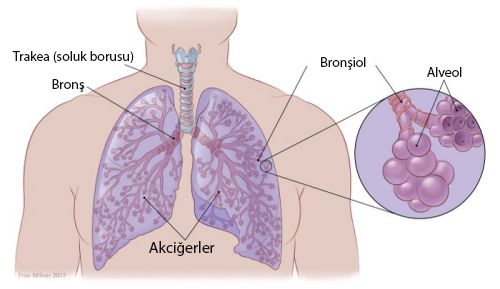
A simple illustration of lung anatomy is shown below.
So how does the body adjust to having one lung?
After one lung is removed, the body can adapt to the new arrangement in several ways. For example, the remaining lung can expand somewhat into the space left by its removed partner, thereby increasing its capacity and gradually learning to compensate for the loss of oxygen. Individuals also have important responsibilities while adapting to the new conditions. People generally think they will be unable to live as before with one lung and will frequently experience problems such as shortness of breath. But this is not the case. By simply slowing down their daily lives a little, they can help their bodies adjust to the new arrangement and pick up their lives where they left off.
What are the risks and potential harms?
Pneumonectomy, which involves completely removing a lung through an incision in the side of the body, is a surgical method and the main treatment for early-stage lung cancers.

In addition to lung cancer, health problems such as serious vehicle accidents, tuberculosis, fungal infections, congenital lung disease, smoking-related complications, and bronchiectasis, a chronic lung disease developing due to infection or inflammation, may require pneumonectomy. Journal of Cancer published a study describing the risks of this surgical intervention. In addition to the possible risks of anesthesia, other potential complications associated with surgery include:
- Respiratory failure
- Excessive bleeding and shock
- Abnormal heart rhythms or arrhythmia
- Reduced blood flow
- Blood clots in the lung or pulmonary embolism
- Inflammation of the lung.
A person's age, general health and smoking may also add to the risks mentioned above. Patients who smoke need to be especially careful because their lung capacity decreases.
After surgery, the space left by the removed lung fills with air. During recovery, people may experience temporary abdominal pain or gas pain. Over time, as the other lung fills part of this space and the remaining cavity fills with fluid from within the body, these complaints disappear. The time needed for complete recovery varies between individuals, ranging from a few weeks to several months. During this period and afterward, people should take care with their daily activities. They may experience difficulty breathing when waking up in the morning, getting up from a prone position or after climbing stairs.
In summary...
After surgery, patients should adjust to their new lifestyles while remaining aware of their own limits and not pushing themselves too hard. Recovery may be longer and more difficult for patients who smoked in the past. Complaints such as shortness of breath may be particularly frequent.
Although living with one lung brings some limitations to daily life, comprehensive measures such as exercise, breathing techniques, diet and patient education as part of pulmonary rehabilitation are very important during recovery. From the start of the process through recovery after treatment, it is extremely important for patients to discuss all possibilities with their doctors and remain under medical follow-up.
Sources
2. Gu, C., Wang, R., Pan, X., Huang, Q., Luo, J., Zheng, J., Wang, Y., Shi, J., & Chen, H. (2017). Comprehensive study of prognostic risk factors of patients underwent pneumonectomy. Journal of Cancer
Was this article helpful?
Your feedback helps us improve our content.




Reader comments
Share your comment
Your name and comment are published only after administrator approval. Your email address is never shown to visitors.
Be the first to comment.