
Nature's Choice – 10 Heroes Who Shaped Science in 2024

In this article
A Year That Expanded the Horizons of Science
2024 was a remarkable turning point for the scientific world. Nature’s 10 highlights people who made important contributions to science during the year and the social impact of their work. Through personal determination and interdisciplinary collaboration, these figures shaped science and humanity's future. This article explores these heroes and the profound effects of their work.
1. Ekkehard Peik: A Pioneer of Nuclear Clocks
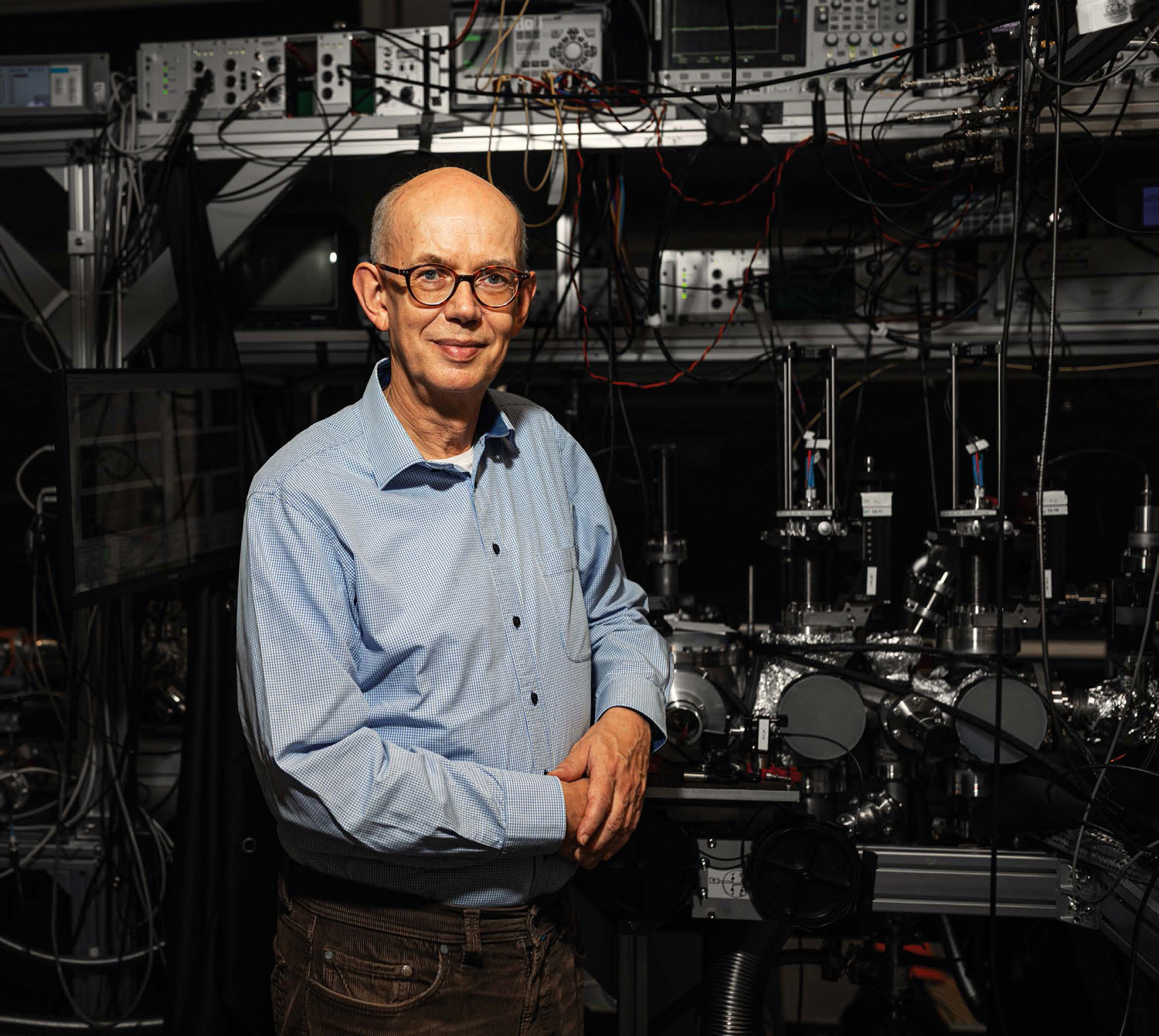
Ekkehard Peik made his mark on 2024 with groundbreaking work on nuclear clocks that is redefining timekeeping technology. This research allows time to be measured with unprecedented precision and stability.
Redefining Time
Atomic clocks, currently the most precise timekeeping devices, rely on electron energy transitions. Peik proposed developing a nuclear clock that instead uses energy transitions within the atomic nucleus. This was considered a revolutionary idea in timekeeping. Because the nucleus is less sensitive to electromagnetic fields, these new clocks have the potential to be more stable and precise than existing atomic clocks.
A Challenging Journey
When Peik and his colleague Christian Tamm began developing the idea in 2001, they thought they could complete the project within a few months. However, early attempts to excite nuclear energy transitions failed. These setbacks did not discourage Peik and his team; they continued the project, learning from each attempt. Finally, in 2024, the team led by Peik successfully triggered an energy transition in the radioactive thorium-229 nucleus.
Rate of Timekeeping Error
The accuracy of different types of clocks can be compared as follows:
-
Mechanical (Analog, Automatic) Clocks: Daily deviations generally range from -10 to +10 seconds.
-
Quartz (Battery-Powered) Clocks: Standard quartz clocks deviate by approximately ±15 seconds per month, equivalent to a daily deviation of about ±0.5 seconds.
-
Atomic Clocks: The most precise atomic clocks deviate by approximately 31.5 attoseconds per year (1 attosecond = 10^-18 seconds).
-
Nuclear Clocks: In theory, they are expected to be more accurate than atomic clocks; however, their precise error rates will become clearer as the technology develops. Current estimates are around 1 second in 40 billion years
Scientific and Technological Implications
Peik's work could have wide-ranging effects, from fundamental science to practical applications. Nuclear clocks could:
- Revolutionize technologies such as GPS and telecommunications.
- Allow spacetime to be measured more precisely.
- Offer a new perspective on fundamental questions in physics, such as dark matter.
Collaboration and Perseverance
Behind Peik's success lies the creation of a consortium across Europe that brought together expertise from different research groups. His scientific perseverance and determination were also crucial in bringing the project to this point. Peik says that his work in this field is only beginning and that he looks forward to new ideas and technological advances.
2. Kaitlin Kharas: A Champion of Fair Pay

“The leader who amplified the voices of Canadian graduate and postdoctoral researchers”
In 2024, Kaitlin Kharas attracted attention in the scientific world as a leader of the campaign that secured Canada's largest pay increase for graduate and postdoctoral researchers in 20 years: Support Our Science (SOS). At a time when young researchers faced financial difficulties, this achievement was crucial to restoring momentum to scientific research.
The Campaign's Origins and Struggle
Support Our Science (SOS) began in 2022 in response to low pay and rising living costs. From the outset, organizers argued that master's and doctoral students should lead the campaign. Kharas initially played an active role in local organizing and became the campaign's director in 2023.
The nationwide walkouts in May 2023 marked a turning point. More than 10000 researchers at 46 institutions stopped work, putting substantial pressure on the government. Kharas helped organize the Toronto protests and met Canada's finance minister, Chrystia Freeland, to present the campaign's demands directly.
Success and Impact
Changes in Canada's 2024 budget increased salaries and substantially expanded the number and value of scholarships. These changes aimed to support scientific productivity by improving young researchers' financial and mental health. They also inspired similar campaigns in the USA and other countries.
Kharas emphasized the importance of teamwork to the campaign's success, particularly acknowledging the contributions of former director Sarah Laframboise and deputy director Courtney Robichaud.
Long-Term Goals
Although Kharas would not directly benefit from the scholarship increases, she was driven by a mission to make the scientific ecosystem sustainable and inclusive. “This money will not directly affect us, but we wanted to ensure that Canada's scientific research ecosystem is sustainable for future generations,” she said.
Impact on Science and Society
Alongside improving scientists' financial conditions, the campaign led by Kaitlin Kharas provided a powerful example of enhancing the social value of science. By giving young researchers a voice and building solidarity within the scientific community, the effort left a lasting legacy.
3. Li Chunlai: The Scientist Who Reached the Moon's Dark Side

“The guardian of samples brought back from the Moon's most mysterious region”
Li Chunlai added a new dimension to lunar exploration through his crucial role in China's Chang’e-6 mission. By bringing the first samples collected from the Moon's dark side to Earth, the mission offers important clues to the history of the Moon and the evolution of planets.
The Moon's Dark Side: A Dream Realized
Li Chunlai described collecting samples from the Moon's dark side as a challenging dream. This region remained mysterious because it is permanently hidden from Earth's view. The Chang’e-6 mission landed on the lunar surface in May 2024 and spent two days drilling and collecting samples. Approximately two kilograms of lunar soil and rock were then returned to Earth.
As a leader of the project, Li Chunlai played a pioneering role in selecting the landing site and analyzing the collected samples. They have the potential to reveal previously unknown information about the Moon's early evolution and geological processes.
The Mysterious South Pole–Aitken Basin
The South Pole–Aitken Basin, selected as the Chang’e-6 landing site, is one of the Moon's largest and oldest impact craters. Samples collected there offer rich material that may include geological formations ranging from lava flows to the lunar crust and even the mantle. Showing that volcanic activity on the Moon continued until 2.8 billion years ago, these samples have opened a new window into lunar history.
Scientific and Global Collaboration
Under Li Chunlai's leadership, the initial sample analyses were conducted in a laboratory at the National Astronomical Observatories of China. The samples were found to be very light, fresh, and paler than those collected from other lunar regions. Li said these findings could reveal information about the history of other planets as well as the Moon's evolution.
Li's team initially distributed the samples mainly to research groups in China, but international collaboration is expected to allow a wider scientific community to analyze them in the future. These studies are accelerating lunar exploration and opening the door to a new generation of planetary missions.
From Lunar Exploration to the Future
Li Chunlai's work extends beyond the Moon. Inspired by the success of Chang’e-6, China is preparing an asteroid sample-return mission in 2025 and a Mars sample-return mission within a few years. Li also plans to lead these new projects.
“This mission is only a beginning,” Li says, noting that the lunar samples will lead to numerous scientific discoveries. These valuable materials from the Moon's far side could pave the way for revolutionary findings in planetary science.
Conclusion: A Leader Illuminating the Moon's Mysteries
The Chang’e-6 mission led by Li Chunlai has made history as an achievement in space exploration and a step shaping the future of planetary science. Samples returned from the Moon's dark side are opening new scientific and technological horizons for humanity. Li's perseverance and leadership are considered a milestone in planetary exploration.
4. Anna Abalkina: A Pioneer in Fighting Academic Fraud

“An advocate for scientific ethics and transparency”
Anna Abalkina stood out in the scientific world in 2024 for her fight against academic fraud. The Russian-born researcher is known for tracking fabricated papers, hijacked journals, and ethical violations in academia in an effort to increase scientific transparency. Her work is an important milestone in protecting ethical standards in science.
Encountering Fraud and Beginning the Fight
Anna Abalkina's fight against academic fraud began while she was working on international economics in Moscow in the 2010s. After discovering that a doctoral student had copied one of her papers, she found that ethical violations in academia were far more extensive than she had imagined. This experience prompted her to investigate more widely.
In 2013, she joined a group of academics and journalists called Dissernet, which investigated plagiarism in doctoral theses, particularly in Russia, resulting in hundreds of degrees being revoked and revealing the involvement of numerous senior politicians in this fraud network.
An International Fight
While focusing on plagiarism and fraudulent journals in Russia and former Soviet countries, Abalkina also investigated similar activities in countries such as Iran and India. Her work exposed “paper mills” selling fabricated research and showed how these papers infiltrated prestigious databases such as Scopus. By 2024, her research had led to hundreds of fabricated papers being retracted.
One of Abalkina's greatest achievements is developing a tool that identifies fraudulent journal websites. It allows researchers to check whether a journal is legitimate. The contribution earned widespread appreciation within the scientific community and helped make academic publishing more transparent.
Fighting Hijacked Journals and Fabricated Papers
Abalkina drew particular attention to a type of fraud known as “journal hijacking.” It involves creating fake websites that imitate the names of genuine journals. By showing how these sites operate and trap researchers, her work raised widespread awareness in the scientific world.
In 2024, Abalkina exposed a bold attempt to clone the journal websites of major publishers. As prestigious publishers such as Elsevier tightened their policies to prevent such fraud, her efforts helped lead the way.
Personal Risk and Courage
Abalkina's work attracted the Russian government's attention, and she was placed on the watchlist of Roskomnadzor, a Russian state agency. Despite the serious risk this poses, Abalkina continues her research in Berlin. Colleagues supporting her work praise her courage and determination to protect ethical standards.
Contributing to the Future of Science
Abalkina does more than expose problems; she also focuses on understanding how these fraud networks operate and identifying weaknesses in the system. Her efforts are seen as a major step toward a more trustworthy publishing environment for the scientific community.
Conclusion: An Advocate for Ethics and Transparency
Anna Abalkina's fight against academic fraud marks a turning point in strengthening the ethical foundations of science. Her work increases transparency and reliability in the scientific world while building a strong defense against fraudulent scientific activity. Her mission protects science and society's trust in scientific accuracy.
5. Huji Xu: A Doctor Revolutionizing Autoimmune Disease Treatment

“A bold approach and a groundbreaking treatment”
Huji Xu made his mark on 2024 with CAR-T cell therapy, ushering in a new era in treating autoimmune diseases. A rheumatologist at Naval Medical University in Shanghai, Xu offered hope to many patients through a method that genetically engineers immune cells to fight autoimmune disease.
CAR-T Cell Therapy: A Revolutionary Approach
CAR-T cell therapy has long used genetically modified T cells to treat diseases such as cancer. Xu's team broke new ground by adapting the technology to autoimmune disease. Targeting the underlying mechanisms, the treatment stops abnormal B-cell activity. It is considered a revolutionary approach, particularly for patients resistant to conventional treatment.
Xu's team chose to use donor T cells during treatment, potentially reducing costs and widening access. A distinctive feature of his approach was using genetic engineering to improve compatibility with the immune system.
Early Experiences and Promising Results
Xu's initial clinical trials revealed the treatment's potential. A woman with extreme muscle weakness regained enough strength to lift her arms and brush her hair two weeks after treatment. Similarly, two men with systemic sclerosis improved rapidly after treatment. After six months, all patients were in remission.
Using CRISPR-Cas9 technology, Xu's team removed five genes from donor T cells so that the cells could persist longer in recipients' bodies. This minimized the risk of immune rejection while improving treatment efficacy.
Scientific Courage and Innovation
Xu's success rested on scientific knowledge and courage. Seeking to test CRISPR-Cas9 genetic engineering in autoimmune diseases, he took an innovative step by embracing an approach whose risks initially deterred many doctors. His leadership also inspired other scientists and clinicians.
Future Perspectives
Xu and his team aim to broaden the treatment's application in autoimmune diseases. Similar treatments have now been given to more than 20 patients, with promising results. Xu wants the approach to become available for milder cases as well as severe disease. “We have a plan to make this method available to a wider population,” he says, hoping it will become a standard treatment in the coming years.
Conclusion: A Future Shaped by Courage and Innovation
Huji Xu's work is creating a paradigm shift in treating autoimmune diseases. This new application of CAR-T cell therapy improves patients' quality of life and reshapes how the scientific world views autoimmune disease. His innovative approach again demonstrates the importance of taking bold steps in science and medicine.
6. Muhammad Yunus: The Economist Rebuilding a Nation

“A microcredit revolutionary and pioneer of social change”
In 2024, following Bangladesh's political revolution, Muhammad Yunus was called upon to lead the country. The Nobel Peace Prize-winning economist is renowned worldwide for his innovative approaches to poverty and his work on microcredit. Now, having undertaken the task of rebuilding his country economically and socially, he faces his greatest test.
Political Revolution and the Call to Lead
In Bangladesh in 2024, student protests that brought down an authoritarian government triggered a wave of nationwide change. Following the revolution, students invited Yunus to lead the nation. They wanted a government that would end corruption, protect human rights, and ensure equal opportunities in education and employment.
The interim government led by Yunus established expert working groups to depoliticize public institutions. These efforts laid the foundations for institutional reforms in Bangladesh and offered hope for the country's future.
The Inventor of Microcredit
Yunus revolutionized the fight against poverty with the microcredit model he developed in the 1970s. While working at the University of Chittagong, he tested how small loans could transform the lives of economically disadvantaged people. By lending small amounts to women, he enabled them to start businesses. After seeing all loans repaid in his early trials, Yunus expanded the approach and, in 1983, founded Grameen Bank.
Grameen Bank has since provided loans to millions of people, helping them break the cycle of poverty. The model has become a development strategy adopted around the world.
Rebuilding Bangladesh
The challenges Yunus faces as a national leader are highly complex. Corruption, repressive systems of governance, and unjust economic structures are longstanding problems in Bangladesh. While collaborating with young revolutionary leaders to implement reforms, he is prioritizing the restructuring of essential services such as education and healthcare.
Bangladesh's authoritarian regime had used public institutions as political tools and deepened corruption. Yunus and his cabinet prepared a roadmap to make these institutions independent and put them to work for the public good. However, the complexity and slow pace of the process have drawn criticism from both inside and outside the country.
Criticism and Challenges
Although Yunus's leadership has broad support, tensions exist between those demanding rapid change and those questioning whether a technocratic government has the authority to propose such extensive reforms. Some also debate whether his political experience is sufficient to shoulder this responsibility.
Nevertheless, his vision and approach to leadership provide a strong foundation for guiding Bangladesh toward a stable future. The support of young people is particularly important during this transition.
Global Influence and Inspiration
Muhammad Yunus is an inspiration to Bangladesh and the wider world. His microcredit model revolutionized understanding of poverty's economic and social foundations, while his approach to leadership reflects a belief in individuals' power to create social change.
Conclusion: A Symbol of Hope and Change
Muhammad Yunus stands at a historic opportunity to reshape Bangladesh's future. His innovative approach to poverty is now serving as a model for political leadership. His success in Bangladesh will offer an example of social change at both national and global levels.
7. Placide Mbala: The Scientific Fight Against Deadly Outbreaks

“The virologist developing a global warning system against outbreaks such as mpox and Ebola”
Placide Mbala, an epidemiologist and virologist at the National Institute for Biomedical Research (INRB) in the Democratic Republic of the Congo (DRC), came to prominence in 2024 for efforts to detect and control deadly outbreaks of mpox (monkeypox). His research combats current outbreaks and provides critical knowledge for preventing future ones.
The Mpox Outbreak: Uncovering a Silent Threat
In 2024, a new mpox outbreak emerged in Central Africa, causing hundreds of deaths. By analyzing a suspicious cluster of cases among young adults and sex workers, Mbala showed that a new mpox strain was responsible. Genomic analysis revealed that it differed from strains seen in the 2022 outbreak and earlier Congolese cases.
The new strain was found to transmit between humans and spread rapidly in countries that had not previously reported mpox. Mbala's research provided early warning even as mpox spread to countries including Sweden, Thailand, India, Germany, the USA, and the UK.
Scientific and Community Responses
Alongside genetic analysis, Mbala developed a comprehensive community engagement strategy to control transmission. He documented how mpox spread in displacement camps and high-risk groups. He particularly conducted awareness programs among stigmatized groups, including sex workers and men who have sex with men, to support efforts against the disease.
The work led by Mbala helped develop new protocols for local and international health organizations. In the process, the Congo's outbreak response became an international model.
A Personal Mission: Keeping the Memory of Outbreaks Alive
Mbala is personally fighting what he calls “scientific amnesia.” Once outbreaks end, the world often forgets these diseases and neglects preventive measures. He believes diseases such as mpox must remain on the agenda and that lasting solutions are needed.
Mbala also played an important role during the Ebola outbreak, becoming the first person in the Congo to identify Ebola virus through genetic sequencing in 2014. Following his mentor Jean-Jacques Muyembe-Tamfum, he became a researcher and an active leader in fieldwork.
Global Collaboration Against Mpox
Throughout 2024, Mbala led international collaborations and encouraged cooperation between local communities and health authorities to control mpox. His research showed that mpox spread from animals to humans and rapidly between human populations.
Alongside community-based interventions, Mbala and his team developed strategies to prevent mpox transmission. Their work profoundly influenced practical public health policy in the Democratic Republic of the Congo and other countries.
Conclusion: The Power of Science Against Outbreaks
Placide Mbala's work plays a crucial role in controlling infectious disease outbreaks worldwide. His leadership against diseases such as mpox and Ebola offers a roadmap for preparedness. His scientific determination and efforts to raise community awareness are leaving a lasting legacy in science and public health.
8. Cordelia Bähr: The Quiet Hero of Climate Justice

“The lawyer who helped shape the fight against climate change by winning a historic Swiss climate case”
Cordelia Bähr gained an important place in science and justice in 2024 through her legal fight against climate change. Her case against the Swiss government at the European Court of Human Rights (ECHR) demonstrated climate change's human rights implications with unprecedented force. Bähr and the group she represented, KlimaSeniorinnen Schweiz (Senior Women for Climate Protection Switzerland), won a major victory by arguing that the government's climate policies violated human rights.
Background to a Historic Case
Cordelia Bähr's climate work began in 2015 when she investigated a deadly European heatwave. She discovered that older women's mortality during the heatwave was significantly higher than that of other groups. This finding opened the door to the argument that the Swiss government's inadequate action against climate change could constitute a human rights violation.
Building on this, Bähr brought the case before Swiss domestic courts in 2016. After the Swiss Federal Supreme Court rejected it in 2020, she took it to the European Court of Human Rights.
The Story of the Victory
On 9 April 2024, the European Court of Human Rights ruled in favor of Bähr and KlimaSeniorinnen. It found that the Swiss government had failed to fulfill its obligations under the Paris Agreement and the United Nations Framework Convention on Climate Change. It also stated that the government had failed to protect older women's human rights.
The ruling was regarded as a historic turning point for Switzerland and the wider world. It demonstrated that legal action against climate change concerns human rights as well as the environment.
Cordelia Bähr's Leadership
Bähr was described as the “brains” behind the case. Working with Greenpeace Switzerland, she built a strong legal team. The case rested on scientific evidence and carefully developed legal arguments. Her determination and strategic thinking were crucial to its international success.
Although often described as a leader who prefers to stay in the background, her team and the older women she represented emphasized that her determination was decisive in winning the case.
What Comes After the Case?
Although the case has concluded, the Swiss government has been slow to implement the ECHR judgment fully. Bähr and her team plan further action to ensure the government meets its climate targets and provides the necessary budget. The case has inspired similar litigation in other European countries and strengthened the climate justice movement.
Human Rights and Climate Change: A New Perspective
Bähr demonstrated the human rights impacts of climate change with unprecedented clarity. Her fight again showed that confronting the climate crisis is an environmental, social, and ethical issue. Her work offers a powerful example of how law can be used to achieve environmental justice.
Conclusion: A Pioneer of Climate Justice
Through determination and leadership, Cordelia Bähr has opened the door to a new era in the fight against climate change. Her success shows how law and science together can help create a fairer, more sustainable world. Her contribution to climate justice will remain an important legacy for future generations.
9. Rémi Lam: Revolutionizing Weather Forecasts with Artificial Intelligence

“The AI pioneer bringing a new perspective to weather forecasting”
Rémi Lam stood out in the scientific world in 2024 for work taking artificial intelligence (AI) in weather forecasting to a new level. At Google DeepMind, he led a team using machine learning to develop weather models, achieving revolutionary improvements in forecast speed and accuracy.
GraphCast: Beyond Traditional Models
In 2023, the team led by Lam developed GraphCast, an AI-based weather forecasting model. Unlike traditional physics-based forecasting systems, it uses a neural network to predict future weather from atmospheric measurements. By delivering highly accurate forecasts within minutes, GraphCast outpaced conventional supercomputers that require hours of calculation.
GraphCast produced more accurate results than forecasts based on existing physical models. “Even I was surprised that we surpassed physics-based forecasting so quickly,” Lam said, emphasizing the significance of the progress.
The Advantages of AI in Forecasting
GraphCast's innovations include:
- Fast Computation: Forecasts can be produced within minutes on an advanced desktop computer.
- Local and Detailed Forecasts: It provides more accurate and detailed predictions, particularly in microclimate regions.
- Low Cost: It lowers forecasting costs by greatly reducing reliance on supercomputers.
Although Lam's model is used as a tool complementing traditional physical weather forecasting methods, it could potentially function as a fully independent system in the future.
A Career Deepening in Machine Learning
Rémi Lam was born near Paris and studied aeronautical engineering. While working on fluid mechanics, he realized how that knowledge could help develop AI-based models. After joining DeepMind, he focused on work combining atmospheric science and artificial intelligence.
In 2024, Lam and his team introduced a new model for longer-range forecasting called GenCast. It provides 15-day forecasts and is again faster and more accurate than traditional methods.
Implications for Society and Science
Lam's work is a scientific achievement with wider social consequences:
- Natural Disasters: It enables earlier detection of extreme weather events such as floods, hurricanes, and wildfires.
- Climate Change: It contributes to a better understanding of climate change's local effects.
- Accessibility: The models' open-source availability makes it easier for researchers and governments to benefit from the technology.
Challenges and Future Prospects
Lam notes that AI systems still depend on physics-based data. His future goal is to develop forecasting systems based entirely on AI and extend the forecasting horizon beyond 10 days. He also hopes that greater precision in local forecasts will enable reliable predictions even in microclimate regions such as San Francisco.
Conclusion: A Leader at the Intersection of Science and Technology
Rémi Lam's work is regarded as a turning point in weather forecasting. These new AI-based methods are revolutionizing meteorology and helping society prepare for extreme weather. His leadership offers a powerful example of the impact of pushing scientific and technological boundaries.
10. Wendy Freedman: The Astrophysicist Seeking to Resolve Disagreements over the Universe's Expansion Rate

“The pioneer shedding light on cosmological puzzles surrounding the Hubble constant”
Wendy Freedman is known in astrophysics for efforts to resolve uncertainties over the expansion rate of the universe, or Hubble constant. In 2024, her longstanding work measuring this rate continued to resonate in the scientific world. In seeking an answer to this complex question in modern cosmology, she developed new measurement methods and challenged existing theories.
The Hubble Constant: Understanding the Universe's Expansion Rate
The Hubble constant, which describes the universe's expansion rate, is a fundamental concept in astrophysics. However, its measured value differs between methods. One relies on the motion of nearby galaxies, while another uses cosmic microwave background radiation formed shortly after the Big Bang. As of 2024, the two methods differ by 8%.
To address this problem, Wendy Freedman developed a third method based on the brightness of red giant stars. These stars remain at a particular brightness level and therefore provide a reliable way to measure cosmic distances more accurately.
Measuring with Red Giants: A New Perspective
The method developed under Freedman's leadership measured the Hubble constant at 69.8 km/s/megaparsec. This is closer to the measurement derived from cosmic microwave background radiation and lower than the 73 km/s/megaparsec value obtained from galaxy motions. Her work is viewed as an important step toward reducing the discrepancy between the two measurements.
While deepening debate about how the universe's expansion rate is measured, this new red-giant technique again emphasized the importance of methodological diversity in astrophysics.
Scientific Contributions to Cosmology
Freedman's career has focused on fundamental discoveries in cosmology:
- In the 1990s, she led the Hubble Space Telescope Key Project and used Cepheid variable stars to measure the universe's expansion rate.
- The red-giant method became her second major innovation for measuring cosmic distances.
- In 2024, she established a new research team combining theoretical and observational data to resolve differences in measurements of the universe's expansion rate.
Her work extends beyond the Hubble constant and has also illuminated efforts to understand the age and structure of the universe.
Debates and Challenges
Some astrophysicists supported Freedman's work, while others criticized it. Although the red-giant method was less popular than measurements based on Cepheid variables, it offered a strong alternative for independent verification. Arguing that such debate advances science, Freedman said, “Asking questions is the foundation of the greatest scientific advances.”
A Journey into the Universe's Mysteries
Freedman's leadership helped explain the universe's expansion rate and inspired younger scientists in the field. As of 2024, plans were being made to apply red-giant measurements to a larger dataset. She said this work would play an important role in answering fundamental questions about the nature and future of the universe.
Conclusion: A Leader Illuminating Cosmological Puzzles
As a scientist dedicated to resolving questions about the universe's expansion rate, Wendy Freedman plays a pioneering role in the complex world of astrophysics. Her work illuminates fundamental issues in cosmology and demonstrates the power of scientific curiosity and interdisciplinary collaboration. Her contributions bring us another step closer to understanding the universe's secrets.
Conclusion
2024 demonstrated the triumph of science and perseverance. These figures opened paths built on knowledge and innovation to make the world a better place. Nature’s 10 again shows that science can resonate throughout society, far beyond laboratories. These inspiring stories point to brighter hopes for the future.
Sources
Was this article helpful?
Your feedback helps us improve our content.




Reader comments
Share your comment
Your name and comment are published only after administrator approval. Your email address is never shown to visitors.
Be the first to comment.