Taking a Gene to the Cell: The First Gene Therapy Trials, 1989-1990

In this article
Taking a Gene to the Cell: The First Gene Therapy Trials, 1989-1990
On Day 181 we read a gene from a family: an address at 17q21, not yet a gene. Today we look the other way: carrying a gene into a cell from outside. Two dates stand out. On 22 May 1989 a gene that treated nothing, and only left a trace, was added to the immune cells of cancer patients. On 14 September 1990 a four-year-old child was given her own cells carrying the gene she lacked. Which one is "first"? The answer hangs on three different words: transferring, being approved, treating.
Cline's shadow and the weight of a committee
First, 1980. According to the National Academies' report on gene therapy oversight, Martin Cline of UCLA tried gene transfer in two patients with beta-thalassemia in Italy and Israel, without the approval of the NIH Recombinant DNA Advisory Committee (RAC). The same source says the ethics board in Israel was allegedly not fully told that the work involved recombinant DNA; Italy had no such board system at the time. Therapeutic gene expression was not achieved, and there was no evidence of further harm. In 1981 Cline resigned as department chair at UCLA.
This episode is the backdrop to the care that followed. Anyone who wanted to transfer a gene into a person now had to pass the RAC, institutional ethics boards and the FDA. According to NIH Catalyst, Steven Rosenberg's notes list 16 reviews needed for this experiment; the RAC approved it 16 to 5 on 3 October 1988 and unanimously, 13 to 0, on 9 December 1988.
Why a "label" first? In 1988, in the NEJM (319:1676-1680), Rosenberg's group had reported giving metastatic melanoma patients lymphocytes taken from their own tumors and grown in the laboratory (TIL), together with interleukin-2 (for IL-2, Day 175). But nobody knew where the infused cells went or how long they lived. The way to follow a cell was to give it a harmless, easily measured gene. It can also be read as the first safety test for a field that had never given a person a gene.
A label, not a treatment
Rosenberg, Blaese, Anderson et al., "Gene transfer into humans", N Engl J Med 323(9):570-578, 30 August 1990
Lymphocytes taken from a patient's tumor and expanded in culture received a bacterial neomycin-resistance gene (neo) through a retroviral vector; the cells were then given back with interleukin-2. According to NIH Catalyst, one patient was a 52-year-old truck driver from Indiana, and there were five patients in all. A secondary summary (médecine/sciences, 1991) says 1 to 11 percent of the cells were marked; marked cells were found by PCR in the blood of all five patients for three weeks, in two patients for two months, and in metastases for up to 64 days. The same summary reports tumor shrinkage in three of five patients; that is explained by TIL and interleukin-2, not by the marker gene. According to Catalyst the goal was met: the cells survived for a long time and the vector proved usable in people; yet all five patients eventually lost their lives to their cancer.
The retroviral vector and the marker gene
A retrovirus converts its RNA genome into DNA with reverse transcriptase and inserts it into the host cell's DNA (for reverse transcriptase, Day 149). If the virus's own genes are removed and a cargo gene is put in their place, the result is a carrier that cannot multiply (general principle). In 1989 the cargo was neo: a bacterial gene that makes the enzyme neomycin phosphotransferase. Its presence in a cell can be measured, but it does nothing useful for a person; hence "marker". The cargo in 1990 was a gene meant to treat.
Completing a missing enzyme
ADA deficiency is a form of severe combined immunodeficiency (SCID) caused by a defect in the gene for the enzyme adenosine deaminase; without the enzyme, lymphocytes are damaged and the child is exposed to infection (general knowledge). According to the NIH Clinical Center and NHGRI accounts, on 14 September 1990 T cells taken from a four-year-old girl were treated with a retrovirus carrying the normal ADA gene and given back to her. The team included Michael Blaese, Kenneth Culver and W. French Anderson of the NCI and NHLBI; the vector was made by Dusty Miller of Fred Hutchinson.
The second patient was a nine-year-old girl whose treatment began on 31 January 1991. The first received 11 infusions over about two years, the second 12 over 18 months. Blaese and colleagues reported the results in Science on 20 October 1995. According to the NHGRI announcement, both were healthy, with stronger immune function and continuing ADA enzyme activity. In the first child, about two years after the last infusion, nearly all T cells carried the vector; in the second it was initially only about 1 percent, and still detectable more than a year later.
There is no clean result here. Both children continued enzyme replacement with PEG-ADA at half dose during gene therapy; Blaese said he was not yet ready to stop the enzyme treatment completely (NHGRI summary). The gene's share could not be separated from the enzyme's.
Three claims, three different questions
"The first gene therapy" covers at least three claims. The first is trying gene transfer in a person: the first recorded attempt is Cline's unauthorized and unsuccessful experiment of 1980. The second is the first approved human gene transfer: sources converge on the marking trial of 22 May 1989. The third is the first approved therapeutic gene transfer: the ADA trial of 14 September 1990 (NIH Clinical Center, NHGRI).
What is interesting for cancer is that the first gene transfer was done in cancer patients while the first treatment trial had nothing to do with cancer. The cancer branch soon split off: according to the 1991 médecine/sciences summary, an FDA-authorized trial due to begin on 13 November 1990 tested TIL carrying the TNF gene in melanoma (single source; I did not read the details). The idea of putting a gene into a T cell and steering it to a target is the basis of today's CAR-T; that story comes on Day 229.
Keeping the three claims apart is more accurate than letting them replace one another: Cline's attempt reads as a breach, the 1989 experiment as a step in monitoring and safety, the 1990 experiment as the first treatment trial. Rosenberg, Blaese and Anderson are co-authors of both the 1990 NEJM and the 1995 Science papers; the two trials were consecutive steps of one team.
Cost and limits
The first limit is the numbers: five patients in 1989, two in 1990-91. The second is that the marking trial says nothing about treatment outcome; it only shows that cells could be followed. The third is that in the ADA trial PEG-ADA continued, so the gene's own share is unknown. The fourth is that a retroviral vector inserts DNA into the host genome, and the price was seen later: in 2003 Science reported LMO2-associated clonal T-cell proliferation in two patients after gene therapy for SCID-X1 (Hacein-Bey-Abina et al.; I verified the citation only). The fifth is that Jesse Gelsinger, a teenager given an adenovirus vector in a trial at the University of Pennsylvania in September 1999, lost his life four days after the injection, according to the Science History Institute.
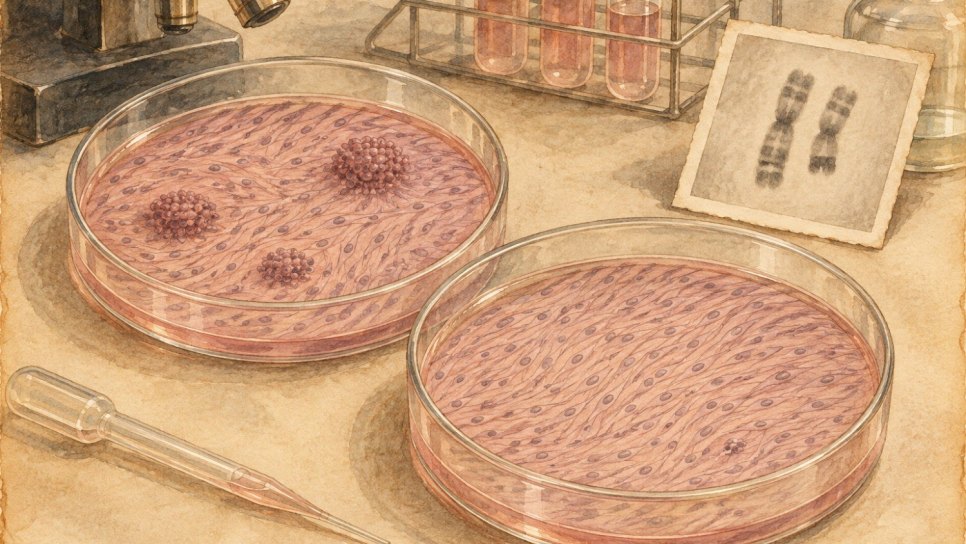
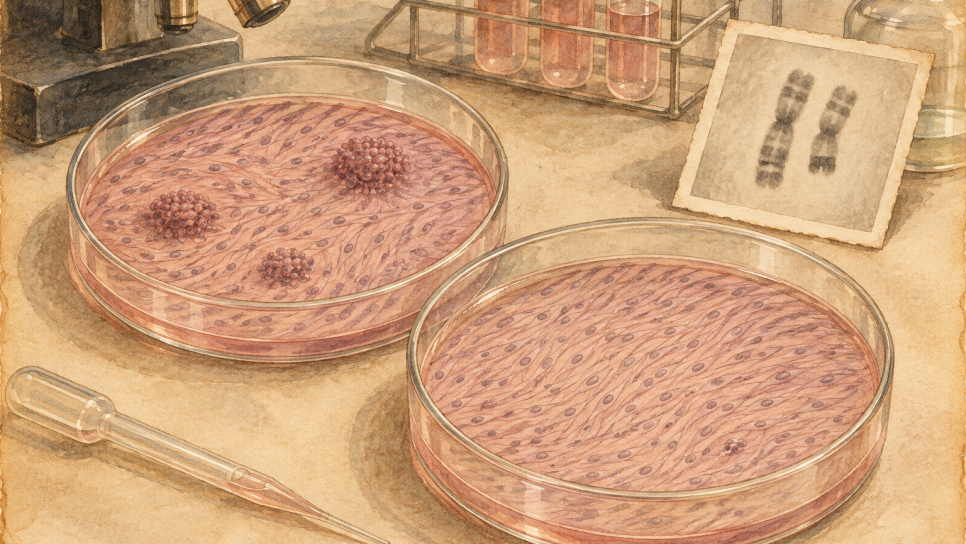
The shared scheme of the two trials and their different questions: cells taken from the patient are expanded in the laboratory, a gene is added with a retroviral vector, and the cells are given back. In 1989 the cargo was a marker gene; in 1990, the therapeutic ADA gene. The scheme above is my simplification; the numbers below come from the sources named in the text. The finding "3 weeks in blood, 64 days in tumor" rests on a single secondary summary.
What did taking genes to cells make possible?
I could not establish a verified, concrete link to Turkey on this topic and will not invent one. I can offer a general inference: the road opened by the 1989-1990 trials underlies today's cell therapies in which a gene is added to T cells (CAR-T), and these require specialized infrastructure, such as vector manufacturing and processing of the patient's cells. I did not research the present state of access and infrastructure for these treatments in Turkey for this article; I will take it up separately on Day 229. If a patient needs to discuss such a treatment, that decision belongs to the assessment of a hematology or oncology team.
From 1980 to 2003
What was verified, what remains uncertain
- Rosenberg 1990 NEJM: the citation (15 authors, 323(9):570-578, 30 August 1990) was verified from the Crossref record; the abstract could not be read. The patient number (five), the fraction of marked cells, detection times and tumor shrinkage come from secondary sources (NIH Catalyst, médecine/sciences 1991) and were not compared with the primary paper.
- The vector name conflicts: the abstract of Kasid et al. (PNAS 1990) says TILs carried neo through the N2 vector, while a GEN magazine article says the LNL6 vector was used in Rosenberg's marking study. I could not verify whether both describe the same trial; in the text I wrote only "retroviral vector".
- Single-source details: that one patient was a 52-year-old truck driver from Indiana, and the RAC votes, rest on NIH Catalyst (read with a summarizer tool).
- ADA trial dates: 14 September 1990 (NIH Clinical Center text, NHGRI, GEN); a photo caption on the Clinical Center page says 19 September. RAC approval was in July 1990 and FDA approval about two months later (GEN); médecine/sciences gives 11 September 1990 as the US authorization. The interval before the cells were returned is four days at the Clinical Center and about 12 days at NHGRI; I could not resolve the conflict and did not use it.
- Cline 1980: Italy and Israel and the 1981 resignation are from the relevant section of the Academies' report; an encyclopedia entry places the event at UCLA on 10 July 1980. I did not resolve the conflict of place and date. The citation of Beutler (Mol Ther 2001) was verified in Crossref; the article was not read.
- General knowledge and added sources: the principle of the retroviral vector, the mechanism of ADA deficiency and the role of the RAC are general knowledge. For Gelsinger, the Science History Institute article was read with a summarizer tool (September 1999; adenovirus; four days); for the LMO2 paper only the citation was verified in Crossref.
- My interpretations: splitting the word "first" into three, reading the two trials as consecutive steps of one team, and not finding a link to Turkey are my own statements. None of the numbers is my own calculation.
Managing Side Effects: Setrons and G-CSF, 1991
Today we took a gene to a cell. Tomorrow we move to a quieter part that may change a patient's day even more: managing the side effects of chemotherapy. Around 1991 the setrons, which suppress nausea, and G-CSF, which supports the white blood cell count, came onto the scene. Before writing I will verify the approval dates, the first trial results and when "supportive care" came to be seen as a field of its own.
Author's note
In this article I split the phrase "the first gene therapy" into three claims and wrote the source of each separately. The numbers for the 1989 trial come from secondary sources, not the primary paper; I marked this in the fact-check box. I deliberately did not name the children.
Sources and Further Reading
- Rosenberg SA, Aebersold P, Cornetta K, Kasid A, Morgan RA, Moen R, ... Miller AD, Blaese RM, Anderson WF. Gene transfer into humans—immunotherapy of patients with advanced melanoma, using tumor-infiltrating lymphocytes modified by retroviral gene transduction. N Engl J Med 1990;323(9):570-578; DOI 10.1056/NEJM199008303230904 (citation only; content not read).
- Blaese RM, Culver KW, Miller AD, ... Rosenberg SA, ... Anderson WF. T lymphocyte-directed gene therapy for ADA− SCID: initial trial results after 4 years. Science 1995;270(5235):475-480; DOI 10.1126/science.270.5235.475 (citation only; results taken from the NHGRI release).
- Kasid A, Morecki S, Aebersold P, Cornetta K, Culver K, Freeman S, ... Blaese RM, Anderson WF. Human gene transfer: characterization of human tumor-infiltrating lymphocytes as vehicles for retroviral-mediated gene transfer in man. Proc Natl Acad Sci U S A 1990;87(1):473-477; DOI 10.1073/pnas.87.1.473 (from the abstract; read with a summarizer tool).
- Rosenberg SA, Packard BS, Aebersold PM, ... White DE. Use of tumor-infiltrating lymphocytes and interleukin-2 in the immunotherapy of patients with metastatic melanoma. N Engl J Med 1988;319(25):1676-1680 (citation only; content not read).
- Wanjek C. Gene therapy turns 30 years old. NIH Catalyst 27(3); irp.nih.gov/catalyst/27/3/gene-therapy-turns-30-years-old (secondary; read with a summarizer tool).
- National Human Genome Research Institute. 1995 release: first human gene therapy results, genome.gov/10000521/1995-release-first-human-gene-therapy-results; NIH Clinical Center. The first gene therapy patient, September 1990, cc.nih.gov/node/6775 (secondary; read with a summarizer tool).
- National Academies of Sciences, Engineering, and Medicine. Gene therapy oversight chapter on the 1980 Cline experiments, nationalacademies.org/read/18577/chapter/4 (secondary; read with a summarizer tool); Beutler E. The Cline affair. Mol Ther 2001;4(5):396-397; DOI 10.1006/mthe.2001.0486 (citation only; content not read).
- C.M. Transfert génique chez l'homme: un premier pas. médecine/sciences 1991;7:83 (secondary; read with a summarizer tool).
- Genetic Engineering & Biotechnology News. Making history with the 1990 gene therapy trial. genengnews.com/insights/making-history-with-the-1990-gene-therapy-trial/ (secondary; read with a summarizer tool).
- Hacein-Bey-Abina S, ... Cavazzana-Calvo M. LMO2-associated clonal T cell proliferation in two patients after gene therapy for SCID-X1. Science 2003;302(5644):415-419 (citation only; content not read); Science History Institute. Feature on Jesse Gelsinger, 20 years later, sciencehistory.org (secondary; read with a summarizer tool).
- Mukherjee S. The Emperor of All Maladies: A Biography of Cancer. New York: Scribner; 2010 (general context; not re-read for this article).
This article is Day 182 of the "365 Days of Cancer History" series. It is historical-popular content; it is not a recommendation for diagnosis, genetic testing, gene therapy or treatment. For questions about gene and cell therapies, consult your physician. Sources have been verified; details that rest on a single secondary source, on a record read with a summarizer tool or on an unreadable text are marked in the fact-check notes.
Plan your visit
Share your preferred date. Our team will contact you to arrange the appointment.
Was this article helpful?
Your feedback helps us improve our content.