
The Awakening of the Cadaver: The First Look Inside the Body to Understand Cancer

In this article
Day 42 (Cancer History in 365 Days Series)
Fifteen hundred years of silence ended one morning in Bologna. Knowledge began to emerge not only from books, but directly from the inner voice of nature and humanity.
Guy de Chauliac and his contemporaries were like captains trying to find their way through fog. They had no compass showing where that complex cellular change extended just beneath the skin or which vessel nourished it.
Since ancient Greece, for approximately 1500 years, performing dissection (direct examination) on the human body had been forbidden. Physicians tried to learn human anatomy only from old texts or observations of animals. Until that cold January day in 1315...
The step that illuminated the silence in Bologna: the authority of direct observation
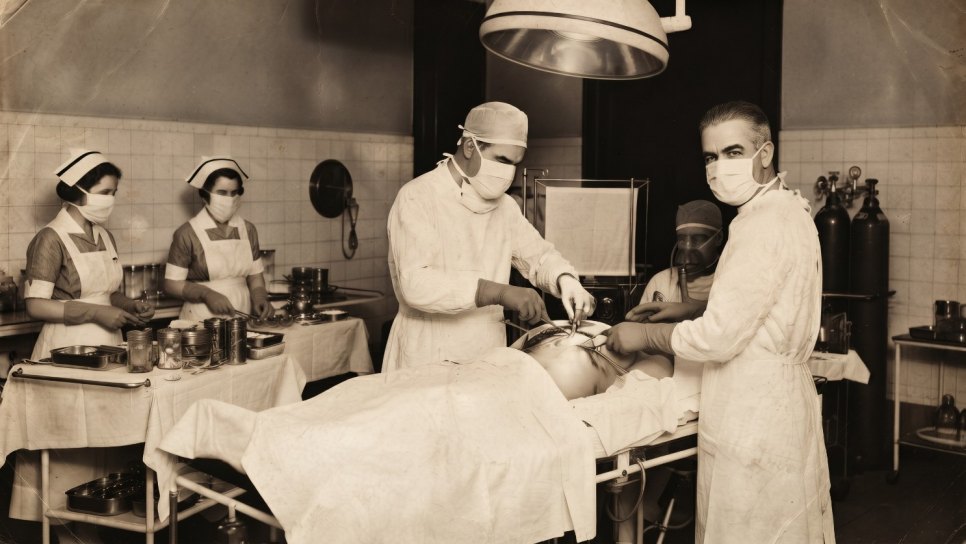
An event that would change the philosophy of medicine forever took place at Italy's University of Bologna. Professor Mondino de Luzzileft tradition behind and took his place at the anatomy table before the students' curious eyes.
This was not merely a physical procedure; direct testimony was replacing 1500 years of uncertainty.
From invisible shadows to tangible realities: cancer takes physical form
Written by Mondino in 1316, Anathomia corporis humaniis one of the most important works of "rediscovery" in medical history. Thanks to this work, oncology overcame its greatest obstacle: invisibility . Cancer ceased to be merely a theoretical concept and began to be recognized as a physical reality.
Cancer was imagined as an invisible fluid called "Black Bile" circulating through the body and falling out of balance.
Looking inside the body made it possible to see firsthand that cancer was actually a change in the organ's own structure .
Thanks to Mondino, physicians established that cancer could occur not only externally, but also in internal organs, and identified its physical presence there. Cancer was no longer a "ghost"; it was tissue that had ceased to conform to the organ's harmony.
The guide's compass: the first light cast into darkness
Mondino de Luzzi's step enabled later generations to approach the body with greater compassion and awareness. Surgeons now knew where to direct the scalpel and could see the vascular networks and nerve pathways surrounding the tumor. Haphazard intervention was giving way to planning that respected the body's integrity.
Mondino was the man who shone the first lantern into a dark room. When the light came on, silently changing tissues inside apparently healthy bodies were noticed for the first time. This awareness laid the first and strongest stone on the long road toward healing the patient.
Healing takes root through recognition and understanding
In our story with cancer, we set aside swords and shields and choose guidance and a compass. Mondino de Luzzi lifted cancer's mysterious veil by teaching the medical world not merely to "look," but truly to "see." When you know where a cell is and how it changes, it becomes possible to invite it back into harmony or respectfully remove it from the body.
Tomorrow, following the path opened by this guidance, we will visit the wise records of Antonio Benivieni, who personally reported history's first detailed cancer cases and laid the foundations of pathology.
Scientific sources and in-depth reading
- 1. Crivellato, E., & Ribatti, D. (2006). Mondino de' Liuzzi and his Anathomia: A milestone in the development of modern anatomy. Clinical Anatomy.
- 2. Siraisi, N. G. (1990). Medieval & Early Renaissance Medicine: Knowledge and Practice. University of Chicago Press.
- 3. Universita di Bologna Historical Archive: Mundinus (Mondino de Liuzzi) and Records of the First Public Dissection in 1315.
Was this article helpful?
Your feedback helps us improve our content.


Reader comments
Share your comment
Your name and comment are published only after administrator approval. Your email address is never shown to visitors.
Be the first to comment.