
What Causes Lip Sores? Could They Be a Sign of Lip Cancer?

In this article
Our lips are sensitive structures that play important roles in speaking, eating, and facial expression. Sores on the lips can therefore be painful and affect daily quality of life. Sores at the corners of the mouth can be particularly uncomfortable when eating or speaking. Many people wonder what caused a sore on their lip and immediately ask, “Could it be a sign of lip cancer?” Fortunately, most lip sores have benign causes and heal with appropriate care. However, sores that persist or recur frequently should be taken seriously and their underlying cause investigated. This article explains why lip sores develop, which possible medical conditions may cause them, and whether lip lesions could be a sign of lip cancer. We also provide tips for maintaining healthy lips and frequently asked questions to explore the topic further.

A small sore and cracks on the lip. Lip sores usually arise from simple causes such as dryness, vitamin deficiency, or infection and often heal quickly. However, persistent sores or those with an unusual appearance require attention.
Why Do Lip Sores Develop?
Several factors can contribute to lip sores. Environmental conditions, nutritional status, habits, and infections can make the skin of the lips sensitive and lead to sores. Here are the most common causes of lip sores:
-
Environmental Factors (Cold, Heat, Wind, and Sun): Cold weather, wind, and dry environments reduce moisture in the lips, causing cracks. The skin of the lips can easily become dry and split, especially in winter or in environments dried by air conditioning. Similarly, excessive sunlight in summer can cause burn-like sores. Chronic sun-related dryness and crusting are medically known as “actinic cheilitis,” which may increase the risk of lip cancer if it progresses.
-
Dehydration and Vitamin Deficiency: Not drinking enough water (dehydration) worsens dry lips. In addition, vitamin B12, iron, and folic acid deficiencies predispose the lips to sores and cracks. For example, people with B vitamin or iron deficiency frequently develop sores at the corners of the mouth (angular cheilitis). A healthy, balanced diet is essential for renewal of lip tissue.
-
A Weakened Immune System and Stress: Reduced resistance to illness also affects lip health. Intense stress, fatigue, or illness can weaken the body's defenses, making it easier for the cold sore virus to reactivate or sores such as aphthous ulcers to develop. Reduced immunity during seasonal changes can also trigger lip sores.
-
Frequently Licking or Biting the Lips: Trying to moisten dry lips with the tongue is a common habit, but it can worsen the problem. Constant licking increases dryness through the irritating effects of saliva and leads to cracking. Similarly, biting the lips or picking off peeling skin damages this sensitive tissue and promotes small sores.
-
Mouth Breathing: Constantly breathing through the mouth because of nasal congestion dries the lips. People who breathe through their mouths during sleep are particularly prone to dryness and cracks at the corners of the mouth. Over time, this can develop into inflammation and sores at the mouth corners.
-
Hot Foods and Drinks / Trauma: Scalding the lips with very hot tea or soup is common. Hot foods and drinks can cause burns on the lip tissue. These sores are usually painful and cause redness and swelling. Blows to the lips, accidental biting, or irritation from a toothbrush/dental floss can also produce small sores.
-
Allergic Reactions and Chemical Irritants: Some cosmetics, such as lipstick and lip moisturizers, as well as toothpaste and mouthwash, can cause allergic reactions on the lips. In people prone to allergies, contact with these substances can cause redness, blisters, or sores. Similarly, cigarette smoke and alcohol chemically irritate the lip mucosa, increasing the risk of sores.
-
Dentures or Orthodontic Braces: Inside the mouth, dentures or braces can constantly rub against the inner lips and their edges. Poorly fitting dentures may cause sores where the lip meets the gum. People receiving orthodontic treatment may frequently develop aphthous-like sores on the inner lip surface.
A combination of these factors also increases the likelihood of lip sores. For example, someone exposed to cold, windy weather who also has a vitamin deficiency may experience lip sores more frequently. Infection -related lip sores, such as cold sores, may also be more severe when these triggers are present. Regularly moisturizing the lips, drinking plenty of water, and eating healthily can therefore reduce the effects of environmental conditions and help prevent lip sores.
Medical Conditions That Can Cause Lip Sores
In some cases, lip sores may be a sign of an underlying medical condition . When lip sores are recurrent or persistent, the following possible health problems should be considered:
-
Cold Sores (Herpes Simplex Virus Infection): One of the most common infection-related lesions on the lips is a cold sore. Cold sores are caused by the Herpes Simplex Type-1 virus. Once it enters the body, the virus can remain dormant in nerve roots and reactivate under suitable conditions. A cold sore usually begins as small, fluid-filled blisters at the edge of or around the lips, then ruptures and crusts over to form a sore. Cold sores are contagious when present and can spread to others through close contact. They may recur when immunity falls or with triggers such as stress, febrile illness, or menstruation. Cold sores usually heal on their own within 7-10 days.
-
Aphthous Ulcers (Canker Sores): Although canker sores occur mainly inside the mouth, they can also develop on the inner lips. They are usually shallow ulcers with a white or yellow center and a red border. Their exact cause is unknown, but stress, acidic foods, trauma, or vitamin deficiencies are thought to trigger them. A canker sore on the lip can be very painful when speaking and eating. It generally heals without scarring within 1-2 weeks. However, very frequent canker sores should not be ignored because they may signal a condition such as Behçet's disease.
-
Behçet's Disease: Behçet's syndrome is an autoimmune disease characterized by mouth ulcers, genital ulcers, and eye problems. People with Behçet's disease almost always develop recurrent, multiple, painful mouth ulcers, which can also affect the lips. In 75-90% of cases, the first sign is aphthous-like sores in the mouth, including the lips, tongue, or cheek mucosa. Behçet-related sores tend to be larger and more painful than ordinary canker sores. People with recurrent lip sores, particularly with additional symptoms such as blurred vision or genital ulcers, should be evaluated for Behçet's disease.
-
Fungal and Bacterial Infections: Chronic sores at the corners of the mouth may sometimes result from a fungal infection with Candida albicans, presenting as angular cheilitis (perlèche) . This causes cracked sores and a whitish appearance at the mouth corners. It often occurs alongside thrush on the tongue or inside the mouth and improves with antifungal treatment. Cracked lips may also develop secondary bacterial infections, producing yellow-crusted sores, such as impetigo-like lesions. These infections require medical advice and appropriate creams or ointments.
In addition to these conditions, systemic disorders such as Crohn's disease, lichen planus, and lupus can also cause lip sores. Much more rarely, the first lesion of a sexually transmitted disease such as syphilis may be a painless sore on the lip. If a lip sore becomes persistent or is accompanied by other symptoms, it is therefore important to see a doctor to treat the underlying condition.
Are Lip Sores a Sign of Lip Cancer?
Not every sore on the lip means cancer. Most lip sores have benign causes, as described above, and heal spontaneously or with simple treatments. In some cases, however, a persistent lip sore may be the first sign of lip cancer . Recognizing an unusual, nonhealing lip sore early, particularly in someone with risk factors, can be lifesaving.
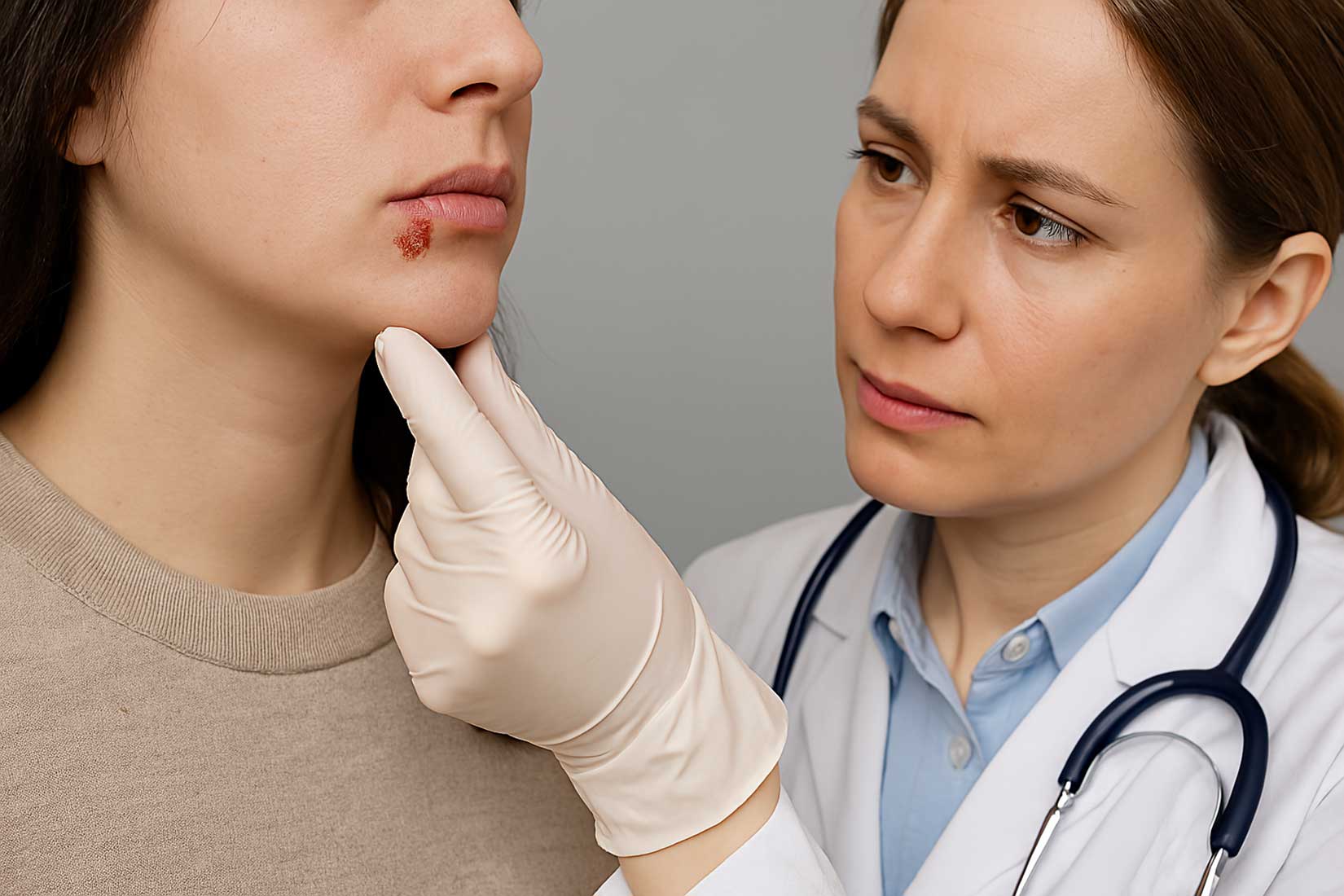
Healthcare professionals may take a sample of a suspicious sore on the lips or in the mouth during an examination. Experts recommend biopsy of lip sores persisting beyond 2-3 weeks so that possible cancer cells can be examined under a microscope.
Lip cancer is a subtype of oral cancer and generally presents as a sore or lesion on the lip that does not heal for a prolonged period. It most often occurs on the lower lip , and most cases are squamous cell carcinomas arising from squamous cells in the skin of the lip. Years of sun exposure, cigarette or pipe smoking, and excessive alcohol consumption are major contributing factors. Lip cancer is more common in fair-skinned older men; farmers and sailors who work in the sun are examples of at-risk groups.
So what features of a lip sore might suggest cancer? The table below summarizes differences between ordinary lip sores and those that may be related to lip cancer:
| Feature | Ordinary Lip Sore | Suspicious Sore (Possible Cancer Sign) |
|---|---|---|
| Healing Time | Usually heals within 7-10 days. For example, a cold sore crusts over and resolves within 10 days at the latest. Canker sores also usually disappear within 1-2 weeks. | Does not improve within 2-3 weeks and remains open. It may even grow or deepen over time. Sores lasting more than 2 weeks should always be assessed by a doctor. |
| Appearance | Superficial, localized lesions. Canker sores appear as whitish or yellow spots; cold sores begin as fluid-filled blisters and later become crusted sores. The surrounding tissue is generally healthy. | The edges may be irregular, raised, or firm. Color changes may occur, with abnormal tissue appearing as a thick whitish area or red or dark patches. The skin around the sore may become firm and crusted. |
| Pain | Most benign lip sores, such as cold sores and canker sores, are painful or sore, but the pain is usually temporary and decreases as the lesion heals. | Pain may be mild or absent initially. As the lesion progresses, it may become painful. Lip cancer sores can sometimes cause severe pain that increases over time. |
| Bleeding | Small lip sores rarely bleed. Cold sores may ooze a little blood when they crust, and deep lip cracks may bleed slightly. | The sore tends to bleed easily, either on contact or spontaneously. Recurrent bleeding may occur as crusts form and fall off. Pus drainage may indicate an additional infection. |
| A Lump or Firmness | Benign sores do not form a mass; swelling of the lip is generally temporary and caused by inflammation or edema. | A firm area or raised lesion may be felt at the sore. Thickening, a lump, or a wart-like projection may develop on the lip. Swollen lymph nodes in the jaw or neck may accompany it, potentially indicating cancer spread at an advanced stage. |
| Risk Factors | Can occur in anyone at any age. Stress, minor trauma, or infection may cause sores without a distinct risk factor. | Generally occurs in people with risk factors, such as a history of prolonged sun exposure, cigarette/pipe smoking, or HPV infection. It is usually seen in men beyond middle age. |
Although these differences provide guidance, a definitive diagnosis requires evaluation of the suspicious lip sore through a medical examination and, if necessary, a biopsy . In particular, if you notice a sore on the lip that does not heal within 2-3 weeks or progressively grows, crusts, or becomes firm, you are advised to see a dermatologist or an ear, nose, and throat specialist. Experts such as Prof. Dr. Mustafa Özdoğan emphasize that red/white sores in the mouth or on the lips lasting longer than 3 weeks may signal head and neck cancers and that treatment success exceeds 90% when diagnosed early.
Lip cancer is generally diagnosed through physical examination of the lesion and pathological analysis of a small tissue sample (biopsy) from the suspicious area. When detected early, the likelihood of successful treatment is high. Treatment often involves surgical removal of the tumor; additional treatments such as radiotherapy and chemotherapy are used when necessary. Remember that most lip sores are not cancer. However, following the principle “when in doubt, get it checked” is the best approach to detecting cancer early if it is present.
How to Prevent Lip Sores
Although preventing lip sores entirely is not always possible, simple precautions can reduce the risk:
-
Keep Your Lips Moisturized: Because dry lips can crack and easily develop sores, regularly apply a moisturizing balm or petroleum jelly . Do not neglect lip protection, particularly in dry, cold weather. Drink plenty of water to keep your body and lips hydrated from within.
-
Protect Your Lips From the Sun: If you will spend a long time outdoors, use a lip balm with SPF (sun protection factor). A wide-brimmed hat also helps protect the lips from harmful UV rays. Remember that intense sunlight exposure increases the risk of lip cancer.
-
Avoid Harmful Habits: Tobacco products such as cigarettes, pipes, and hookahs irritate and damage the lips, promoting sores and increasing cancer risk over time. Excessive alcohol consumption is also harmful because it weakens the oral mucosa. Giving up these habits helps protect lip health.
-
Try Not to Lick Your Lips: If you frequently lick your lips, try to reduce this habit. Although saliva moistens the lips briefly, it dries them out more over time. Soothe your lips with moisturizer so that you do not feel the need to lick them.
-
Eat a Balanced Diet and Get Adequate Vitamins: Pay attention to your diet because vitamin and mineral deficiencies can trigger lip sores. If you have deficiencies such as vitamin B12 or iron deficiency, take supplements as recommended by your doctor. A healthy diet and a strong immune system reduce recurrence of problems such as cold sores and canker sores.
-
Avoid Allergens and Irritants: If your lips develop sores after using a particular product, such as a certain brand of lipstick or toothpaste, stop using it and have allergy testing if needed. Acidic and very spicy foods can also irritate existing sores; reduce these foods until the sores heal.
-
Regular Checkups: If you frequently develop lip sores, have routine medical checkups to find out whether there is an underlying problem. Regular dermatological examinations can help with early diagnosis, particularly if you are at risk, such as someone who works in intense sunlight, smokes, or has a family history of lip cancer.
These measures can keep the skin of your lips as healthy as possible and largely prevent sores. Nevertheless, if you notice a persistent change despite careful attention and care, remember to consult a specialist promptly.

Frequently Asked Questions About Lip Sores
How many days does a lip sore usually take to heal?
Although it depends on the cause, ordinary lip sores, such as cold sores or small cracks, usually heal within 1 week to 10 days . Canker sores also usually disappear in less than two weeks . If a lip sore persists beyond 2 weeks without healing, this should not be considered normal . You should see a doctor for persistent sores because they may indicate another underlying problem.
Is every sore on the lip lip cancer?
No, a sore on the lip certainly does not always mean lip cancer. The cause is usually simple, such as a cold sore, canker sore, crack, or allergy, and it resolves quickly. Lip cancer is rare and generally presents as an unusual, nonhealing sore lasting longer than 2-3 weeks . Suspicion is warranted if the sore is accompanied by a whitish/red patch, a firm lump, or persistent bleeding. Apart from such suspicious situations, there is no need to worry, but any sore that does not heal on its own is still best assessed by a doctor.
What can I do at home for a lip sore?
There are several ways to soothe simple lip sores at home. First, keep your lips moisturized: Applying petroleum jelly or a moisturizing balm helps cracks heal. Honey may also help; it is a natural antiseptic that moisturizes the sore while protecting it from infection. Aloe vera gel may reduce pain and accelerate healing through its soothing and anti-inflammatory ingredients. Mixing baking soda with water and massaging it into the lips is a traditional remedy that may dry the sore and help it resolve in some people. Natural oils such as coconut oil and avocado oil may also support healing by softening the skin and relieving dryness. Before trying these methods, make sure you are not allergic to any of them. If the sore worsens, consult a doctor instead of continuing home treatment.
Which doctor should I see for a lip sore?
The specialty that initially deals with lip sores is dermatology . Dermatologists can diagnose skin and lip lesions and guide treatment. If the sore also involves the inside of the mouth, an ear, nose, and throat (ENT) specialist or an oral and dental health specialist (dentist) can also assess it. In suspicious cases, these clinicians will take a biopsy for pathological examination if necessary. If the sore is thought to result from a systemic condition such as Behçet's disease, referral to a rheumatology specialist may be appropriate. Seeing a dermatologist first is generally a good starting point.
What can I do to prevent lip cancer?
The most important way to prevent lip cancer is to avoid risk factors and protect the lips. To do so:
-
Use a protective lip balm and wear a hat when spending long periods in the sun.
-
Do not use cigarettes or tobacco products, and limit alcohol consumption.
-
Moisturize your lips and prevent chronic dryness.
-
If you notice a suspicious sore, show it to a doctor rather than waiting for months. Lip cancer detected early can be completely cured with treatment.
Remember that generally healthy habits, such as a balanced diet, adequate sleep, and avoiding stress, strengthen immunity and benefit lip health as well as the rest of the body. Being alert to changes in your lips and seeking professional help when needed are the most effective ways to manage lip sores and prevent potentially serious problems.
Was this article helpful?
Your feedback helps us improve our content.




Reader comments
Share your comment
Your name and comment are published only after administrator approval. Your email address is never shown to visitors.
Be the first to comment.