Should Medical Education Be Redefined? Harvard’s Lifestyle Medicine Approach and Check The Life
In this article
Can a Physician Be a Lifestyle Coach? Harvard's Lifestyle Medicine Approach and Check The Life
The news shared on social media under the headline "Harvard Medicine has redefined what it means to be a doctor" is largely accurate, but somewhat exaggerated. The November–December 2026 issue of Harvard Magazine devoted its cover, titled "Be Well!", to lifestyle medicine. The cover story describes how Harvard Medical School trains physicians to approach their patients like a coach. At the heart of this approach are six pillars: physical activity, restorative sleep, nutrition, social connection, stress management and avoidance of risky substances. The same philosophy underpins the Check The Life program, which we described in our article on lessons from the blue zones. We have previously discussed how a substantial share of cancers is preventable and biological age.
- What the news says: Harvard Medical School has embedded nutrition and lifestyle medicine as a theme in medical education since 2020, and since 2024 there has been a mandatory 3-hour nutrition science course. Associate Professor Elizabeth Frates, MD, trains physicians and students in lifestyle medicine and coaching.
- The six pillars: Physical activity, sleep, a plant-predominant diet, social connection, stress management and reducing risky behaviors such as smoking and alcohol use.
- Why coaching: Information alone does not change behavior. In patients with high blood pressure, education alone improved self-care in only about 1 in 9 patients, whereas 45% of patients who received coaching reached their lifestyle goals within 6 months.
- Check The Life: A healthy living program that measures the same six areas with a team of internal medicine, cardiology, psychology, nutrition and physiotherapy specialists and manages them together over 12 months. The program was founded by Prof. Mustafa Özdoğan, MD.
The core of the news is accurate, but some statements claim more than the source says:
| Claim on social media | What the source says |
|---|---|
| "Harvard Medicine has redefined what it means to be a doctor" | Harvard Magazine made lifestyle medicine its cover story and described this shift in physician training at Harvard Medical School. There is no official "redefinition" of the medical profession. |
| "Elizabeth Frates has been appointed" | Frates has long been a faculty member at Harvard Medical School and is a past president of the American College of Lifestyle Medicine (ACLM). She runs intensive lifestyle medicine courses, a student interest group and a residents' journal club. |
| "Nutrition and lifestyle medicine have been added to the curriculum" | Accurate. In 2020 it was embedded as a theme across the four-year medical curriculum; in 2024 a mandatory 3-hour online nutrition science course was added. Frates's courses, however, are elective. |
| "6 core pillars: physical activity, sleep, nutrition, social connection, stress, risky behaviors" | Accurate; these are the six internationally recognized core domains of lifestyle medicine. |
Why does this matter?
A substantial share of cardiovascular disease, type 2 diabetes, obesity and cancer is largely linked to lifestyle. Most of the $5.7 trillion in annual health care spending in the United States stems from these chronic diseases. According to the Harvard Magazine article, smoking, high blood pressure, diabetes and obesity increase the risk of loss of life from any cause 1.8- to 2.6-fold, whereas low cardiorespiratory fitness increases this risk 4.5-fold (exercise and lifespan).
The problem is not that people do not know what healthy living is; it is that they cannot put what they know into practice. Short clinic visits and health systems focused on drugs and procedures make it hard for physicians to find time for lifestyle counseling. Lifestyle medicine aims to fill this gap with evidence-based methods. It also matters in oncology: exercise, a healthy weight and staying away from tobacco both lower cancer risk and support quality of life and survival after cancer treatment.
No, but it has become rapidly institutionalized over the past 20 years:
What is lifestyle medicine?
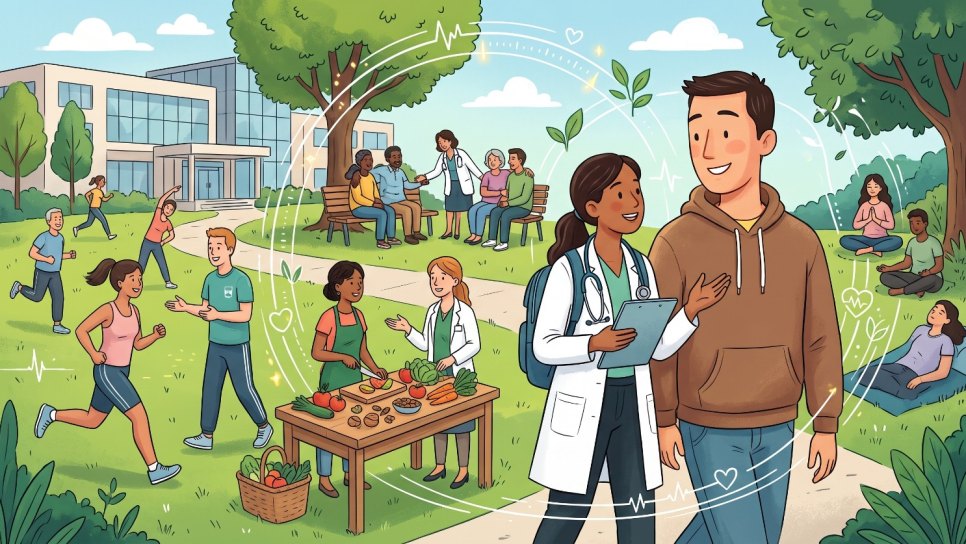
Lifestyle medicine is the medical field that uses habits such as physical activity, sleep, nutrition, social connection, stress management and avoidance of risky substances, in an evidence-based way, to prevent, treat and sometimes reverse chronic disease. It does not replace medication or surgery; it complements them. The physician acts like a coach who listens without judgment and helps patients reach their own goals.
The six core pillars
Figure 1 · The six core pillars of lifestyle medicine
With the targets cited in Harvard Magazine
| Pillar | What is recommended? | An example from the evidence |
|---|---|---|
| Physical activity | At least 150 minutes of moderate- or 75 minutes of vigorous-intensity exercise per week; strength, balance and flexibility training | Low cardiorespiratory fitness raises the risk of loss of life more than the classic risk factors do (4.5-fold) |
| Restorative sleep | 7–9 hours a night, with regular bedtimes and wake-up times | Insufficient sleep raises the likelihood of catching a cold 2- to 3-fold |
| Nutrition | A plant-predominant, Mediterranean-style diet based on unprocessed foods | A diet rich in plant protein is associated with about an 8% lower risk of loss of life; a diet rich in processed red meat, with an increase of more than 35% |
| Social connection | Strong relationships with family, friends and community | People with weak social ties were found to have a 2- to 3-fold higher risk of loss of life over 9 years (1979) |
| Stress management | Gratitude, helping others, a sense of purpose, relaxation and enjoyable activities | Mind–body practices can reduce stress load and anxiety |
| Avoidance of risky substances | Quitting smoking; limiting alcohol or not drinking at all | Addiction treatment techniques such as motivational interviewing support behavior change |
In nutrition, nuts are among the food groups with the strongest evidence: in an analysis of 66 randomized trials, nuts were the food group that most improved cardiovascular and metabolic risk factors, followed by legumes and whole grains (the Mediterranean diet, whole grains). Cutting back on ultra-processed foods is also part of this approach.
Lifestyle-related risk factors
Increase in the risk of loss of life from any cause (fold). From studies cited in Harvard Magazine; the upper value of each range is shown.
The range is 2- to 3-fold for social ties and 1.8- to 2.6-fold for the classic risk factors. Observational data; they do not establish cause and effect on their own. Comparisons across different studies are indirect; patient populations, prior treatments and follow-up differ.
Why should a physician act like a coach?
Information or coaching?
Share of patients with high blood pressure reaching self-care or lifestyle goals (%). Colored bar: coaching; gray bar: education alone.
Education alone led about 1 in 9 patients (about 11%) to better self-care; with coaching, the rate was about 5 times higher.
The key message of the Harvard Magazine article is this: information alone does not change behavior. In a study of patients with high blood pressure, learning about the benefits of healthy living led only 1 in 9 patients to better self-care. By contrast, 45% of patients who received coaching support reached their lifestyle goals within 6 months, a rate about 5 times higher than with education alone.
The core elements of the coaching approach Frates teaches in her courses are:
- Not judging: Listening with empathy instead of blaming the patient; asking "What would be important for you to change?" instead of saying "You need to lose weight."
- Hearing change talk: Noticing and reinforcing the statements in which patients express their desire to change (motivational interviewing).
- Letting the patient set the goal: Rather than prescribing from above, helping patients discover their own goals and barriers; patients decide when they are ready.
- Teamwork: Like an orchestra conductor, the physician guides a team of nurses, dietitians, physiotherapists and coaches.
- Physicians' own habits: Research shows that physicians are more likely to recommend to patients the habits they practice themselves. That is why training at Harvard starts with the physician's own health.
What has changed in the Harvard curriculum?
| Year | Change | Scope |
|---|---|---|
| 2020 | "Nutrition and Lifestyle Medicine" added as a theme to the four-year medical curriculum | Integrated into existing courses |
| 2024 | Course: "Nutrition Science for Health and Longevity: What Every Physician Needs to Know" | Mandatory, online, 3 hours |
| Every year | Frates's two-day intensive lifestyle medicine course (more than 90 participants in April 2026) | Elective |
| Ongoing | Lunchtime student interest group, resident and physician journal club, student-run LIVELY youth health workshops | Elective |
George Q. Daley, Dean of Harvard Medical School, stresses that these elements are evidence-based and that every physician should understand these principles. At the same time, the article points out that the fee-for-service system in the United States favors short visits, medications and procedures, and that lifestyle programs are rarely covered by insurance. It is also important to distinguish evidence-based lifestyle medicine from the $6 trillion wellness industry, much of which rests on weak evidence.
Check The Life: the same philosophy, a measurable program
Rather than squeezing the six pillars of lifestyle medicine into a single physician visit, Check The Life is a healthy living program that brings five disciplines to the same table. Its aim is not to promise "living to 100" or to turn back biological age, but to make the years added to life healthy ones. Its slogan sums up this approach: "Measure together, manage together."
Figure 2 · The Check The Life cycle
Measure, understand and plan, manage together, measure again
| Harvard's pillar | Its counterpart in Check The Life |
|---|---|
| Physical activity | Physiotherapy and cardiology: exercise stress test, grip strength, functional tests, personal step target |
| Nutrition | Nutrition and internal medicine: body composition, waist circumference, visceral fat, metabolic risk, microbiome analysis and a personal nutrition plan |
| Restorative sleep | Cardiology and psychology: assessment of sleep patterns |
| Stress management | Cardiology and psychology: stress, burnout, blood pressure and heart rhythm; conversations on meaning and motivation |
| Social connection | Psychology: relationships, family, belonging and support networks |
| Avoidance of risky substances | The blue zones' "evening wine" habit is deliberately left out of the program; it is replaced by a "dinner at five" approach (an early dinner) |
| Coaching and team | A team, an app, video consultations and a month-6 check-in over 12 months; repeat measurements at month 12 |
The "orchestra conductor" role Harvard expects of physicians takes shape in Check The Life through the shared report and shared goals of a five-discipline team. Guided by the principle "you cannot manage what you do not measure," baseline measurements ensure that goals are personal and measurable, while 12 months of managing together targets continuity, the hardest part of coaching.
Why does this matter for cancer?
- Prevention: Smoking, alcohol, obesity, physical inactivity and an unhealthy diet are among the main causes of preventable cancers (alcohol and cancer, obesity, physical inactivity).
- During treatment: Appropriate exercise and nutrition can help reduce chemotherapy side effects and fatigue (exercise before and after cancer).
- After treatment: In cancer survivors, healthy living can help lower both the risk of recurrence and other health problems such as cardiovascular disease (a guide to nutrition and exercise after treatment).
- Stress and psychology: Although stress has not been shown to cause cancer directly, it can trigger unhealthy habits (stress and cancer).
How should the findings be interpreted?
- The strength of the evidence varies: The evidence on physical activity, quitting smoking and nutrition is strong; much of the data on social connection and stress management comes from observational studies and does not establish cause and effect with certainty.
- The coaching data come from a single area: The "45% versus about 1 in 9" comparison comes from patients with high blood pressure; the same effect should not be expected in every condition.
- Lifestyle medicine does not replace medication: It is applied alongside necessary medications, screenings and treatments, not instead of them. In cancer care, proven treatments should not be delayed.
- It must be distinguished from the wellness industry: Evidence-based lifestyle medicine uses measurable goals and scientific methods; unproven supplements, detox programs and promises to "reverse biological age" fall outside its scope.
In Turkey, lifestyle medicine has not yet been established as a separate specialty; however, counseling on nutrition, exercise and quitting smoking is part of family medicine, internal medicine and other specialties. As in the United States, short clinic visits in Turkey limit the time physicians can devote to lifestyle counseling. Long-term coaching and team-based lifestyle programs are generally not covered by the SGK (the Turkish Social Security Institution). Check The Life is one of the programs that aims to fill this gap by bringing together five disciplines and 12 months of follow-up.
Steps you can take today
- Physical activity: At least 150 minutes of brisk walking or the equivalent per week, plus strength training 2 days a week. A little activity is better than none (how to get started with exercise).
- Sleep: 7–9 hours every night, with similar bedtimes and wake-up times on weekends too.
- Nutrition: Fill half your plate with vegetables and fruit; add legumes, whole grains and a handful of nuts; cut back on processed meat and ultra-processed foods. Get checked for blood sugar and insulin resistance.
- Social connection: Regular weekly get-togethers; joining a community or volunteering.
- Stress: A few minutes of breathing exercises a day, meditation or yoga, walks in nature.
- Risky substances: Quit smoking (how can I quit smoking?); cut down on alcohol or avoid it altogether.
- Measure: Know values such as your blood pressure, blood sugar, cholesterol, waist circumference and resting heart rate, and track how they change. Do not skip the cancer screenings recommended for your age.
Frequently asked questions
- Has Harvard Medical School really added lifestyle medicine to its curriculum?
- Yes. According to the November–December 2026 issue of Harvard Magazine, "Nutrition and Lifestyle Medicine" has been embedded as a theme in the four-year medical curriculum since 2020, and a mandatory 3-hour nutrition science course was added in 2024. Elizabeth Frates's intensive lifestyle medicine courses are elective.
- What are the six pillars of lifestyle medicine?
- Physical activity (at least 150 minutes of moderate-intensity exercise per week), restorative sleep (7–9 hours a night), a plant-predominant diet, strong social connection, stress management and reducing risky substances such as tobacco and alcohol.
- What does it mean for a physician to act like a coach?
- It means that, instead of giving the patient instructions from above, the physician listens without judgment, notices and reinforces the patient's desire to change, and sets goals together with the patient. In patients with high blood pressure, 45% of those who received coaching reached their goals within 6 months, whereas education alone worked for only about 1 in 9 patients.
- What is Check The Life?
- A healthy living program founded by Prof. Mustafa Özdoğan, MD, in which internal medicine, cardiology, psychology, nutrition and physiotherapy specialists work together. It measures the person, turns the findings into personal goals, manages them together with the team for 12 months and measures again at month 12.
Glossary
- Lifestyle medicine
- The medical field that uses healthy habits in an evidence-based way to prevent and treat chronic disease.
- Motivational interviewing
- A non-judgmental counseling method that helps people discover their own reasons for change.
- Change talk
- Statements in which a person expresses a desire, reason or commitment to change a habit.
- Cardiorespiratory fitness
- The capacity of the heart, lungs and muscles to use oxygen during exercise; measured with an exercise stress test.
- Chronic disease
- A long-lasting condition that usually does not resolve completely, such as cardiovascular disease, diabetes, obesity and cancer.
- ACLM
- American College of Lifestyle Medicine; the professional organization that provides education and certification in lifestyle medicine.
DROZDOGAN Academy Commentary
Harvard's message is not new, but it is important: a substantial share of disease is linked to lifestyle, and physicians have to do more than simply provide information about it.
⚡ Why it matters
When one of the world's most influential medical schools builds lifestyle medicine into its training and puts the topic on a magazine cover, it shows that the field is part of mainstream medicine, not "alternative" medicine.
✅ Strengths
There is strong observational evidence for each of the six pillars and randomized evidence for many of them. The coaching approach has been shown to increase behavior change markedly compared with education alone. A training model that starts with the physician's own health is a sensible one.
⚠️ Limitations
The mandatory curriculum is currently limited to a single 3-hour course; the other courses are elective. Much of the data on social connection and stress is observational. Coaching requires time, a team and resources, and health systems do not yet support it adequately.
🩺 In practice
At every visit, however briefly, physical activity, sleep, nutrition, social connection, stress and smoking/alcohol should be asked about; the patient should be heard without judgment, and small, measurable goals should be set together. For patients with cancer and cancer survivors, lifestyle support should be part of the treatment plan.
❓ Open questions
Will long-term randomized trials be able to show an effect of lifestyle coaching on cancer risk and lifespan? How will team-based programs be integrated into health systems and reimbursement? When and how will lifestyle medicine be added to medical education in Turkey?
Bottom line: A physician acting as a lifestyle coach does not replace the treatment of disease; it strengthens it. Measuring, setting goals together and managing the process together are what Harvard and Check The Life have in common.
- This article was prepared in October 2026.
- The accuracy of the news was assessed by comparing it with the cover story in the November–December 2026 issue of Harvard Magazine. The numerical data in this article are taken from that story; the full texts of the original studies it cites were not accessed.
- Conflict of interest: Check The Life is a program founded by Prof. Mustafa Özdoğan, MD, the owner of drozdogan.com. Information about the program is based on the program's own promotional materials; no published study on the program's outcomes is cited in this article.
- This article is for general information only; it is not personal medical advice.
- One of the charts (risk factors) brings together results from different studies cited in the same review article; the comparison is indirect. The diagrams are derived from the text and contain no new data. The Academy commentary is our own.
References
- Shaw J. To promote healthy habits in patients, start with the doctors ("The Lifestyle Prescription"). Harvard Magazine, November–December 2026 (online October 8, 2026). harvardmagazine.com
- Elizabeth P. Frates, MD. Harvard T.H. Chan School of Public Health profile. hsph.harvard.edu
- Lifestyle Medicine and Wellness Coaching Immersion. Harvard Medical School. learn.hms.harvard.edu
- Harvard Lifestyle Medicine. harvardlifestylemedicine.org
- Berkman LF, Syme SL. Social networks, host resistance, and mortality: a nine-year follow-up study of Alameda County residents. Am J Epidemiol 1979;109:186-204.
- Blue zones and Check The Life: lessons from the blue zones. drozdogan.com.
Was this article helpful?
Your feedback helps us improve our content.