
What You Should Know About Lung Cancer

Every year, "1 August" is observed as World Lung Cancer Day and "November" as Lung Cancer Awareness Month . On this occasion, let us refresh our knowledge of lung cancer and examine the facts more closely.
What Is Lung Cancer?
Lung cancer is a disease in which malignant (cancer) cells form in lung tissue. It is the leading cause of cancer-related death in both men and women.
Lung cancers are generally divided into small cell and non-small cell as two main groups. These types grow differently and are treated differently. Non-small cell lung cancer is more common than small cell lung cancer.

What Are the Leading Causes of Lung Cancer?
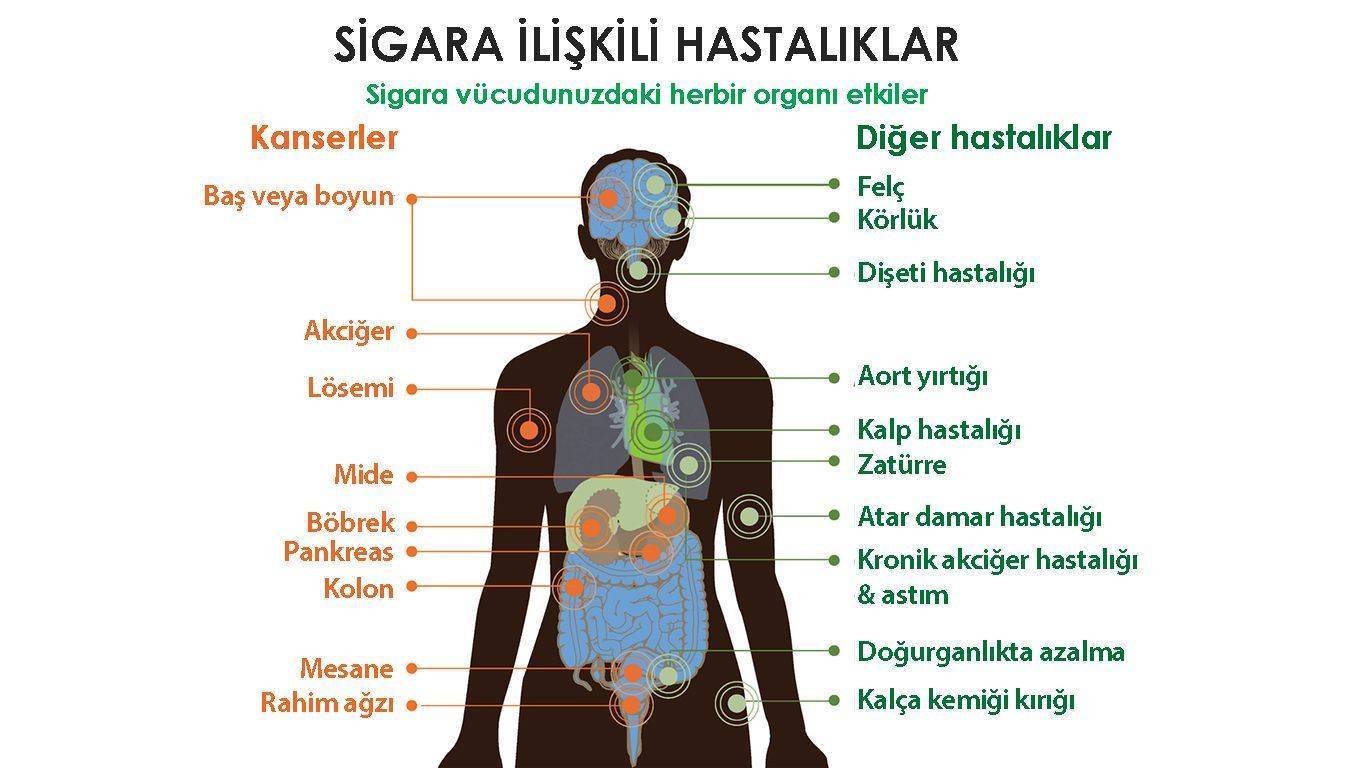
Smoking is the number-one risk factor and the most common known cause (%80-90). Thus, of every 10 lung cancers, almost 9 develop because of smoking. Compared with nonsmokers, smokers have a risk of lung cancer-related death approximately 15-30 times higher. However, quitting at any age can reduce lung cancer risk. Secondhand smoke (smoke from other people's cigarettes, pipes or cigars) also increases lung cancer-related mortality. In addition, 3rd-hand smoke is a lung cancer risk factor.
The most important cause of lung cancer after smoking is considered radon gas, a radioactive gas produced by uranium breaking down in rocks and soil. It is odorless and can become trapped in homes and workplaces. It flows toward the ground and seeps into air or water supplies. Radon can enter buildings through cracks in floors, walls or foundations, and levels can build up over time.
Other causes increasing risk include workplace exposure to asbestos, arsenic, beryllium, cadmium, diesel exhaust, silica, tar and soot. Exposure to these substances is known to increase lung cancer risk.
If parents, siblings or children in the family have previously had lung cancer, exposure to radon or other substances associated with lung cancer is possible.
Lung cancer risk is higher in people smoking 1 or more packs daily who take high-dose beta-carotene supplements (pills), people with HIV infection and people receiving chest radiation treatment.
You May Be Interested:
How Can We Reduce Lung Cancer Risk?
- Do not smoke cigarettes or tobacco. Electronic cigarettes, pod mod and similar devices should not be used
- If you smoke, quit
- Avoid cigarette smoke
- Have your home tested for radon gas. High radon levels at home can be reduced by preventing leaks, such as sealing basements.
- Follow workplace safety rules for cancer-causing substances
- Have lung cancer screening
Who Should Be Screened for Early Lung Cancer Detection?
Lung cancer screening is recommended only for adults without complaints such as cough or pain who are at high risk.
- Those with a history of heavy smoking and
- who currently smoke or quit within the past 15 years and
- are between 55 and 80 years old should be screened for lung cancer.
Note: Heavy smoking means a history of 30 pack-years or more. One pack-year means smoking an average of one pack daily for one year. For example, smoking one pack daily for 30 years or two packs daily for 15 years is described as 30 pack-years.
The only recommended screening test for lung cancer is low-dose computed tomography (also called a low-dose CT scan). Screening is recommended only for adults without signs or symptoms but at high risk. If considering screening, talk with your doctor. Discussing your risks can help you decide whether to undergo lung cancer screening.
If screening is appropriate, your doctor can refer you for tomography. The best way to reduce lung cancer risk is not to smoke and to avoid cigarette smoke. Screening should not be seen as an alternative to quitting smoking.
Was this article helpful?
Your feedback helps us improve our content.




Reader comments
Share your comment
Your name and comment are published only after administrator approval. Your email address is never shown to visitors.
Be the first to comment.