
Whatever You Eat, I Eat Too – Maternal Nutrition and Epigenetics

Your eating habits affect your children even before birth, and we all actually know that whatever you eat, your children eat too.
One of the greatest concerns of expectant mothers, new mothers and other mothers is how their own diet will affect their children. With childhood obesity increasing overall, mothers and mothers-to-be pay more attention to what they eat and drink. However, children are influenced by their parents’ eating patterns even before entering the world.
A child’s future health has been shown to be influenced by the mother’s health before pregnancy. This understanding arose from two different sources: environmental factors (parents’ diets directly affecting the child) and genetic factors, particularly epigenetics.
What Is Epigenetics?
Epigenetics, beyond genetics is its meaning, and it studies how genes behave and are regulated. Epigenetic mechanisms do not change DNA or gene structure but determine whether a gene is active; in other words, without mutation gene expression changes. The best-known epigenetic changes are DNA methylation and histone modification. The figure below shows epigenetic mechanisms.
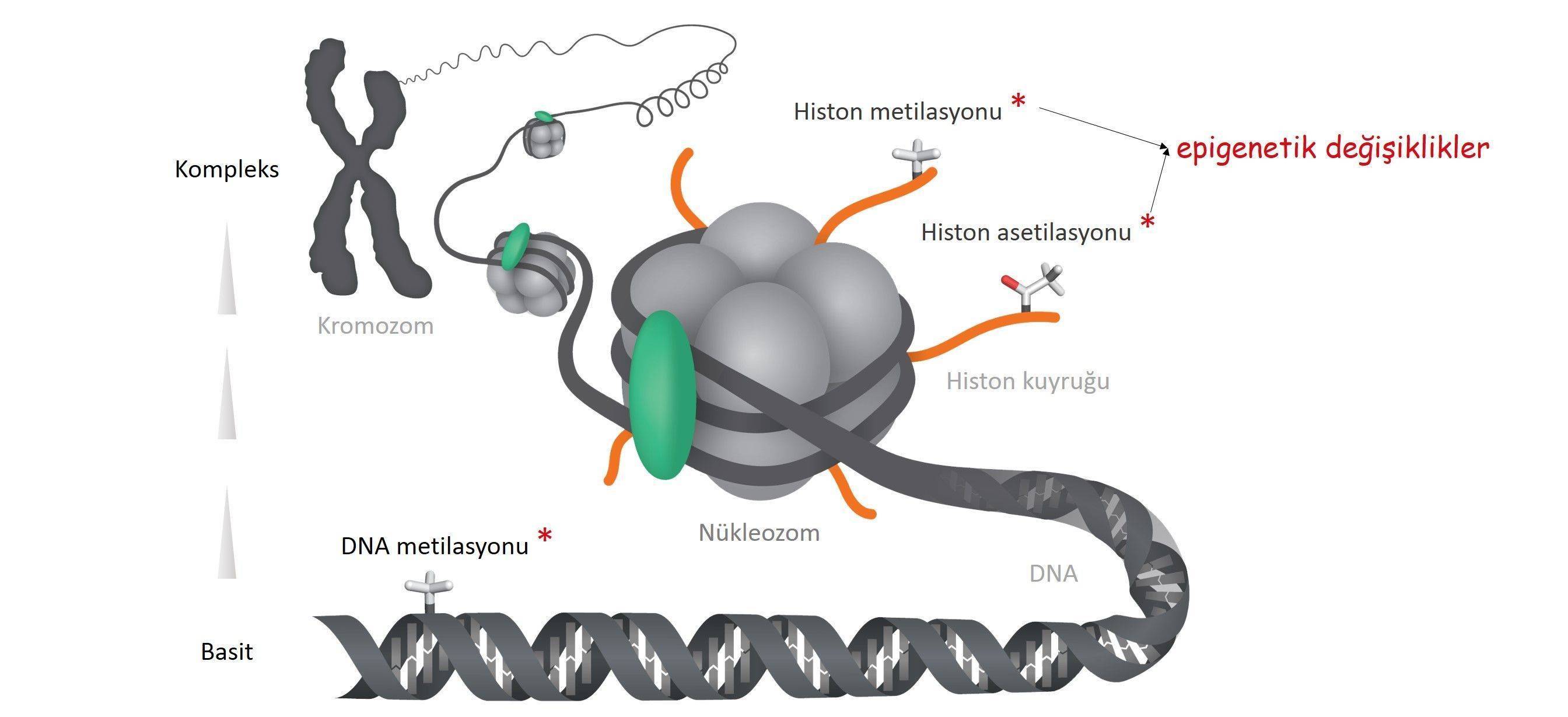
In DNA methylation, chemical groups called methyl groups are added to DNA. The gene region receiving a methyl group remains inactive and cannot perform its function. In cancer cells, tumor suppressor genes have been found to have very high methylation levels. Because the tumor suppressor gene has lost activity, the cell begins to multiply uncontrollably.
Epigenetics tells us that our genes are not fixed and may change according to conditions affecting the cell. Genes may adapt to environmental changes such as lifestyle (for example, inactivity) and diet, affecting the development of diseases.
For example, high-fat diets! Highly processed, energy-dense foods in which more than %45 of total calories come from fat constitute high-fat diets and reflect a typical Western diet. Unhealthy Western eating patterns can be said to increase children’s risks through epigenetic mechanisms of obesity, chronic diseases and metabolic syndrome . Research has shown that a maternal high-fat diet causes epigenetic changes through DNA methylation.
Another study found that the mother’s prenatal body mass indexwas one of the most important determinants of the child’s future body mass index. Numerous studies have shown that maternal eating patterns and exercise habits are associated with children’s obesity risk. Of course, focusing only on the mother is inappropriate; the family should be considered as a whole, since everyone ultimately eats the same meals.
This information may make families anxiously ask, “Is there anything I can do?”, “Could I already have caused harm?” or “What could I have done differently?” However, turning away from harm at any point is beneficial; you can adopt healthier eating habits immediately.
Sources
Influence of maternal obesity, diet and exercise on epigenetic regulation of adipocytes.
Mol Aspects Med, 2017.
2. Schou Andersen C, Juhl M, Gamborg M, Sørensen TI, Nohr EA.
Maternal Recreational Exercise during Pregnancy in relation to Children's BMI at 7 Years of Age.
Int J Pediatr. 2012
3. Dudley KJ, Sloboda DM, Connor KL, Beltrand J, Vickers MH.
Offspring of mothers fed a high fat diet display hepatic cell cycle inhibition and associated changes in gene expression and DNA methylation.
PLoS One. 2011
Was this article helpful?
Your feedback helps us improve our content.




Reader comments
Share your comment
Your name and comment are published only after administrator approval. Your email address is never shown to visitors.
Be the first to comment.