
The Dance of Genes: Epigenetics and Cancer

In this article
Developing effective cancer treatments requires understanding how healthy cells become dangerous cancer cells. Genetics plays an important role in explaining cancer's origin. In recent years, we have encountered a field opening the way to personalized treatment:
Epigenetics. Cancer means cells multiplying uncontrollably and without limits, spreading to other tissues or organs. How does this happen? DNA contains the fundamental code of all living organisms. Our genes are formed by DNA , whose information produces proteins performing bodily functions. Genes sit within chromosomes. We have 23 chromosome pairs, inherited from parents by offspring. Genes also determine cancer susceptibility.
There are 3 gene types with fundamental roles in cancer. These are;
- Proto-oncogenes: Normally responsible for cell growth. Mutations cause transformation into oncogenesand lead to cancer development.
- Tumor suppressor genes: Genes suppressing growth. When mutated, cells begin multiplying aggressively and uncontrollably.
- DNA repair genes: Responsible for repairing DNA damage.
The Human Genome Project's completion in 2003 revealed our entire genetic structure. Previously, we thought we had over 100 thousand genes, but recent research places the number at approximately 22 thousand. Very few were discovered to consist of actual genes. Much of the remainder, previously called junk DNA , was found to be important in determining how genes function and interact, consisting of regulatory genes as the structures identified.
What Is Epigenetics?
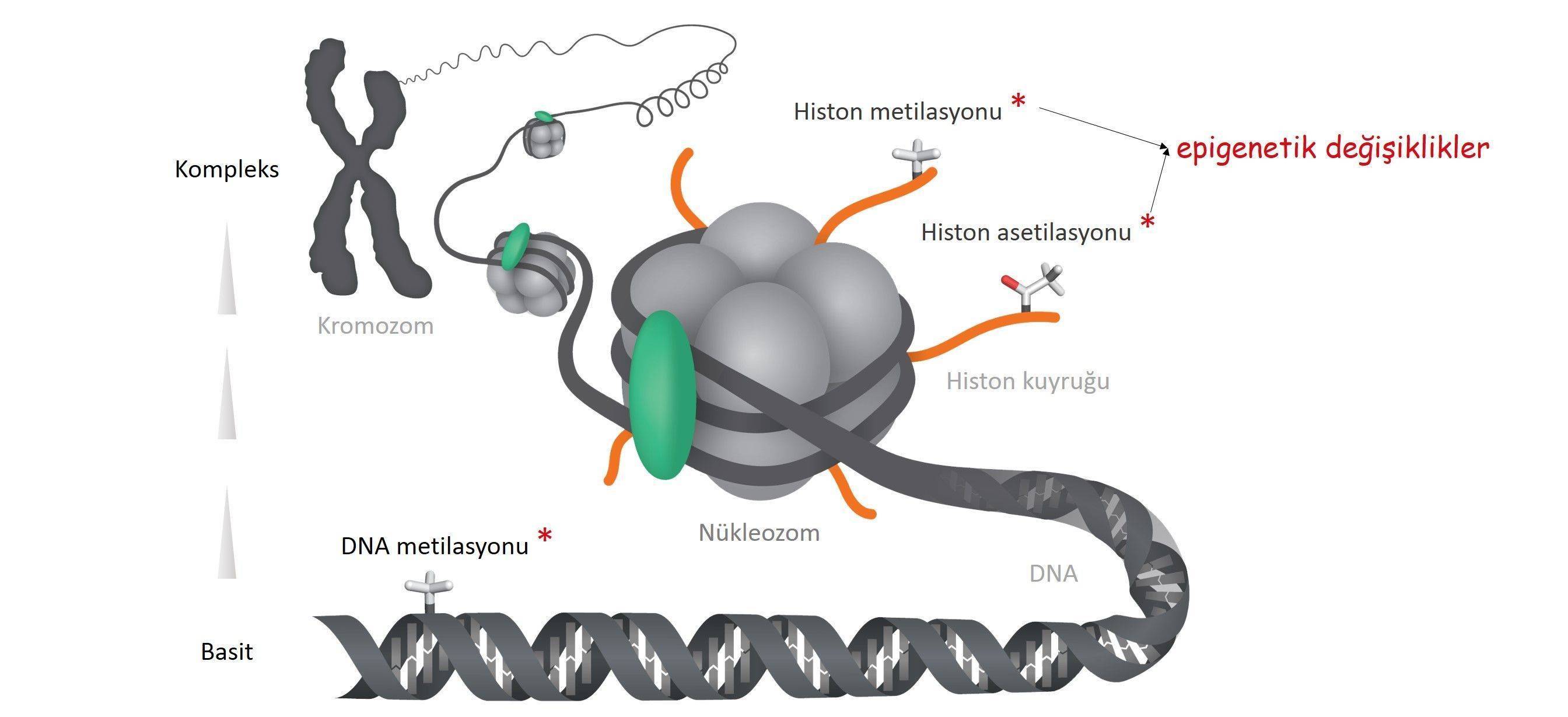
These developments produced a field examining genes' relationships with each other and their environment, Epigenetics . Epigenetics means beyond genetics and studies gene behavior and regulation. It tells us genes are not fixed and can change according to conditions affecting cells. In other words, genes can change in response to environmental changes, influencing disease development.
Think of genes as lights in a room. Previously, disease was thought to result when one or more lights were damaged. Some lights are brighter (highly active genes), others dim (suppressed activity), while some have tape blocking light (epigenetic mechanisms), indicating reduced gene expression. As in this analogy, disrupted balance in gene activity causes disease.
The epigenetics-cancer relationship gained importance after the 2000s. Epigenetics shows that cancer depends on gene defects and relationships among genes and with the environment. Lifestyle and diet affect gene activity and determine risk. This was demonstrated in 2005 in low-risk early-stage prostate cancer patients who changed diet and lifestyle instead of beginning treatment. Protective genes could be activated and cancer genes disabled through these changes (4).
Epigenetic effects on cancer are a recent research focus. We have not solved every mechanism, but studies establish effects on tumor suppressors. Cancer resembles falling dominoes: silencing a tumor suppressor through epigenetics knocks down the first domino, with others following. Cancer becomes more aggressive.
Epigenetics may open the way to personalized treatments and dietary options targeting cancer's underlying causes. In our next article, “Epigenetic Treatments in Cancer”, FDA approved epigenetic drugs and clinical studies are presented.
Sources
2. International Human Genome Sequencing Consortium, Finishing the euchromatic sequence of the human genome, Nature 431, 931-945 (21 October 2004) | doi:10.1038/nature03001; Received 29 July 2004; Accepted 7 September 2004
3. Kronenwetter C et. al., A qualitative analysis of interviews of men with early stage prostate cancer: the Prostate Cancer Lifestyle Trial., Cancer Nurs. 2005 Mar-Apr;28(2):99-107.
4. Dean Ornish, Changes in prostate gene expression in men undergoing an intensive nutrition and lifestyle intervention, PNAS June 17, 2008 vol. 105 no. 24 8369-8374
Was this article helpful?
Your feedback helps us improve our content.




Reader comments
Share your comment
Your name and comment are published only after administrator approval. Your email address is never shown to visitors.
Be the first to comment.