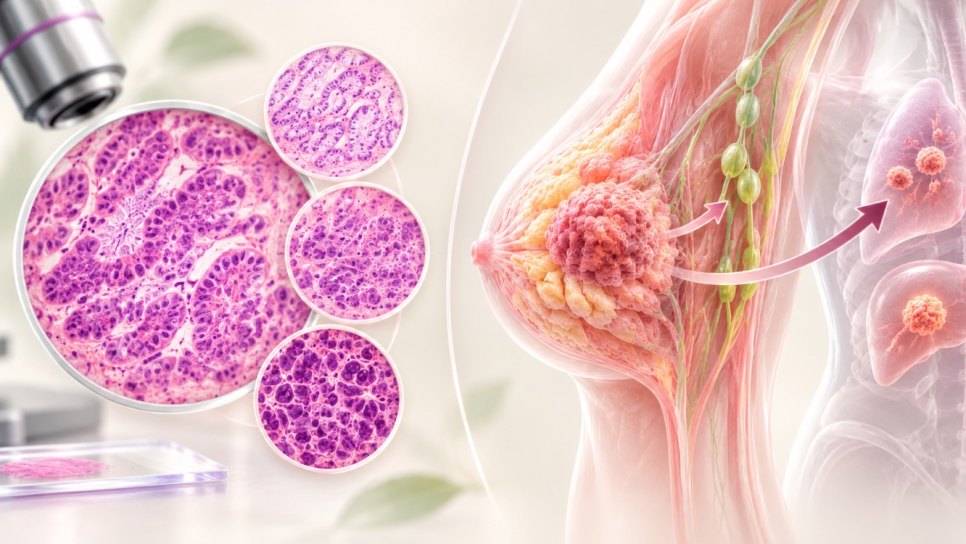
Can Lung Cancer Be Detected Early via Blood Test in Never-Smokers? CEACAM5 and CEACAM6 in a JAMA Study

In this article
The Silent Lung Cancer Risk in People Who Have Never Smoked: What Do CEACAM5 and CEACAM6 in the Blood Reveal?
Lung cancer is usually linked with smoking, yet roughly one in every four to five people with lung cancer has never smoked, and for this group there is currently no accepted method of early detection. A study published in JAMA Network Open on November 2, 2026, led by the International Agency for Research on Cancer (IARC), part of the World Health Organization, compared blood samples taken years before diagnosis from 180 never smokers with lung cancer against samples from 180 matched healthy people. Of the 2,821 proteins examined, only two, CEACAM5 and CEACAM6, were significantly associated with later developing lung cancer. In this article we explain what the study found, what it did not find, and what never smokers can do today. An important note: this study does not yet provide a ready-to-use blood test or screening method. We covered the general symptoms of lung cancer in our lung cancer guide and screening for people who smoke in our article on screening recommendations.
- What was found? In never smokers, those with higher CEACAM5 and CEACAM6 levels in blood drawn up to 5 years before diagnosis had a relative risk of lung cancer about 1.7-fold higher. Among 2,821 proteins, these two were the only ones that remained significant after statistical correction.
- Was it confirmed? Partly. The association was replicated in the UK Biobank (49,291 people), but that group included only 16 patients who had never smoked. Large, independent validation in never smokers is still needed.
- Is there a test? No. The study reports no absolute risk, no cutoff value and no diagnostic accuracy. CEACAM5 is the CEA marker that has been in use for decades, and the CEA blood test is not suitable for screening.
- What should I do today? Take a persistent cough, coughing up blood and shortness of breath seriously; talk to your doctor if lung cancer runs in your family; and protect yourself from radon, secondhand smoke and indoor smoke.
Why does this matter?
Considered on its own, lung cancer in never smokers is the fifth leading cause of cancer-related loss of life worldwide. Most of these cancers are adenocarcinomas; according to 2022 data, 53–70% of lung cancers in never smokers are of this type, and about 15% have been linked to air pollution. They are more common among women and people of East Asian descent, and genetic changes that can be treated with targeted drugs, such as EGFR, are also more frequent in this group (lung cancer in women, EGFR-mutated lung cancer).
The problem is this: screening with low-dose computed tomography (CT) is recommended only for people with a heavy smoking history. Never smokers fall outside these programs, and their cancers are often found only after symptoms appear, at an advanced stage (screening in people who smoke). That is why the idea of a simple blood test that could pick out the higher-risk never smokers is so appealing. But there is a long road from discovering a biomarker to putting it into use, and not every promising result makes it to the end of that road (how to read research news).
Can a blood test detect lung cancer early in never smokers?
Not yet. A study published in November 2026 showed that higher blood levels of the proteins CEACAM5 and CEACAM6 in never smokers were associated with the risk of developing lung cancer within 5 years. However, these findings have not been confirmed in large groups of never smokers, and no blood test that can be used for screening or diagnosis exists today.
Why does lung cancer develop in people who don't smoke?
In never smokers, lung cancer behaves like a different disease from the one seen in smokers. The tumors are mostly adenocarcinomas, carry fewer mutations and more often depend on a single "driver" change such as EGFR, ALK or ROS1 (ALK-positive lung cancer). Risk factors include air pollution, radon gas, secondhand smoke, indoor cooking and fuel smoke, occupational exposures such as asbestos, and a family history of lung cancer. In many patients, however, no clear cause can be found (smoking and cancer, facts about lung cancer).
Figure 1 · Risk factors in people who don't smoke
Often several factors act together
How was the study done?
The researchers drew on four large studies in the Lung Cancer Cohort Consortium (LC3): the Cancer Prevention Study II and the Multiethnic Cohort in the US, and the Shanghai Men's and Women's Health Studies in China. In these studies, blood was collected from tens of thousands of people between 1996 and 2010, and the samples were stored frozen. The team identified 180 never smokers who were diagnosed with lung cancer within 5 years after their blood was drawn. Each was matched with a person from the same cohort, of the same age and sex, who had given blood at the same time and did not develop cancer. Of the participants, 71% were women and 82% were of Asian descent, and the median age was 66.
Figure 2 · Study design
Looking back from blood drawn years earlier
In the stored blood samples, 2,821 different proteins were measured at the same time using a research platform called Olink Explore 3072. When so many proteins are examined, some associations will inevitably appear by chance, so the researchers applied a multiple-comparison correction. After this correction, only two proteins remained significant: CEACAM5 and CEACAM6. The findings were then tested in an independent group in the UK Biobank in Britain, which included 49,291 people and 157 lung cancer cases (multiple analyses from a single blood sample, blood transcriptome atlas).
Results: how strong is the association?
In people whose blood level was one standard deviation higher (roughly "clearly above average"), the odds of lung cancer were 1.65-fold higher for CEACAM5 and 1.72-fold higher for CEACAM6. In the UK Biobank, across all participants, smokers and never smokers alike, the association was even stronger (1.92- and 1.86-fold). But when only never smokers in the UK Biobank were considered, the number of patients fell to 16; the association remained significant for CEACAM5 (1.84-fold), whereas for CEACAM6 it was not significant because the confidence interval included 1.
Figure 3 · Odds ratios and confidence intervals
Results in the discovery and validation groups
The association weakened somewhat as the time between blood draw and diagnosis grew longer, but it did not disappear: both proteins were also significantly elevated in blood drawn 2.5–5 years before diagnosis. This suggests that the proteins may reflect not only a tumor that is already present but not yet noticed, but also a risk that will develop later. The association was seen in squamous cell and small cell lung cancer as well as in adenocarcinoma.
How long before diagnosis does the signal appear?
Relative risk by time between blood draw and diagnosis (per 1 standard deviation increase).
The association grows somewhat stronger closer to diagnosis, but persists in blood drawn 2.5–5 years earlier. This suggests the proteins may reflect not only a tumor that is already present but also a risk that will develop later. Relative risk (1 = no difference) is not absolute risk.
What are CEACAM5 and CEACAM6?
CEACAM5 and CEACAM6 belong to the family of carcinoembryonic antigen-related cell adhesion molecules. They help cells attach to one another and to their surroundings, and they are normally present in small amounts on some epithelial cells. When cells begin to turn cancerous, the amount of these proteins on their surface can increase and some of it passes into the blood. CEACAM5 is, in fact, the very CEA tumor marker that has been in use for decades (what is the CEA test?).
Figure 4 · Two proteins, from the cell surface into the blood
CEACAM5 (CEA) and CEACAM6
An important caution is needed here: the CEA blood test is widely available, including in Türkiye, but it is not recommended for cancer screening in healthy people. CEA can rise in smokers, with liver and bowel inflammation and in many other conditions, while it stays normal in most early-stage cancers. The research platform used in this study is also not the same as the CEA test in clinical laboratories, and the results cannot be converted directly from one to the other. For this reason, conclusions such as "My CEA is a little high, could I have lung cancer?" or "My CEA is normal, so I don't have lung cancer" cannot be drawn from this study.
A different biology in people who don't smoke
Perhaps the most interesting finding of the study was that most of the 36 proteins previously shown to predict lung cancer risk in smokers were of no use in never smokers. The median odds ratio for these proteins was 1.47 in smokers but 1.01 in never smokers, in other words, practically "no effect." Only CEACAM5, ALPP, SPINT1 and WFDC2 showed an association in the same direction in both groups. This suggests that lung cancer in never smokers has a biology of its own and that risk tools developed for smokers cannot be applied directly to this group (tumor genetics and NGS).
Do smoking-related protein markers work in never smokers?
Median odds ratio (OR) of 36 proteins known to be associated with lung cancer in smokers.
An OR of 1 means no association. Most proteins that predict lung cancer in smokers showed no association in never smokers; only CEACAM5, ALPP, SPINT1 and WFDC2 pointed in the same direction. This suggests that lung cancer in never smokers has a different biology.
Limitations of the study
- Small discovery group: 180 patients and 180 controls are not enough to detect weak associations.
- Weak validation in never smokers: The UK Biobank included only 16 patients who had never smoked, so independent validation could not be done in the main target group.
- No absolute risk: The study gives "how many times higher" information, but does not report a person's actual risk, a usable cutoff value or the accuracy of the test (sensitivity, specificity, AUC).
- Population differences: Most participants were of Asian descent; it is not known whether the results apply as they are to other populations, such as Türkiye's.
- Other risk factors: How the markers would be used together with family history, occupation and environmental exposures was not evaluated.
- Conflict of interest: Some authors are listed as inventors on a planned patent application for a protein-based risk model.
Screening in never smokers: today and tomorrow
Today, US and European guidelines recommend low-dose CT screening only for people in a certain age range with a heavy smoking history. There is no routine screening recommendation for never smokers. The most notable experience here comes from Taiwan: in the TALENT study, 12,011 people, 93% of whom had never smoked and half of whom had a family history of lung cancer, were screened with low-dose CT; lung cancer was found in 2.6%, and 96.5% of these cancers were stage 0 or I. Based on these results, Taiwan added people with a family history of lung cancer to its national screening program. However, the effect of this kind of screening on survival, and harms such as unnecessary biopsies, are not yet clear (what is a lung nodule?).
Figure 5 · Lung cancer screening: today and tomorrow
Smokers, never smokers and the future
The possible role of blood markers such as CEACAM5 and CEACAM6 here is to help decide who should be screened with CT. In other words, a blood test would not diagnose cancer on its own, but it could make screening more efficient by picking out those at higher risk. Similar "early detection from blood" approaches are being studied in colon and pancreatic cancer, and some have reached the approval stage (multi-cancer blood test, blood test for pancreatic cancer, blood test for colon cancer).
Figure 6 · A blood biomarker's journey to the clinic
Which stage have CEACAM5 and CEACAM6 reached?
What should a never smoker do today?
Screening with a blood test is not yet possible, but reducing risk factors and recognizing symptoms are the most effective steps you can take today. If you have a cough lasting more than three weeks, are coughing up blood, or have shortness of breath, chest pain, hoarseness or unexplained weight loss, the fact that you don't smoke does not rule out lung cancer completely; you should see a doctor (coughing up blood).
Figure 7 · What you can do today
Symptoms, family history and exposure
The situation in Türkiye
- Türkiye has no national lung cancer screening program for never smokers. At some centers, low-dose CT screening is offered individually to people who smoke or have quit.
- No clinical test that measures CEACAM5 and CEACAM6 together is available in Türkiye or anywhere else in the world. The routine CEA test should not be used for this purpose.
- Radon levels may be high in some regions of Türkiye; information on home radon testing can be obtained from local health and disaster management offices.
- Secondhand smoke and indoor fuel use are still common in Türkiye; reducing these exposures is the foundation of lung health for never smokers, too (how to quit smoking).
Questions to ask your doctor
- I have never smoked, but lung cancer runs in my family. Could low-dose CT be considered for me?
- Do I need a chest X-ray or CT for my cough that won't go away?
- Is there an exposure at my home or workplace that raises my lung cancer risk?
- My CEA test came back high; does that mean lung cancer?
- If I am diagnosed with lung cancer, will genetic tests such as EGFR be done?
- "If I don't smoke, I won't get lung cancer." No. A substantial share of lung cancers occur in people who have never smoked.
- "There is now a blood test that detects lung cancer early." No. This study identified risk markers; there is no ready-to-use test.
- "My CEA test is normal, so I don't have lung cancer." No. CEA is often normal in early stages and is not used for screening.
- "If my CEA is a little high, I have lung cancer." No. CEA can rise because of smoking, inflammation and many other causes.
- "A 1.7-fold risk means I will get cancer." No. This is a relative increase; because lung cancer risk is low in never smokers, the absolute risk may still be small.
Frequently Asked Questions
- Can a blood test detect lung cancer early in never smokers?
- Not yet. A study published in November 2026 showed that higher blood levels of CEACAM5 and CEACAM6 in never smokers were associated with lung cancer risk within 5 years. However, these findings have not been confirmed in large groups, and there is no ready-to-use test.
- What are CEACAM5 and CEACAM6?
- They are surface proteins that help cells attach to one another. They can increase in cells that are turning cancerous and pass into the blood. CEACAM5 is the very CEA tumor marker that has been used for decades; however, the CEA test is not suitable for screening.
- What causes lung cancer in never smokers?
- The main risk factors are air pollution, radon gas, secondhand smoke, indoor cooking and fuel smoke, occupational exposures such as asbestos, and a family history of lung cancer. In many patients no clear cause can be found.
- Should never smokers get lung cancer screening?
- Today there is no routine screening recommendation for never smokers. People with a family history of lung cancer or with symptoms should talk to their doctor. In Taiwan, people with a family history of lung cancer are screened with low-dose CT.
Glossary
- Biomarker
- A measurable characteristic that indicates the presence, risk or course of a disease.
- CEA (CEACAM5)
- Carcinoembryonic antigen; a protein that can rise in the blood in some cancers and is used to monitor treatment.
- CEACAM6
- Another surface protein from the CEA family that plays a role in cell adhesion.
- Nested case-control study
- A study in which people in a large follow-up group who later develop a disease are compared with matched healthy people using stored samples.
- Odds ratio (OR)
- A measure of how many times higher the odds of a disease are in people with a characteristic than in those without it; 1 means no difference.
- Confidence interval
- The range that very likely contains the true value; if it includes 1, the association is not significant.
- Relative and absolute risk
- Relative risk shows how many times the risk increases; absolute risk shows a person's actual chance of developing the disease.
- Low-dose CT
- Computed tomography with low radiation, used in lung screening.
- Adenocarcinoma
- The most common type of lung cancer; also the most common type in never smokers.
- Radon
- A colorless, odorless radioactive gas that seeps from the ground and can build up indoors.
DROZDOGAN Academy Commentary
This study shows that a protein we have known for decades, CEA, may tell us something new about lung cancer risk in never smokers. But there is a long road between a "risk marker" and a "screening test."
⚡ Why it matters
Never smokers are a large group left entirely outside lung cancer screening. A tool that could pick out those at higher risk in this group could make screening possible.
✅ Strengths
Blood samples taken years before diagnosis; unbiased screening of 2,821 proteins; multiple-comparison correction; validation in a large independent group; an association lasting up to 5 years; led by an independent institution such as IARC.
⚠️ Limitations
A small discovery group; validation in never smokers rests on only 16 patients. No absolute risk, cutoff value or test accuracy. Most participants were of Asian descent. CEACAM5 is a marker with low specificity that can also rise for other reasons.
🩺 In practice
In our patients who have never smoked, we take symptoms seriously and discuss screening options individually with those who have a family history of lung cancer. We do not order CEA to screen healthy people for lung cancer, and we do not interpret an incidentally high CEA on the basis of this study.
❓ Open questions
Will these proteins give the same result in thousands of never smokers? What level should count as "high risk"? How well will they perform when combined with family history, air pollution and genetic risk scores? Will CT screening of people selected by a blood test extend survival?
Bottom line: CEACAM5 and CEACAM6 are promising first candidates for predicting lung cancer risk in never smokers. But for now they are not a screening or diagnostic test; taking symptoms seriously and reducing exposures are still the most effective approach.
- This article was prepared in November 2026.
- Study data are taken from the original article published in JAMA Network Open on November 2, 2026. Information on the frequency of lung cancer in never smokers and on air pollution is based on IARC's 2025 data, and the Taiwan data on the 2020 presentation of the TALENT study.
- Because the study did not report absolute risk or test accuracy, these are not given in this article either. Information on radon and screening practices in Türkiye is general.
- The illustrations are simplified. The Academy commentary is our own.
- This article is not medical advice; make your health decisions together with your doctor.
References
- Zahed H, Bulos-Salim C, Alcala K, et al. Protein biomarkers of lung cancer risk among individuals who never smoked. JAMA Netw Open 2026;9(11):e2641494. doi:10.1001/jamanetworkopen.2026.41494. jamanetwork.com
- International Lung Cancer News. Lung cancer screening study in East Asia successful at identifying early-stage disease (TALENT, WCLC 2020). ilcn.org
- Dentistry.co.uk. Lung cancer in non-smokers on the rise (IARC, Lancet Respiratory Medicine 2025). dentistry.co.uk
- Gold P, Freedman SO. Demonstration of tumor-specific antigens in human colonic carcinomata by immunological tolerance and absorption techniques. J Exp Med 1965;121:439-462. pubmed.ncbi.nlm.nih.gov
- National Lung Screening Trial Research Team. Reduced lung-cancer mortality with low-dose computed tomographic screening. N Engl J Med 2011;365:395-409. nejm.org
Was this article helpful?
Your feedback helps us improve our content.