
28 coronavirus myths and the facts

In this article
The novel coronavirus SARS-CoV-2 and the disease it causes, COVID-19
The novel coronavirus known as SARS-CoV-2 spread from Wuhan, China, to every continent except Antarctica. As always, when the word pandemic begins appearing in headlines, people become frightened, and fear brings misinformation and rumors. In this article, we have compiled the most common false claims and the facts about the novel coronavirus circulating on social media and elsewhere.
1. Spraying chlorine or alcohol on the skin kills viruses inside the body

Fact: Spraying alcohol or chlorine all over your body will not kill viruses that have already entered it. Spraying these substances may harm clothing or mucous membranes, such as the eyes and mouth. Remember that alcohol and chlorine can be useful for disinfecting surfaces, but they must be used according to appropriate recommendations.
2. Hand dryers kill coronavirus

Fact: Hand dryers do not kill coronavirus. The best way to protect yourself and others is to rub your hands with an alcohol-based sanitizer, wash with soap and avoid social contact.
3. Rinsing the mouth and nose with salt water or gargling protects against coronavirus
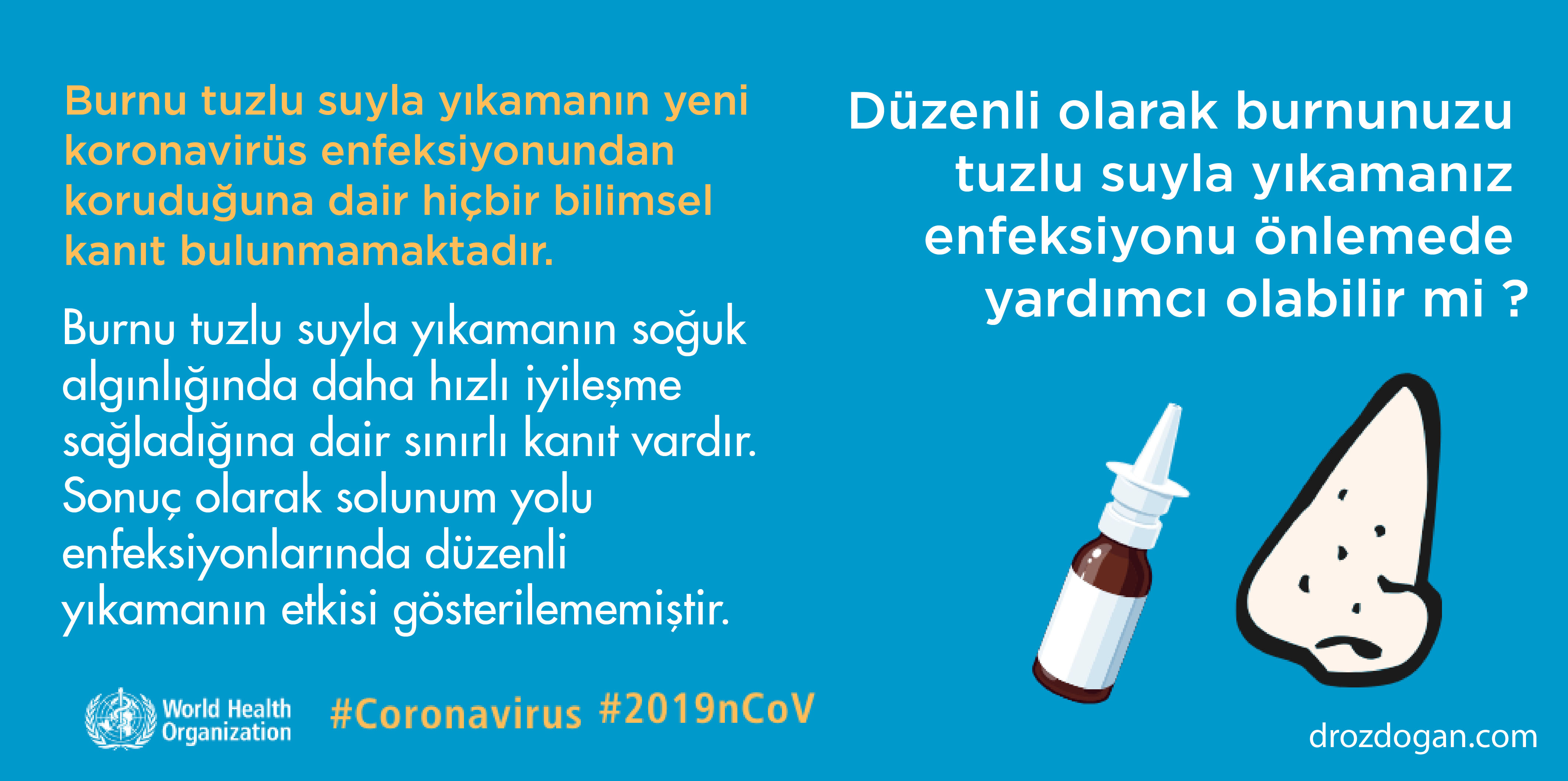
Fact: There is no evidence that regularly rinsing your nose with salt water or saline protects against respiratory infections. Some research suggests this technique may reduce symptoms of acute upper respiratory infections, but scientists have not found that it reduces infection risk.
4. Antibiotics kill coronavirus

Fact: Antibiotics kill bacteria. They do not kill viruses.
5. Thermal scanners can diagnose coronavirus disease

Fact: Thermal scanners can detect whether someone has a fever. COVID-19 symptoms may also appear 2-10 days after infection, meaning an infected person can have a normal temperature for several days before fever begins.
6. Garlic protects against coronavirus
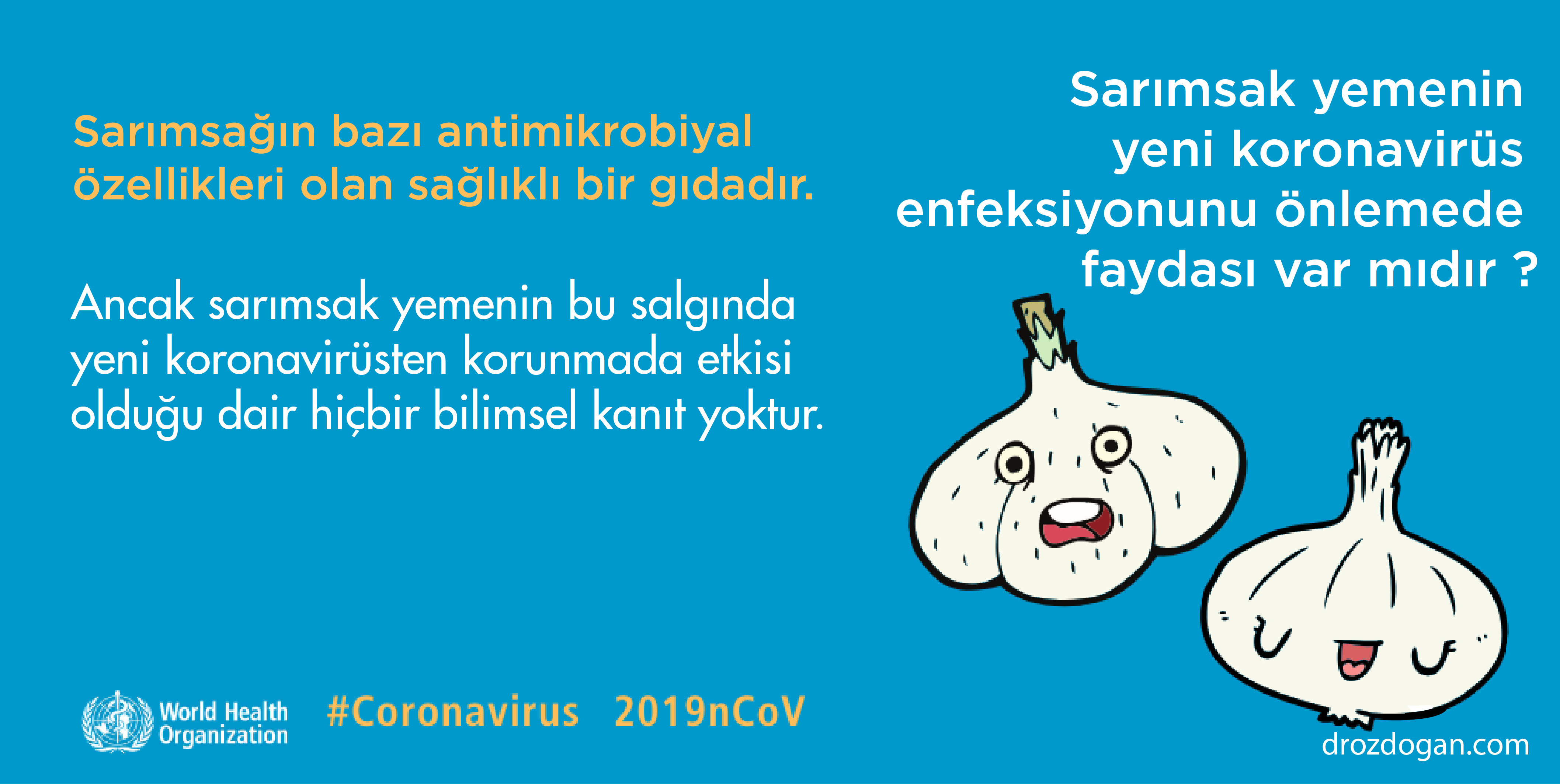
Fact: Some laboratory research suggests garlic may slow the growth of certain bacteria, but human studies have not supported this. COVID-19 is caused by a virus, however, and there is no evidence that garlic can protect people against COVID-19.
7. The virus will die and the outbreak will end when temperatures rise in spring

Fact: Some viruses, such as those causing colds and influenza, spread more easily during colder months. This does not mean they stop completely when the weather becomes warmer. Scientists do not yet know how temperature changes will affect SARS-CoV-2's behavior.
8. Influenza and pneumonia vaccines protect against COVID-19

Fact: Because SARS-CoV-2 differs from other viruses, existing vaccines do not protect against COVID-19 infection.
- Related topic: When will a coronavirus vaccine be ready?
9. An ultraviolet (UV) disinfection lamp kills the novel coronavirus

Fact: UV lamps should not be used to sterilize hands or other skin areas because UV radiation may irritate the skin.
10. A treatment for novel coronavirus infection has been found

Fact: To date, no specific drug has been approved to prevent or treat novel coronavirus infection (COVID-19). Infected people should nevertheless receive appropriate care to relieve and treat symptoms, and those with severe disease should be monitored and treated in hospital.
11. The novel coronavirus spreads through mosquito bites

Fact: To date, there is no information or evidence suggesting the novel coronavirus can be transmitted by mosquitoes. It is a respiratory virus that spreads mainly through droplets produced when an infected person coughs or sneezes, or through saliva or nasal discharge droplets.
12. Taking a hot bath prevents novel coronavirus disease

Fact: Taking a hot bath does not prevent COVID-19. Your normal body temperature remains between 36.5 ° C and 37 ° C regardless of the temperature of your bath or shower. Bathing in excessively hot water can actually be harmful because it may burn you. The best way to protect yourself against COVID-19 is to clean your hands frequently. This removes viruses that may be on your hands and helps you avoid infection from touching your eyes, mouth or nose.
13. Only older people are at risk

Fact: Like other coronaviruses, SARS-CoV-2 can infect people of any age. However, people with preexisting conditions such as cardiovascular disease, diabetes and hypertension are more likely to become seriously ill.
14. Children do not get COVID-19
Fact: All age groups can become infected. Most cases so far have been in adults, but children are not immune. Preliminary evidence actually suggests that children are likely to become infected, although their symptoms are less severe.
15. COVID-19 is just like influenza
Fact: SARS-CoV-2 causes illness with flu-like symptoms such as pain, fever and cough. Both COVID-19 and influenza can be fatal in rare cases, and both can cause pneumonia. However, COVID-19's overall profile is more serious. Estimates vary, but mortality appears to be between 1% and 3%; the World Health Organization's current estimate is 3.4%, although this figure may change by the end of the outbreak.
16. Everyone who gets COVID-19 dies
Fact: This statement is false. As noted above, COVID-19 is fatal for only a small proportion of people. In a recent report, the Chinese Center for Disease Control and Prevention concluded that 80% of COVID-19 cases were mild-to-moderate.
WHO also reports that approximately 80% of people will have relatively mild illness that does not require specialist hospital treatment. Mild symptoms may include fever, cough, sore throat, fatigue and shortness of breath.
17. Does the antimalarial Plaquenil protect against the novel coronavirus?
Fact: There are no clinical trial results, or scientific evidence, showing that Plaquenil, whose active ingredient is hydroxychloroquine, protects people from COVID-19. Plaquenil is nevertheless being used in hospitalized patients with COVID-19 and is being tested as treatment rather than for prevention, and the scientific evidence is unclear here too. Testing drugs such as Plaquenil prophylactically on a large scale before their effectiveness has been proven may cause the virus to undergo mutation much faster than its natural course, acquire resistance, and lead us to create a new virus and experience a new outbreak in the near future!
Nearly 100 noncritical mutations have already been identified in this virus. Drugs swallowed like candy because they supposedly have no adverse effects will pressure the virus's resistance mechanisms.
Thinking one is protected by taking Plaquenil is another misconception. Neither Turkey's Ministry of Health nor the FDA recommends Plaquenil for protection against coronavirus. It is also not approved for standard COVID-19 treatment in the United States.
As the virus spreads, it may undergo more mutations. This process is random, with genetic drift particularly involved. Allowing the virus to evolve and change by spreading it is therefore an even greater risk that will also negatively affect drug discovery.
- Related topic: Could the antimalarial Plaquenil be a remedy for coronavirus disease (COVID-19)? (Detailed)
18. SARS-CoV-2 is merely a mutated form of the common cold
Fact: Coronaviruses are a large family of viruses with spike proteins on their surfaces. Some use humans as their primary host and cause the common cold. Other coronaviruses, such as SARS-CoV-2, primarily infect animals. Both Middle East respiratory syndrome (MERS) and severe acute respiratory syndrome (SARS) began in animals and passed to humans.
-Related topic: 7 DIFFERENCES between novel coronavirus disease and influenza (flu)
19. You must be in close contact with someone for 10 minutes to catch the virus
Fact: The longer someone spends with an infected person, the more likely they are to catch the virus, but it is still possible to catch it in less than 10 minutes.
20. You can protect yourself by gargling bleach
Fact: There are no circumstances in which bleach benefits your health. Bleach is corrosive and can cause serious damage.
21. Products from China can spread coronavirus
Fact: Based on previous research into similar coronaviruses, including those causing SARS and MERS and those resembling SARS-CoV-2, scientists believe the virus cannot survive on letters or packages for long periods, more than 2-3 days.
22. Homemade herbal remedies can treat coronavirus
Fact: No home remedy, including vitamin C, essential oils, colloidal silver, sesame oil, garlic or sipping water every 15 minutes, can protect against COVID-19.
The best approach is to develop good handwashing habits and avoid places where crowds may gather.
-Related topic: What should NUTRITION and ACCESS TO FOOD look like during the coronavirus outbreak?
23. You can catch coronavirus from urine and stool
Fact: This is unlikely, although opinions differ. According to the London School of Hygiene and Tropical Medicine in Britain, viruses and bacteria swallowed with mucus from the upper respiratory tract reach the intestines after being denatured in the stomach's acidic conditions. Modern, highly sensitive detection methods can detect these viruses in stool. Usually, viruses detected in this way are not infectious to others because the intestines destroy them.
In one study, the research team never found evidence of the virus in blood or urine. Researchers detected viral RNA in stool, but no infectious virus was present. This suggests that the virus does not spread through the fecal route, which remains unknown to date.
24. Coronavirus is the deadliest virus known to humans
Fact: Although SARS-CoV-2 appears more serious than influenza, it is not the deadliest virus humans have encountered. Others, such as Ebola, have higher mortality rates.
25. The virus was manufactured in a laboratory in China
Fact: Despite internet rumors, there is no evidence that this is the case. Some researchers suggest SARS-CoV-2 may have passed to humans from a mammal called a pangolin. Others think it may have come to us from bats, as with SARS.
26. The outbreak spread to humans through bat soup
Fact: Although scientists are certain the virus began in animals, there is no evidence that it came from any kind of soup.
27. Cats and dogs transmit coronavirus
Fact: There is currently very little evidence that SARS-CoV-2 can infect cats and dogs. However, in Hong Kong, a Pomeranian whose owner had COVID-19 became infected. The dog showed no symptoms.
- Related topic: Coronavirus disease (COVID-19): questions and answers about pets, commercial animals and stray animals (detailed)
28. Face masks protect against coronavirus
Fact: Healthcare workers use tightly fitted professional face masks to protect against infection. Disposable face masks, however, are unlikely to provide this type of protection. Because they do not fit the face properly, droplets may still enter the mouth and nose. Small viral particles may also pass directly through the material. Nevertheless, if a person has a respiratory illness, wearing a mask may help prevent others from becoming infected. Wearing a mask can also create a false sense of security and lead people to neglect other infection-control practices, such as hand hygiene. In that situation, a mask will be protective only if the person washes their hands regularly with soap.
Was this article helpful?
Your feedback helps us improve our content.


Reader comments
Share your comment
Your name and comment are published only after administrator approval. Your email address is never shown to visitors.
Be the first to comment.