
Coronavirus Is MOST CONTAGIOUS Before Symptoms and During the First Week of Illness

In this article
Two studies published in March 2020 provided the strongest evidence that coronavirus can multiply readily in people’s noses and throats and spread before people realize they are ill. Increasing social distancing, staying home unless necessary, observing hygiene rules, and ensuring isolation and quarantine where needed are therefore vital to prevent further spread and deaths.
As comprehensive efforts to contain the COVID-19 pandemic have taken effect worldwide, researchers are only beginning to obtain data about when patients are most infectious.
People infected with SARS-CoV-2 can test positive before and after symptoms appear. However, a new German study of nine infected people, published on 8 March 2020, suggests they are most infectious before symptoms and in the first week of illness (reference 1).
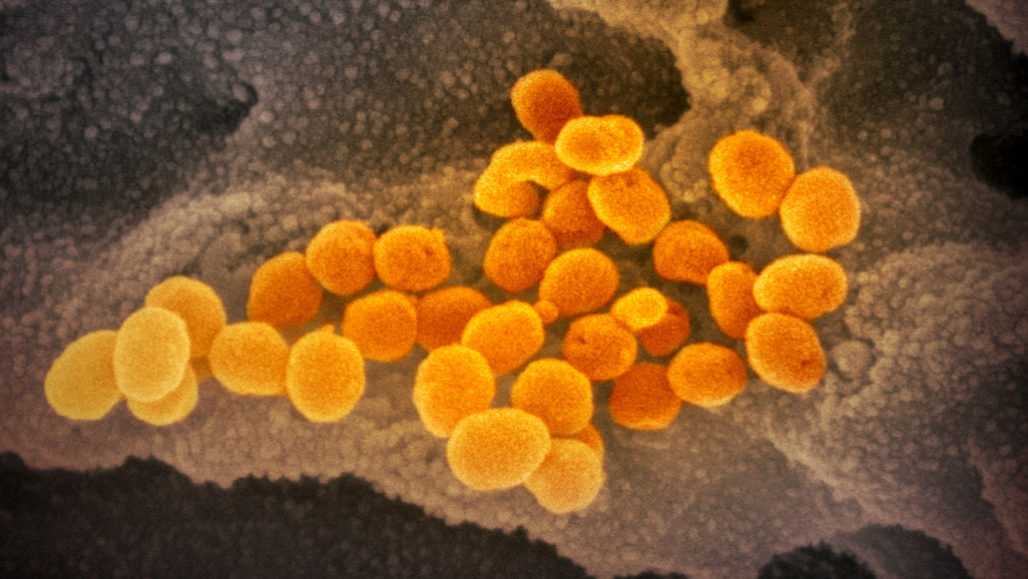
Above: an electron micrograph of novel coronaviruses (orange) emerging from a ruptured human cell (gray). Source: National Institute of Allergy and Infectious Diseases-Rocky Mountain Laboratories / NIH
During the first week, researchers isolated infectious virus from around 17 percent of nasal and throat specimens and 83 percent of sputum samples.
Millions of viruses were detected in patients’ noses and throats, roughly 1000 times the amount produced in SARS patients.
This high viral load may help explain why the novel coronavirus is so contagious.
The scientists identified these nine people some time after exposure, so they do not know exactly when patients began shedding the virus.
After the eighth day of symptoms, researchers could detect viral genetic material, RNA, in patient swabs or samples, but could no longer find infectious virus. This suggests that antibodies made by the immune system against SARS-CoV-2 killed viruses leaving the cells.
The study highlights an important point: finding RNA or a viral fragment in a swab or sample does not guarantee that the virus is "live" or infectious.
Lack of knowledge, misinformation and misperceptions mislead the public: people can shed large amounts of virus even when mildly ill or without symptoms, helping explain how easily it spreads. Social distancing measures are therefore very important.
There is encouraging news, too. After antibody production, around 10 days after becoming ill, the likelihood of infecting others falls substantially.
Wendtner and colleagues tested the nine patients every morning throughout their hospital stay, collecting blood, urine, stool, and nasal and throat specimens, and asking them to cough up sputum or phlegm. Wendtner says, "We were learning with the patients because we did not know the best and safest time to discharge them".
High levels of viral shedding from the nose and throat occurred very early in infection. By the time of testing, most patients’ upper-respiratory viral production had already peaked. As infection progresses, the virus moves deeper into the lungs.
The team never found evidence of virus in blood or urine, although antibodies produced by the immune system against the virus may be present. They therefore stopped collecting blood and urine samples from other hospitalized COVID-19 patients. Researchers detected viral RNA in stool but no infectious virus, suggesting that the virus did not spread through the previously uncertain fecal route.
It was found that 1 sneeze by an ill person was enough to infect another person or people nearby. This shows that the novel coronavirus has very high infectivity—and that healthcare workers are also at high risk...
Patients began producing antibodies against the virus around 6 to 12 days after symptoms started. Once antibody production began, researchers still found high levels of viral RNA in sputum and nasal and throat specimens, but patients no longer shed infectious virus.
Therefore, 14 days is safe for quarantine, and we should follow this simple advice.
Another strong indication that the novel coronavirus is infectious very early came from a report published on 16 March in Science:
Ruiyun Li and colleagues combined observations of reported infections in China with mobility data, a networked dynamic metapopulation model and Bayesian inference to estimate key population characteristics associated with SARS-CoV-2. They found that 86% of all infections were undocumented before travel restrictions on 23 January 2020. The study also found that 79% of documented cases arose from undocumented cases, helping explain the rapid geographical spread of SARS-CoV-2.
*
Who Should Be Tested for Coronavirus?
If you have fever, cough and shortness of breath without a runny nose, you may have the virus, regardless of overseas travel or contact with someone arriving from abroad. Everyone in this category should be tested.
However, most people infected with the novel coronavirus have no symptoms but remain infectious. Testing should therefore not wait for symptoms. At present, health systems cannot test this many people. This once again highlights the importance of increasing social distancing and staying home!
There are two main types of tests for diagnosing the novel coronavirus SARS-CoV-2:
- Polymerase chain reaction (Polymerase Chain Reaction = PCR), and
- Rapid diagnostic tests
PCR testing detects the viral genome in a nasopharyngeal sample, a swab from the nose and upper throat. For this coronavirus, the genome is RNA. The procedure takes 45-90 minutes and is also called a molecular diagnostic test.
Rapid diagnostic tests look for viral antigens or the human immune system’s virus-targeting antibodies. Rapid tests can use either nose and upper-throat swabs or blood. Swab tests look for viral antigens; blood tests look for antibodies developed against the virus.
Figure 1: the types of coronavirus tests and the samples used for each are shown below.

*
- ALL OUR CORONAVIRUS ARTICLES -
*
Sources
2. Ruiyun Li et al. Substantial undocumented infection facilitates the rapid dissemination of novel coronavirus (SARS-CoV2). Science 16 March 2020.
Was this article helpful?
Your feedback helps us improve our content.


Reader comments
Share your comment
Your name and comment are published only after administrator approval. Your email address is never shown to visitors.
Be the first to comment.