
A New Immune System Cell Discovered: The Phospholipid-Reactive T Cell

One of the most important cells in our immune system is the T cells population. T cells help defend our bodies against pathogens and cancer formation. In recent years in particular, T cells have gained importance in cancer immunotherapy. In December 2018, a study in European Journal of Immunology reported that a new type of T cell that recognizes phospholipids in the cell membrane had been discovered. It is stated that this type of T cell could play an important role in autoimmune diseases and cancer.
The research was conducted at the UCLA Jonsson Cancer Center and the La Jolla Institute for Immunology in the United States.
As we know, cells are the basic building blocks of our bodies. Within cells, the most critical events occur at the cell membrane. Cell membranes consist of two types of lipid (fat) molecules: phospholipids and glycolipids. Inside the cell, these lipids are bound to the CD1d molecule. The CD1d molecule transports lipids to the cell surface.
In the research;
- Phospholipids were discovered to activate a different type of T cell, which was named the phospholipid-reactive T cell . Glycolipids, meanwhile, activate iNKT (innate Natural Killer T-cells). These cells protect the body, particularly against cancer and autoimmune diseases. However, when iNKT cells become overactive, liver diseases such as hepatitis occur. The presence of phospholipids prevents excessive activation of these cells. For this reason, phospholipid-reactive cells are thought to maintain balance in the immune system.
- It was also found that the number of phospholipid-reactive T cells in the body is quite small (%2 of all lymphocytes). So what does this study mean for us?
- The newly discovered phospholipid-reactive T cells are thought to play a role in alcohol-related hepatitis, dyslipidemia, cancer and autoimmune disorders.
- The importance of T cells in cancer is increasing every day. These developments shed light on the development of effective cancer immunotherapies. -
Below, you can see the graphical abstract of the article:
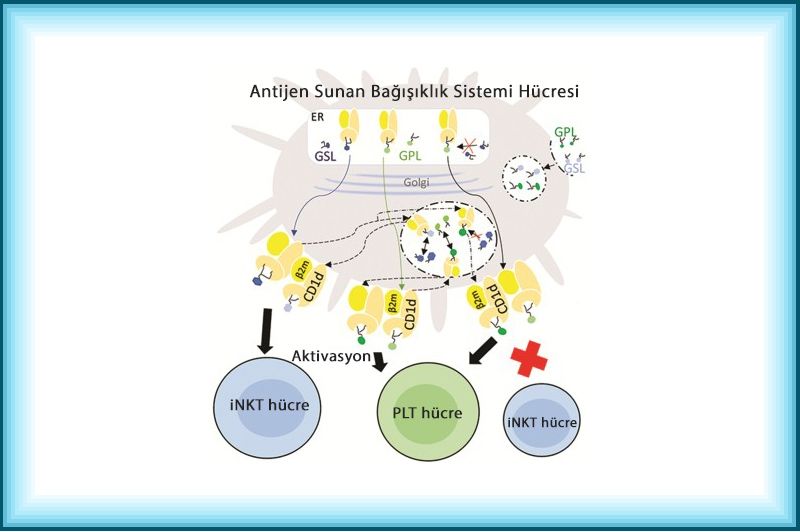
Explanation:
Glycerophospholipids (GPL) bind the lipid antigen-presenting CD1d molecule and activate phospholipid-reactive T cells (PLT). GPLs compete with glycerosphingolipids (GSL) from inside and outside the cell to bind CD1d, and this keeps iNKT cells inactive.
Sources
Self‐glycerophospholipids activate murine phospholipid‐reactive T cells and inhibit iNKT cell activation by competing with ligands for CD1d loading.
European Journal of Immunology, 03 December 2018.
Was this article helpful?
Your feedback helps us improve our content.




Reader comments
Share your comment
Your name and comment are published only after administrator approval. Your email address is never shown to visitors.
Be the first to comment.