
What are B cells (B lymphocytes)? Functions and antibody production

In this article
The human body constantly encounters various pathogens. To protect itself against these pathogens, our body has developed the immune system . This system consists of various components. It is broadly divided into the innate immune system and the adaptive immune system . Of these defense systems, the most effective is adaptive immunity, which consists of various cells. One type of these cells is the B cell (B lymphocyte), which produces antibodies to provide the body's humoral (fluid-based) defense. Humoral defense protects the body against free bacteria, molecules produced by viruses and various other antigens. This protection is provided by antibodies produced by plasma cells, a differentiated form of B cells. Antibodies bind to antigens and suppress their harmful effects (cancer cells also produce their own specific antigens).
The diagram below shows B-cell activation following a viral infection.

B cells are naturally present in the body, and different B cells carry different antibodies. To conserve energy and resources, they do not multiply unless necessary. Depending on its effects, a pathogen entering the body for the first time is likely to evade innate immunity. The antigen that passes this system binds to a B cell already present in the body whose antibody is complementary to it, causing that cell to multiply. This pathogen-specific multiplication is called clonal expansion. Once B cells have multiplied sufficiently, they divide into plasma cells and the memory B cells as two subgroups.
Plasma cells produce and release antibodies into circulation to fight free antigens. Memory cells do not participate in the active fight against the antigen; instead, they wait in readiness for a possible later encounter with the same antigen. This enables a faster and more effective response when the antigen enters the body again. Memory B cells also have a considerably longer lifespan than plasma cells.
- Related topic: A new micro-organ that houses memory B cells in our immune system has been discovered
The importance of B cells in cancer
Any problem that prevents B lymphocytes from working properly begins to cause difficulties in the immune system. For example, B-ALL (precursor B-cell acute lymphoblastic leukemia) is a cancer originating from B lymphocytes. In this cancer, mutated B lymphocytes can be recognized through their CD19 antigens. Recently, another important component of adaptive immunity, T lymphocytes has been used to prepare CAR-T cell therapy in which T lymphocytes with receptors specifically modified for the CD19 antigen are given to the patient to fight damaged B lymphocytes. This approach has led to substantial progress in ALL treatment.
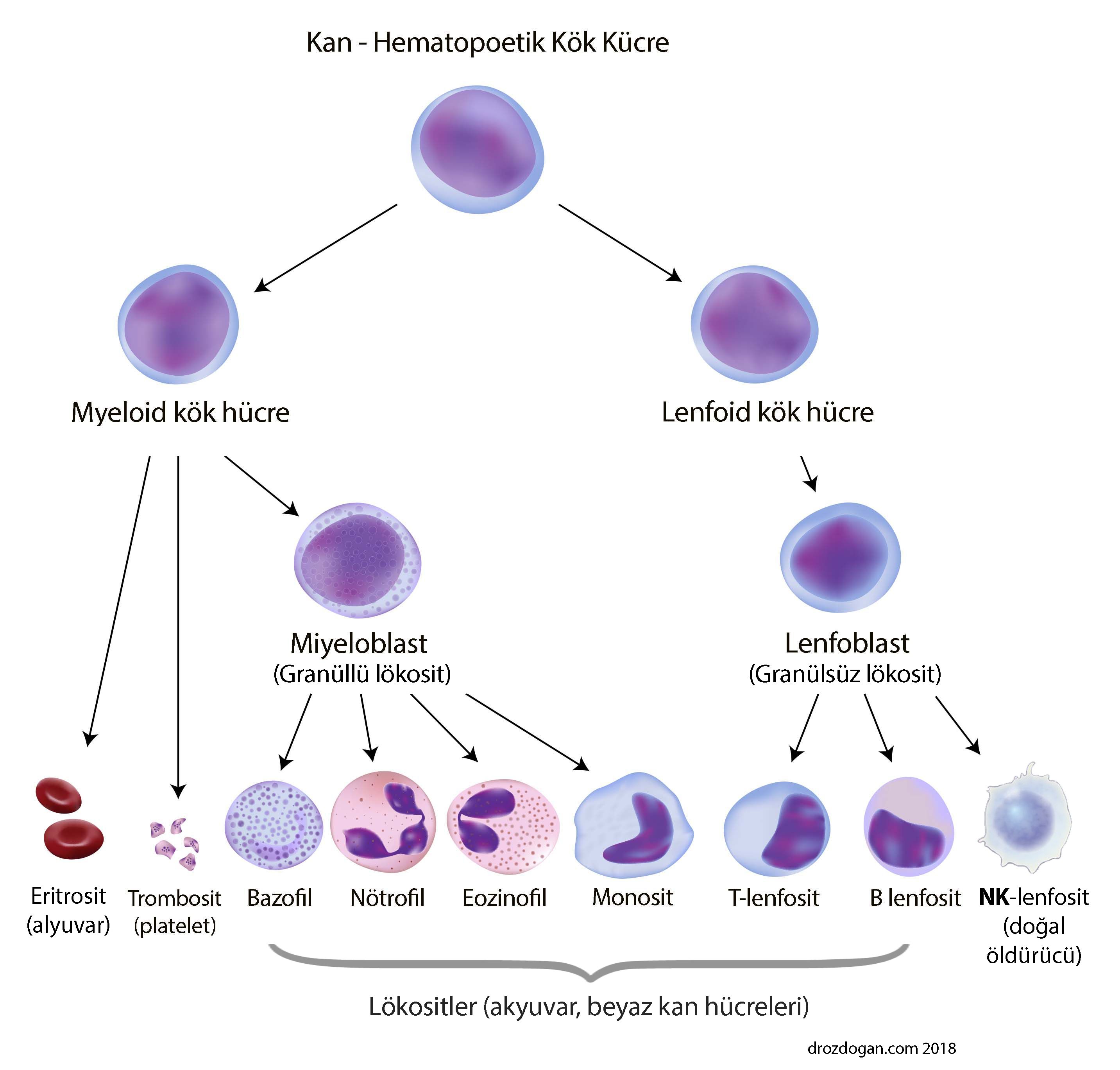
The diagram below shows blood cells and the main immune-system cells:
Sources
Immunobiology, 5th edition
The Immune System in Health and Disease
Was this article helpful?
Your feedback helps us improve our content.




Reader comments
Share your comment
Your name and comment are published only after administrator approval. Your email address is never shown to visitors.
Be the first to comment.