
CRISPR/CAS9 Sets Its Sights on Replacing Immunotherapies in Cancer Treatment

Considered one of the century's most important discoveries, CRISPR/CAS9 technology holds great promise for treating solid (organ) tumors as well as genetic diseases. Cancer arises from thousands of epigenetic and genetic abnormalities. At the same time, the tumor microenvironment supports cancer cell growth. Recently developed CAR-T cell therapies also aim to enable T cells to recognize and attack cancer cells.
You May Be Interested:
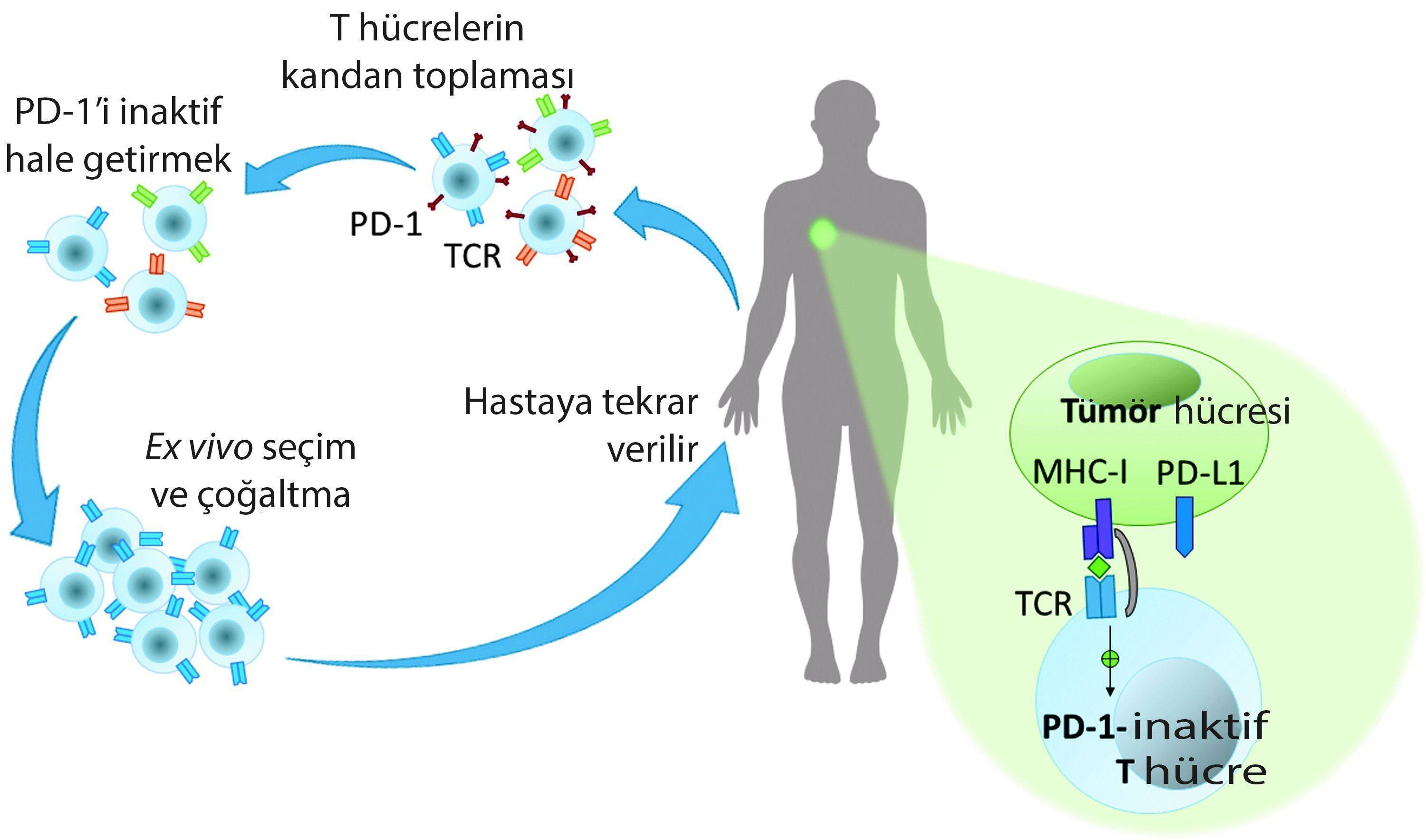
The figure below explains how CRISPR can be used in cancer immunotherapy. T cells taken from the patient are genetically modified with crispr. The PD-1 gene is inactivated. As a result, the PD-1 protein that deactivates T cells cannot be produced, and immune cells become able to attack cancer cells. The activated T cells are returned to the patient, creating an effective cancer treatment.
Are There Clinical Studies of CRISPR-CAS9 in Cancer Immunotherapy?
There are 7 ongoing clinical studies on using CRISPR in cancer treatment. Information about the clinical studies is available in the table below.

All these studies suggest that CRISPR may perhaps replace immune checkpoint inhibitors , the new generation of effective immunotherapies that are currently very costly.
Sources
Applications of CRISPR-Cas9 Technology in Translational Research on Solid-Tumor Cancers.
The CRISPR Journal, Feb 2018.
Was this article helpful?
Your feedback helps us improve our content.




Reader comments
Share your comment
Your name and comment are published only after administrator approval. Your email address is never shown to visitors.
Be the first to comment.