
Doors are closing in cancer cells

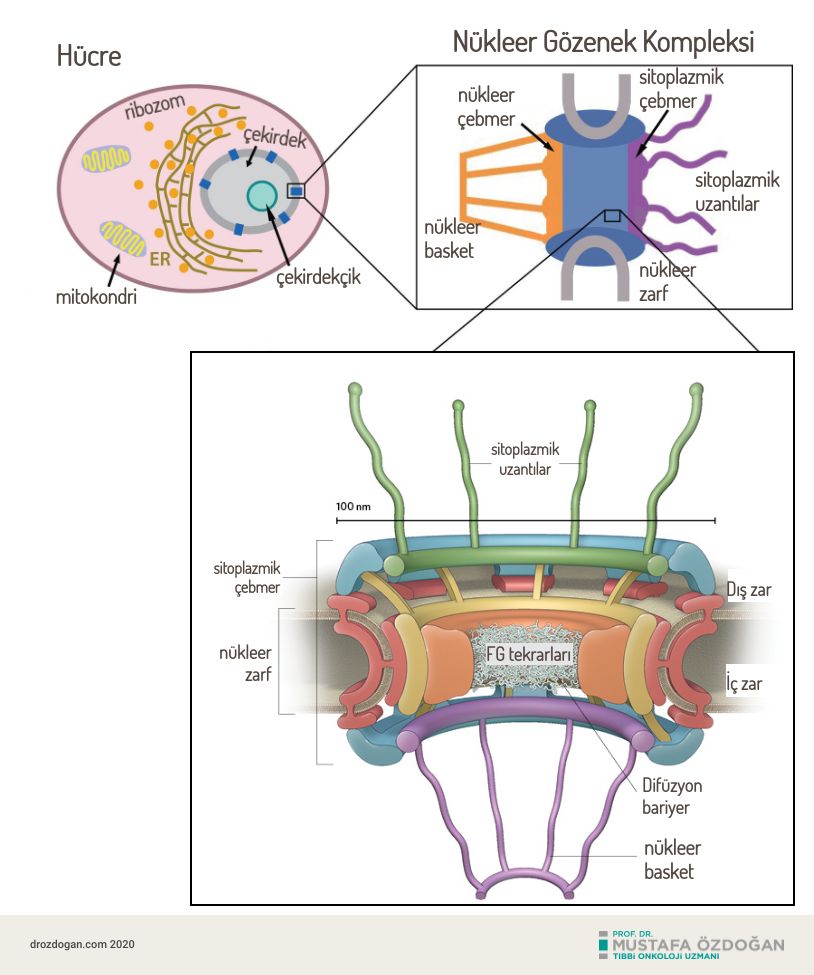
The cell nucleus is an important center where genetic information is stored, organized, and protected separately from other cellular compartments. While the nucleus seeks to isolate and protect the genetic information it carries, it must also communicate with the rest of the cell using cellular components such as proteins and RNA. The nuclear pore complex (NPC) controls the passage of components between the nucleus and cytoplasm and prevents substances that should not be in the nucleus from entering it.
Below, the location of the nuclear pore complex in the nuclear envelope and its molecular structure can be seen.
On September 28, 2020, Cancer Discovery published a new study in animal models showing that closing nuclear pore complex channels shrinks aggressive tumors without harming healthy cells.
Scientists involved in the research explain its importance as follows: "Nuclear pore complexes control the components entering the cell nucleus and act as gates . Because cancer cells grow and divide very quickly, they have many more nuclear pore complexes than normal cells. This has also been demonstrated by research. Our study shows that by preventing the formation of nuclear gates, we can selectively kill cancer cells. It is the first study to show this."
In their experimental setup, the researchers transplanted human tumor cells unable to form NPCs into animal models. They tested three different types of tumor cells known to depend particularly on NPCs for growth and multiplication: skin cancer, leukemia and colorectal cancer. As a result of the experiments, they observed that all the mice used as animal models had smaller and more slowly growing tumors.
With these results, the team demonstrated that inhibiting NPC formation selectively leads to cancer cell death, prevents tumor growth, and triggers tumor regression . In addition to its destructive effect on tumor cells, inhibiting NPC formation causes normal cells to reversibly halt their cell cycles. Thus, healthy cells continue to survive.
While this research closes "doors" to cancer cells, it opens "doors" to new treatment methods. Finding new drugs that specifically inhibit NPC formation for treating aggressive or metastatic, treatment-resistant cancers is extremely important. These gates are thought to play a role in adapting to environmental conditions and developing drug resistance . Closing them is thought to make cancer cells more sensitive to treatments and lead to more favorable long-term outcomes.
Sources
Was this article helpful?
Your feedback helps us improve our content.


Reader comments
Share your comment
Your name and comment are published only after administrator approval. Your email address is never shown to visitors.
Be the first to comment.