
What Is Metastasis? Why and How Does Cancer Spread? Symptoms of Metastasis; Which Cancers Spread to Which Organs?
In this article
When Cancer Spreads: Understanding Metastasis, Recognising the Symptoms and Placing Hope Where It Belongs
Metastasis is the process by which cancer cells break away from the organ where they first formed and create new tumours elsewhere in the body; cancer that has spread in this way is called metastatic cancer and, for most cancers, stage 4 cancer. Metastasis is the most critical turning point in cancer, but it no longer means "nothing can be done". In the US, 5-year survival for cancer that has spread to distant organs has doubled over the past 30 years, and in some patients with limited metastasis long-term control, or even cure, is possible. In this article we explain how metastasis develops, why cancer spreads to particular organs, the symptoms of metastasis, and how it is diagnosed and treated. We have covered how cancer develops, bone metastasis and local treatment in oligometastatic breast cancer in separate articles.
This article has been comprehensively revised. We have added the American Cancer Society's 2026 statistics, the symptoms of metastasis and emergencies, a map of spread by organ, randomised trial evidence in limited metastasis (oligometastasis), the importance of a repeat biopsy when metastasis is diagnosed, and the distinction that "stage 4 does not always mean distant metastasis". The frequently quoted "90%" figure for the share of cancer-related loss of life attributable to metastasis is now interpreted alongside current registry data.
- What is metastasis? It is the spread of cancer cells from the original tumour to distant organs through the blood, the lymphatic system or the body cavities, where they form new tumours. Cancer that has spread is named after the organ in which it began: prostate cancer that has spread to the bone is not "bone cancer" but metastatic prostate cancer.
- Why and where? Metastasis is not random. The direction of blood flow and whether the target organ suits the cancer cell ("seed and soil") are decisive. The most common sites of spread are the lymph nodes, bone, liver, lungs, brain and the peritoneum (the lining of the abdomen).
- Symptoms: These depend on the organ involved: persistent pain in the bone; cough and breathlessness in the lungs; jaundice and abdominal swelling in the liver; headache, seizures or weakness in the brain. Back pain together with weakness in the legs is an emergency.
- Hope is realistic: In the US, 5-year survival for cancer that has spread to distant organs has risen from 17% to 35%. In limited metastasis, adding surgery or stereotactic radiotherapy to systemic treatment can extend survival in suitable patients. Treatment is personalised according to the type of cancer, its molecular features and how widely it has spread.
Why does this topic matter?
Metastasis is the process that makes cancer hardest to treat. The statement often repeated in the literature, that "90% of cancer-related loss of life is due to metastasis", was found to be 66.7% for solid tumours when assessed strictly in an analysis based on the Norwegian cancer registry. Whatever the exact figure, the conclusion is the same: preventing metastasis, recognising it early and treating it correctly are among the factors that most shape survival in cancer.
At the same time, the course of metastatic cancer has changed markedly in recent years. Thanks to immunotherapy, targeted ("smart") drugs, antibody–drug conjugates, precision radiotherapy techniques and better supportive care, the number of patients living for many years even with cancer that has spread to distant organs is growing. Among our own patients are people with breast and colorectal cancer who have been living for more than 10 years even though their cancer had spread to the bone or the liver.
5-year survival for cancer that has spread to distant organs: what has changed in 30 years?
Percent, US. Grey bar: mid-1990s; coloured bar: most recent period.
Source: American Cancer Society, Cancer Statistics 2026. Immunotherapy, targeted drugs and better supportive care contributed to this progress. These averages are not a precise prediction for any individual patient.
What is metastasis, and what does "metastatic" mean?
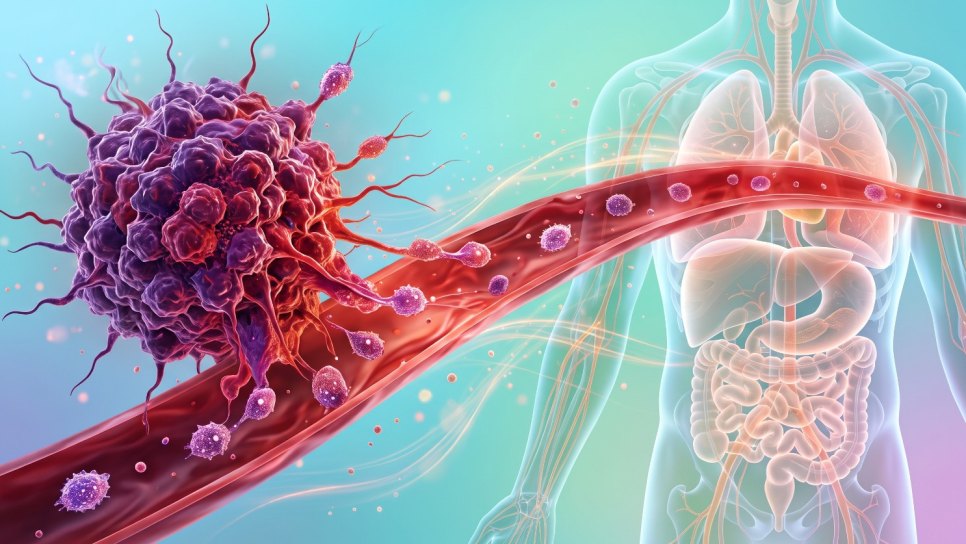
Metastasis is the process by which cancer cells break away from the tissue where they first formed and spread to other organs through the blood, the lymphatic system or the body cavities, where they form new tumours. Cancer that has metastasised is called metastatic cancer and, for most cancer types, is classified as stage 4. Cancer that has spread is named after the organ in which it began and keeps that cancer's characteristics.
| Term | Meaning |
|---|---|
| Primary (original) tumour | The tumour in the organ where the cancer began. |
| Regional spread | Spread of the cancer to nearby lymph nodes or surrounding tissues; usually stage 2 or 3. |
| Distant metastasis (M1) | Spread of the cancer to distant organs or distant lymph nodes; shown as "M1" in staging. |
| Stage 4 | In most solid tumours, this means distant metastasis. In some cancers, however (for example, certain subgroups of head and neck and thyroid cancers), stage 4 can be defined without distant metastasis. |
| Oligometastasis | A limited number (usually 1–5) of metastatic sites; long-term control may be possible with local treatments. |
| Recurrence (relapse) | The return of cancer after treatment, either in the same area or in distant organs. |
| Cancer of unknown primary | A situation in which metastasis is found but the original tumour cannot be identified; about 2–5% of all cancers. |
Blood cancers such as leukaemia, lymphoma and multiple myeloma are widespread in the body from the outset; in these, staging and the concept of "metastasis" differ from those used for solid tumours.
How does metastasis happen?
Metastasis is a long and "inefficient" process in which the cancer cell has to overcome a series of demanding steps. Most cancer cells that enter the bloodstream are eliminated by the immune system, by the pressure of the flow and by an unsuitable environment; an estimated fewer than one in ten thousand go on to form a new tumour. The cells that do manage to spread have usually undergone additional changes that give them the ability to move, to survive and to adapt to a new environment (does a biopsy spread cancer?).
Figure 1 · How does metastasis develop? An illustrated guide
From the original organ into the circulation, and on to a distant organ: six steps
Metastasis does not begin only in the final stage of a tumour: in some cancers, cells can enter the circulation early in the course of the disease. This is why preventive (adjuvant) treatment is given after surgery even for early-stage cancers. Today, tests for circulating tumour DNA (ctDNA) in the blood are increasingly making it possible to detect residual disease that is not yet visible on imaging (ctDNA tests after surgery, ultra-sensitive ctDNA in breast cancer).
Figure 2 · Dormant cells and late recurrence
Why can cancer return even years after treatment?
How does cancer spread?
Figure 3 · Three routes of spread
The blood, the lymphatic system and the body cavities
Why does cancer metastasise, and why does it settle in particular organs?
Cancer cells do not settle in an organ at random. The "seed and soil" idea that Paget put forward in 1889 has now been confirmed at the molecular level: a cancer cell can take root only in an organ whose microenvironment suits it. The direction of blood flow adds to this.
Figure 4 · How does the direction of blood flow affect where metastasis occurs?
A simplified diagram of the circulation
Figure 5 · Seed and soil: the nest is prepared in advance
A tumour can prepare the target organ before cancer cells arrive
Figure 6 · Factors that determine organ selectivity
Seed and soil, blood flow and molecular mechanisms
For cancer cells to grow in a new organ, they also need to form new blood vessels (angiogenesis) and to evade the immune system. Each of these mechanisms is a target for treatments such as drugs that block blood-vessel formation and immunotherapy (immunotherapies).
Which cancers spread to which organs?
Figure 7 · The most common sites of metastasis and their source cancers
Shown on a body map; any cancer can spread to any organ
| Cancer type | Common sites of metastasis |
|---|---|
| Lung | The other lung, adrenal glands, liver, bone, brain |
| Breast | Lymph nodes, bone, liver, lungs, lining of the lungs (pleura), brain |
| Colon and rectum | Liver, lungs, peritoneum; less often bone and brain |
| Prostate | Bone (especially the spine and pelvis), lymph nodes |
| Stomach | Peritoneum, liver, lymph nodes, ovaries (Krukenberg tumour) |
| Pancreas | Liver, peritoneum, lungs |
| Ovary | Peritoneum, surface of the abdominal organs, lining of the lungs (pleura), liver |
| Kidney | Lungs, bone, brain, liver |
| Bladder | Lymph nodes, bone, lungs, liver |
| Melanoma | Skin, lymph nodes, lungs, liver, brain, bone |
| Head and neck | Lymph nodes in the neck, lungs |
| Cervix | Pelvic lymph nodes, lungs, liver, bone |
| Thyroid | Lymph nodes in the neck, lungs, bone |
Brain tumours (gliomas) very rarely spread outside the brain. In leukaemia, lymphoma and multiple myeloma, involvement of the bone marrow or lymph nodes is not metastasis but the natural spread of the disease.
For more detail, see our articles on the individual cancer types: lung, breast, colorectal, prostate and ovarian cancer.
What are the symptoms of metastasis?
The symptoms of metastasis depend on the organ to which the cancer has spread: in the bone, persistent pain that is worse at night, or a fracture; in the lungs, a cough that will not go away and breathlessness; in the liver, jaundice, pain in the upper right abdomen and abdominal swelling; in the brain, headache, vomiting, seizures or weakness; and in the lymph nodes, painless swelling. Tiredness, loss of appetite and unexplained weight loss are general symptoms; metastasis can also be found without causing any symptoms at all.
Figure 8 · Possible symptoms of metastasis by organ
These symptoms can also have other causes; talk to your doctor
Figure 9 · An emergency: spinal cord compression
Side view of the spine
Most of these symptoms can also arise from causes unrelated to cancer; what matters is to report new, persistent or worsening complaints to your doctor without delay (which symptoms mean you should call your oncology team). For more on brain metastasis and spread to the linings of the brain, see our articles on brain metastasis in breast cancer, leptomeningeal metastasis and brain oedema.
How is metastasis diagnosed?
Figure 10 · From suspected metastasis to a treatment plan
Imaging, biopsy and multidisciplinary review
Tumour markers (such as CEA, CA 15-3, CA 125 and PSA) cannot establish a diagnosis on their own; they help in monitoring the response to treatment and the course of the disease. Not every area of uptake on PET-CT means cancer either; inflammation and healing processes can also show uptake (what is FDG uptake?). Broad genetic testing of tissue taken from a metastasis can reveal options for targeted drugs (next-generation sequencing).
How long can someone live with stage 4 cancer?
Questions such as "how long can someone live with stage 4 cancer?" or "how long can you live once cancer has spread to the bone?" have no single answer. The most important factors that shape survival are the type of cancer and its molecular features, the number and location of the metastases, the response to treatment and the person's general health. For example, according to US data, 5-year survival in colorectal cancer that has not spread is above 90%, but it falls to around 15% once the cancer has spread to distant organs; by contrast, 5-year survival in melanoma with distant metastasis has risen from 16% to 35% thanks to immunotherapy (survival in stage 4 melanoma). In some cancers, such as hormone receptor-positive breast cancer or prostate cancer, people can live well for many years with bone metastasis (metastatic HER2-positive breast cancer).
Average statistics come from patients treated in the past and do not fully reflect the effect of today's treatments; they are not a precise prediction for any individual patient. The most accurate information is the assessment your oncologist makes for your particular cancer type and situation. Lifestyle changes such as stopping smoking contribute to survival even at stage 4 (the effect of stopping smoking).
Limited metastasis (oligometastasis): a different picture
When there are only a few metastases (usually 1–5 sites), the disease can behave differently from widespread metastasis. In these patients, adding local treatments such as surgery, stereotactic radiotherapy (SBRT) or ablation to all metastases, alongside systemic treatment, can provide long-term control in carefully selected patients (CyberKnife radiosurgery). Liver metastases from colorectal cancer that can be removed surgically are the classic example in which cure can be achieved with this approach (liver metastasis in colorectal cancer).
The contribution of local treatment in limited metastasis: SABR-COMET
5-year overall survival, percent. Coloured bar: stereotactic radiotherapy to all metastases + standard treatment; grey bar: standard treatment alone.
Phase 2 randomised trial; 99 patients with 1–5 metastases from a range of cancer types. Serious side effects were also more frequent in the stereotactic radiotherapy arm. The results are being tested in larger phase 3 trials in carefully selected patients.
Figure 11 · Limited and widespread metastasis on a body map
Illustrative drawing
Figure 12 · Limited and widespread metastasis
The goal of treatment depends on how widespread the metastasis is
Not every limited metastasis benefits from local treatment, however: in phase 3 trials the results vary by cancer type, and the side effects of SBRT must also be taken into account. If stereotactic radiotherapy is planned while a patient is receiving a targeted drug or immunotherapy, interactions with the medicines should be assessed (radiosurgery and targeted drugs).
Treatment options for metastatic cancer
- Chemotherapy: Targets rapidly dividing cancer cells; used alone or together with other treatments.
- Targeted ("smart") drugs: Target specific mutations or proteins found in the tumour (such as EGFR, ALK, HER2 and BRAF); they can provide long-term control in suitable patients.
- Immunotherapy: Releases the brakes on the immune system, helping it to recognise and eliminate cancer cells; it has changed the course of metastatic disease in many cancers, including melanoma, lung cancer and kidney cancer.
- Hormone therapy: One of the main treatments for hormone-sensitive cancers such as breast and prostate cancer.
- Antibody–drug conjugates: A new generation of "smart" drugs that deliver chemotherapy directly to the cancer cell.
- Radiotherapy: Used at high doses for control in limited metastasis (SBRT), and in widespread disease to relieve pain, bleeding or symptoms of pressure (new radiotherapy methods for brain metastasis).
- Surgery and ablation: In suitable patients, limited metastases in the liver, lung or brain can be removed or destroyed with heat.
- Supportive and palliative care: Should be planned from the start of treatment for pain, breathlessness, nutritional problems and mental health; it improves quality of life and, in some studies, survival as well (palliative care, depression and psychotherapy in cancer).
In Turkey, the chemotherapy, hormone therapies, many targeted drugs and immunotherapies used in metastatic cancer are licensed; however, reimbursement for some drugs depends on specific conditions and cancer types. Stereotactic radiotherapy, PET-CT and molecular testing are available at many centres. Making treatment decisions in metastatic disease at tumour boards attended by specialists in medical oncology, radiation oncology, surgery, radiology and pathology ensures that selective approaches, such as those for limited metastasis, are applied to the right patients. Access to palliative care services, however, is still insufficient; it is important for patients to ask for this support from the start of treatment.
Advice for patients and their families
- Ask the right questions: Is the metastasis limited or widespread? Have the molecular features of the tumour been tested? What is the aim of treatment: control, cure or relief of symptoms? Is there a suitable clinical trial?
- Report symptoms early: New pain, breathlessness, jaundice, seizures, weakness, or back pain together with weakness in the legs should be reported straight away.
- Ask for supportive care: Support for pain, fatigue, nutrition and emotional difficulties is as important as the treatment itself.
- Do not fixate on average figures: Statistics are averages from the past; your oncologist is best placed to assess your own situation.
- When making decisions, do not hesitate to seek a second opinion from an experienced centre.
Frequently asked questions
- What is metastasis?
- Metastasis is the spread of cancer cells from the tissue where they first formed to other organs through the blood, the lymphatic system or the body cavities, where they form new tumours. Cancer that has metastasised is called metastatic cancer and, for most cancer types, is classified as stage 4. Cancer that has spread is named after the organ in which it began.
- What are the symptoms of metastasis?
- The symptoms depend on the organ to which the cancer has spread: persistent pain or a fracture in the bone, cough and breathlessness in the lungs, jaundice and abdominal swelling in the liver, headache, seizures or weakness in the brain, and swelling in the lymph nodes. Tiredness and weight loss may also occur. Back pain together with weakness in the legs is an emergency.
- Why does cancer metastasise?
- Over time, cancer cells acquire additional genetic changes that allow them to detach from one another, enter blood vessels, survive in the circulation and grow in new organs. Which organ they settle in is determined by the direction of blood flow and by how well the target organ suits the cancer cell ("seed and soil"). Only a small number of cells that manage to evade the immune system can form a metastasis.
- Can stage 4 cancer be treated?
- Yes. Although stage 4 cancer often cannot be eliminated completely, it can be kept under control for many years with chemotherapy, targeted drugs, immunotherapy, hormone therapy and radiotherapy. In the US, 5-year survival for cancer that has spread to distant organs has risen from 17% to 35% over the past 30 years. In some patients with limited metastasis, cure may be possible.
Glossary
- Metastasis
- The spread of cancer from the organ where it began to distant parts of the body.
- Primary tumour
- The tumour in the organ where the cancer first began.
- Oligometastasis
- A situation in which there is a limited number (usually 1–5) of metastatic sites.
- Dormancy
- A state in which metastatic cancer cells remain "asleep" for a long time without dividing.
- Angiogenesis
- The formation of new blood vessels to nourish a tumour.
- Peritoneum
- The membrane that lines the abdominal cavity and covers the abdominal organs.
- Stereotactic radiotherapy (SBRT)
- Radiation treatment in which a high dose is delivered to the target in a small number of sessions while largely sparing the surrounding tissue.
- ctDNA
- Circulating tumour DNA in the blood; it can be used to monitor residual disease and the response to treatment.
- Palliative care
- Supportive care that aims to relieve symptoms and improve quality of life at every stage of the illness.
DROZDOGAN Academy Commentary
Metastasis is the hardest turn on the cancer road, but a "stage 4" diagnosis today carries a very different meaning from 20 years ago.
⚡ Why it matters
Understanding the biology of metastasis explains why preventive treatment after surgery, regular follow-up, a repeat biopsy of the metastasis and local treatment in limited metastasis all matter.
✅ What we know today
Survival in cancer that has spread to distant organs has doubled over the past 30 years. There is randomised evidence that local treatment can extend survival in limited metastasis. Molecular testing of the metastasis is widening the options for targeted drugs and immunotherapy.
⚠️ Limitations
Most widespread metastatic cancers still cannot be cured. Average survival figures vary greatly by cancer type and are not enough for an individual prediction. In limited metastasis, it is not yet fully known which patients will benefit most from local treatment.
🩺 In practice
For every patient diagnosed with metastatic disease, we assess together how widespread the metastasis is, the molecular features of the tumour and the patient's own priorities. We discuss patients with limited metastasis at the tumour board with a view to local treatment, and we plan palliative support from the time of diagnosis.
❓ Open questions
Will it become possible to eliminate dormant cancer cells before they awaken? Can treatments be developed that prevent the formation of the pre-metastatic "nest"? Will detecting and treating metastasis with ctDNA, before it is visible on imaging, extend survival?
Bottom line: Metastasis is the most critical turning point in cancer, but it is no longer the end of the road. With an accurate diagnosis, personalised treatment and early support, living a long and meaningful life with metastatic cancer is becoming possible more and more often.
- This article was prepared in October 2026; the previous version was updated and rewritten.
- Survival data are taken from the American Cancer Society's Cancer Statistics 2026 report and refer to the US population; figures for Turkey may differ. Stage-specific survival rates for colorectal cancer are approximate.
- The share of cancer-related loss of life attributable to metastasis (66.7%) is based on Norwegian cancer registry data; the proportion varies by cancer type.
- SABR-COMET is a phase 2 trial; the comparison in the chart is between the two arms of a single study.
- The sites of metastasis by organ are simplified general information. This article is for general information only and is not personal medical advice. The diagrams are simplified. The Academy commentary is our own.
References
- Siegel RL, et al. Cancer statistics, 2026. CA Cancer J Clin 2026. Press release: American Cancer Society, January 2026. pressroom.cancer.org
- Dillekås H, Rogers MS, Straume O. Are 90% of deaths from cancer caused by metastases? Cancer Med 2019;8:5574-5576. doi:10.1002/cam4.2474
- Chaffer CL, Weinberg RA. A perspective on cancer cell metastasis. Science 2011;331:1559-1564. doi:10.1126/science.1203543
- Hoshino A, Costa-Silva B, Shen TL, et al. Tumour exosome integrins determine organotropic metastasis. Nature 2015;527:329-335. doi:10.1038/nature15756
- Müller A, Homey B, Soto H, et al. Involvement of chemokine receptors in breast cancer metastasis. Nature 2001;410:50-56. doi:10.1038/35065016
- Paget S. The distribution of secondary growths in cancer of the breast. Lancet 1889;133:571-573. doi:10.1016/S0140-6736(00)49915-0
- Hellman S, Weichselbaum RR. Oligometastases. J Clin Oncol 1995;13:8-10. doi:10.1200/JCO.1995.13.1.8
- Palma DA, Olson R, Harrow S, et al. Stereotactic ablative radiotherapy for the comprehensive treatment of oligometastatic cancers: long-term results of the SABR-COMET phase II randomized trial. J Clin Oncol 2020;38:2830-2838. doi:10.1200/JCO.20.00818
Was this article helpful?
Your feedback helps us improve our content.




Reader comments
Share your comment
Your name and comment are published only after administrator approval. Your email address is never shown to visitors.
Be the first to comment.