Health Doesn't Fit in a Drop of Blood: Elizabeth Holmes, Theranos, Digital Health and a Holistic View
In this article
Fitting Health into a Single Drop: A Story of Self-Deception from Theranos to Today
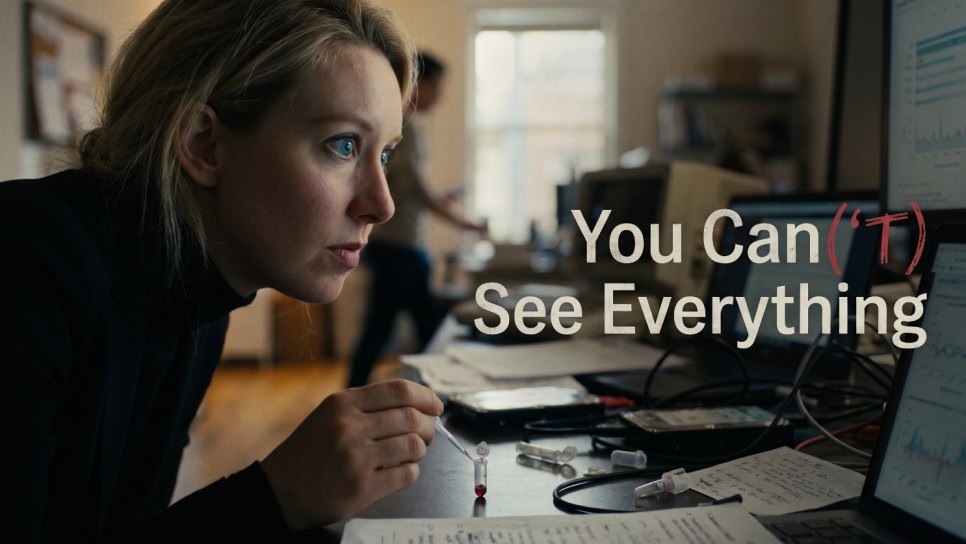
You Can See Everything (2026), the documentary about Elizabeth Holmes and Theranos, has become one of the most talked-about documentaries of the year. Directed by Nathan Fielder and Lance Oppenheim, the film focuses on the 34 days before Holmes reported to prison. For me, though, the real question is not who Holmes is; it is why so many people, experienced investors and statesmen among them, believed the promise of "hundreds of tests from a single drop of blood." In this essay I look at the digitalisation of health, at why one-size-fits-all approaches fail, at why digital-health startups collapse so often, and at why health has to be assessed as a whole. I introduced the Check The Life programme, which I built on this view, in my article on the Blue Zones and Check The Life; I discussed the real causes of cancer in my article cancer can be prevented.
The film is not only talked about; it also stands out in the numbers. With 254 critic reviews, it holds 97% on Rotten Tomatoes and 95% from audiences, and its IMDb user rating hovers above 9 out of 10 (9.1 at the end of November 2026), placing it among the highest-rated documentaries of all time on IMDb. According to Gold Derby, it became only the third documentary to pass $100 million at the US box office, after Fahrenheit 9/11 and The Eras Tour. In the Oscar race, the film is on the Academy's list of 190 Documentary Feature submissions and is ranked among the top three contenders on prediction sites. More remarkable still, the Academy has noted that the film is also eligible for Best Picture: no documentary in Oscar history has ever been nominated in that category. The shortlist will be announced on December 15 and the nominations on January 21, 2027; the 99th Academy Awards ceremony will take place on March 14, 2027.
- Theranos: Founded in 2003, the company claimed it could run hundreds of tests on a few drops of fingertip blood; by 2014 it was valued at $9 billion. The device could not do what was promised. In 2022 Holmes was found guilty of defrauding investors and sentenced to 11¼ years in prison.
- The documentary: You Can See Everything is not a classic exposé; it is an unsettling study of persuasion, perception and the nature of deception. Its central question: "Can you see everything?"
- The common error: Reducing health to a single measurement. One drop of blood, one watch, one whole-body scan or one "biological age" number is not enough to describe a person's health.
- The alternative: Holistic health: measuring physical, psychological, social and host (microbiome) health together, interpreting the results with a physician and following them over the years. Check The Life was founded on this idea.
Why does this matter?
Of course we would love to simplify health. One test, one app, one device; relief if the result is green, action if it is red. This wish is so powerful that a company like Theranos was able to raise billions of dollars for years without a single serious scientific publication. Today the same wish appears in smartwatches, in scanning centres that "see everything" in one session, in promises to "reverse your biological age" and in apps that recommend the same supplement list to everyone (chronological and biological age).
The problem is not the technology itself. The problem is the idea that health can be reduced to a number. People around the world are living longer, yet they spend an average of 9.6 years with illness or disability. What will close this gap is not a single test; it is attending to movement, nutrition, sleep, mental health, social ties, family history and proven screening together. At a time when health misinformation is so widespread on social media, being able to make this distinction matters more than ever (health misinformation on social media).
- No: Theranos was neither the first nor the last health-technology deception. After it, the microbiome-testing company uBiome shut down over fraudulent billing, and Babylon Health, which claimed its artificial intelligence diagnosed "as well as a doctor," collapsed.
- What is new: Rather than retelling the events, the documentary shows how the person who deceived constructs her own narrative, for the camera and for the audience.
- What has not changed: The promise of "seeing everything with a single measurement" still sells.
What was Theranos and why did it collapse?
Theranos was a company founded by Elizabeth Holmes in 2003 that claimed it could run hundreds of laboratory tests quickly and cheaply from a few drops of fingertip blood. Its device could not reliably perform most of these tests; the company secretly ran them on other manufacturers' machines. After the truth emerged in 2015, it closed in 2018.
Theranos's device, called "Edison," rested on a promise that ignored the basic rules of laboratory medicine. Fingertip blood mixes with tissue fluid; reliably running dozens of different measurements on a few drops is technically very difficult. Instead of admitting this, the company diluted the blood and ran it on commercial analysers. The results were frequently wrong, and those errors influenced treatment decisions for real patients. The truth was brought to light by Wall Street Journal reporter John Carreyrou and by employees who spoke up from inside the company, such as Erika Cheung and Tyler Shultz. In January 2022 Holmes was found guilty on four counts of defrauding investors; she was acquitted of the charges relating to patients. She received a prison sentence of 135 months and, together with her former partner Ramesh Balwani, was ordered to pay $452 million in restitution.
What the documentary is about: "Can you see everything?"
You Can See Everything opens in 2023, when Holmes and her partner Billy Evans invite the film crew to a rented beach house in Del Mar, California, 34 days before she goes to prison. Running close to three hours, the film carries the style Fielder is known for from "Nathan for You" and "The Rehearsal," blurring the line between reality and fiction. Holmes's family, her children, her effort to tell her own story and her bearing, which still hints at innocence, all come before the camera. The film premiered with a surprise screening at the Telluride Film Festival on September 6, 2026, was released in the US by A24 on October 16 and received highly favourable reviews from critics.
What moves me most about the film is the double meaning of the question in its title. Theranos claimed it could "see everything in a single drop"; the documentary asks whether a camera can show a person "in their entirety." In both cases the answer is the same: no. Neither a drop of blood can fully show a person's health, nor can 34 days of footage fully show a person's character. Tyler Shultz, who worked at Theranos and exposed the truth, has criticised the film for leaving some points out, a reminder of how much it matters whose hands the narrative is in.
One drop, one watch, one scan: The appeal of reductionism
The Theranos promise lives on today in different guises. What they share is the claim to fit health into a single measurement, a single device or a single session.
- One drop: Tests done at home or at the pharmacy that report dozens of values from a single sample. Some are accurate and useful; but when they skip the question of which test is needed by whom and when, they can lead to needless anxiety and needless further testing.
- One watch: Smartwatches and rings collect data on steps, sleep, heart rate and rhythm. These data are a valuable starting point, but until they are interpreted they are only numbers. They can generate false alarms as well as false reassurance.
- One scan: Neko Health, co-founded by Spotify founder Daniel Ek, promises to catch problems such as heart disease, skin cancer and diabetes early with a scan of about 50 minutes; according to press reports, the company raised funding in 2025 at a valuation of about $1.8 billion. Experts, however, stress that such scans on their own do not reveal most preventable conditions such as heart disease, high blood pressure or diabetes, and that incidental findings can lead to needless anxiety and further tests.
- One number: A single result such as "your biological age is 42." Epigenetic clocks are scientifically interesting, but not mature enough to guide an individual's treatment.
The founders of these ventures often know technology well, but they either do not understand the philosophy of health or choose to ignore it. Health cannot be reduced to a single variable like an engineering problem. The same LDL cholesterol value means one thing for someone who smokes and has a family history of early heart attack, and something else for someone who is active and has no risk factors. A raised tumour marker can be a sign of cancer in one person and a harmless finding in another. What gives a result meaning is the context supplied by a physician who knows the person.
Figure 1 · The reductionist promise and the holistic approach
Same tools, different mindset
Why do digital-health startups collapse so often?
Over the past decade, digital health has become one of investors' favourite fields. Yet in the same period, many ventures that set out with grand promises have collapsed or disbanded. A few examples:
| Company | Promise | What happened? |
|---|---|---|
| Theranos (US) | Hundreds of tests from a few drops of blood | Valued at $9 billion in 2014; the device did not work; closed in 2018, and its founder received a prison sentence |
| uBiome (US) | At-home microbiome testing | FBI raid and bankruptcy in 2019; the founders were charged with defrauding investors in 2021 |
| Babylon Health (UK) | AI diagnosis as good as a doctor's | Went public in 2021 at a $4.2 billion valuation; its claims were scientifically disputed; collapsed in 2023 |
| Haven (US) | A venture by Amazon, Berkshire Hathaway and JPMorgan to rebuild the health system | Founded in 2018, disbanded in February 2021 |
Source: publicly available sources on the companies and court records (see References). The list is illustrative; not every digital-health venture fails.
Behind these collapses I see a few common causes:
- "Sell first, build later" does not suit medicine: In the software world, launching an unfinished product and fixing it afterwards is routine. In medicine, a wrong result leads to a real person receiving the wrong treatment.
- Marketing instead of evidence: Theranos grew for years without publishing in peer-reviewed journals. An assessment in The Lancet concluded that there was no convincing evidence behind Babylon's "as good as a doctor" claim in real-world practice.
- Data is not knowledge: More measurement does not mean better health. Uninterpreted data produces anxiety and unnecessary tests.
- The health system is complex: Haven's dissolution, despite the backing of three of the world's most powerful companies, showed that health cannot be fixed by technology and capital alone.
- One solution for everyone: A single app, a single algorithm or a single package does not fit people who differ in age, family history, illnesses and living conditions in the same way.
Why does "the same prescription for everyone" fail in health?
The strongest determinants of health lie not in a single blood value but in life itself. In two large US cohorts, people who had all five habits (not smoking, maintaining a normal weight, being active for at least 30 minutes a day, eating healthily and keeping alcohol limited) lived 14 years longer as women and 12 years longer as men after the age of 50, compared with those who had none. This study counted moderate drinking as "healthy"; but it is important to remember that alcohol raises cancer risk (alcohol and cancer, smoking and cancer).
Five healthy habits and life expectancy
Total life expectancy at age 50 (years). US, two large cohorts.
The five habits: not smoking, normal weight, at least 30 minutes of activity a day, a healthy diet and moderate alcohol. The difference is 14.0 years in women and 12.2 years in men. These are observational data; they do not prove cause and effect. Source: Li et al., Circulation 2018.
Cardiorespiratory fitness is an equally powerful marker. Among 122,007 people assessed with an exercise test, those with the lowest fitness had a 5-fold higher risk of loss of life than those with the highest; this difference was far larger than the risk associated with smoking or diabetes (exercise is a cancer medicine, moderate physical activity, inactivity and colon cancer). Fitness cannot be read from a drop of blood or from a photograph.
Fitness, smoking and diabetes: risk of loss of life
Adjusted hazard ratio (1.00 = reference). 122,007 people assessed with an exercise test.
Fitness is not measured from a single drop of blood, a single watch or a single imaging study; it requires an exercise test and functional tests. These are observational data. Source: Mandsager et al., JAMA Netw Open 2018.
Differences between individuals show up even in how people respond to medicines. In the European PREPARE study, choosing drugs and doses for each person based on 12 genes reduced serious side effects by about 30%. Nutrition is no different: what works is not the same diet for everyone, but a plan built around the person's habits, weight and illnesses (the Mediterranean diet, ultra-processed foods, obesity and healthy diets).
What is holistic health? The Check The Life approach
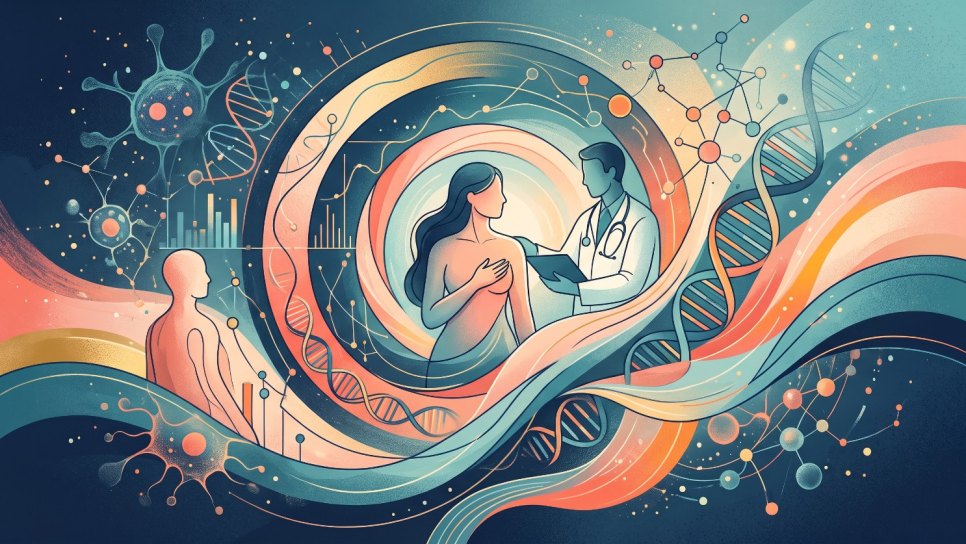
Holistic health means considering a person together with their body, mind, relationships and biology, without reducing them to a single organ, a single test or a single disease. I founded Check The Life on this understanding. The programme's slogan is "Measure together, manage together." Our aim is not only to add years to life, but to add health to those years.
In Check The Life, health is measured in four domains and read as a whole: physical health (movement, nutrition, habits), psychological health (mood, stress, sleep), social health (work, family, connections) and host health (the gut microbiome) (the gut microbiome, stress and cancer). Each domain is scored from 0 to 100 and tracked over the years. Six disciplines (internal medicine, cardiology, psychology, nutrition, physiotherapy, and gynaecology or urology) look at the same person at the same table; the findings are combined in a single report and turned into a personal plan together with the physician.
Figure 2 · The four domains of health
One picture, four domains in Check The Life
This approach rests on three core principles:
- Not every test, but the right test: Measurements are chosen according to age, sex, family history and lifestyle. No "just in case" testing. Proven screening always comes first (screening with colonoscopy, early diagnosis of breast cancer).
- Family history is the first genetic test: A three-generation pedigree shows who needs which screening and when; where necessary, genetic counselling and testing are planned (nutrition, genetics and cancer, BRCA1 and BRCA2).
- A trend, not a single result: Not a one-day check-up, but lifelong follow-up. Check-ins are scheduled at 1, 3, 6 or 12 months depending on the person; what we discuss is not the meaning of one result but of change over time.
Figure 3 · The Check The Life cycle
Measure, understand, plan, manage together, remeasure
So, am I against technology?
No. At Check The Life I also use new-generation tools: whole-genome sequencing and polygenic risk scores, pharmacogenomic testing that predicts drug response, microbiome analysis, whole-body MRI and multi-cancer early detection (MCED) testing, which looks for signals of many cancer types in a single blood sample (next-generation sequencing). But I use them under three conditions: they must complement proven screening rather than replace it, the decision about who they suit must be made together with a physician, and every result must be interpreted by a physician and tied to a plan.
The limits of these tools also need to be stated plainly. It has not yet been shown in randomised trials that multi-cancer early detection tests reduce loss of life from cancer. Whole-body MRI can lead to further tests and anxiety because of incidental findings that may be insignificant. Microbiome and polygenic risk scores are advancing rapidly in science, but not every result translates into a treatment decision today. What makes a tool valuable is not the tool itself; it is using it in the right person to answer the right question.
7 questions to ask so you are not misled
- Has the accuracy of this test or device been demonstrated in peer-reviewed scientific publications?
- Who will interpret the result? Is there a plan for what happens if something is found?
- Is this measurement really necessary for my age, sex and family history?
- Is it offered instead of proven screening, or alongside it?
- What happens if there is a false positive or an incidental finding?
- Is the same package offered to everyone, or is it chosen for me?
- Is it a one-off, or will my results be followed over time?
What is the situation in Türkiye?
In Türkiye, too, check-up packages, home test kits, direct-to-consumer genetic tests and health apps are spreading quickly. Some of them are useful; others can lead to a burden of unjustified tests, needless anxiety or false reassurance. In Türkiye, more than half of all loss of life is due to cardiovascular disease and cancer; both begin years in advance, and a large share of them can be measured, prevented and caught early. That is why the question to ask about a health assessment should not be "how many tests were done?" but "were these tests chosen for me, and what kind of plan did the results lead me to?" Trust-based communication between physician and person comes before any technology (patient and physician communication).
Questions you can ask your doctor
- Which screenings are proven and necessary for my age, sex and family history?
- How should I interpret the data from my smartwatch or ring?
- What will the additional tests on offer (whole-body MRI, genetic testing, blood tests) gain me, and what are the possible harms?
- Will my results be assessed once, or followed over time?
- How will my sleep, stress and activity patterns be assessed?
- "The more tests, the better." No. Unjustified testing can bring incidental findings, needless anxiety and additional procedures. What matters is the right test for the right person.
- "If my smartwatch says I'm normal, I'm healthy." Device data is a useful starting point, but it does not replace many important measurements such as blood pressure, cholesterol, cancer screening and fitness.
- "AI diagnoses better than a doctor." In some areas AI is a powerful aid; but it does not replace a physician who knows the person's history, values and preferences.
- "I can learn my biological age from a single test." Epigenetic clocks are still at the research stage; a single number does not describe health as a whole.
The most reliable way to judge the value of a new test or treatment is through well-designed clinical trials (what is a clinical trial?). Health should be approached holistically during illness, too (a holistic approach to the cancer patient).
Frequently Asked Questions
- What is the documentary You Can See Everything about?
- Directed by Nathan Fielder and Lance Oppenheim, the 2026 documentary follows Theranos founder Elizabeth Holmes during the 34 days before she reported to prison. It is not a classic exposé; it questions the nature of persuasion, perception and deception.
- Why did Theranos collapse?
- The company's device, which supposedly ran hundreds of tests on a few drops of blood, could not reliably perform most of them. Tests were secretly run on other machines, and results were often wrong. The truth came out in 2015, and the company closed in 2018.
- Are smartwatches and whole-body scans enough to measure my health?
- Not on their own. These tools can provide useful data, but they do not replace proven screening, fitness assessment, or evaluation of mental health and family history. The results need to be interpreted in context by a physician.
- What is Check The Life?
- It is the holistic health programme I founded, focused on preventing cardiovascular disease and cancer. It measures physical, psychological, social and host health with six disciplines and follows each person, together with them, throughout life.
Glossary
- Holistic health
- An approach to health that considers a person together with their body, mind, relationships and biology.
- Reductionism
- The tendency to explain a complex situation by reducing it to a single measurement or cause.
- Healthspan
- The years of life lived free of illness and disability.
- Incidental finding
- A finding detected by chance on a test done for another purpose, often of no significance.
- Overdiagnosis
- Diagnosing, and needlessly treating, a condition that would never have harmed the person.
- Wearable
- A device worn on the body, such as a smartwatch or ring, that collects health data.
- Pharmacogenomics
- The field that studies how genes affect a person's response to medicines.
- Host health
- The influence of the community of microorganisms in the gut (the microbiome) on health.
- Multi-cancer early detection (MCED) test
- A test that looks for signals of many cancer types in a single blood sample.
- Cardiorespiratory fitness
- The capacity of the heart, lungs and muscles to adapt to exercise; measured with an exercise test.
DROZDOGAN Akademi Commentary
The story of Theranos is not a story about technology; it is a story about philosophy. Every promise that reduces health to a single measurement should be tested with the same question: what does this measurement tell me, in my life?
⚡ Why it matters
Digital-health tools are multiplying rapidly, and people increasingly try to read their health from a screen. Used correctly, these tools are valuable; used wrongly, they produce false reassurance, needless anxiety and unnecessary tests.
✅ Strengths
The holistic approach rests on solid ground: the impact of lifestyle, fitness, sleep and social ties on health has been shown consistently in large cohorts. Proven screening reduces loss of life from cancer.
⚠️ Limitations
A holistic assessment takes time, a team and effort; it is harder and more expensive than a single test. The long-term benefit of new-generation tests (MCED, polygenic risk, whole-body MRI) is not yet fully known. Most lifestyle data are observational.
🩺 In practice
At Check The Life, I first ask every person this question: what matters to you? We choose measurements according to that answer, age and family history; we interpret the results together across six disciplines and follow them over the years. I use new technologies, but I never present any of them as an answer on its own.
❓ Open questions
Will digital-health tools and AI strengthen the doctor–patient relationship, or try to replace it? How will we measure how much holistic programmes extend healthspan in the long run?
Bottom line: Health does not fit into a single drop of blood, a single watch or a single scan. We do need to measure; but the right things, in the right person, together and over time.
- This article was prepared in November 2026.
- Conflict of interest: Check The Life is a programme I founded and run at Memorial Göztepe Hospital. Because I introduce this programme in the article, I have a conflict of interest. The programme also uses whole-body MRI, multi-cancer early detection testing and genomic tests; I have stated the limits of these tools openly in the article.
- Information about the documentary was compiled from the production company, film reviews and publicly available sources. IMDb and Rotten Tomatoes scores change over time; the values given are those at the end of November 2026. Oscar expectations are the assessments of prediction sites, not final results. Information on Theranos and the other companies is based on court records and press sources. Neko Health's valuation is a press report that has not been confirmed by the company.
- The data in the charts come from observational studies. The Akademi comment is my own. This article is not medical advice; make your health decisions together with your doctor.
References
- A24. You Can See Everything (2026). a24films.com
- You Can See Everything. Wikipedia (accessed November 2026). wikipedia.org
- Gold Derby (Yahoo Entertainment). 'You Can See Everything' headlines Academy's list of Oscar-submitted Documentary Features. November 23, 2026. yahoo.com
- Rotten Tomatoes. You Can See Everything (accessed November 2026). rottentomatoes.com
- IMDb. You Can See Everything (2026) (accessed November 2026). imdb.com
- TIME Prediction Markets (sponsored content). Could "You Can See Everything" be the first documentary nominated for Best Picture? October 1, 2026. time.com
- Elizabeth Holmes. Wikipedia (accessed November 2026). wikipedia.org
- Carreyrou J. Bad Blood: Secrets and Lies in a Silicon Valley Startup. Knopf; 2018.
- Babylon Health. Wikipedia (accessed November 2026). wikipedia.org
- uBiome. Wikipedia (accessed November 2026). wikipedia.org
- Haven Healthcare. Wikipedia (accessed November 2026). wikipedia.org
- Axios. Full-body scan startup Neko Health raises $260 million. January 2025. axios.com
- The Week. Full-body scans: are Neko Health and the like more panic than panacea? April 2025. theweek.com
- Li Y, Pan A, Wang DD, et al. Impact of healthy lifestyle factors on life expectancies in the US population. Circulation 2018;138:345-55. doi:10.1161/CIRCULATIONAHA.117.032047
- Mandsager K, Harb S, Cremer P, et al. Association of cardiorespiratory fitness with long-term mortality among adults undergoing exercise treadmill testing. JAMA Netw Open 2018;1:e183605. doi:10.1001/jamanetworkopen.2018.3605
- Swen JJ, van der Wouden CH, Manson LE, et al. A 12-gene pharmacogenetic panel to prevent adverse drug reactions (PREPARE). Lancet 2023;401:347-56. doi:10.1016/S0140-6736(22)01841-4
- Garmany A, Terzic A. Global healthspan-lifespan gaps among 183 World Health Organization member states. JAMA Netw Open 2024;7:e2450241. doi:10.1001/jamanetworkopen.2024.50241
- Turkish Statistical Institute (TÜİK). Statistics by cause, 2024. data.tuik.gov.tr
Plan your visit
Share your preferred date. Our team will contact you to arrange the appointment.
Was this article helpful?
Your feedback helps us improve our content.