
Colonoscopy Screening for Large Bowel – Colorectal Cancer

Colonoscopy is the best method both for early diagnosis of large bowel cancers and for detecting polyps, obtaining biopsies and/or completely removing a polyp. Although proven to reduce colorectal cancer and related mortality rates, it is still not used as widely as desired as a cancer screening method in many countries because of procedure-related anxiety, pain and discomfort, operator performance and questions about effectiveness.
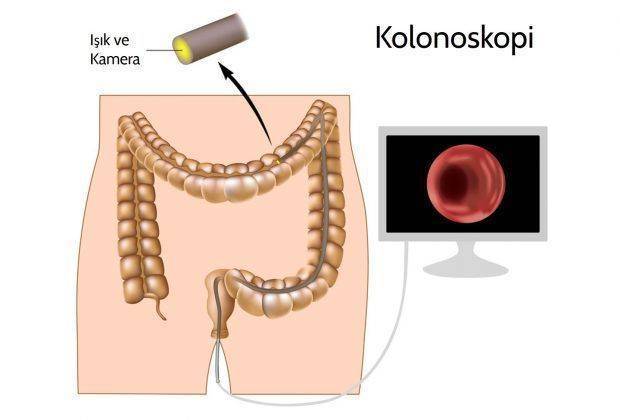
A study published on 23 May 2016 in JAMA Internal Medicine, an important scientific publication, was the most comprehensive research to date evaluating colonoscopy effectiveness and safety for colorectal cancer screening (randomized clinical trial).
The study was conducted in various European countries; participation rates in screening colonoscopy, adenoma presence, procedure performance and side effects were evaluated.
Among individuals aged 55 – 64 who were recommended colonoscopy, numbering 31 420, a total of 12 574 (40%) underwent screening. Participant and screening rates by country were as follows:
- 60% of Norwegian participants (colonoscopy was recommended to 8816 people and 5354 underwent it),
- 40% of Swedes (of 1222 people, 486 underwent it),
- 33% of Poles (of 18 188 people, 6004 underwent it), and
- 23% of Dutch participants (of 3194 people, 730 underwent it)
During colonoscopy, the rate of reaching the cecum, where the small and large intestines meet, was 97%, adenoma detection was 30% (one-third high-risk adenomas), and colorectal cancer was 0,5%. Performance of those conducting colonoscopy (endoscopists) was assessed, and approximately one of every 5 endoscopists could not reach the cecum or detect adenomas at the desired performance level.
When colonoscopies were evaluated for side effects, moderate-to-severe abdominal pain occurred in 16% with air insufflation; with CO2 insufflation, this rate was around 4%.
In conclusion, cancer screening with colonoscopy has a high detection capacity for lesions throughout the large bowel. Screening uptake and endoscopist performance vary by country. Abdominal pain that may occur after the procedure can be substantially reduced using carbon dioxide insufflation.
Related Topic:
- How can I protect myself from developing colon and rectal cancer?
Sources
Population-Based Colonoscopy Screening for Colorectal Cancer: A Randomized Clinical Trial.
JAMA Intern Med. 2016 May 23.
Was this article helpful?
Your feedback helps us improve our content.




Reader comments
Share your comment
Your name and comment are published only after administrator approval. Your email address is never shown to visitors.
Be the first to comment.