
Halving Cancer Is Possible If We Focus on the Real Causes

In this article
In June 2018, JAMA Oncologypublished a study reporting a rise in new cases during 2006-2016 of 28 percent. Most striking was the significant increase in lifestyle -related cancers in developing countries.
Lifestyle changes are therefore important to prevent cancer (primary prevention) and reduce risk.
Lifestyle Strategies Reducing Cancer Risk Include;
- Eating more vegetables and less red meat as part of a healthy diet,
- Maintaining an ideal, healthy weight throughout life,
- Being physically active,
- Wearing protective clothes and using sunscreen for sun protection, particularly avoiding exposure between 10.00 and 14.00,
- Not smoking,
- Alcohol reduction or elimination.
These cancer prevention strategieshave their greatest effects against breast, lung, colorectal, head and neck, liver and esophageal cancers, as well as melanoma skin cancer. These strategies are also known to have positive effects in preventing recurrence after diagnosis (secondary prevention), although additional research is needed for further evidence.
Modifiable lifestyle behaviors (diet and physical activity) contribute % 30-50 to cancer development . Studies show following American Cancer Society (ACS) prevention guidance can reduce cancers overall by % 17 and certain selected cancers, such as colorectal in high-risk groups, by up to % 60.
One major risk factor, rising greatly over the past 30 years, is obesity. Obesity increases overall cancer risk by % 14 to % 20. In America, among cancer patients under 65, at least % 50 are estimated obese. IARC’s 2016 report linked obesity to 13 cancer types; 18-year follow-up also showed weight gain beyond obesity substantially affects risk. This supports maintaining healthy weight throughout life as a highly effective prevention strategy.
American Cancer Society and American Institute for Cancer Research / World Cancer Research Fund CANCER PREVENTION GUIDE
Maintain an Ideal, Healthy Weight Throughout Life:
- Stay as lean as possible throughout life without becoming underweight.
- Avoid excessive weight gain at every age.
- Exercise regularly and limit high-calorie food and drink to maintain healthy weight.
Adopt a Physically Active Lifestyle:
- Adults should undertake at least 150 minutes of moderate activity weekly or 75 minutes of vigorous activity, or an equivalent combination averaging 30 minutes daily.
- Children and adolescents should do moderate or vigorous activity at least three times weekly for at least 1 hour during the day.
- Limit prolonged sitting, reclining, television and computer time.
- Trying to increase daily physical activity may benefit health.
Eat a Healthy, Predominantly Plant-Based Diet:
- Consume amounts of food and drink that maintain healthy weight. Sugary drinks should be avoided. Reduce high-calorie foods.
- Limit all processed meat and red meat.
- Eat at least 2,5 cups of vegetables and fruit daily. Consume more vegetables, fruit, whole grains and legumes.
- Refined grains should be replaced by whole grains.
- Limit salty foods and foods processed with salt (sodium).
- If drinking alcohol, limit consumption.
- Do not use dietary supplements claiming cancer protection.
- Encourage mothers to breastfeed for at least 6 months to promote healthy weight in mothers and babies.
The American Cancer Research (ACS) 2018 update is underway. Expected developments emphasize cancer-preventive health behaviors reducing risk and deaths and the Mediterranean diet and other healthy eating habits, with greater emphasis on the need to encourage them.
Guidelines are expected to emphasize metabolic health beyond adult weight gain and increasing body mass index increases. Beyond these, greater emphasis on metabolic health is expected. Recent evidence shows that even people with normal BMI can have metabolic disorderscontributing to cancer. Reducing fatty areas may also play a vital role in survival, particularly in colorectal cancer.
Figure 1. Biological mechanisms through which diet, activity and obesity affect cancer risk

How Do Healthy Diet and Physical Activity Reduce Cancer Risk?
Besides evidence from major studies linking diet, activity, obesity and cancer, biological mechanisms affect cancer development and recurrence (see figure 1).
In Figure 1, mechanistic biomarkers, meaning cancer risk biomarkers, mostly focus on common cancers such as breast, prostate, colorectal and endometrial cancers.
Diet, activity and weight control each involve independent biological mechanisms potentially affecting cancer. Healthy choices promote an anticancer environment at organ/tissue and DNA/genetic levels, jointly increasing their preventive power.
Preventing Malignant Melanoma Skin Cancer Through Lifestyle Changes
Although incidence of almost all cancers falls, melanoma is increasing. Strong evidence links ultraviolet radiation (UVR) to melanoma. In 2009, WHO classified UVR from sunlight or tanning devices as a class 1 carcinogen .
Recommended Lifestyle Measures for Melanoma Prevention Include;
- using sunscreen
- wearing protective clothes,
- staying in shade,
- avoiding sun between 10.00 and 14.00,
- avoiding indoor UV sources such as tanning beds.
Recent Norwegian and Australian studies show regular adult sunscreen use reduces melanoma risk. High sun exposure beginning in childhood and continuing through life, or prolonged tanning, is linked to more skin cancer and melanoma. Young people with five or more blistering sunburn lesions are estimated to have %80 higher melanoma risk.
Incidence of Alcohol-Related Cancers
Alcohol-related cancer burden is substantial.
- In 2012 worldwide, an estimated %5.6 of cancer deaths were alcohol-related .
- IARC’s 2010 monograph on human carcinogenic risk summarizes alcohol as causing oral, pharyngeal, laryngeal, esophageal squamous, colorectal, liver and female breast cancers.
- Alcohol-related cancer risk increases proportionally with consumption.
Alcohol may also contribute to other cancers, but it is not necessarily the sole factor. Suspected links to stomach and lung cancers come from studies, yet strong associations with other risks, such as H. pylori in stomach cancer or smoking in lung cancer, make its independent role hard to identify.
How Does Alcohol Cause Cancer?
Alcohol clearly contributes to cancer, and risk is unrelated to beverage type. Increased risk is generally attributed to ethanol conversion by alcohol dehydrogenase into acetaldehyde and finally acetate. Although the exact mechanism is unclear, animal models suggest carcinogenic, mutagenic acetaldehyde rather than ethanol itself causes cancer.
IARC authors list additional mechanisms including oxidative stress, increased androgen/estrogen production, increased hepatic fibrogenesis and reduced folate concentrations.
Direct contact with cell surfaces through acetaldehyde formation begins in the mouth, mainly mediated by oral bacteria. Levels are highest in saliva, which has the greatest alcohol contact.
Alcohol Dose–Risk Relationship
Understanding the dose–risk relationship between alcohol consumption and cancer matters for several reasons.

The table above: Meta-analysis summary of alcohol consumption amount and cancer risk
Light, moderate and heavy drinking correspond respectively to 12.5 g or less daily, 50 g or less, and more than 50 g daily. A standard drink contains 12.5 g alcohol, establishing this reference amount.
Risks differ by cancer. The largest are oral and pharyngeal cancers, where alcohol and metabolites contact tissue directly. Heavy drinkers (more than 4 glasses daily) have five times the relative risk of nondrinkers.
Although relative risks are highest with moderate and heavy drinking, even light drinkers remain at risk. A meta-analysis specifically examining one drink daily or less found continuing increases for some cancers.
Even light drinking is associated with esophageal squamous, pharyngeal and breast cancer; no association with other cancers was found.
The American Institute for Cancer Research recommends limiting alcoholic drinks, to no more than two glasses daily for men and one for women.
For cancer prevention, the best choice is no alcohol.
Conclusion
Although global incidence and mortality fall, cancer’s disease and treatment burden remains substantial. Prevention or early detection is therefore crucial to reducing it.
Primary prevention is possible through modifiable lifestyles: healthy weight, regular activity, avoiding high-risk sun exposure, not smoking and limiting alcohol. These particularly protect against breast, colorectal, head and neck, esophageal, liver cancer and melanoma.
Lifestyle changes also benefit secondary prevention, but their role requires further study.
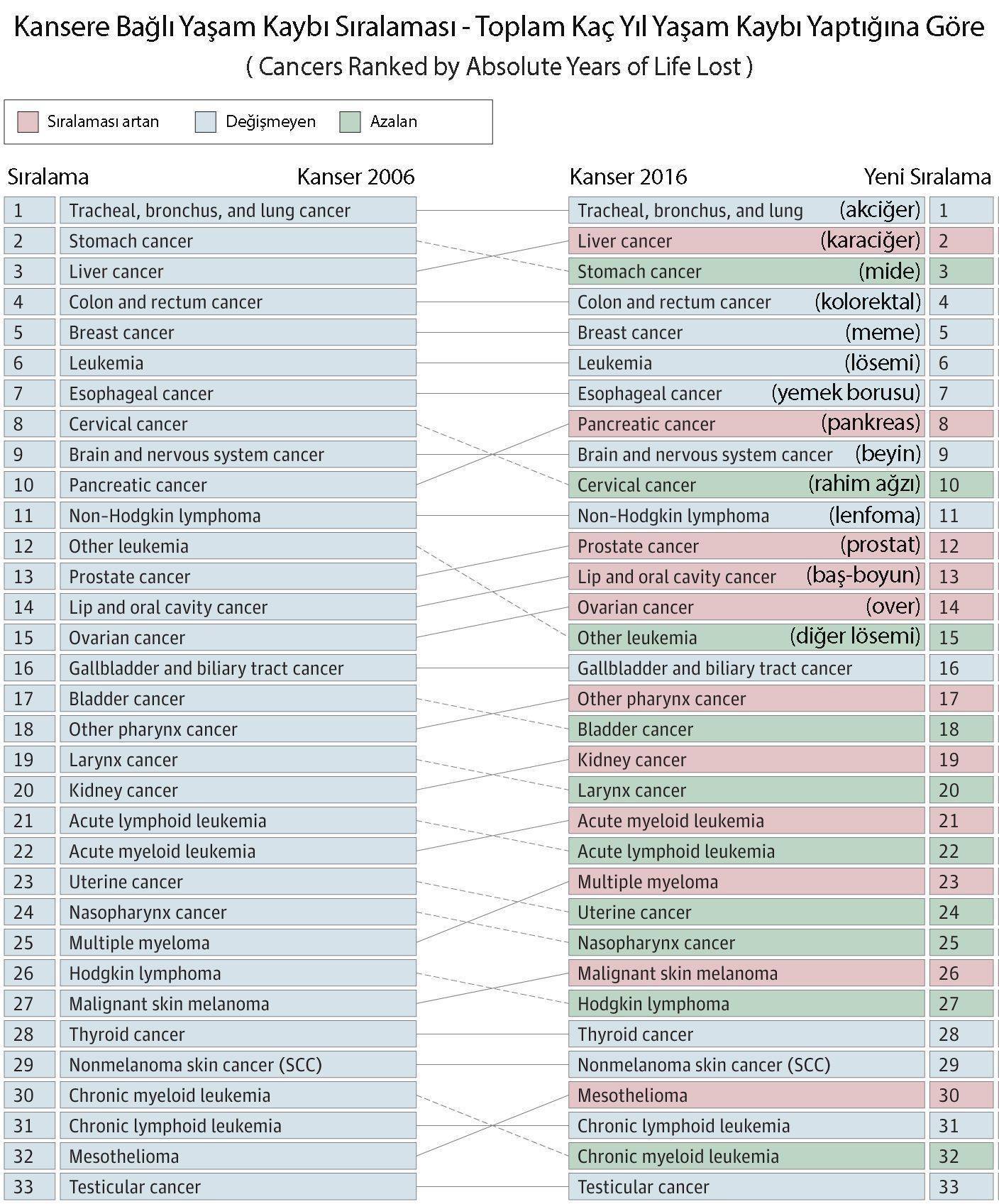
The table belowshows leading cancer deaths and changing trends from 2006 to 2016. A few striking examples;
- Lung cancer remains the leading killer, indicating weak global control of tobacco products.
- Declining stomach and cervical cancer became possible through understanding Helicobacter pylori and HPV infections.
Sources
ASCO Educational Book (2018).
Was this article helpful?
Your feedback helps us improve our content.




Reader comments
Share your comment
Your name and comment are published only after administrator approval. Your email address is never shown to visitors.
Be the first to comment.