
What You Need to Know About Colon and Rectal Cancer

In this article
Colon and rectal cancers originate from cells in the last part of the large intestine (colon) and the rectum. The large intestine forms the final part of the digestive system and stores stool. Colon cancer can occur anywhere in the colon, while rectal cancer begins in the rectum. These cancers generally develop on formations called polyps, and these tumors may become cancerous over time.
Colon and rectal cancer can be completely treated if detected early. Early-stage cancers usually have no symptoms, so regular screening tests such as colonoscopy are important for early detection. Symptoms begin in advanced stages and may include abdominal pain, weight loss, blood in the stool, and digestive problems such as constipation or diarrhea.
"Colorectal Cancer Awareness Month" occurs each year in March and is a campaign aiming to raise awareness of colorectal cancer worldwide. During this month, many organizations hold events emphasizing the importance of early diagnosis. These may include free screening tests, health checks, awareness walks, conferences, seminars and many other activities.
Colon and Rectal Cancer Statistics in Türkiye
Colon and rectal cancers are the 3rd most common cancer in both men and women in our country. According to our official cancer statistics for 2020, in 2019, of 233.834 diagnosed cancer cases, 21.191 (9.1%) were colorectal cancer. Per 100 thousand people annually, men have 26.2 new colon and rectal cancer cases, while the number for women is 16.2. Statistics indicate an increase in incidence in our country.
Colon and rectal cancers generally occur more often in older people, with a median diagnosis age of 67, but in developed countries, colon cancer incidence among young people is increasing. This is attributed to Western-style eating habits and increasing obesity rates.

What Proportion of Colorectal Cancers Is Hereditary?
Approximately 5-10% of colorectal cancers have a hereditary cause. These include Lynch syndrome, familial adenomatous polyposis (Familial adenomatous polyposis = FAP) and hereditary diseases such as MYH-associated polyposis (MAP). These conditions carry a high risk of colorectal cancer, so colonoscopy and other screening tests are recommended at earlier ages. Doctors may recommend more frequent colonoscopy and other screening tests for people with a family history.
What Are the Symptoms of Large Bowel Cancer?
- Rectal bleeding: the most common finding that brings a person to the doctor.
- Changes in bowel habits: it can cause both constipation and diarrhea. Examples include constipation followed by a period of diarrhea, or a feeling of incomplete relief after using the toilet (rectal fullness).
- Abdominal pain: a common finding that is not specific to cancer. It is often described as trapped gas. However, cancer should be considered if the complaint persists.
- Weight loss: loss of more than 10% of body weight in a short period is particularly important.
- Anemia - pallor: particularly when new-onset anemia is detected in someone over 45, large bowel cancer should be considered and the necessary investigations must be performed.
- Bloating: when colon and rectal cancers become large, they may cause partial or complete bowel obstruction.
Is Colon Cancer Increasing While Stomach Cancer Declines?
While stomach cancer incidence (annual number of new cases) is falling worldwide, colon cancer incidence is increasing. This may have many causes. Particularly in developed countries, factors such as improved healthcare, increasing colorectal cancer incidence in young people, and implementation of early diagnosis and screening programs contribute to the increase. An aging population and changing lifestyle factors (less physical activity, lower-fiber diets, etc.) may also increase colon cancer incidence. However, this trend is not identical everywhere and may differ by country.
The decrease in stomach cancer is more pronounced, however, because we can say that overall our food is now cleaner. Refrigerators have reduced the need to store and consume food under unsuitable conditions (such as salting and pickling). Also, detection and treatment of Helicobacter bacteria , the most important cause of stomach cancer, is another reason for the decline in its frequency.
What Is the Relationship Between Colon Cancer and Diet?
Gastrointestinal cancers are the cancers most closely associated with diet, partly because they come into direct contact with food. It is now clear that a Western-style diet characterized by low fiber, processed foods and fried foods, and obesity resulting from excessive consumption, markedly increase colon cancer risk.
Which Carcinogens Are Known to Cause Colon Cancer?
One of the most discussed cancer findings in recent years has been that heavy consumption of processed meats such as salami, sausages, ham and sucuk increases colon cancer risk. Consuming 50 gr or more daily increases risk by 18%. Consequently, the World Health Organization (WHO) classified processed meat consumption as category 1 carcinogenic . Even small amounts of alcohol are carcinogenic for colon cancer. Moderate alcohol consumption increases risk by 17%, and heavy consumption by 44%.
In recent years, there have been doctors encouraging red meat consumption, superstar-like butchers and so on… Are these efforts increasing red meat consumption?
It is true that red meat consumption is increasing and popular approaches play a role.
"Red meat is harmless; it does not cause cancer" is a claim made by some professors. Is this correct information?
Red meat's association with cancer differs from that of processed meat. While the World Health Organization classifies processed meat as a group 1 carcinogen, red meat is classified as group 2A, "probably carcinogenic to humans." We therefore cannot directly say that red meat causes cancer. Nevertheless, no healthy diet includes heavy red meat consumption; it should be eaten less frequently than fish and poultry.
Is There a Relationship Between Eating Habits in Türkiye and Colon Cancer?
Since colon cancer is the 3rd most common cancer in both men and women in our country, we can speak of a relationship between our eating habits and its high frequency. Our country also has rapidly increasing obesity rates in adults and children. Increasing adoption of Western-style eating and moving away from fiber-rich foods is another factor. Physical inactivity/a sedentary lifestyle is another important cause of colon cancer.
The Importance of Colonoscopy
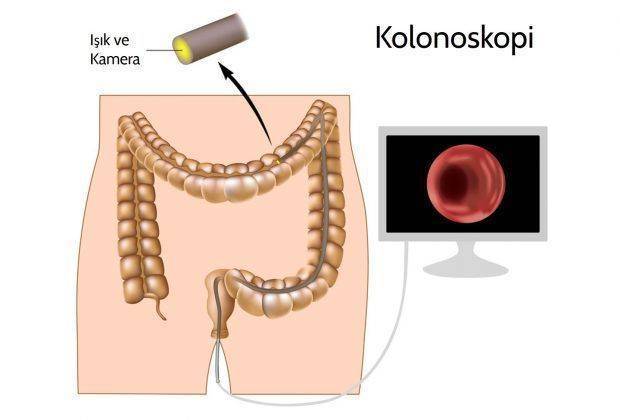
Colonoscopyis the best method for early diagnosis of large bowel cancers, detecting polyps, obtaining biopsies and/or completely removing polyps. It is a cancer screening method proven to reduce colorectal cancer and mortality from this disease . Nevertheless, concerns about procedure-related anxiety, pain and discomfort mean it is still not used as widely as desired in many countries. For early detection of colon cancer, we recommend colonoscopy for both men and women starting at 45, every 10 years. Those unwilling to undergo colonoscopy can have an annual fecal occult blood test starting at 45. The age threshold of 45 applies to people at normal cancer risk. Those with a family history or hereditary risk of colon cancer should start screening earlier.
What Proportion of Polyps Can Become Cancerous Over Time?
A small proportion of polyps can become cancerous. The rate varies with polyp type, size and number. For example, adenomatous polyps can develop into colon cancer, and risk increases with their size. Approximately 1 cm or larger adenomatous polyps have an estimated 10% rate of becoming cancerous. Early diagnosis and treatment of polyps are therefore important. Screening tests such as colonoscopy can detect polyps early and allow the necessary treatment to remove them.
Where Are We in Colon Cancer Treatment?
Colon cancer is one of the cancers that can be completely treated early, and early diagnosis rates are rising as screening programs expand and awareness increases.
Surgery is the main treatment for early-stage colon cancer. In a very small proportion of stage 2 cancers and in stage 3 colon cancer, adjuvant (preventive) chemotherapy is needed after surgery to reduce recurrence risk. To determine which patients with stage 2 colon cancer will benefit from chemotherapy, genetic tests have begun to be used.
The main treatment for stage 4 colon cancer, meaning spread to other organs, is chemotherapy and intravenously administered targeted smart drugs. Stage 4 colon cancer tends to metastasize primarily to the liver. Liver metastases can be burned with advanced nonsurgical techniques performed by interventional radiologists, such as radiofrequency ablation (FRA), or frozen with cryoablation. A much newer development is that new-generation immunotherapies are highly effective in approximately 5% of colon cancer patients. New genetic tests allow us to predict which patients will benefit from immunotherapy drugs that remove the immune system's blindness to cancer cells.
Recommendations for Prevention
A substantial proportion of colon and rectal cancers result from controllable risk factors, and early diagnosis is also possible through screening methods.
To prevent colorectal cancers, we recommend:
- Maintaining a healthy weight,
- Eating a vegetable-rich diet,
- Avoiding alcohol or reducing it as much as possible,
- Not smoking,
- Avoiding processed meats, reducing red meat consumption, and
- Adopting as active a lifestyle as possible.
Was this article helpful?
Your feedback helps us improve our content.




Reader comments
Share your comment
Your name and comment are published only after administrator approval. Your email address is never shown to visitors.
Be the first to comment.