
What is genetic testing? How is it performed? What is its role in cancer?

In this article
Genetic tests are medical tests that assess individuals’ genetic makeup by examining inherited information, generally focusing on genes or gene regions. They are used to diagnose and treat diseases involving genetic factors and identify genetic risks.
Genomic tests, on the other hand, generally examine broader genetic information, usually encompassing an organism’s entire genetic material or large genetic regions. They study relationships between genes, gene functions and interactions with the environment. These tests are particularly important in cancer treatment because tumors’ genetic and genomic profiles can identify treatments to which particular cancers respond best.
In summary, genetic tests generally focus on specific genes or gene regions, while genomic tests examine a broader part of genetic information and investigate interactions between genes. Both types play important roles in diagnosing and managing genetic diseases and determining the use of genetic and genomic information.
How Is Genetic Testing Performed?
Genetic tests, also known as DNA and genetic code tests, are medical tests used to detect particular genetic variations in a person’s DNA. In other words, they detect changes in chromosomes, genes or proteins. They are generally performed by collecting biological material such as blood or saliva. DNA in the sample is analyzed and genetic changes or mutations are identified.
More than 1000 types of genetic tests are used today. Next-Generation Sequencing (NGS), Polymerase Chain Reaction (PCR) and immunohistochemical studies are the most common methods used to identify genetic changes.
So why do we use genetic tests in cancer? Is cancer a genetic disease?
Is Cancer a Genetic Disease?
Cancer, at the cellular level , is a genetic disease. When damage accumulates in genes controlling cell multiplication and relationships between cells, cells begin proliferating uncontrollably and cancer develops (the process is explained in detail in an infographic at the end of the article).
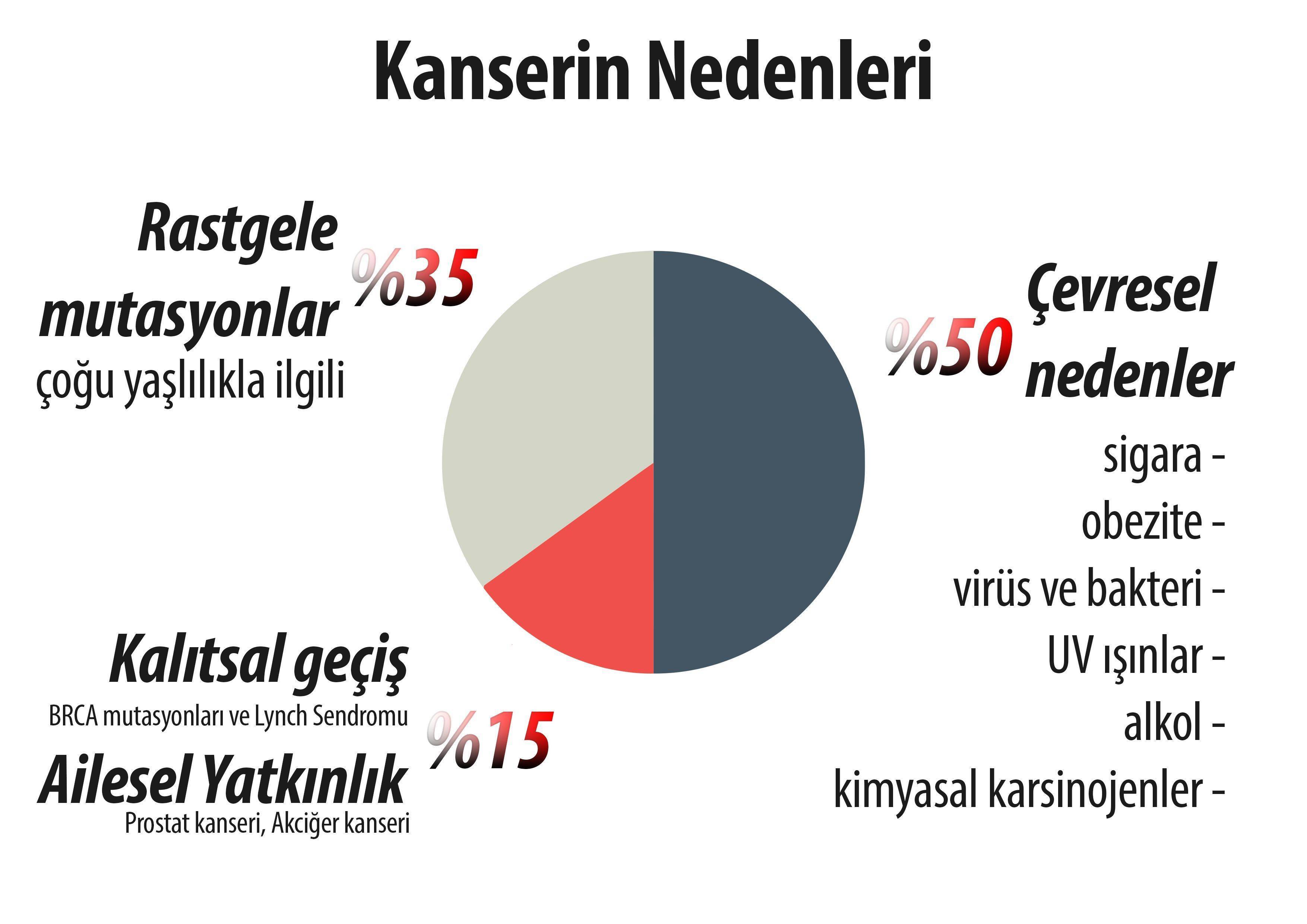
In fact, when we say “cancer is a genetic disease” , we do not mean it is inherited from a mother or father. The expression means cancer develops as a result of a person’s genes being affected. Cancers resulting from inherited transmission from parents account for %10 of all cases. This also makes genetic testing important in cancer.

The Role of Genetic Testing in Cancer
In general, the main contributions of genetic testing and identifying damaged genes are;
- New drug discoveries
- Development of effective prevention strategies
- Implementation of personalized treatments
Genetic testing also has a very important role in cancer. Some cancers, particularly certain families of cancers such as breast, ovarian and colon cancer, are associated with genetic factors. Testing may help determine cancer risk and provide opportunities for early diagnosis and treatment for family members.
Specific gene mutations in certain cancers can also affect treatment options. Detecting these mutations through genetic tests can enable personalized cancer treatment approaches. Appropriate treatment protocols can then be used and response rates improved.
In summary, there are 2 main purposes for genetic testing in cancer:
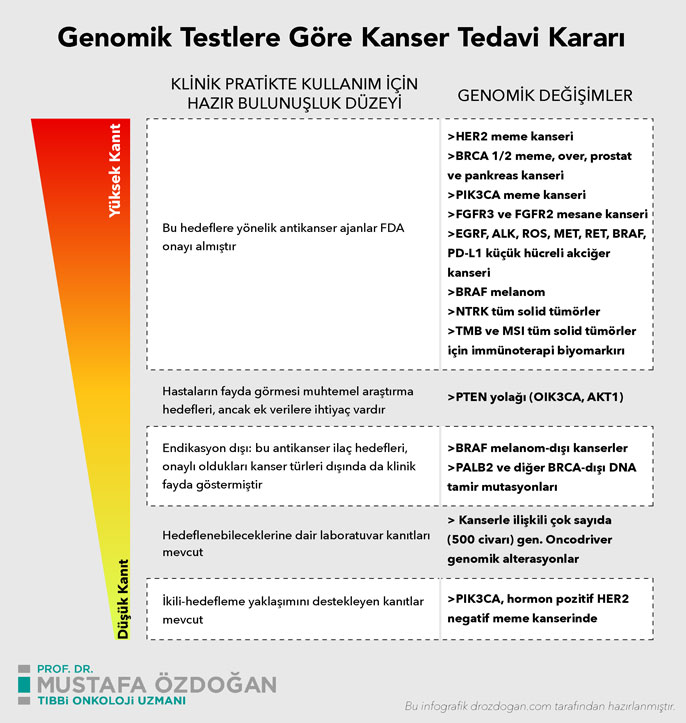
- To test suitability for targeted cancer drugs by detecting sporadic cancer-driving genetic changes in the tumor (not inherited from parents but arising later in life). Examples include EGFR, ALK, HER2, NTRK, BRAF
- In people with a family history of cancer, to identify inherited cancer gene changes (germline mutations [passed down from a mother or father]), calculate individual and familial risks, help early diagnosis and assess suitability for drugs targeting inherited cancer genes.
Prominent Genetic Abnormalities in Cancer – Mutations?
Cells must undergo numerous genetic changes before becoming cancerous. The chart below shows genetic alterations that should be tested, particularly in advanced cancers, and for which an FDA-approved drug exists.

Testing Mutations Inherited From Parents – Germline Mutations
- This determines whether individuals with a family history of cancer have inherited cancer syndromes (signs). Recent findings suggest approximately %10 of all cancers arise from inherited mutations.
- By identifying individuals with inherited cancer syndromes, it contributes to family risk planning.
- In people diagnosed with cancer, if factors such as family history indicate an inherited cancer syndrome, it also determines their risk of developing other cancers. Protective surgery and new treatment plans can therefore be considered before cancer develops.
- Related topic: Why Did Angelina Jolie Have Both Breasts Removed?
By helping people understand their genetic risks, genetic tests play an important role in early disease diagnosis and treatment. However, these tests cannot be performed in every patient.
Genetic test results can also be complex and may require specialist processes such as genetic counseling. Consulting a healthcare professional before genetic testing is therefore important. It must be emphasized that the number of genetic tests providing clinical benefit in cancer is limited. They are recommended for patients meeting certain criteria by oncologists competent in cancer genetics. Genetic test results may also be complex and require specialist processes such as genetic counseling. Consulting a healthcare professional before genetic testing is therefore important.
- For more detailed information about cancer: WHAT IS CANCER? Why and how does it develop? The entire process in brief!
Sources
genome.gov
2. Zsofia Kinga Stadler et al. Targeted therapy based on germline analysis of tumor-normal sequencing (MSK-IMPACT) in a pan-cancer population. ASCO 2020/ Abstract 1500
Was this article helpful?
Your feedback helps us improve our content.



Reader comments
Share your comment
Your name and comment are published only after administrator approval. Your email address is never shown to visitors.
Be the first to comment.