
Neratinib Received FDA Approval for Metastatic HER2-Positive Breast Cancer

Neratinib (Nerlynx), a small-molecule anticancer agent, was approved for the treatment of adults who had previously received two or more lines of anti-HER2-based regimens and had metastatic or advanced HER2-positive breast cancer in combination with capecitabine chemotherapy on 25 February 2020 by the US Food and Drug Administration (FDA). Note: Neratinib had previously received FDA approval on 17 July 2017 for early-stage HER2-positive breast cancer as adjuvant treatment (see the related approval).
NALA Study Design
The efficacy of neratinib with capecitabine was investigated in NALA, a randomized, multicenter, open-label clinical trial in 621 patients with metastatic HER2-positive breast cancer who had received two or more anti-HER2-based regimens in the metastatic setting. Patients were randomized (1: 1). During each 21-day cycle, patients received the following doses:
- In the experimental arm, oral neratinib 240 mg once daily for 21 days and capecitabine 750 mg/m2 on days 1-14, 2 times daily (307 patients), and
- In the control arm, lapatinib 1250 mg for 21 days and capecitabine 1000 mg/m2 on days 1-14, 3 times daily (314 patients).
Patients were treated until disease progression or unacceptable adverse effects. The primary efficacy outcome measures were overall survival and progression-free survival. Important secondary outcome measures were objective response rate and duration of response.
Study Results
- Median progression-free survival was 5.6 months (95% CI: 4.9, 6.9) in patients receiving neratinib with capecitabine and 5.5 months (95% CI: 4.3, 5.6) in those receiving lapatinib with capecitabine. Hazard ratio: 0.76; 95% CI: 0.63, 0.93; p=0.0059.
- At month 12, progression-free survival rates were 29% (95% CI: 23, 35) and 15% (95% CI: 10, 20), respectively.
- Median overall survival was 21 months (95% CI: 17.7, 23.8) in the neratinib arm and 18.7 months (95% CI: 15.5, 21.2) in the lapatinib arm. Hazard ratio: 0.88; 95% CI: 0.72, 1.07; p=0.2086
- The objective response rate favored neratinib, at 32.8% and 26.7%, respectively.
- Median duration of response favored neratinib, at 8.5 and 5.6 months, respectively.
Adverse Effects
The most commonly reported adverse effects of any grade in the neratinib plus capecitabine arm were diarrhea, nausea, vomiting, decreased appetite, constipation, fatigue / asthenia, weight loss, dizziness, back pain, arthralgia, urinary tract infection, upper respiratory tract infection, abdominal distension, renal failure and muscle spasms. The most commonly reported grade 3 or 4 adverse effects were diarrhea, nausea, vomiting, fatigue and decreased appetite. - Related topic: Diarrhea caused by cancer itself or its treatments - what causes it and how is it treated? For advanced or metastatic breast cancer, the recommended neratinib dose is a daily total of 240 mg (6 tablets taken orally with food 1 time daily). Because diarrhea is a common adverse effect, supportive antidiarrheal treatment such as loperamide is also recommended routinely during the first 56 days of neratinib treatment. *
What Is Neratinib's Mechanism of Action?
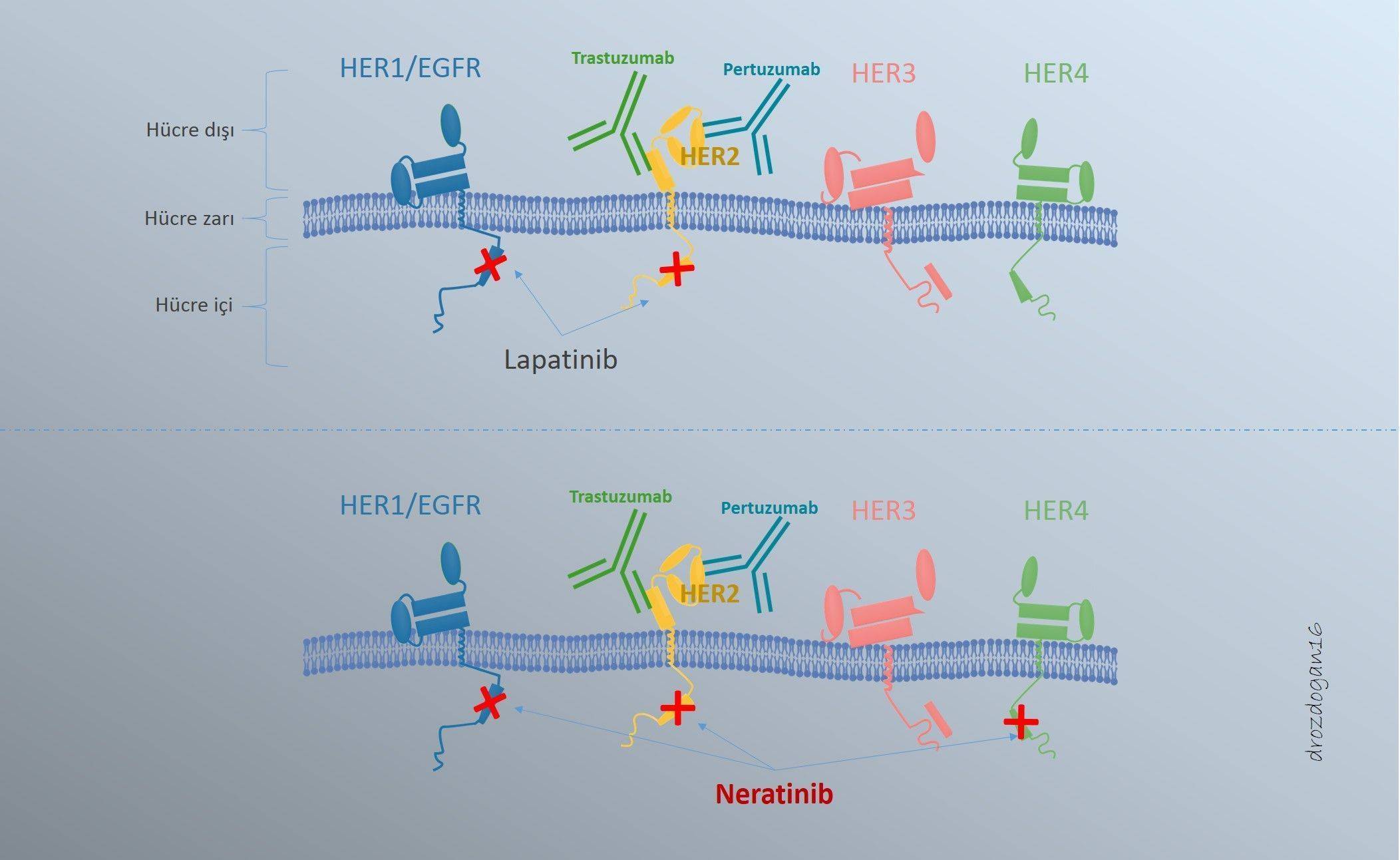
Neratinib is a tyrosine kinase inhibitor. It irreversibly inhibits the tyrosine kinase activity of the intracellular portion of Human Epidermal Growth Factor Receptors (EGFR, HER2, HER4), thereby suppressing growth and proliferation signals within cancer cells.
Sources
fda.gov - 25 Feb 2020
Was this article helpful?
Your feedback helps us improve our content.




Reader comments
Share your comment
Your name and comment are published only after administrator approval. Your email address is never shown to visitors.
Be the first to comment.