
Red Wax and the Art of Death: Frederik Ruysch’s Secret Recipe for Mapping Tumors

In this article
Day 64 (Cancer History in 365 Days Series)
The first anatomical evidence of how cancer is nourished: the story of Amsterdam’s brilliant anatomist who froze tumor angiogenesis in three dimensions.
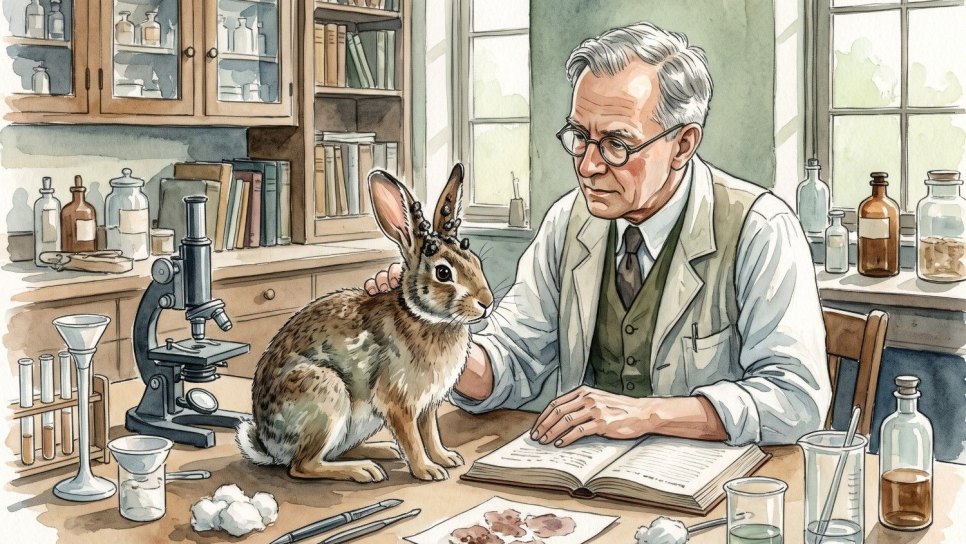
In the late 17th century, Amsterdam was the heart of science and art. The city’s chief midwife and anatomy teacher, Frederik Ruysch (1638-1731), wanted to reveal the magnificent design within the body by freezing death itself. He believed anatomy could be a living work of art, rather than merely the smell of decaying flesh.
The Secret Recipe That Brought Death to Life: Cinnabar and Beeswax
Ruysch invented the famous “injection” technique that went down in history. He added the natural mineral that gives a blood-red color, cinnabar (cinnabar), to heated white beeswax and injected this hot liquid into the vessels. The wax traveled into the smallest capillaries and solidified there, immortalizing the vascular system.
In the bodies prepared by Ruysch, the cheeks took on a rosy color, and the tissues acquired a fresh, flawless appearance, as if still alive.
In the dioramas he arranged under glass domes, infant skeletons wore lace collars, expressing the “transience of life” through a philosophical aesthetic.
The “Bloody” Map of Tumors: The Discovery of Angiogenesis
Ruysch’s greatest contribution to the history of oncology was applying this technique to cancerous tumors. When the hot wax penetrated the depths of a tumor, a biological strategy concealed for centuries came to light.
The First Physical Proof in History
For the first time, physicians saw with their own eyes the extraordinarily dense, chaotic network of blood vessels developing around and inside a tumor. Cancer was not merely a passive stone growing by itself; it was effectively taking the body’s vascular system hostage, building an enormous “blood highway” to feed itself. Ruysch became the first anatomist to provide physical proof of “tumor angiogenesis”, one of the most fundamental concepts in modern oncology.
Ruysch’s collection was so captivating that the Russian tsar, Peter the Great , was enthralled on seeing these immortalized bodies under glass domes. He purchased the entire collection for the enormous sum of 30000 guilders and had it transported to St. Petersburg (the Kunstkamera).
Tomorrow (Day 65): We will meet the legendary surgeon who established the logic of “staging” in modern oncological surgery, John Hunter with his principle: “If the tumor is mobile, cut it out; if it is fixed, do not touch it!”
Frederik Ruysch taught us that, to provide “well-targeted guidance” in oncology, we must first see the enemy’s supply lines. The dense vascular networks he mapped with red beeswax form the biological rationale for the modern drugs we now call “antiangiogenic therapies.”
The philosophy of biological restoration is to understand how a tumor exploits the body and to cut off that route of nourishment “precisely.” The vascular highways Ruysch froze like a work of art 300 years ago are the visual ancestor of the complex networks we target today at the molecular level. Healing begins with the bold perspective that makes the invisible visible.
Historical and Scientific Sources
- 1. Kooijmans L. Death Defied: The Anatomy Lessons of Frederik Ruysch. Brill, 2010. (A comprehensive biography exploring Ruysch’s secret recipe).
- 2. Margócsy D, Somolinos A. “The anatomical preparations of Frederik Ruysch in Kunstkamera.” 2020.
- 3. Carlson BM. “Anatomy in the 1700s: The Golden Age of Anatomical Preparation.” 2018.
- 4. Faguet GB. A Brief History of Cancer: Milestones of Knowledge. International Journal of Cancer, 2015.
Was this article helpful?
Your feedback helps us improve our content.


Reader comments
Share your comment
Your name and comment are published only after administrator approval. Your email address is never shown to visitors.
Be the first to comment.