
The Heart-Friendly Pesco-Mediterranean Intermittent Fasting Diet

A new study in the Journal of the American College of Cardiology, published on 14 September 2020, emphasizes that cardiovascular diseases can be reduced most effectively by combining intermittent fasting (time-restricted eating) with the Mediterranean diet.
Pescetarianism is a dietary pattern that includes fish or other seafood but excludes meat from other animals. Pescetarian diets contain most of the animal products consumed by some vegetarians, such as eggs and dairy products (lacto-ovo). However, unlike pescetarians, vegetarians do not eat meat. The Pesco-Mediterranean diet includes Mediterranean diet staples such as vegetables, legumes, and fish/seafood.
Many studies show that the Mediterranean diet reduces cardiovascular disease risk, along with coronary heart disease, metabolic syndrome, and neurodegenerative disorders (Alzheimer's and Parkinson's disease), among many other disease risks. Over time, the Mediterranean diet has gained support from many health organizations, with endorsements from bodies including the United States Department of Health and Human Services, the United States Department of Agriculture, and the American Heart Association in 2019. The Mediterranean diet has maintained its position on the expert-selected U.S. News list of best diets for the past 7 years: in first place.
However, following healthy diets is not always easy. Looking at the American public overall, we see high consumption of red and processed meat. Although vegetable-rich diets reduce cardiovascular disease risk, eating an entirely plant-based (vegan) diet can be difficult. This dietary pattern may also cause certain nutrient deficiencies. Let us examine the Pesco-Mediterranean diet, designed to resolve this dilemma.
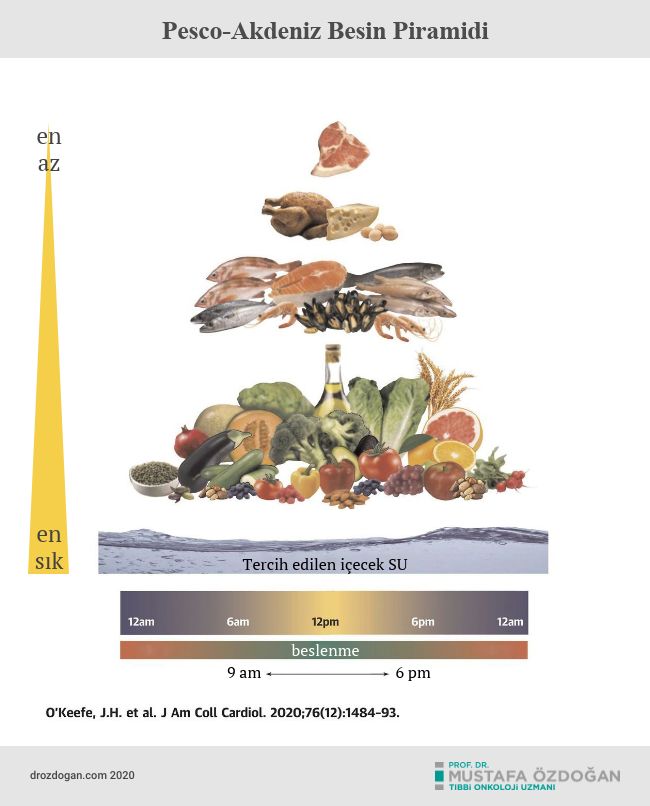
What are the components of the Pesco-Mediterranean diet?
The Mediterranean diet includes as much olive oil as desired. However, the quality of the olive oil is very important. It should be unrefined and cold-pressed. Scientific evidence shows that the Mediterranean diet's heart-health benefits are largely due to bioactive polyphenols in olive oil. To benefit from olive oil, it should be used without exposure to high heat. You can use it generously in salads, vegetable dishes, pasta, rice dishes, fish, and legumes.
Nuts are another source of healthy fats in the Mediterranean diet. They are rich in unsaturated fats, fiber, protein, polyphenols, phytosterols, tocopherols, and minerals. This makes nuts an effective food for improving health.
Legumes play a central role in the Mediterranean diet as sources of plant protein. They are an excellent source of protein, folate, magnesium, and fiber. In addition to reducing cardiovascular disease risk, they improve blood sugar, cholesterol, and blood pressure. They are effective for weight management.
Foods such as barley, oats, brown rice, and quinoa are whole grains and are staples of the traditional Mediterranean diet. Researchers warn, however, that refined grains such as pasta and ready-made pizza should be consumed only in very small amounts.
Acceptable animal products in the Pesco-Mediterranean diet
The traditional Mediterranean diet consists of olive oil, greens, and legumes, but today's Mediterranean diet includes large amounts of white cheese and lamb. In the Pesco-Mediterranean diet, most of the plate consists of vegetables and whole grains. Although fish and seafood are absent from vegetarian and vegan diets, they are included in the Pesco-Mediterranean diet because they provide many vitamins and minerals. However, the quantities of animal products, including fish, are reduced in this diet.
Fish is an animal food consumed in the Mediterranean diet. However, eating too much fish may not be as healthy as thought. Why? Some fish may be exposed to large amounts of toxins, heavy metals, and microplastics. Eating too much means taking more of these harmful substances into the body. The 2015-2020 Dietary Guidelines for Americans recommend 250 g of fish or seafood 2 times per week instead of red meat, poultry, and eggs.
Other animal foods are dairy products and eggs. We know these foods contain important nutrients such as protein, minerals, probiotics, and vitamin D. Researchers do not, however, agree on how much cardiovascular disease risk these foods pose. The Pesco-Mediterranean diet particularly permits low-fat yogurt, kefir, and soft cheeses. Nutrient-rich eggs are allowed in limited quantities.
The following table shows how often the components of the Pesco-Mediterranean diet are consumed.
| Foods | |
| Recommended |
|
| Foods requiring caution |
|
| Foods to avoid |
|
The role of time-restricted eating in the Pesco-Mediterranean diet
Time-restricted eating (intermittent fastin, fasting diet) is a fundamental component of this diet. Daily food intake is generally restricted to 6-12 hours each day. Concentrating consumption at certain times of day can prevent constant snacking. The most popular form of time-restricted eating is to eat 2 meals instead of 3 and shorten the time window for calorie consumption. No study has assessed the optimal time window, but the 16: 8 fasting / eating ratio (16 hours of fasting: 8 hours of eating) is the most popular.
When followed regularly, time-restricted eating has been shown to reduce intra-abdominal fat and free-radical production. It has also produced powerful cellular responses that can reduce the risk of diabetes, cardiovascular disease, and cancer. The Pesco-Mediterranean diet, emphasizing daily time-restricted eating (a 6-12-hour window) and fish and seafood as the main sources of animal protein, is recommended as an ideal heart-protective diet.
Summary and conclusion
Humans are adapted to consuming both plant and animal foods. Today, however, many people consume excessive amounts of animal meat and products, saturated fats, and processed meat. A vegan diet with no animal products may also predispose people to osteopenia (low bone density), sarcopenia (reduced muscle mass), and anemia. A plant-based diet that favors fish / seafood as the animal food source therefore appears the most sensible option. Combining a healthy diet such as the Mediterranean diet with time-restricted eating may provide more effective results. This study has shown us the positive effect of combining the two dietary patterns on cardiovascular disease.
Sources
Was this article helpful?
Your feedback helps us improve our content.


Reader comments
Share your comment
Your name and comment are published only after administrator approval. Your email address is never shown to visitors.
Be the first to comment.