
What Is Alzheimer’s Disease?
What is Alzheimer’s, and is it a type of dementia? This article covers Alzheimer’s stages, causes, onset and symptoms, testing, treatment and life expectancy.

In this article
Alzheimer’s Disease
Alzheimer’sis a slowly progressive but irreversible brain disease that adversely affects life by impairing memory and thinking skills and eventually the ability to perform simple tasks.
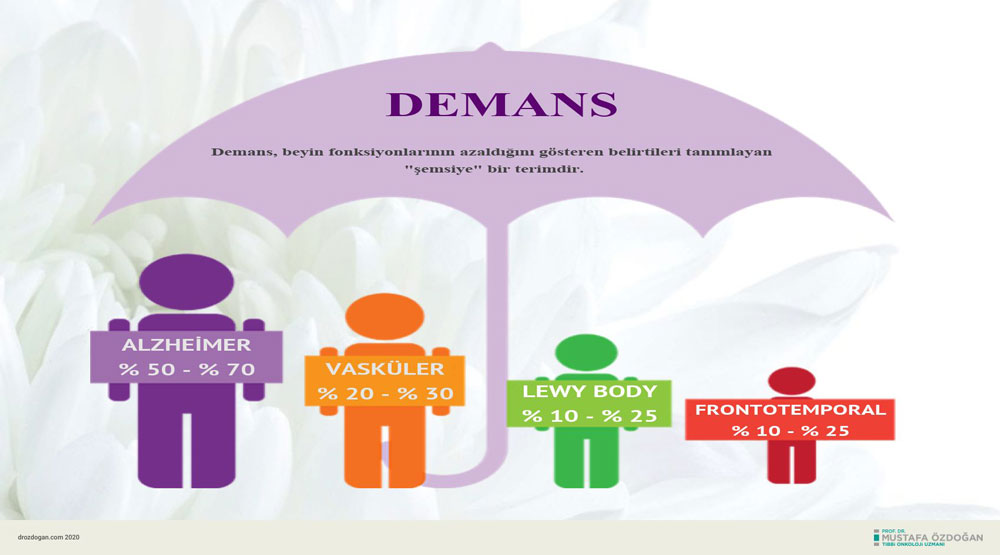
Dementia, unlike Alzheimer’s disease, is a term used for conditions caused by diseases or brain injuries that negatively affect memory, thinking and behavior. It is a broader term. Alzheimer’s disease is a progressive form of dementia.
According to disease figures published in 2010, Alzheimer’s disease is currently the 6th leading cause of deathin the United States. However, recent estimates suggest Alzheimer’s disease ranks for older people as a cause of death, after cardiovascular diseases and cancer, in 3rd place .
Alzheimer’s is known as a disease of older age, with 96% of cases occurring after age 65 . When diagnosed before age 65, it is generally called early-onset Alzheimer’s disease (4%). In the United States, 1 in 10 people aged 65 and over (10%) has Alzheimer’s dementia, and the rate every 5 years almost doubles. At age 85 and over, Alzheimer’s affects one in every 2 or 3 people.
Many causes can contribute to dementia. Dementia due to Alzheimer’s disease accounts for 60 to 80 percent of all dementia cases.
- Related Topic: What Is Dementia? Are Dementia and Alzheimer’s the Same Thing?
While 4.7 million people in the United States had Alzheimer’s disease in 2010, this is expected to rise to 13.8 million in 2050 as the older population grows.
After diagnosis in a person with Alzheimer’s, average life expectancy is 4 to 8 years . Depending on other factors, however, it can exceed 10 years and extend up to 20 years.

What Changes Occur in the Brain in Alzheimer’s Disease?
A healthy adult brain contains approximately 100 billion neurons (nerve cells), each with long branching extensions that enable connections with other neurons. Synapses are these connections, through which information flows from one neuron to another receiving neuron. The brain contains approximately 100 trillion synapses . If the brain is compared to a forest, neurons can be thought of as trees and synapses as leaves. Rapid signaling between synapses forms the cellular basis of memories, thoughts, sensations, emotions, movements and skills.
In Alzheimer’s disease, high levels of certain proteins inside and outside brain cells make it difficult for cells to stay healthy and communicate. Cells in the hippocampus, the brain region involved in learning and memory, are generally damaged earliest. Memory loss is therefore often one of the first symptoms of Alzheimer’s.
More specifically, Alzheimer’s disease is based on accumulation of the protein beta-amyloid outside neurons (called beta-amyloid plaques) and progressive accumulation of an abnormal form of the protein tau inside neurons (twisted threads of tau called tangles).
Beta-amyloid plaques interfere with neuron-to-neuron communication at synapses, while tau tangles block transport of nutrients and other essential molecules within neurons. As beta-amyloid increases, a tipping point is reached at which abnormal tau spreads throughout the brain. Beta-amyloid plaques are also believed to contribute to cell death.
Toxic beta-amyloid and tau proteins activate immune cells in the brain called microglia. Microglia try to clear widespread debris from dead or dying cells and toxic proteins. Amyloid and tau structures accumulate beyond the capacity of microglia to clear them, contributing to chronic brain inflammation and atrophy. As brain cells are lost during this process, the ability to metabolize glucose, the brain’s main fuel, decreases, further impairing normal brain function.
Is Early-Onset Alzheimer’s Disease Genetic?
A small percentage of Alzheimer’s cases (estimated at 1 percent or less) develops from mutations in any of three specific genes: the amyloid precursor protein (APP) gene and the genes for presenilin 1 and presenilin 2 proteins. People with mutations in any of these three genes are predisposed to develop symptoms before age 65, sometimes as young as 30.
By age 40, most people with Down syndrome have substantial beta-amyloid plaques and tau tangles in their brains. According to the National Down Syndrome Society in the United States, most people with Down syndrome develop Alzheimer’s dementia during their lifetime. This is believed to result from extra copies of chromosome 21.
What Are the Risk Factors for Alzheimer’s? (Causes)
Many things are considered risk factors for Alzheimer’s. Sometimes it can develop as a result of multiple factors.
The main risk factors for late-onset Alzheimer’s include:
Nonmodifiable Alzheimer’s Risk Factors:
- Older ageis considered the most important risk factor. Most people with Alzheimer’s dementia are aged 65 or over. The proportion increases with age: 3 percent of people aged 65-74, 17 percent of those aged 75-84 and 32 percent of those aged 85 and over have Alzheimer’s dementia. (It is important to reiterate that Alzheimer’s dementia is not a normal part of aging.)
- A family history of Alzheimer’s. Family history alone is not sufficient for Alzheimer’s to develop. However, having affected family members, particularly first-degree relatives such as parents or siblings, especially more than one person, can increase risk.
- Carrying the apolipoprotein E-e4 (APOE-e4) gene. The APOE-e4 gene is believed to have a limited effect on Alzheimer’s overall occurrence. Unlike genetic mutations that cause Alzheimer’s, inheriting APOE-e4 is not sufficient for an individual to develop the disease. This also applies to the more than 20 genes recently found to affect Alzheimer’s risk. Heredity (genetics) and shared environmental and lifestyle factors (such as access to healthy food and physical activity habits) may contribute to familial transmission.
Modifiable Alzheimer’s Risk Factors:
- Cardiovascular diseases
- High blood cholesterol
- Stroke
- High blood pressure
- Diabetes
- Smoking
- Poor diet
- Obesity
Cardiovascular health positively affects brain health. Although it makes up only 2 percent of body weight, the brain uses 20 percent of the body’s oxygen and energy resources. A healthy heart and blood vessels deliver oxygen- and nutrient-rich blood to the brain, allowing it to function normally.
Many factors increasing cardiovascular risk, such as smoking and diabetes, are also associated with greater dementia risk. Even the age at which risk factors develop appears to affect dementia risk. For example, obesity, hypertension and high cholesterol in middle age have been linked to dementia risk.
- Traumatic brain injury. Severe head trauma (such as being struck by an object or in motor vehicle accidents) can disrupt normal brain function. TBI can involve loss of consciousness or post-traumatic amnesia. Research shows that moderate and severe TBI increase the risk of certain dementia forms. Repeated head injuries (as in boxers, football players and war veterans) may increase the risk of dementia, cognitive impairment and neurodegenerative disease.
- Exposure to Aluminum and Other Metals. In recent years, concerns have arisen about certain metals such as copper, zinc, iron and aluminum from foods or cookware potentially causing Alzheimer’s disease. However, there is no strong evidence that these metals entering the body increase Alzheimer’s risk. Many metals occur naturally in the brain and are essential for healthy function. Some studies even show zinc reduces amyloid plaque toxicity by converting amyloid proteins to a form less harmful to the brain. There is no convincing evidence about the health significance of elevated metal levels before or during disease, or lowering them through treatment. Likewise, no convincing relationship has been established between body aluminum levels and Alzheimer’s development. Further research is needed.

What Are the Initial Signs / Symptoms of Alzheimer’s?
- Forgetting things enough to affect daily life and not remembering them later
- Difficulty planning, problem-solving or calculating numbers
- Difficulty completing everyday tasks at home, work or during leisure time
- Confusion about places or times
- Difficulty understanding visual images and spatial relationships
- Doing the same things repeatedly
- Problems remembering words when speaking or writing
- Misplacing regularly used objects
- Losing the ability to follow sequential steps
- Difficulty making decisions or making poor decisions
- Withdrawing from work or social activities
- Changes in mood and personality
The most common early symptom of Alzheimer’s is difficulty remembering newly learned information, because brain changes usually begin in the area affecting learning. As Alzheimer’s progresses, its course may involve disorientation (impaired awareness of place and time), changes in mood and behavior, unfounded suspicions about family, friends and professional caregivers, speech impairment, increasingly severe memory loss and behavioral changes, and difficulty with vital functions such as walking and swallowing.
What Are the Stages of Alzheimer’s Disease?
Alzheimer’s progression can be divided into three main stages:
- Mild Alzheimer’s disease (early stage)
- Moderate Alzheimer’s disease (middle stage)
- Severe Alzheimer’s disease-dementia (late stage)
The Alzheimer’s Association additionally defines seven stages along the continuum of cognitive decline according to symptom severity. These range from no impairment through mild and moderate decline to "very severe decline." Diagnosis is difficult until stage 4, generally described as "mild or early-stage Alzheimer’s."

Is There an Alzheimer’s Test, and How Is It Diagnosed?
There is currently no definitive way to diagnose Alzheimer’s.
However, some questions and tests that can help with diagnosis include:
- Asking patients and family members about behavioral changes, difficulties with daily tasks, medical history and personality changes
- Memory testing, counting, problem-solving and assessment of speech
- Blood and urine tests to exclude other conditions, and assessment of conditions causing similar symptoms, such as stroke, tumors, sleep problems and medication side effects
- Brain CT scans or magnetic resonance imaging (MRI) showing atrophy in certain brain areas, or positron emission tomography (PET scans) identifying reduced brain glucose uptake and structural changes
- Biomarkers such as elevated tau or reduced beta-amyloid in cerebrospinal fluid (CSF), and the NT1 test (measurement of tau fragments in blood)
- Neuropsychological tests currently help diagnose Alzheimer’s
How Is Alzheimer’s Treated?
There is no cure for Alzheimer’s, but treatments can slow progression. Treatment may relieve some symptoms and improve quality of life. Ultimately, the disease progresses and damages the brain and body.
Drugs Used to Treat Alzheimer’s Disease:
Drug effects vary from person to person. All these drugs become less effective as Alzheimer’s progresses.
The drugs most often prescribed to prevent or slow the development of Alzheimer’s symptoms are:
- Donepezil (Aricept)
- Galantamine (Razadyne)
- Memantine (Namenda): sometimes given with Aricept, Exelon or Razadyne
- Rivastigmine (Exelon)
Some of the most promising Alzheimer’s drugs currently in development include:
- Aducanumab and Solanezumab are anti-amyloid drugs.
- Researchers are also studying whether a type of insulin in a nasal spray can improve memory function.
Can Alzheimer’s Be Prevented?
Strong evidence suggests that managing modifiable cardiovascular risk factors such as diabetes, obesity, high blood pressure, high cholesterol and smoking can reduce dementia risk.
Regular physical activity (150 minutes weekly) and a healthy dietary pattern (such as the Mediterranean diet) contribute substantially to reducing dementia risk. A healthy diet emphasizes fruit, vegetables, whole grains, fish, chicken, nuts and legumes while limiting saturated fats, red meat and sugars.
People with more years of formal education have been found to have a lower risk of Alzheimer’s and other dementias. This is believed to result from longer education building cognitive reserve . Cognitive reserve refers to the brain’s ability to use connections between neurons flexibly and efficiently when remembering a person or event. However, years of formal education should not be viewed as its sole determinant. Staying socially and mentally active (listening to the radio, reading various news, doing puzzles, traveling, learning a new language and visiting museums) and getting enough sleep also contribute substantially to cognitive reserve, thereby reducing Alzheimer’s risk.
Everyone’s Alzheimer’s Journey Is Different
Everyone has a unique health history and lifestyle habits. These directly influence how Alzheimer’s disease affects each individual. Along with regular health checks, developing and maintaining healthy lifestyle habits throughout life is important for remaining healthy in the future.

Sources
alz.org
2. Drugs for Alzheimer’s Disease: Current and in Development, Healthline.com
3. Number of Alzheimer's deaths found to be underreported, National Institute on Aging, U.S. Departmaent of Health and Human Services
4. What Is Alzheimer’s Disease?, Healthline.com
5. Aluminium, metals and dementia, Alzheimer's Society
Was this article helpful?
Your feedback helps us improve our content.




Reader comments
Share your comment
Your name and comment are published only after administrator approval. Your email address is never shown to visitors.
Be the first to comment.