Obesity Harms the Heart in Two Ways: The Physical Burden of Excess Fat and Diseased Fat (Adiposopathy)
In this article
Fat Is Not Just a Burden but an Organ: How Does Obesity Harm the Heart?
A clinical practice statement from the Obesity Medicine Association (OMA), published in the journal Obesity Pillars, emphasises that obesity leads to cardiovascular disease through two separate but intertwined pathways: the physical burden that excess fat places on the body ("fat mass disease") and the effects of dysfunctional adipose tissue on hormones, immunity and metabolism ("sick fat disease", or adiposopathy). Rather than treating blood pressure, blood sugar and cholesterol one by one, the statement recommends treating the underlying disease, obesity, first and early. In this article we illustrate the two pathways, review the proven effects of obesity medicines on the heart and consider what matters in practice. We have previously covered the meaning and effects of obesity, the importance of abdominal fat and the link between brown fat and health in separate articles.
- Two pathways: Fat mass disease is the physical burden that excess fat places on the heart, airway, kidneys and veins. Sick fat disease is dysfunctional adipose tissue driving inflammation, insulin resistance, bad cholesterol and a tendency to clot.
- They progress together: The two pathways often coexist in the same person and reinforce each other; separate treatment algorithms are not recommended.
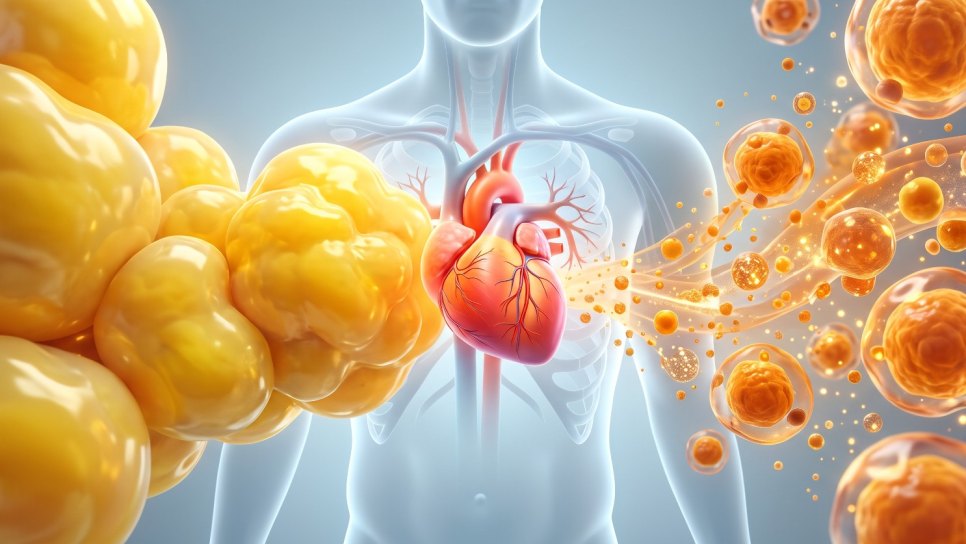
- Fat around the heart: Epicardial fat, which is in direct contact with the heart and coronary arteries, can damage the artery "from outside to inside" through inflammatory signals.
- Obesity first: Semaglutide reduced major adverse cardiovascular events by 20% in patients with obesity and cardiovascular disease; tirzepatide reduced the risk of worsening heart failure or loss of life from cardiovascular causes by 38% in patients with obesity and HFpEF. Assessment should consider not only body mass index (BMI) but also waist circumference and body composition.
Why does this matter?
The prevalence of obesity has doubled in 73 countries since 1980, and obesity contributes to millions of lives lost each year, most of them from cardiovascular disease. For many years obesity was seen as a condition that contributed to "classic" risk factors such as high blood pressure, diabetes and cholesterol, and treatment focused on those risk factors. The statement instead defines obesity as an underlying disease that needs to be treated in its own right (cardiovascular risk factors).
Previous scientific statements were mostly written from a cardiology perspective; this one reflects the view of obesity medicine specialists. Dr Neha Pagidipati, a preventive cardiologist at Duke University, stresses that cardiologists should regard obesity treatment as a core part of preventing cardiovascular disease. Because obesity affects not only the heart but also the liver, the kidneys and the risk of certain cancers, this approach is also important from an oncology standpoint (fatty liver and cancer risk).
How does obesity lead to cardiovascular disease?
Obesity leads to cardiovascular disease in two ways. The first is the physical burden of excess fat: the volume of blood the heart must pump increases, the heart wall thickens, fat in the throat leads to sleep apnoea, and fat around the kidneys raises blood pressure. The second is dysfunctional, "sick" adipose tissue: by releasing inflammatory signals and free fatty acids, it drives insulin resistance, diabetes, bad cholesterol, hardening of the arteries and a tendency to clot.
Figure 1 · Two pathways from obesity to cardiovascular disease
Fat mass disease and sick fat disease
The first pathway: fat mass disease
Excess adipose tissue increases the body's metabolic demand, which requires a larger blood volume and a higher cardiac output. Over the years, this constant load leads to enlargement of the left ventricle, thickening of its wall and impaired relaxation, contributing to heart failure with preserved ejection fraction (HFpEF). Epicardial fat surrounding the heart can also physically compress the heart within the pericardium and restrict its filling.
Figure 2 · Fat mass disease: a physical burden on the body
From the heart to the legs: five mechanical effects of excess fat
These mechanical effects matter beyond the heart too: sleep apnoea raises blood pressure and promotes arrhythmias; fat inside the abdomen and around the kidneys compresses the kidneys and raises blood pressure; and pressure on the veins together with inactivity increases the risk of blood clots (a sedentary lifestyle).
The second pathway: sick fat disease (adiposopathy)
Adipose tissue is an active organ that secretes hormonal and immune signals. When a calorie surplus persists for a long time, fat cells enlarge, cannot get an adequate blood supply and come under stress; inflammatory cells gather around them. This "sick" adipose tissue releases excess free fatty acids and inflammatory signals into the bloodstream and disrupts hormonal balance. The result is insulin resistance and type 2 diabetes (diabetes worldwide and in Turkey), high blood pressure, bad cholesterol (dyslipidaemia) and a tendency to clot. Each of these is among the leading causes of cardiovascular disease (insulin resistance and diabetes, what is inflammation?).
Figure 3 · Healthy fat versus sick fat
Even at the same weight, fat can work differently
Fat around the heart: "outside-to-inside" damage
The statement gives particular weight to epicardial fat on the surface of the heart. This fat is in direct contact with the heart muscle and the coronary arteries; when it becomes dysfunctional, it can release inflammatory signals and harmful fatty acids directly into the neighbouring tissues. This can contribute to hardening of the arteries (atherosclerosis), stiffening of the heart muscle (fibrosis) and arrhythmias such as atrial fibrillation. The authors describe this as an "outside-to-inside" mechanism that complements the "inside-to-outside" damage done to the artery by bad cholesterol and inflammatory signals in the blood (the truth about cholesterol).
Figure 4 · Fat around the heart: damage to the artery from outside and inside
Cross-section of a coronary artery and the surrounding epicardial fat
Treatment: a separate approach for each pathway?
The statement does not recommend separate treatment algorithms depending on which pathway predominates; it stresses that effective obesity treatment should target both excess fat mass and dysfunctional adipose tissue. Dr Caroline Apovian of Brigham and Women's Hospital notes that the two pathways are interrelated and "should be treated together". According to Apovian, people who are prone to storing fat around the abdomen may need to start treatment at lower BMI values; for this reason, clinicians should look not only at BMI but also at waist circumference and body composition.
Figure 5 · Clinical assessment: looking beyond weight
Where fat sits and how it works determine cardiovascular risk
How obesity medicines affect the heart
There is growing evidence that some obesity medicines improve cardiovascular outcomes beyond their effects on weight loss and classic risk factors:
- SELECT: In 17,604 patients with overweight or obesity and cardiovascular disease but without diabetes, semaglutide 2.4 mg reduced major adverse cardiovascular events (heart attack, stroke and loss of life from cardiovascular causes) by 20% compared with placebo. In absolute terms, the event rate fell from 8.0% to 6.5% (Wegovy (semaglutide)).
- STEP-HFpEF: In patients with obesity-related HFpEF, semaglutide improved heart failure symptoms, physical function and markers of inflammation; average weight loss was 13.3% versus 2.6%.
- SUMMIT: In 731 patients with obesity and HFpEF, tirzepatide reduced the risk of loss of life from cardiovascular causes or worsening heart failure by 38% (event rate 9.9% versus 15.3%) and improved quality of life (Mounjaro (tirzepatide)).
- Heart rhythm: Although GLP-1 medicines raise the heart rate by 2–3 beats per minute, they reduce the burden of atrial fibrillation through weight loss, reduced inflammation and favourable remodelling of the atria.
Obesity medicines reduce cardiovascular events
Proportion of patients with an event, %. The grey bar shows placebo; the coloured bar shows the medicine.
SELECT: 17,604 patients with overweight or obesity and cardiovascular disease but without diabetes, mean follow-up 40 months; major adverse cardiovascular events. SUMMIT: 731 patients with obesity and heart failure with preserved ejection fraction (HFpEF), median 2 years; worsening heart failure or loss of life from cardiovascular causes. Comparisons across different studies are indirect; patient populations, prior treatments and follow-up times differ.
STEP-HFpEF: weight and inflammation fell together
Change at 52 weeks in 529 patients with obesity and HFpEF, %. The grey bar shows placebo; the coloured bar shows semaglutide 2.4 mg. CRP is a marker of inflammation.
Semaglutide also led to greater improvement on a scale of heart failure symptoms and physical function (KCCQ): 16.6 points versus 8.7 points.
Dose adjustment, side effects and the effects of these medicines on mental health are discussed in separate articles (dose adjustment of weight-loss injections, GLP-1 medicines and mental health). Apovian says that personalised treatment is the goal, but that large databases are needed to determine which genetic profiles respond best to which medicine, surgery, diet or exercise, and that "this is years away".
What does "treat obesity first" mean?
Figure 6 · Treat obesity first
Treating the underlying disease rather than risk factors one by one
Apovian notes that this approach may be a shift for primary care physicians but has long been standard practice for obesity medicine specialists. Pagidipati, for her part, stresses that distinguishing the two pathways is useful for understanding the mechanisms, but that on a busy clinic day what really matters is knowing that obesity can harm the heart in more than one way and using treatments with proven cardiovascular benefit. In her view, incorporating obesity treatment into cardiology practice "is not as hard as people think".
According to the Turkey Health Survey 2022 by TÜİK (the Turkish Statistical Institute), one in five people aged 15 and over has obesity. Semaglutide and tirzepatide are licensed in Turkey; however, their use for treating obesity is generally not reimbursed by the SGK (the Social Security Institution), and access to the medicines can be a problem from time to time. Simple steps such as measuring waist circumference, analysing body composition and assessing for sleep apnoea can, by contrast, easily be carried out in primary care and in check-up programmes. Team-based programmes that address nutrition, exercise and psychological support together are also becoming increasingly important in obesity management (Check The Life).
Advice for our readers
- Look not only at your weight but also at your waist circumference: above 88 cm in women and 102 cm in men is a sign of abdominal fat.
- If you snore, stop breathing during sleep or feel sleepy during the day, ask to be assessed for sleep apnoea.
- Have your blood sugar, cholesterol and liver tests checked regularly (cholesterol levels by age); abdominal fat can be risky even at a "normal weight".
- Use obesity medicines only on a doctor's advice and under medical supervision (semaglutide and its licence in Turkey); medicines support, rather than replace, diet and exercise (the Mediterranean diet and the heart).
- If you have cardiovascular disease, plan your obesity treatment together with your cardiologist; regular exercise also protects the heart independently of weight (moderate physical activity).
- If you have gained weight after cancer treatment, remember that obesity treatment should be planned alongside your cancer follow-up (weight-loss medicine after breast cancer).
Frequently asked questions
- What are fat mass disease and sick fat disease?
- Fat mass disease refers to the problems caused by the physical burden that excess fat places on the body, such as heart failure, sleep apnoea, high blood pressure and blood clots in the veins. Sick fat disease (adiposopathy) is when dysfunctional adipose tissue leads to inflammation, insulin resistance, diabetes, bad cholesterol and hardening of the arteries. The two conditions often occur together.
- Why does the fat around the heart (epicardial fat) matter?
- Epicardial fat is in direct contact with the heart muscle and the coronary arteries. When it becomes dysfunctional, it can release inflammatory signals directly into the arteries and the heart muscle, contributing to hardening of the arteries, stiffening of the heart muscle and arrhythmias. It can also physically compress the heart and restrict its filling.
- Do obesity medicines reduce the risk of heart attack?
- The evidence points that way. In the SELECT trial, semaglutide reduced major adverse cardiovascular events by 20% in patients with obesity and cardiovascular disease but without diabetes. In the SUMMIT trial, tirzepatide reduced heart failure events in patients with obesity and heart failure. These medicines should be used on a doctor's advice and under medical supervision.
- Is body mass index enough on its own?
- No. Two people with the same body mass index can have very different fat distribution and function. Waist circumference and body composition give a better picture of risk, especially in people prone to storing abdominal fat, and may call for treatment to start earlier.
Glossary
- Adiposopathy (sick fat)
- Impairment of the hormonal, immune and metabolic functions of adipose tissue.
- Fat mass disease
- Diseases caused by the physical burden that excess fat places on the body.
- Epicardial fat
- Adipose tissue on the surface of the heart, inside the pericardium, in contact with the heart muscle and the coronary arteries.
- HFpEF
- Heart failure with preserved ejection fraction; the heart's pumping strength is maintained, but it cannot relax and fill adequately.
- Insulin resistance
- Cells fail to respond adequately to insulin; a forerunner of type 2 diabetes.
- Atherosclerosis
- Plaque formation in the artery wall through the build-up of fat and inflammation; hardening of the arteries.
- GLP-1 receptor agonist
- A class of medicines (such as semaglutide) that mimic a gut hormone which increases the feeling of fullness and regulates blood sugar.
- Waist circumference
- A simple and powerful marker of abdominal fat; it may reflect cardiovascular risk better than body mass index.
- Obstructive sleep apnoea
- Repeated blockage of the upper airway during sleep; it promotes high blood pressure and arrhythmias.
DROZDOGAN Academy Commentary
This statement invites us to see adipose tissue not as a passive burden but as an organ with both a physical load and a biological effect.
⚡ Why it matters
The "treat obesity first" approach focuses on the common root of high blood pressure, diabetes and cholesterol rather than chasing each of them separately. For certain cancers that grow from the same root, this approach is also valuable in terms of prevention (the link between cancer and diabetes).
✅ Strengths
The two-pathway concept explains why risk can differ between patients of the same weight. The statement is supported by randomised trials showing that obesity medicines reduce cardiovascular events.
⚠️ Limitations
It is an expert opinion statement; it presents no new data and offers no separate treatment recommendations for the two pathways. There are as yet no standard criteria or biomarkers to distinguish sick fat from fat mass disease in everyday practice.
🩺 In practice
In our patients, alongside weight, we assess waist circumference, body composition, metabolic values and sleep patterns. We plan obesity treatment as part of reducing cardiovascular and cancer risk, and we combine medicines with lifestyle change and psychological support.
❓ Open questions
Will measuring epicardial fat become part of routine risk assessment? Can reliable blood markers of sick fat be developed? Can we personalise which patient will respond best to which treatment?
Verdict: Obesity harms the heart through both its weight and its biology. Because these two pathways progress together, treatment must also be holistic: treating obesity first is the most rational way to prevent cardiovascular disease and the other diseases that grow from the same root.
- This article was prepared in October 2026.
- Information about the statement and the experts' views is based on the Medscape Medical News report covering the statement; the full text of the statement was not accessed.
- The absolute rates for the SELECT, STEP-HFpEF and SUMMIT trials are taken from the respective publications; the trials in the chart involve different patient groups and cannot be compared directly.
- The illustrations are original and simplified. The Academy commentary is our own. This article is for general information only and is not personal medical advice.
References
- Bays HE, et al. Obesity and cardiovascular disease: fat mass disease and sick fat disease. Obesity Medicine Association clinical practice statement. Obesity Pillars 2026.
- Fat mass and sick fat: two obesity pathways to CVD. Medscape Medical News, October 2026.
- Lincoff AM, Brown-Frandsen K, Colhoun HM, et al. Semaglutide and cardiovascular outcomes in obesity without diabetes. N Engl J Med 2023;389:2221-2232. doi:10.1056/NEJMoa2307563
- Kosiborod MN, Abildstrøm SZ, Borlaug BA, et al. Semaglutide in patients with heart failure with preserved ejection fraction and obesity. N Engl J Med 2023;389:1069-1084. doi:10.1056/NEJMoa2306963
- Packer M, Zile MR, Kramer CM, et al. Tirzepatide for heart failure with preserved ejection fraction and obesity. N Engl J Med 2025;392:427-437. doi:10.1056/NEJMoa2410027
- GBD 2015 Obesity Collaborators. Health effects of overweight and obesity in 195 countries over 25 years. N Engl J Med 2017;377:13-27. doi:10.1056/NEJMoa1614362
- Türkiye İstatistik Kurumu. Türkiye Sağlık Araştırması, 2022. tuik.gov.tr
Was this article helpful?
Your feedback helps us improve our content.