
Metabolic and Alcohol-Related Fatty Liver Disease and Cancer Risk – New Findings

In this article
The Link Between Metabolic Dysfunction, Alcohol-Related Fatty Liver Disease, and Increased Cancer Risk
Fatty liver disease associated with metabolic dysfunction (MASLD= Metabolic dysfunction–associated steatotic liver disease) and increased alcohol intake (MetALD= MASLD with increased alcohol intake) represent major public health concerns worldwide.
On 20 September 2024, Alimentary Pharmacology & Therapeutics published research suggesting that these conditions may play a critical role not only in liver health but also in cancer risk. Increases are seen particularly in liver and gastrointestinal cancers, as well as other cancer types. The study aims to clarify this connection and inform prevention strategies.
What Is MASLD (Metabolic Dysfunction–Associated Steatotic Liver Disease)?
MASLD means Metabolic Dysfunction–Associated Steatotic Liver Disease. It describes a condition previously known as Non-Alcoholic Fatty Liver Disease (NAFLD), but the name changed with updates in 2023. MASLD is characterized by excessive fat accumulation in the liver, occurring independently of alcohol consumption.
Characteristics of MASLD
- Cause: Generally associated with components such as obesity, insulin resistance, diabetes, and hypertension that form part of metabolic syndrome. These metabolic factors commonly accompany the disease.
- Effects: May cause fat accumulation (steatosis), inflammation (steatohepatitis), fibrosis, and even cirrhosis in the liver.
- Risk Factors:
- Obesity
- Type 2 diabetes
- Metabolic syndrome
- Sedentary lifestyle
- Hypercholesterolemia
Health Effects
MASLD is not only a risk factor for liver disease; it is also associated with cardiovascular disease and certain cancers, particularly liver and gastrointestinal cancers.
What Is MetALD (MASLD With Increased Alcohol Intake)?
MetALD refers to Metabolic Dysfunction–Associated Steatotic Liver Disease with Increased Alcohol Intake. Defined as a subcategory of MASLD, it describes a situation in which alcohol consumption contributes to fatty liver disease alongside metabolic dysfunction.
Characteristics of MetALD
- Cause: Results from MASLD combined with alcohol consumption. Alcohol increases the burden on the liver and may trigger both steatosis and inflammation.
- Effects:
- Rapidly progressing liver damage
- Increased risk of alcoholic hepatitis
- Development of fibrosis and cirrhosis
- Risk Factors:
- All causes of MASLD (obesity, diabetes, etc.)
- Alcohol consumption above 20 grams per day in men and 10 grams per day in women
Health Effects
MetALD is more dangerous than MASLD in terms of liver damage and cancer risk. In particular, liver cancer is strongly associated with this increased risk.
The Health Significance of MASLD and MetALD
- Global Prevalence: MASLD is one of the most common chronic liver diseases worldwide and affects approximately 25% of adults across the population.
- Cancer Risk: MASLD, and particularly MetALD, may increase liver and gastrointestinal cancers.
- Preventable Risk Factors: Lifestyle changes, including diet and exercise, and reduced alcohol consumption can slow progression and reduce cancer risk in both conditions.
Current Research
Participants and Methods
The large cohort study used South Korea's National Health Insurance Service (NHIS) database and included people aged 40-69, totaling 3.6 million. All participants underwent health screening and were divided into four groups:
- MASLD (Metabolic dysfunction–associated steatotic liver disease)
- MetALD (MASLD combined with increased alcohol intake)
- Other combined etiologies
- No steatohepatitis (control group)
The main objective was to examine differences in cancer risk between these groups. Cancer development during follow-up was the primary outcome.
Results: Cancer Risk in Numbers
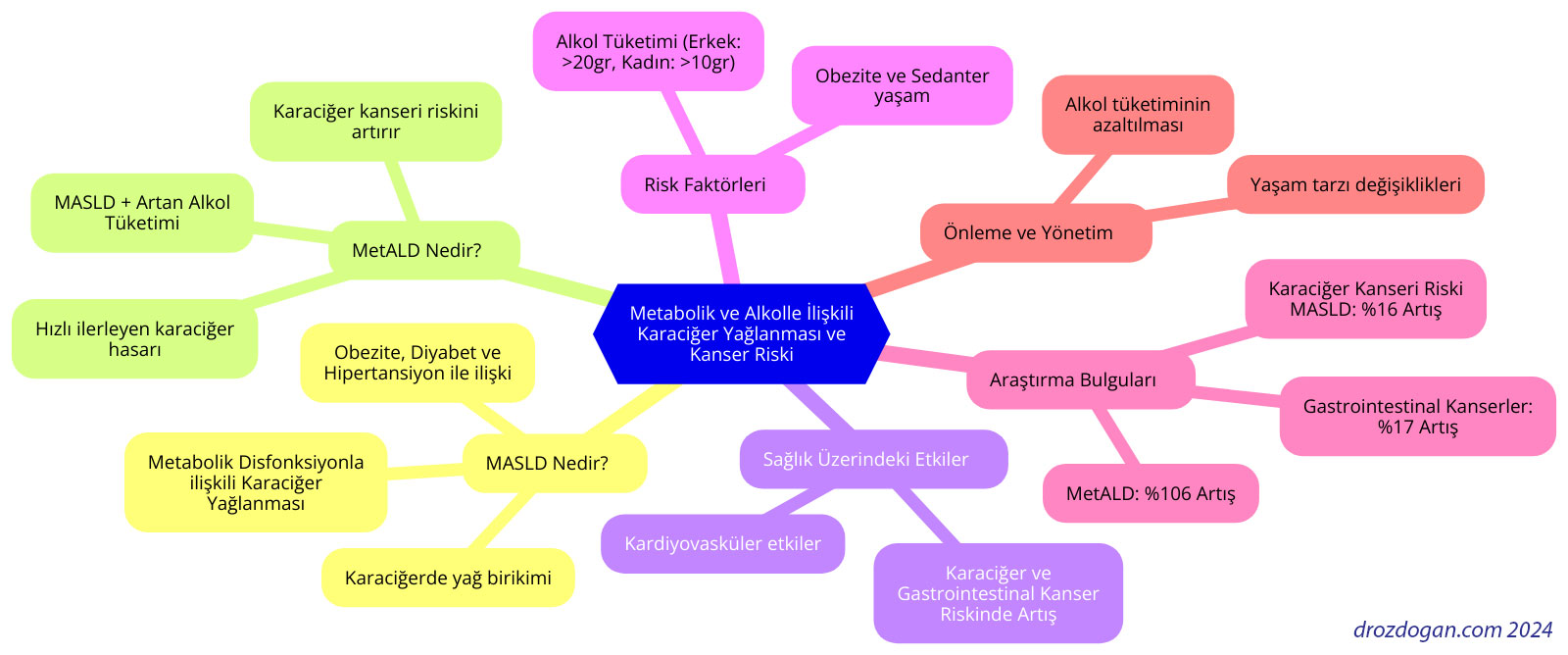
Overall Findings
Of the total cohort, 39.3% were diagnosed with steatohepatitis and subdivided into MASLD, MetALD, and other combinations. During 33.9 million person-years of follow-up, 285845 people (7.9%) developed cancer.
- MASLD Group: Cancer risk increased by 2% (SHR: 1.02).
- MetALD Group: The increase in cancer risk was more pronounced, at 7% (SHR: 1.07).
Liver Cancer
A particularly notable increase in liver cancer risk was identified:
- MASLD: 16% increase (SHR: 1.16)
- MetALD: 106% increase (SHR: 2.06)
Gastrointestinal Cancers
Significant increases were also observed in gastrointestinal cancers, including stomach, colorectal, pancreatic, and biliary tract cancers:
- MASLD: 13% increase (SHR: 1.13)
- MetALD: 17% increase (SHR: 1.17)
Other Cancers
The MASLD group was associated with modestly increased risks of lung and hormone-sensitive cancers (breast, uterine, and ovarian).
Clinical Significance
Researchers emphasized that managing MASLD and MetALD is critical not only for liver health but also for reducing cancer risk. Reducing alcohol consumption and controlling metabolic dysfunction may be effective approaches to cancer prevention.
These findings call attention to the importance of metabolic health for both healthcare professionals and the public.
Limitations and Considerations
- Diagnostic Methods: The study diagnosed fatty liver solely from the fatty liver index (FLI ≥ 30). The lack of radiological or histological data may limit the definition of steatohepatitis.
- Population Homogeneity: Because the study included only Korean individuals, its findings are difficult to generalize to other ethnic groups.
Future Prospects
This study provides an important starting point for understanding the relationship between liver health and cancer. Similar studies in broader populations, supported by radiological and histological data, may further clarify the link between metabolic dysfunction and cancer.
Metabolic health not only improves individual quality of life but can also make a major difference to public health.
Sources
2. Edited by Javed Choudhury. MASLD and MetALD Linked to Increased Cancer Risk - Medscape - November 25, 2024.
Was this article helpful?
Your feedback helps us improve our content.




Reader comments
Share your comment
Your name and comment are published only after administrator approval. Your email address is never shown to visitors.
Be the first to comment.