
The Limits of the Naked Eye and a Universe in Glass: The Birth of the Microscope

In this article
Day 59 (The History of Cancer in 365 Days Series)
We had opened up the body, yet we still could not see cancer. Until sand and fire became the magical lens that illuminated the invisible.
Until the 17th century, the history of cancer remained confined to the naked eye. Surgeons saw and cut out tumors, yet could never understand “what” they were made of or why they returned. In its effort to decipher the secrets of the universe, humanity had reached a wall its eyes could not see beyond. The birth of the microscope set in motion the transformation of cancer from an imaginary fluid circulating in the body (black bile) into a cellular rebellion within tissues. This analysis tells the story of the ability to “look closely,” a fundamental requirement of precise oncology, from a spectacle maker’s shop to the medical laboratory.
Vesalius had dissected cadavers, and Benivieni had held cancer in his hands during autopsies. Yet in the dim operating rooms of the 17th century, surgeons faced profound helplessness. They could cut out a tumor but could not see why it was “hard as stone” or how it drew nourishment from the healthy tissues around it. What would tear down this wall was not a scalpel, but a piece of glass shaped by sand, fire, and a craftsman’s breath.
A Chance Discovery in the Netherlands and Galileo’s “Little Eye”
Our story begins in the 1590s in the Dutch town of Middelburg. Father-and-son spectacle makers Hans and Zacharias Janssen invented history’s first “compound” magnifier by placing lenses at opposite ends of a tube. In those years, everyone was pointing these glass tubes toward the sky in search of stars.
In 1624, Galileo Galilei readjusted telescope lenses to “see very small things close at hand.” This was the first step toward looking into the microscopic universe.
In 1625, Johannes Faber combined the Greek words mikrós (small) and skopein (to see), introducing this legendary name to the world.
The Book Read Until Two in the Morning: The Man Who Named the “Cell”
When the microscope ceased to be a toy and became science’s most dangerous weapon, the English genius Robert Hooke (1635-1703) entered the scene. His book, published in 1665, Micrographia literally shook the world.
The Birth of the Concept of the Cell
When Hooke placed a very thin slice of bottle cork under the microscope, he saw tiny chambers arranged side by side. These chambers reminded him of the small rooms in monasteries where monks lived (cellula). For the first time in history, he gave that name to the fundamental building block of life: Cell. For the history of oncology, this meant naming the enemy’s true “headquarters.”
The Cloth Merchant’s Secret Lenses and “Animalcules”
A cloth merchant in the Dutch city of Delft, Antonie van Leeuwenhoek, discovered thousands of living creatures swimming in water droplets using brass lenses he had ground himself: “animalcules” (little animals). He was the first to see red blood cells in blood and bacteria. He proved that life was an invisible yet ceaselessly teeming ocean.
Redrawing Cancer’s Battlefield: Marcello Malpighi
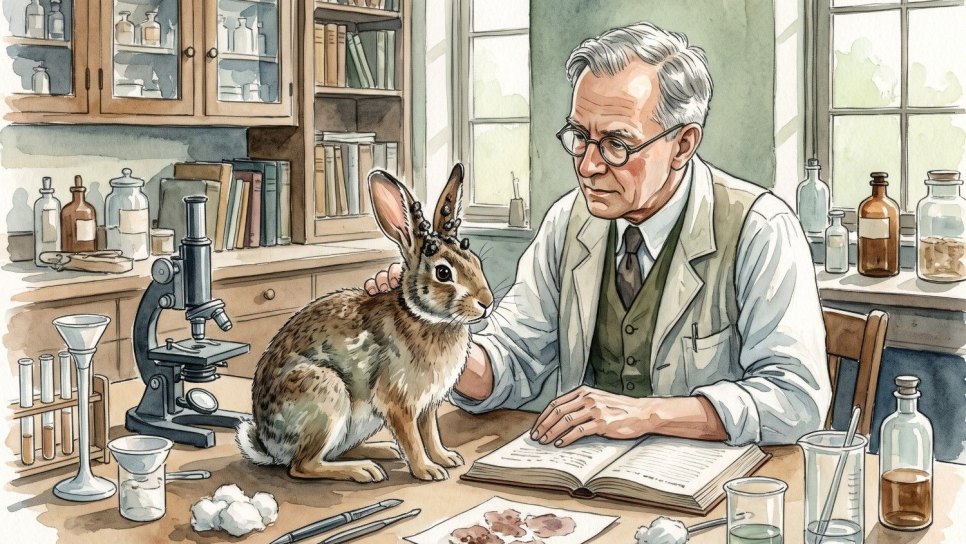
Italy was where this microscopic revolution touched oncology. Marcello Malpighi turned those magical lenses directly toward human organs and lymph nodes. Looking through the microscope, Malpighi overturned the 1500-year-old dogma that “organs are sponges” and gave modern Histology(the science of tissue) its foundations.
Tomorrow (Day 60), we will continue our journey with Bernardino Ramazzini, who noticed that nuns developed breast cancer more often and produced the first major cancer “statistics” in medical history.
Seeing Is the First Step in Restoration
The invention of the microscope is the greatest revolution in “precision” in the history of oncology. Making the invisible visible is not merely a matter of curiosity; it is the most honest way to seek healing. The artificial intelligence algorithms and high-resolution digital pathology systems we use in health informatics today are, in fact, the technological continuation of Hooke’s initial excitement as he looked at those monastic rooms (cells).
The philosophy of biological restoration begins with understanding the cell’s voice, rhythm, and where it goes wrong. If Robert Hooke had not ground glass, we would not be talking about a genetic orchestra today. Healing means recognizing the perfect balance in nature’s smallest and most hidden detail and being able to rebuild that balance through science.
Historical Sources and Further Reading
- 1. Hooke R. Micrographia: Physiological Descriptions of Minute Bodies. London: Royal Society, 1665.
- 2. Adelmann HB. Marcello Malpighi and the Evolution of Embryology. Cornell University Press, 1966.
- 3. Gest H. "The discovery of microorganisms by Robert Hooke and Antoni van Leeuwenhoek." Notes and Records of the Royal Society, 2004.
- 4. Faber J. Accademia dei Lincei Correspondence: Naming the Microscope. (1625).
Was this article helpful?
Your feedback helps us improve our content.


Reader comments
Share your comment
Your name and comment are published only after administrator approval. Your email address is never shown to visitors.
Be the first to comment.