Three Names, One Gene: The Independent Discovery of neu, c-erbB-2 and HER2, 1984-1987
In this article
Three Names, One Gene: The Independent Discovery of neu, c-erbB-2 and HER2, 1984-1987
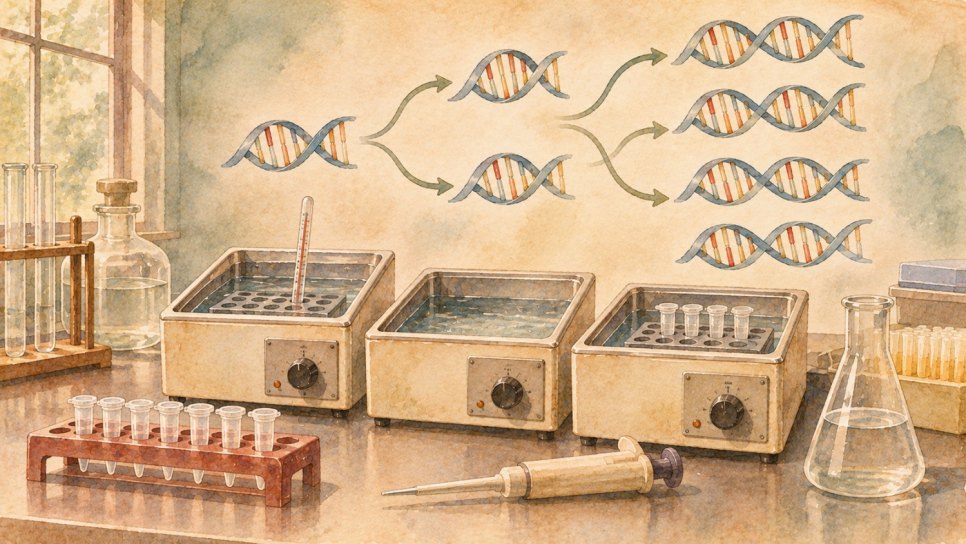
Yesterday (Day 173) we used the word "amplification" for DNA in a test tube. Today the same word appears for a tumor's own genome: gene amplification, meaning an increase in the copy number of a gene inside the cell. The two are different things and must not be confused. As promised in yesterday's tomorrow box, I first sorted out why the same gene carries three names and what 1984 is actually the date of, because the plan says "the discovery of HER2, 1984" and that title is only half right.
First a rat, not a human
On page 513 of volume 312 of Nature, dated 6 December 1984, an article opened under the title "The neu oncogene: an erb-B-related gene encoding a 185,000-Mr tumour antigen." The authors were Schechter, Stern, Vaidyanathan, Decker, Drebin, Greene and Weinberg. The paper had been received on 18 June and accepted on 19 September. According to the abstract, the transforming neu gene came from rat neuro/glioblastomas; its product was an antigen called p185; the gene was homologous to erbB; and p185 was serologically related to the EGF receptor but distinct from it, since both were present together in nontransformed Rat-1 cells.
So I have to correct the plan: what was found in 1984 was not the gene of human breast cancer but a gene from a rat tumor. And "discovery" here means the publication date; I do not know the date of the first observation at the bench.
The same trail through three different doors
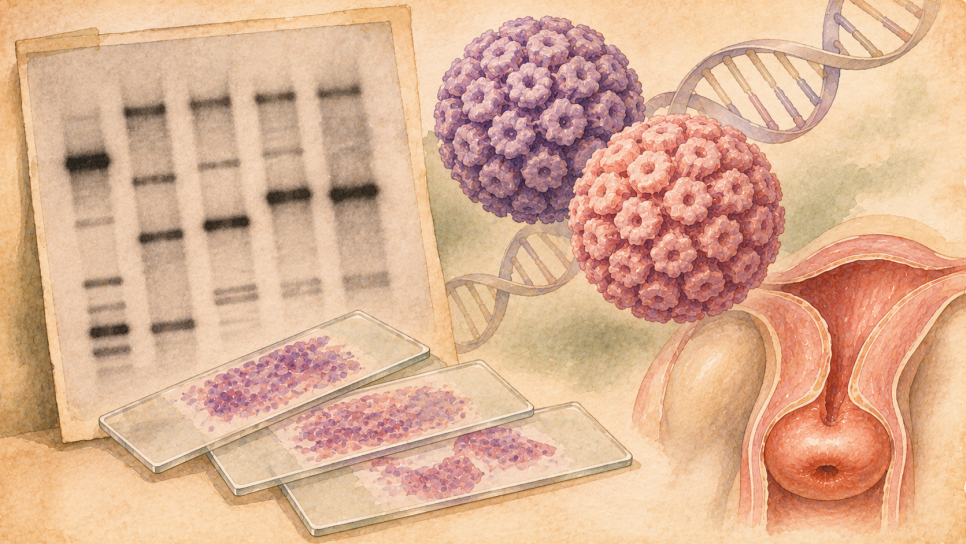
The trail of the human gene appeared in three papers in 1985, and each started from different material. The first came out in Science on 6 September 1985 (volume 229, pages 974-976): King, Kraus and Aaronson reported that a new gene related to v-erbB was amplified in a human mammary carcinoma. The gene was amplified differently from the EGF receptor gene; its 5-kb transcript differed from the transcripts of the EGF receptor, and the authors presented it as a new member of the tyrosine kinase proto-oncogene family.
The second appeared in PNAS on 1 October 1985 (volume 82, pages 6497-6501): Semba, Kamata, Toyoshima and Yamamoto separated the gene they called c-erbB-2 from the c-erbB-1/EGF receptor gene and found it amplified about 30-fold in a human salivary gland adenocarcinoma. In A431 cells, where the EGF receptor gene is amplified, c-erbB-2 was not amplified; the gene resembled rat neu.
The third came out on 6 December 1985 in volume 230 of Science (pages 1132-1139): Coussens and colleagues (Ullrich is among the authors) reported that the chromosomal location of a tyrosine kinase receptor with extensive homology to the EGF receptor coincided with that of neu, and suggested that "the two genes may be identical." I use the word "independent" here in this sense: the starting materials differed (a breast carcinoma, a salivary gland adenocarcinoma, a receptor cloned by its resemblance to the EGF receptor). Whether the groups knew of each other I cannot read from the papers.
Where the three names come from
neu: from the rat neuro/glioblastoma source; I did not read the explanation of the name in the Schechter paper, and my source is a database summary. c-erbB-2: the cellular relative of a viral oncogene called v-erbB; according to Semba and colleagues the EGF receptor gene is c-erbB-1 and this is the second (the same logic as Rous's src gene on Day 97: a gene carried by a virus that derives from the cell's own gene; see Day 167; I did not verify which virus v-erbB comes from). HER2: Coussens and colleagues gave this name because of the "close relationship" to the human EGF receptor (according to the OMIM summary). In 1987 Slamon wrote HER-2/neu. So three names for one gene are the traces of three different paths.
The same gene, or a related one?
Coussens's "may be identical" was a hypothesis, and certainty matured over several papers. On 16 January 1986, Bargmann, Hung and Weinberg reported in volume 319 of Nature (pages 226-230) that the predicted protein of neu consists of 1,260 amino acids, spans the membrane, and is about 50 percent identical to the EGF receptor overall and more than 80 percent in the tyrosine kinase domain; neu probably encoded the receptor for a growth factor not yet identified. The same year Akiyama and colleagues showed that the product was a 185-kD glycoprotein with tyrosine kinase activity, and the clone of Yamamoto and colleagues differed from Coussens's at codon 655 (isoleucine versus valine). According to the OMIM entry, Di Fiore and colleagues (Science 1987) showed that NEU and HER2 are the same gene and that overexpression alone can turn the gene into an oncogene; Francke's personal communication of 1988 says that sequencing found the two identical. I do not tie the moment of certainty to a single paper.
A number showed an association, not a cause
Slamon et al., Science 235:177
Slamon, Clark, Wong, Levin, Ullrich and McGuire examined the copy number of the HER-2/neu gene in 189 primary breast cancers. According to the abstract, the gene was amplified from about 2-fold to more than 20-fold in about 30 percent of the tumors. Amplification was a significant predictor of both overall survival and time to relapse, also after adjustment. In patients with lymph node involvement, its value was greater than that of most then-current factors, including hormone receptor status. In the initial survey of 103 tumors the rate was 19 tumors, 18 percent; the 30 percent and the 18 percent are figures from different sets of samples.
Two distinctions are needed here. First: amplification is a DNA copy-number feature, while the drug's target is the protein, and overexpression is a separate measurement; the two tests do not always place the same patient in the same class. Second: Slamon 1987 reported an association. It did not say "this gene makes the tumor more aggressive" or "if this gene is targeted, patients benefit." The first was supported in the laboratory (Di Fiore); the second was tested only by the trials of the 1990s. I could not read the hazard ratios and confidence intervals, so I cannot give the relative effect as a number; I can only say "significant."
Thirteen and a half years from discovery to drug
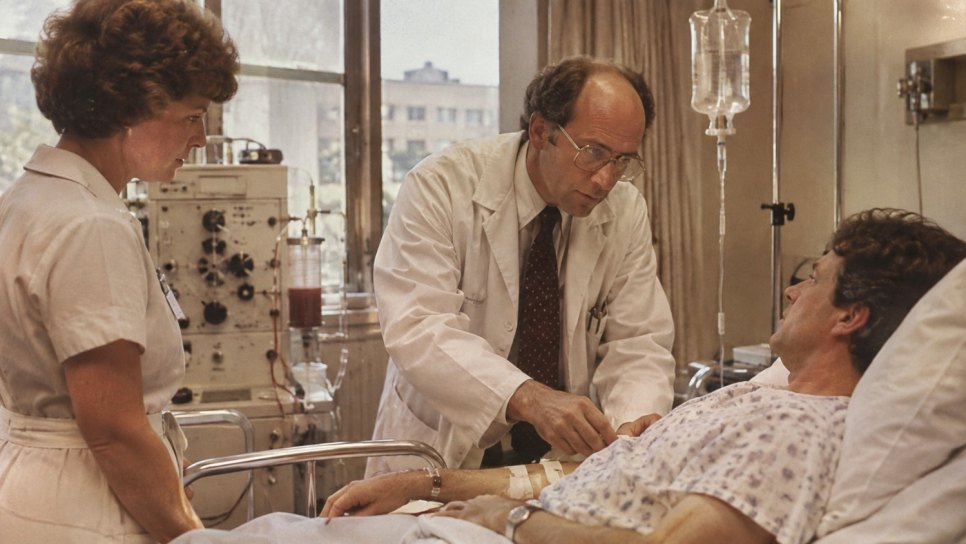
According to the National Cancer Institute page, the HER2 protein is high in about 30 percent of breast cancers. On the drug side, the milestone I could verify is this: on 25 September 1998 Genentech announced FDA approval of trastuzumab (Herceptin). The indication was metastatic breast cancer with HER2 overexpression, first-line with paclitaxel and as a single agent in later lines. About 900 women were in the trials. From the neu paper of December 1984 to this approval is about 13.8 years, from the human-gene paper of September 1985 about 13.1 years, and from Slamon about 11.7 years; all were calculated from day counts. FDA approval for adjuvant use came on 16 November 2006, about 8.1 years after the first approval.
What happened in between, that is, how the antibody was developed and how the trials were set up, is the subject of a separate day in the plan (Day 193); I do not tell it here. The National Cancer Institute writes that adjuvant trastuzumab improved survival of women with stage 1-3 HER2-positive disease by "more than 30 percent." That is a relative statement; the page gives no absolute difference, and I am not inventing one.
Costs and limits
According to Genentech's 1998 announcement, serious cardiac toxicity was seen in some patients, most clearly with concurrent chemotherapy; cardiotoxicity, leukopenia, anemia, diarrhea, abdominal pain and infections were more frequent in the Herceptin plus chemotherapy arm. The drug was defined only for tumors with HER2 overexpression, so a test that measures the target correctly is essential. The figure of 30 percent also means that the remaining 70 percent will not benefit from this drug. I did not verify price and access information for this article, so I did not write it.
From publication to drug. Bar lengths show the years between two dates; the full length is 14 years. The blue bars run from a publication date to the 25 September 1998 approval; the amber bar runs from the 1998 approval to the 16 November 2006 adjuvant approval. Publication dates are not the laboratory dates of the discovery.
I found no verified local link
I found no verified source on the first use of HER2 research or the HER2 test in Türkiye, so I am not building such a link. A general inference: "HER2 positive" or "negative" is not read on its own. The report states which test (protein staining or gene copy number) and which threshold were used; the distinction between amplification and overexpression described in this article is the key to understanding the report. For your own report, consult your physician.
From 1984 to 2006
What was verified, what stayed uncertain
- Day 158: Köhler and Milstein have still not been written; the promise in the tomorrow box of Day 157 was not kept.
- 1984 a rat gene, 1985 the human gene: the citation, dates and abstract of the Schechter paper were read with a summarizing tool from a journal site's abstract page. The plan's "1984" title is therefore not correct for the human gene.
- Three papers in 1985: citations and findings are from the abstracts on an academic index site; full texts were not read. The author list of the Coussens paper may be longer; I took only Ullrich's name from the abstract. Whether the groups worked independently of each other was not verified.
- Origin of the names (HER2, neu, c-erbB-2): from the OMIM entry as read with a summarizing tool; the Akiyama, Yamamoto, Di Fiore and Francke details are also from there, and the original papers were not read. Francke 1988 is a personal communication. I did not see the exact expansion of "HER" in an original paper.
- Slamon 1987: the page range appeared as 177-182 in one record and 177-178 in one PDF; I wrote 177-182. The 30 percent (abstract) and the 18 percent (initial survey) are different sample sets. I did not read whether the study was retrospective, nor the hazard ratios.
- 25 September 1998: the approval announcement date is from Genentech's announcement (Drugs.com); the "1998" on the National Cancer Institute page is the year of the phase 3 results, not the approval date. 16 November 2006 and the 30 percent statement are from the same page. I did not write dates such as 1990 and 2001 from a journalistic timeline.
- Not verified: details of the Slamon-Ullrich collaboration, Genentech's early role, and price and access information are not in this article.
A cytokine tried in patients: Steven Rosenberg and IL-2, 1985
Today we told the thirteen and a half years it took a gene to reach a drug; tomorrow we go to the first years of giving the immune system's own signaling molecule to patients: interleukin-2. Before writing I will verify the citation of the 1985 paper, the response rates, the severe side effects and the approval date; I will hedge the "first" claims.
Author's note: In this article I paid attention to two things. First, saying openly that 1984 is the rat's gene and 1985 the human's, and using the word "independent" only as far as the papers allow. Second, leaving the association between the gene count in a tumor and the patient's course, before the drug story, as only an association.
Sources and Further Reading
- Schechter AL, Stern DF, Vaidyanathan L, Decker SJ, Drebin JA, Greene MI, Weinberg RA. The neu oncogene: an erb-B-related gene encoding a 185,000-Mr tumour antigen. Nature 1984;312:513-516 (from the abstract page).
- King CR, Kraus MH, Aaronson SA. Amplification of a novel v-erbB-related gene in a human mammary carcinoma. Science 1985;229(4717):974-976 (from the abstract).
- Semba K, Kamata N, Toyoshima K, Yamamoto T. A v-erbB-related protooncogene, c-erbB-2, is distinct from the c-erbB-1/epidermal growth factor-receptor gene and is amplified in a human salivary gland adenocarcinoma. Proc Natl Acad Sci USA 1985;82(19):6497-6501 (from the abstract).
- Coussens L et al. Tyrosine kinase receptor with extensive homology to EGF receptor shares chromosomal location with neu oncogene. Science 1985;230(4730):1132-1139 (from the abstract; author list may be incomplete).
- Bargmann CI, Hung MC, Weinberg RA. The neu oncogene encodes an epidermal growth factor receptor-related protein. Nature 1986;319:226-230 (from the abstract page).
- Slamon DJ, Clark GM, Wong SG, Levin WJ, Ullrich A, McGuire WL. Human breast cancer: correlation of relapse and survival with amplification of the HER-2/neu oncogene. Science 1987;235(4785):177-182.
- OMIM. ERBB2 (entry 164870), omim.org (origin of the names and the 1985-1988 citations; read with a summarizing tool).
- National Cancer Institute. Page on HER2, cancer.gov (the 30 percent, the 2006 adjuvant approval).
- Drugs.com / Genentech. Herceptin FDA approval announcement, 25 September 1998, drugs.com (indication, adverse effects).
- Mukherjee S. The Emperor of All Maladies: A Biography of Cancer. New York: Scribner; 2010 (general context; the relevant pages were not re-read for this article).
This article is Day 174 of the "365 Days of Cancer History" series and presents the discovery history of the HER2 gene as a historical reading. It is historical-popular content; it is not a recommendation on diagnosis, screening or treatment. For HER2 testing and treatment options, consult your physician. The sources have been verified; details that rest on a single secondary source, a summarising tool or an unreadable text are marked in the fact-check notes.
Was this article helpful?
Your feedback helps us improve our content.