
What Is a Rapid Coronavirus Test, and How Is It Performed?

Scientists are still debating whether millions of cheap, rapid diagnostic kits will help bring the pandemic under control.
Here Is Why…
As coronavirus case numbers rose in the United Kingdom in early 2021, the government announced a striking change in the fight against Covid-19: millions of cheap, rapid coronavirus tests. On 10 January, the government said these tests would be made publicly available nationwide and that everyone, with or without symptoms, would be tested. Similar tests will play a crucial part in US President Joe Biden's plans to tame the out-of-control outbreak in the United States.
These rapid tests, which generally mix a sample from the nose or throat with liquid on paper to return a result within 15 minutes to half an hour, are considered tests of infectiousness rather than infection. They can detect only high viral loads, so they will miss many people carrying low levels of the SARS-CoV-2 virus. However, there is hope that they will help overcome the pandemic by quickly identifying the most infectious people, who may unknowingly spread the virus.
Concerns About Rapid Coronavirus Tests
Yet when the government announced its plan, it became the subject of a heated debate. One group of scientists welcomed England's testing strategy. Another said that rolling the tests out to millions would miss a large number of cases and cause more harm than good. Many supported the view that people might mistakenly feel safe again after a negative test result and change their behavior, as argued by a test evaluation expert at the University of Brimingham in England, Jon Deeks. Deeks also said that more infections would be missed if people administered the tests themselves rather than relying on trained professionals. Deeks and his Brimingham colleague Jac Dinnes are among the scientists calling for more data on rapid coronavirus tests before their use becomes widespread.
Other researchers quickly responded, however, saying claims that the tests could cause harm were wrong and “unreliable.” These scientists include an epidemiologist at the Harvard T.H. Chan School of Public Health in Boston, who says the arguments are delaying many of the solutions needed against the pandemic, Michael Mina.
Scientists' Shared Conclusion
The one thing scientists agree on is the need for a clear statement about what rapid tests are for and what negative results mean. Mina says, “It is a terrible idea to throw these tools at people who do not know how to use them properly.”
Comparing Rapid Tests
Reliable information about rapid tests is hard to obtain because, at least in Europe, products are sold based solely on manufacturers' data, without independent evaluation. There is no standard protocol for measuring performance, making analyses difficult to compare and forcing each country to conduct its own validation.
The CEO of the Foundation for Innovative New Diagnostics (FIND), a nonprofit in Geneva, Switzerland, that reviews and compares dozens of Covid-19 assays, Catharina Boehme says, “It is the Wild West in diagnostics.”
In February 2020, FIND began the ambitious task of evaluating hundreds of types of Covid-19 tests in a standardized experiment. In collaboration with the World Health Organization (WHO) and research institutes worldwide, the foundation is running hundreds of coronavirus tests and comparing their performance with results obtained using the highly sensitive polymerase chain reaction (PCR) technique. This technique looks for a specific viral genetic sequence in a sample taken from a person's nose or throat (or sometimes saliva). PCR-based tests make many copies of this genetic material through numerous amplification cycles, so they can detect very small amounts of virus present initially. However, they can be time-consuming and may require trained staff and expensive laboratory equipment.


Why Are There Concerns About the Reliability of Rapid Tests?
Cheaper, faster tests tend to work by detecting specific proteins on the surface of SARS-CoV-2 particles, collectively called antigens. These “rapid antigen tests” do not amplify anything in the sample, so they can detect the virus only when the viral load in the person's body reaches a high level, perhaps hundreds of thousands or millions of viral copies per milliliter of sample. The virus generally reaches these levels when symptoms start or are about to start, which is when people are most infectious.
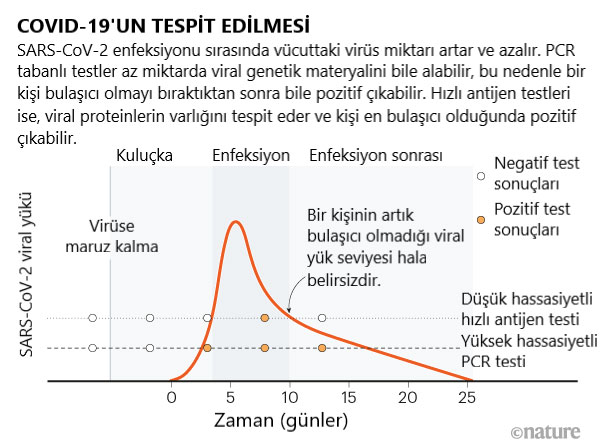
Dinnes says manufacturers' data on test sensitivity mostly come from laboratory experiments in symptomatic people, who tend to have high viral loads. In these experiments, most rapid tests appear very sensitive (and extremely specific: very unlikely to give a false positive result). Real-world evaluations, however, indicate markedly different performance in people carrying lower viral loads.
How Are Viral Load Levels Determined?
Viral loads in samples are generally measured by reference to the number of PCR amplification cycles needed to detect the virus. In general, if it takes approximately 25 or fewer PCR amplification cycles (defined as the cycle threshold, or a Ct of 25 or lower), levels of live virus are thought to be high, suggesting that people are probably infectious, although it is not known whether there is a significant threshold separating when people are infectious from when they are not.
The Porton Down and Oxford Study
In November 2020, the UK government released preliminary results from a study conducted at Porton Down science park and the University of Oxford; the full results, which had not yet been peer reviewed, were published online on 15 January. These stated that, although most rapid antigen (or “lateral flow”) tests were “not performing at a level required for mass population deployment,” 4 separate brands achieved, in laboratory experiments on samples with Ct values of 25 or 25 and below, 91-100% sensitivity. FIND's reevaluations of several rapid test kits have also generally shown 90% or greater sensitivity at these viral load levels.
As viral levels fall, meaning Ct values rise, rapid tests begin missing infections. Porton Down scientists focused on tests from Innova Medical in Pasadena, California; the UK government has already spent more than £800 million ordering these tests, which have become a key part of its strategy to slow coronavirus spread. The tests' sensitivity fell to 88% at CT levels of 25 – 28 and to 76% at Ct levels of 28 – 31.

This compares unfavorably with a December evaluation of the BinaxNOW rapid test made by Abbott Laboratories in Abbott Park, Illinois.
In that study, more than 3300 people in San Francisco were tested, and 100% sensitivity was obtained for samples with Ct levels below 30, even when infected individuals had no symptoms.
However, differently calibrated PCR systems mean that Ct levels cannot easily be compared between laboratories and do not always indicate the same viral level in a sample. Innova says the UK and US studies used different PCR systems and that only direct comparisons using the same systems are valid. The UK government pointed to a UK report written by Porton Down scientists in late December that ran the Innova test head-to-head with the Abbott Panbio test (similar to the BinaxNOW kit sold by Abbott in the United States). In slightly more than two dozen samples with Ct levels below 27, both returned up to 93% positive results.
This detail about Ct calibration is crucial when considering a trial of Innova tests in thousands of people in Liverpool, England, which identified only two-thirds of cases with Ct levels below 25. This suggested that the tests missed one-third of probably infectious cases. But now the public health and informatics researcher leading the trial at the University of Liverpool, Iain Buchan, says that Ct values of 25 in the laboratory processing the samples are thought to correspond to much lower viral levels in other laboratories, perhaps equivalent to Ct values of 30 or above.
Deeks says a December trial at the University of Birmingham illustrates how rapid tests can miss infections. More than 7000 asymptomatic students there received an Innova test; only 2 tested positive. But when university researchers rechecked 10% of the negative samples using PCR, they found another 6 infected students. Across all samples, probably 60 infected students were missed.

An area in London designated for rapid testing of asymptomatic Covid-19 cases.
Why Can Rapid Tests Give Incorrect Results?
Mina says these students had low viral levels and were therefore unlikely to be infectious in any case. Deeks argues that people with low viral levels might be on their way to becoming more infectious, even if they might instead be in the final stage of a declining infection. Another factor is that some students' samples may have been poor, so many viral particles might not have been tested. Deeks worries that people will mistakenly think a single negative test makes them safe; a rapid test is actually a snapshot of possible non-infectiousness at that moment. Deeks says suggestions that the tests will make workplaces completely safe are not the right way to inform the public about their effects. “If people develop a false sense of security, they may actually spread the virus around,” he says.
But Mina and others say the Liverpool trials show that people did not behave this way and were told they could still transmit the virus later. Mina emphasizes that using the tests frequently, twice a week, is an effective key to eliminating the pandemic.
Interpreting a test result depends not only on the test's accuracy but also on the person's existing likelihood of having Covid-19. This depends on infection rates in their area and whether they have symptoms. If a person in an area with high levels of Covid-19 has typical symptoms and receives a negative result, it is probably a false negative that should be double-checked with PCR.
Can Rapid Tests Be Performed at Home?
Researchers also debate whether people should perform the tests themselves, at home, school, or work. Assay performance may vary depending on how the people testing collect and process samples. For example, laboratory scientists obtained nearly 79% sensitivity across all samples using the Innova test, including very low viral loads, but members of the public administering it themselves obtained only 58%, the worrying difference Deeks mentions.

Nevertheless, in December, the UK medicines regulator authorized home use of the Innova test to detect infection in asymptomatic people. The tests were processed as if they came from the country's National Health Service and were designed by the Department of Health and Social Care (DHSC), but a DHSC spokesperson confirmed they were purchased from Innova and manufactured by Xiamen Biotime Biotechnolohy in China. The spokesperson stated: “The lateral-flow tests used by the UK government undergo rigorous evaluation by the country's leading scientists. This means they are accurate, reliable, and successfully detect asymptomatic Covid-19 carriers.”
A German study also suggests that self-administered tests may work as well as those performed by professionals. In the study, which has not yet been peer reviewed, when people collected their own nasal samples and completed an unnamed WHO-approved rapid test, sensitivity was very similar to that achieved by professionals, even though people frequently deviated from the instructions.
In conclusion, In the United States, the Food and Drug Administration (FDA) has granted emergency use authorization for 13 antigen tests, but only one, the Ellume Covid-19 Home Test, can be used in asymptomatic people. According to Ellume, a company in Brisbane, Australia, the test detected coronavirus in 10 of 11 asymptomatic people who tested positive by PCR. In February, the US government announced it would buy 8.5 million tests.
Making Rapid Tests Available to the Public
Some countries without resources for PCR testing, particularly India, have used antigen tests for months simply to supplement their testing capacity. Some countries with PCR testing are also rapidly making quick alternative tests available to the public because of doubts about their accuracy, and governments implementing mass rapid testing even call it a success. Slovakia, with a population of 5.5 million, was the first country to attempt to test its entire adult population.
Widespread testing helped bring the infection rate down by approximately 60%. But testing was accompanied by strict restrictions not implemented in other countries, as well as government financial support to help people who tested positive stay home. Experts say it is unclear whether this approach would work elsewhere, although the combination of testing and restrictions appeared to reduce infection rates much faster than restrictions alone. In other countries, many people might want rapid tests but lack incentives to isolate if they test positive. Still, because commercial rapid tests are relatively cheap, as little as 5 dollars, Mina says cities and states could buy millions of tests for a tiny fraction of what the pandemic costs governments.

A healthcare worker collects a sample from a passenger for a rapid test at a railway station in Mumbai, India.
Where Might Rapid Tests Be Useful?
Settings where rapid tests may be particularly suitable for asymptomatic screening include prisons, homeless shelters, schools, and universities, where people are likely to come together anyway; any testing is therefore useful for detecting some additional infectious cases. Deeks warns, however, against allowing tests to be used in ways that could change people's behavior or encourage them to relax precautions. For example, people might interpret a negative result as encouragement to visit a relative in a care home.
In the United States, mass rapid testing programs have so far been made available in places such as schools, prisons, airports, and universities. For example, since May, the University of Arizona in Tucson has used Sofia tests developed by Quidel in San Diego, California, to test its athletes daily. Since August, it has also tested students at least monthly, with some students, particularly those living in outbreak-affected dormitories, being tested as frequently as once a week. So far, the university has performed approximately 150,000 tests and has reported no increase in Covid-19 cases in the past two months.
A stem cell researcher involved in Arizona's mass testing program, David Harris, says different tests have different uses: rapid antigen tests should not be used to assess the prevalence of a virus in a community. “If you use it like a PCR test, you get terrible sensitivity. But for what we are trying to do, preventing the spread of infection, antigen testing seems to work wonderfully, particularly when performed repeatedly.”

A student at the University of Oxford in England takes a university-provided rapid antigen test before flying to the United States in December 2020.
Conclusion
Many research groups worldwide are developing faster and cheaper testing methods. Some make minor changes to PCR testing to speed up amplification, but most of these tests still require special equipment.
Other approaches rely on a technique called loop-medicated isothermal amplification, or LAMP, which is faster and needs less equipment than PCR. However, these tests are not as highly sensitive as PCR-based tests.
Last year, researchers at the University of Illinois in Urbana – Champaign developed their own rapid diagnostic assay. It is a PCR-based test that uses saliva rather than nasal samples and bypasses an expensive, slow step. It costs 10 – 14 dollars and provides results in a 24-hour time frame, allowing everyone on campus to be screened twice a week, although a laboratory is still needed to run PCR. Last August, the frequent-testing program allowed the university to detect and broadly control an increase in infections on campus. Within a week, new cases fell by 65%, and the university has not reported similar increases since.
Boehme says no test fits every need, but assays that can identify infectious people are vital to keeping the world's economies open. “Testing at airports, borders, workplaces, schools, and clinical settings – these are all situations where rapid tests have great power because they are easy to use, inexpensive, and fast,” she says. But she adds that large-scale testing programs should be based on the best available tests.
The European Union's approval process for Covid-19 diagnostic tests is currently the same as for other types of diagnostics, but concerns about the performance of some assays led to new guidance last April. It calls on manufacturers to produce test kits that perform at least as well as state-of-the-art Covid-19 tests. But because tests may actually perform differently from manufacturers' experiments, the guidance recommends that member states validate tests before making them publicly available.
Ideally, Boehma says, each country would not need to validate every assay. There would be common protocols used by manufacturers and laboratories worldwide, such as those developed by FIND. Boehma says, “Standardized approaches to testing evaluation are what we need.” She says, “This would be no different from what happens when evaluating treatments and vaccines.”
Sources
Was this article helpful?
Your feedback helps us improve our content.


Reader comments
Share your comment
Your name and comment are published only after administrator approval. Your email address is never shown to visitors.
Be the first to comment.