
What Is CRP? What Do High or Low CRP Test Results Mean?

In this article
The CRP test is a simple blood test that measures inflammation in the body. “CRP” stands for C-reactive protein, a protein produced by the liver and released into the blood when infection or inflammation is present. Measuring it helps doctors assess whether inflammation is present . High levels generally indicate an infection, a wound or tissue damage, an autoimmune disease, or another inflammatory condition. Often called an “inflammation test,” CRP can also help monitor disease severity and response to treatment.
Briefly: CRP is a quick, reliable blood test that helps detect hidden or active inflammation. It does not establish a definitive diagnosis on its own, but gives the doctor an important sign that a problem may be present and that further investigations may be needed.
Why Is a CRP Test Performed?
Doctors request CRP when they suspect infection or inflammation. Levels can rise in many conditions, making the test useful when assessing various diseases.
CRP is commonly tested in the following situations:
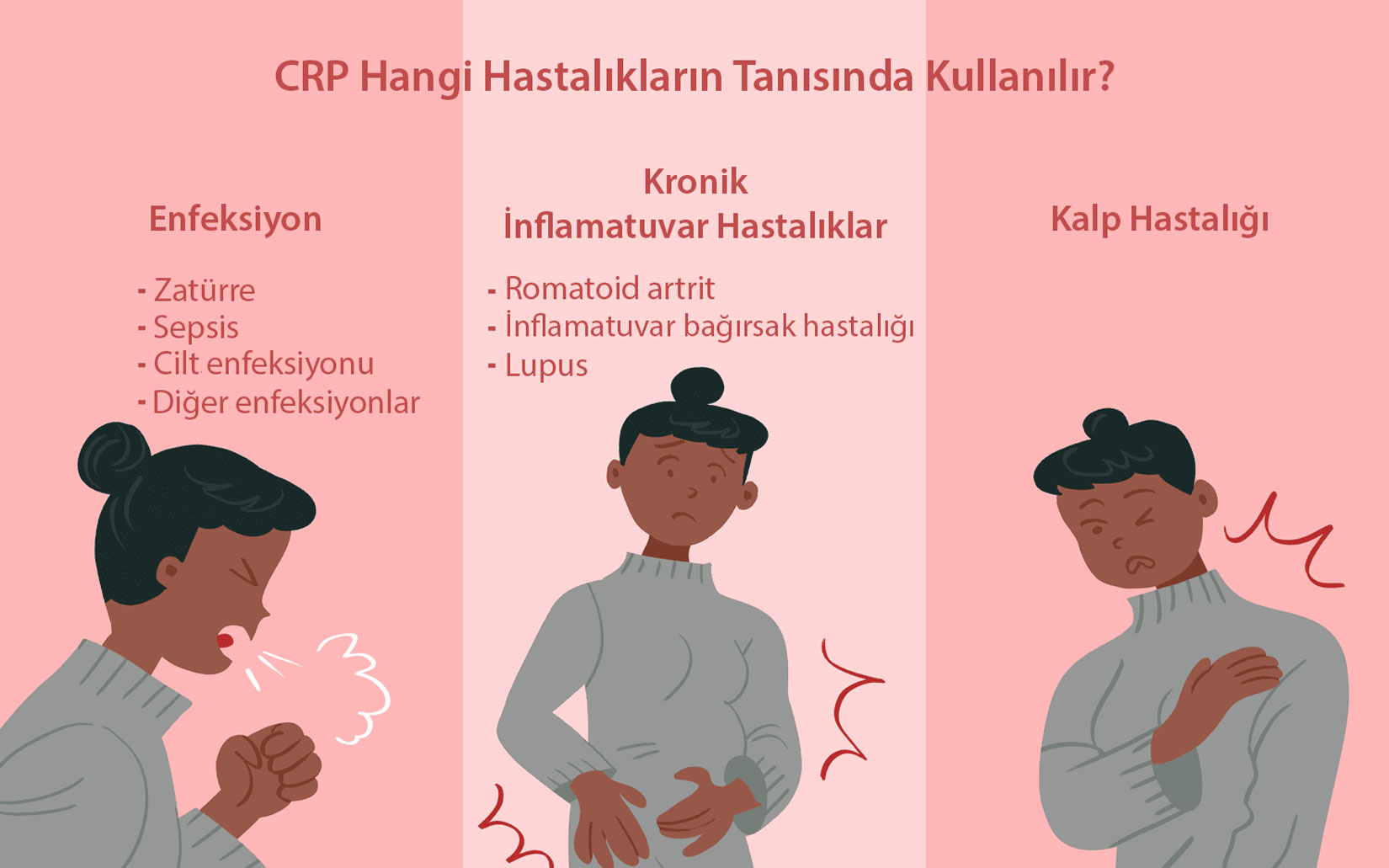
- Suspected infection: Particularly when bacterial infections such as pneumonia or sepsis , or fungal infections, are suspected, CRP testing is requested. High CRP suggests that an infection may be present.
- Inflammatory diseases: Rheumatoid arthritis, lupus, and inflammatory bowel disease such as Crohn's disease or ulcerative colitis are autoimmune conditions in which CRP helps assess flare-ups or disease activity.
- Tissue damage and after surgery: Trauma or injury, and surgery, trigger inflammation that may raise CRP. Monitoring after surgery can help assess whether complications have developed.
- Monitoring chronic conditions: Cardiovascular disease, diabetes and obesity can cause mildly elevated CRP. Studies suggest that persistently high CRP may increase heart attack risk. A high-sensitivity CRP (hs-CRP) test may therefore be used to assess heart disease risk. An hs-CRP result <1 mg/L indicates low risk and >3 mg/L high risk.
CRP may also be requested during a general health check. With unexplained symptoms such as fever, weakness or fatigue, it is checked to look for an underlying infection. Important point: CRP indicates whether inflammation is present but cannot identify its location or exact cause on its own. If it is high, your doctor may request other investigations, such as further blood tests or imaging, to find the cause.
How Is a CRP Test Performed?
CRP is a simple blood test requiring no special preparation. It can be performed with or without fasting because food intake does not affect the result. The steps generally are:
- Blood collection: A small blood sample is taken from a vein in your arm. Like any blood draw, it is quick and generally painless apart from slight discomfort when the needle is inserted.
- Laboratory analysis: The sample is sent to a laboratory, where automated equipment measures C-reactive protein. Some laboratories use techniques such as turbidimetry or nephelometry, but these technical details make little difference to the patient receiving the result.
- Receiving the results: Results are generally available the same day or the next day. The report gives CRP in “mg/L” (milligrams per liter), for example, CRP = 8 mg/L.
CRP is reliable and provides important information to support diagnosis. A single measurement may not always be enough, however, and your doctor may recommend repeating the test at intervals to monitor infection or treatment response.
What Should CRP Be? Normal Values
In healthy people, blood CRP is very low or undetectable. Laboratory reference ranges vary, but levels between 0 and 5 mg/L are generally considered normal . Some sources also consider values up to 10 mg/L within the normal range. Results are generally interpreted as follows:
| CRP Level | Interpretation | Possible Conditions |
|---|---|---|
| 0 – 5 mg/L | Normal | Indicates no active inflammation. Healthy people generally have CRP in this range. |
| 5 – 10 mg/L | Borderline (Mildly elevated) | May reflect minor inflammation or a risk factor. Obesity, smoking, gum inflammation, intense exercise, pregnancy, or a mild infection may cause this range. It usually does not indicate a serious problem, but medical follow-up may be needed. |
| > 10 mg/L | High | Indicates significant inflammation. Infections such as bacterial infections or pneumonia, rheumatic disease, tissue damage from injury or surgery, and some cancers may raise CRP above 10 mg/L. Higher values generally mean more severe inflammation. |
Note: CRP can reach very high levels. Severe bacterial infection or sepsis, for example, can raise it to 100 mg/L or similarly high values. However, high CRP alone does not definitively indicate a particular disease. Results must always be interpreted alongside symptoms and other investigations.
As the table shows, CRP should normally be close to 0 in the blood. Low CRP generally does not mean a medical problem and is actually desirable. A value below the reference range, such as 0 mg/L, indicates an absence of inflammation and a healthy state.
What Does High CRP Mean?
High CRPmeans that blood C-reactive protein exceeds normal levels. It is a warning sign of inflammationin the body. A high result may mean the body is fighting an infection, repairing tissue damage, or experiencing active inflammatory disease.
High CRP is not itself a disease but a sign of another underlying problem. As CRP rises, the severity of inflammation generally increases. A mild flu-like infection may raise it slightly, whereas a serious bacterial infection may cause much higher values. Important: A high CRP result suggests a problem in the body but does not identify the problem on its own. Doctors therefore examine the patient and perform other tests when needed to find the cause of the elevated result.
What Causes High CRP?
Many health problems can raise CRP. In general, CRP increases whenever inflammation occurs in the body. The main causes include:
- Infections: Bacterial, viral, or fungal infections trigger inflammation and raise CRP. A simple cold may cause a mild increase, while more serious infections such as an abscess or pneumonia can cause much higher levels.
- Autoimmune and rheumatic diseases: Rheumatoid arthritis, lupus (SLE), inflammatory bowel diseases, and other conditions involving excessive immune responses may raise CRP. Levels generally rise further during active disease or flare-ups.
- Chronic conditions: Long-standing conditions such as diabetes, cardiovascular disease, hypertension or severe obesity may cause low-grade chronic inflammation. CRP may remain persistently slightly above normal in these individuals.
- Injury or surgery: After any trauma such as a fall, accident, or operation, the body initiates inflammation to repair damage. CRP therefore rises temporarily after surgery or major injury. A postoperative level much higher than expected may signal a complication or infection.
- Cancer: Some cancers,particularly advanced or metastatic cancers, can cause chronic inflammation and increase CRP. However, high CRP alone does not mean cancer , as explained in the “CRP and Cancer” section below. CRP also rises when a cancer patient develops an infection.
- Other factors: Smoking, gum inflammation (periodontal disease), severe stress, sleep problems, and even pregnancy can mildly increase CRP. These generally produce a small rather than large rise.
As this list shows, many causes are possible. When CRP is high, your doctor will assess your overall condition and investigate further if needed. For example, blood cultures may be taken for suspected infection, or specific tests requested for suspected rheumatic disease.
What Are the Symptoms of High CRP?
In fact, CRP itself is not a symptom you can feel;it is a laboratory result. The increase does not directly cause symptoms, but the underlying condition may. Symptoms accompanying high CRP therefore depend on its cause:
- With infection: Fever, chills, shivering, weakness, loss of appetite, localized pain such as a sore throat or abdominal pain, or infection-specific symptoms such as cough and sputum.
- With rheumatic or autoimmune disease: Joint pain, swelling, and morning stiffness, as in rheumatoid arthritis; rash and sun sensitivity, as in lupus; or abdominal pain and diarrhea, as in Crohn's disease.
- With chronic inflammation: General symptoms such as prolonged weakness, fatigue, and low motivation. People with obesity-related high CRP may have low energy and mild joint pain.
- With serious infection or sepsis: Emergency symptoms such as high fever, rapid heartbeat, shortness of breath, and confusion. These are life-threatening emergencies requiring hospital treatment.
- With cancer: Depending on the cancer, weight loss, night sweats, enlarged lymph nodes, or prolonged unexplained fever may reflect the underlying disease. High CRP is a secondary finding.
In summary, high CRP has no specific symptom that can be felt. A person only learns of the increase through a blood test. The condition raising CRP has usually caused symptoms that prompted the doctor to order the test. CRP is not normally measured without a reason; a concern such as fever or pain prompts testing to investigate its cause. If a routine check finds high CRP without symptoms, consult a doctor to investigate the reason.
What Does Low CRP Mean?
Some results may show CRP as too low to measure or report it as “negative.” Low CRP is generally a good sign. Healthy people may have values close to zero, so a “low” or “negligible” result is normal. A value below the reference range indicates that no active inflammation is present.
Low CRP has no adverse significance. A fall after treatment may indicate improvement in infection or disease. For example, a decline from a high value to normal during treatment for serious infection indicates reduced inflammation and recovery.
Note: Very rarely, with severe liver damage such as cirrhosis, CRP production may be insufficient even when inflammation is present. This is not a specific “low CRP” condition but a reflection of another underlying problem. In general, a low CRP value has no separate medical significance.
How Can CRP Be Lowered?
When CRP is high, the main goal should be treating the cause . The most effective way to lower it is to address the disease causing inflammation. If a bacterial infection is responsible, appropriate antibiotics clear the infection and CRP returns to normal. If rheumatic disease is active, anti-inflammatory or immunosuppressive treatment lowers it.
In addition, lifestyle changes can improve CRP. The following measures are recommended particularly for long-term cardiovascular health and reducing overall inflammation:
- Healthy eating: A Mediterranean-style diet or similar anti-inflammatory eating pattern is recommended. Eat plenty of vegetables, fruit, whole grains, and legumes. Fish such as salmon and sardines, rich in omega-3 fatty acids, and healthy fats such as olive oil, nuts, and avocado may help reduce inflammation. Reduce red meat and processed foods and choose white meat such as chicken or fish.
- Losing excess weight: Excess weight can increase chronic inflammation. Regular exercise and weight loss through a balanced diet reduce inflammatory markers, including CRP.
- Avoiding smoking and alcohol: Smoking continually stimulates inflammatory processes. Quitting lowers CRP over time. Alcohol can also increase inflammation when consumed excessively, so limiting or avoiding it is beneficial.
- Regular exercise: Moderate physical activity for 30 minutes at least 3-4 days a week strengthens immunity and reduces inflammation. Make walking, cycling, or swimming part of your routine.
- Stress management and sleep: Chronic stress and poor sleep may increase inflammation. Make sure you get enough good-quality sleep —about ~7-8 hours a day for adults. Stress-reduction techniques such as meditation, yoga, or hobbies can help reduce the body's inflammatory response.
- Regular health checks: If you have diabetes, hypertension, or another chronic condition, keeping it controlled with appropriate treatment also prevents CRP from remaining elevated. Managing existing conditions well helps keep overall inflammation low.
These recommendations improve general health, help lower CRP, and reduce the risk of heart disease and other long-term health risks. But remember: if your CRP level is high, first consult a doctor to find out whether medical treatment is needed. Lifestyle measures at home matter, but a serious underlying infection or other problem requires medical intervention.
CRP and Cancer
The relationship between high CRP and cancer is a common concern. Because CRP rises in many inflammatory conditions, it can also increase in serious diseases such as cancer. In particular, advanced cancers or cancers that have metastasized may raise CRP through tumor-related inflammation. Some patients with lymphoma, liver cancer, or bowel cancer, for example, have high CRP at diagnosis.
However, high CRP does not automatically mean cancer. CRP is a nonspecific marker, meaning it rises for many reasons. An increase in cancer is part of the protein's general response to inflammation. Cancer cannot be diagnosed from CRP alone; someone may have very high CRP yet not have cancer at all.
If cancer is suspected, doctors perform many other tests alongside CRP. Even a high value such as 50-100 mg/Lis only a warning sign; definitive diagnosis requires biopsy, imaging such as MRI or CT, and other blood tests. For example, unexplained weight loss or prolonged fever alongside high CRP may prompt cancer investigations.
Some research also suggests a possible connection between chronic inflammation and cancer development. Persistently high CRP over many years is known to damage blood vessels and increase heart disease risk, and chronic inflammation is thought to play a role in some cancers. This remains an area of research. In conclusion: High CRP may signal many conditions, including cancer, but it is not a cancer marker on its own. If CRP is elevated and the doctor suspects cancer, a comprehensive assessment will follow.
Frequently Asked Questions
Do you need to fast for a CRP test?
No, fasting makes no difference for a CRP test. No special preparation is required. Blood can be drawn at any time of day, and food intake does not affect the result. Your CRP can be measured accurately even after breakfast.
What CRP level is dangerous?
Generally, CRP below 5 mg/L is considered normal and not a danger sign. CRP above 10 mg/L indicates significant inflammation. Higher levels may mean a more serious condition. Values above 50-100 mg/L are considered very high and generally associated with serious infection or inflammation. However, what is “dangerous” varies by person and situation. A value of 20 mg/L may matter in a cancer patient receiving chemotherapy, while 20 mg/L may not be particularly high in someone with pneumonia. Your result should therefore be interpreted by your doctor.
Is high CRP a sign of cancer?
On its own, high CRP is not interpreted as a sign of cancer. It can rise in many conditions, including cancer, but most often increases for noncancerous reasons such as infection or inflammatory disease. Suspicion of cancer depends on additional findings, such as a chest X-ray, tumor-specific blood markers, or biopsy results. In summary: Do not panic about high CRP; it does not necessarily mean cancer. Your doctor will arrange further investigations if needed to clarify the possibility.
How can CRP be lowered?
The most important way to lower CRP is treating its underlying cause. Infections are treated with medication, active rheumatic disease with appropriate therapy, and surgery is performed when needed. CRP generally returns to normal with treatment. In addition, lifestyle changes can lower it over time: healthy eating, regular exercise, quitting smoking, reaching a healthy weight, and managing stress reduce overall inflammation, as detailed in “How Can CRP Be Lowered?” above.
Are ESR and CRP the same?
No, the erythrocyte sedimentation rate (ESR) and CRP are different blood tests, although both indicate inflammation. ESR measures how quickly red blood cells settle in a sample; CRP measures blood C-reactive protein. Both rise with infection and inflammation. Doctors sometimes request both for a broader assessment, such as monitoring rheumatic disease. They differ technically and in what they measure, although they serve similar purposes.
Can high CRP establish a diagnosis on its own?
No, high CRP alone cannot diagnose a specific disease. It gives a general signal that something may be wrong. Doctors evaluate it with other findings to identify the cause. They review examination findings and may request imaging such as X-rays or ultrasound, urine tests, or further blood tests. CRP is therefore part of the diagnostic process, but cannot establish a diagnosis alone. Rather than panicking, follow your doctor's guidance.
Was this article helpful?
Your feedback helps us improve our content.




Reader comments
Share your comment
Your name and comment are published only after administrator approval. Your email address is never shown to visitors.
Be the first to comment.