
What Is Tumor Lysis Syndrome (TLS)? Symptoms and Treatment

What Is Tumor Lysis Syndrome?
Tumor lysis syndrome is a condition occurring when many cancer cells die within a short period and release their contents into the blood.
Lizis is a biological term whose English equivalent is "lysis", meaning "breakdown" or "cell dissolution". Lysis is the disintegration of a cell through rupture of its wall or membrane.
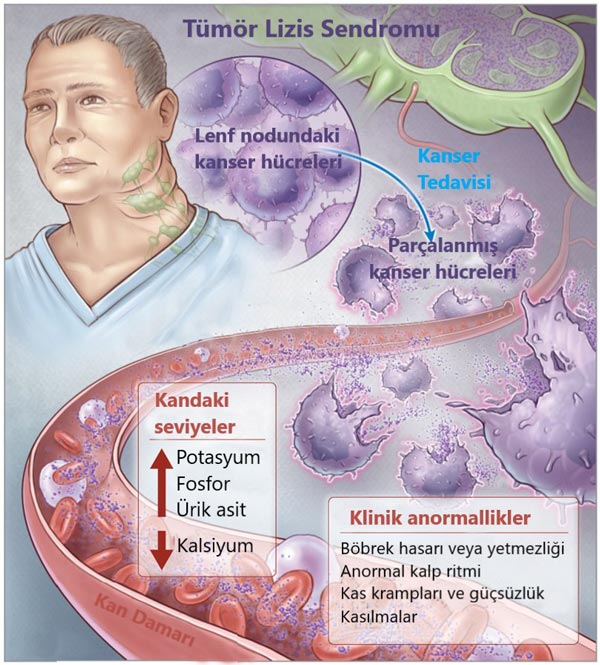
When cancer cells break down rapidly in the body, uric acid, potassium and phosphorus levels rise faster than the liver can remove them. This causes tumor lysis syndrome. Excess phosphorus absorbs calcium, causing blood calcium levels to fall. Changes in blood uric acid, potassium, phosphorus and calcium can affect many organs and systems, especially the kidneys, but also the heart, brain, muscles and digestive system.
Below, an illustrated explanation of tumor lysis syndrome can be seen:
What Causes Tumor Lysis Syndrome? Which Cancer Types Cause It?
Not all cancer patients have an equal risk of developing tumor lysis syndrome (TLS).
Cancer patients at the highest risk of developing TLS include:
- TLS due to a treatment complication: TLS most commonly develops this way. Cancers responding strongly to cancer treatment include acute leukemia or high-grade lymphoma. These cancers typically have very rapidly dividing cells.
- Spontaneous TLS / TLS due to the disease itself: Patients with rapid cell division and a large "tumor burden".
TLS can occur spontaneously, before cancer treatment, but it occurs more often within one week after starting treatment. TLS is not limited to patients receiving conventional chemotherapy; it can also occur in patients receiving steroids, hormone therapy, targeted therapy or radiation therapy. Patients who are dehydrated and have existing kidney dysfunction are at higher risk of developing TLS.
What Are the Symptoms of Tumor Lysis Syndrome and How Is It Diagnosed?
Symptoms due to TLS are generally nonspecific, but may include:
- Nausea with or without vomiting
- Loss of appetite and fatigue
- Dark urine, reduced urination or flank pain
- Muscle cramps and spasms
- Palpitations
TLS is a serious condition and, if untreated, can result particularly in kidney failure and death.
TLS is diagnosed based on blood tests together with signs and symptoms. Just a few abnormal laboratory values may be insufficient to recognize the onset of TLS; it may also present with kidney or organ failure.
Can Tumor Lysis Syndrome Be Prevented?
Some measures can reduce the risk of developing TLS. Oncologists and hematologists consider blood test results and the characteristics of the cancer to determine a patient's risk of TLS and which preventive measure or measures to use. Intravenous fluids can help the kidneys remove toxins in urine. Drugs such as Allopurinol and resburikaz lower blood uric acid levels and may be prescribed for this reason.
How Is Tumor Lysis Syndrome Treated?
TLS can still occur despite preventive measures. Patients at high risk are monitored with blood tests and clinical observations to ensure early diagnosis if it occurs; if they develop TLS, this monitoring continues during treatment. Treatment resembles the preventive measures, including intravenous fluids, allopurinol and especially rasburikaz.
In some cases, patients may be admitted to intensive care. Blood tests are frequently repeated to assess electrolyte levels and kidney damage. Heart rhythm and urination are also closely monitored. Careful correction of electrolyte imbalances is important. Some patients with severe kidney damage may also need temporary hemodialysis.
Sources
Was this article helpful?
Your feedback helps us improve our content.




Reader comments
Share your comment
Your name and comment are published only after administrator approval. Your email address is never shown to visitors.
Be the first to comment.