
1-7 April National Cancer Week 2019

What Is Cancer?
DNA damage accumulates, giving rise to cells that can spread from their tissue of origin to other regions through metastasis and multiply uncontrollably. More than 1000 diseases, including their subtypes, formed by such cells are collectively called cancer. It is also known as a malignant tumor or malignant growth.
Cancers have existed throughout human history and are even known to predate humanity (see the history of cancer). The earliest known written records of cancer were found in an Egyptian papyrus from around 1600 BC. This papyrus describes breast cancer . What we mean is that cancer has been known for a very long time and probably occupies a very deep place in our subconscious.
When cancer is mentioned, the 2 subjects people wonder about most are: what causes cancer and is there a treatment? While awaiting answers, the most important point to remember is that cancer is not one disease but, with potentially different causes and treatments and more than 1000 subtypes, a group of diseases .
Let Us Briefly Review the Causes and Treatments of Cancer:
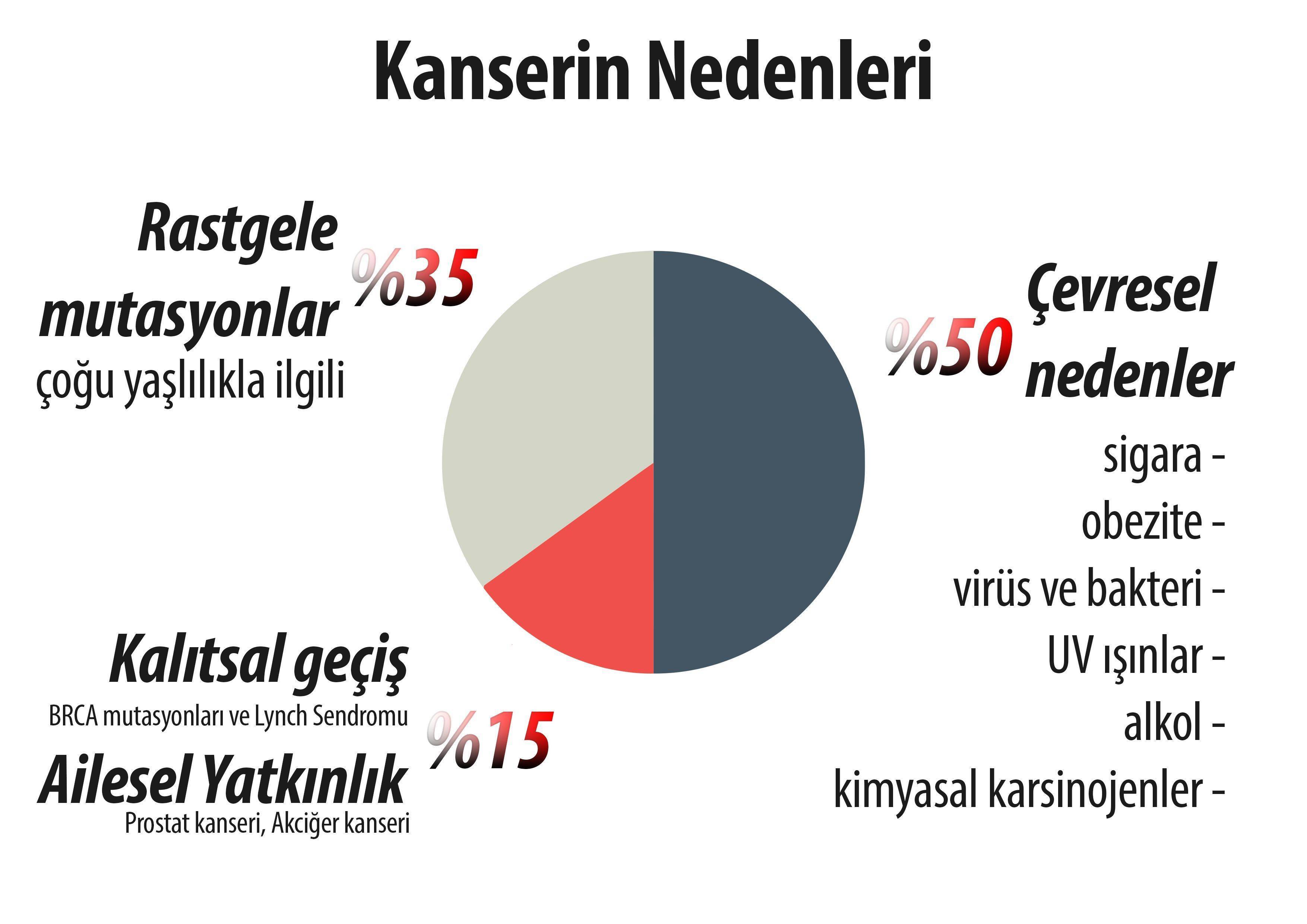
In the figure above, the leading causes of cancer can be seen (for an explanation of the figure, see here).
In the last 50 years alone, cancer treatments have saved millions of people who might otherwise have died of cancer. For example, the wider use of breast cancer screening methods and advances in treatment, according to a study , have saved, in the United States alone, more than half a million women’s lives; if we extend this finding to all cancer types and the world, it is easy to see that scientific advances have saved millions of lives. Nevertheless, cancer remains a leading global health problem: in 2018, there were 18.1 million new cancer cases and 9.6 million deaths. Globally, approximately every 6 deaths include 1 due to cancer.
A noteworthy aspect of the cancer burden is that, besides being a global health condition expressed in enormous numbers, at least half of all cancers are potentially preventable.
Let Us Review the Most Commonly Used Cancer Treatments:
- Immunotherapy
- Chemotherapy and smart drugs
- Molecular treatments
- Cancer surgeries
- Radiotherapy
- Minimally invasive (non-surgical) cancer treatments
National Cancer Week to Raise Cancer Awareness
The first week of April has been observed in our country since 1956 as National Cancer Week . We see Cancer Week as an opportunity to remind people that at least half of cancers can be prevented and that, for common cancer types, cancer screening makes early diagnosis possible.
A Brief History of 1-7 April National Cancer Week
To help patients with cancer and their relatives, support cancer research, and contribute to medical education in our country, in 1947 in Ankara the Turkish Association for Cancer Research and Control was established. Since its foundation, the association has published materials and held meetings to raise public awareness about early diagnosis and treatment. In 1956, on its recommendation, the first week of April was recognized as Cancer Control Week in Turkey.
Another question that comes to mind about cancer is the extent of the cancer burden in our country, namely, is cancer common or rare in Turkey? To explore this, let us look at cancer numbers by country:
Global Cancer Data by Country
In Which Countries Is Cancer Most Common?
This article provides age-standardized rates for the top 50 countries with the highest cancer rates (including non-melanoma skin cancers).
For all men and women, the age-standardized rate for all cancers (including non-melanoma skin cancer) in 2018 was, per 100.000 people, 197.9 (that is, the annual number of newly diagnosed cancer cases for every 100 thousand people). For men, per 100.000 people, the rate was 218.6, higher than for women, per 100.000 people, at 182.6.
Global Cancer Rates: Both Sexes

Cancer Rates in Men

Cancer Rates in Women

Below, you can watch the infographic video we prepared especially for this week:
Let Us Create a Healthy Society That Does Not Fear Cancer Together!
Sources
Was this article helpful?
Your feedback helps us improve our content.




Reader comments
Share your comment
Your name and comment are published only after administrator approval. Your email address is never shown to visitors.
Be the first to comment.