
A Monkey, an Oud String, and a Surgical Revolution: Al-Zahrawi, the Genius of Al-Andalus

In this article
Day 32 (The History of Cancer in 365 Days Series)
While Europe was living through the "Dark Ages," a genius in Córdoba was transforming surgery from "butchery" into an art. Al-Zahrawi's (Albucasis's) laboratory, an oud string swallowed by a monkey, and the moment that changed modern medicine.
"Studying the science of anatomy strengthens one's faith in God." — Al-Zahrawi
Introduction: In tenth-century Al-Andalus, the marble halls of Madinat al-Zahra, northwest of Córdoba, smelled of orange blossoms and ink. In this intellectual paradise, the court physician Abu al-Qasim al-Zahrawi was preparing for a revolution that would change the course of medical history. He was not only a physician but also an inventor. His 30-volume Kitab al-Tasrifwould become the "visual memory" of surgery and serve as a textbook in Europe for 500 years.
A Musical Accident and the Discovery of "Catgut"
The history of science shows that the greatest discoveries sometimes come at the most unexpected moments. Al-Zahrawi's discovery of "absorbable sutures," one of the cornerstones of modern surgery, also rests on such a coincidence.
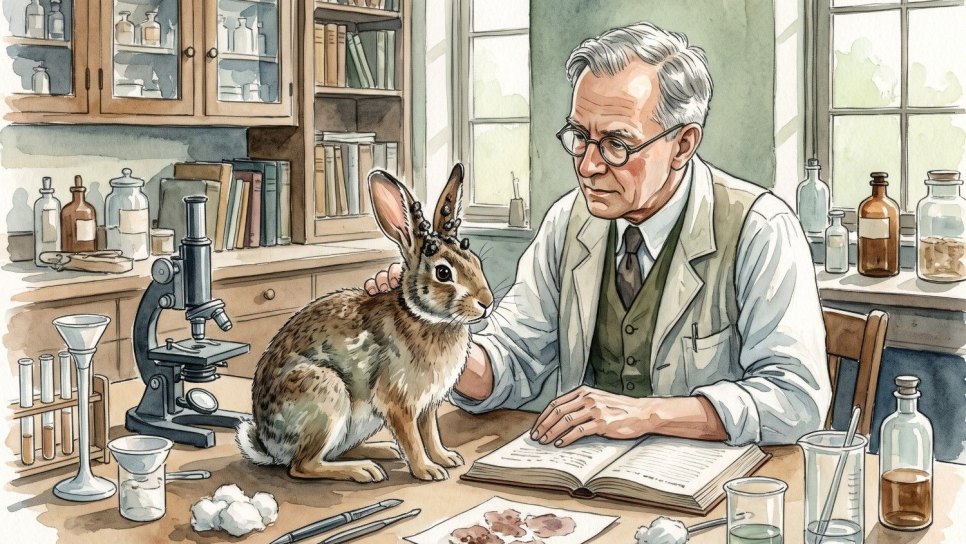
One day, a monkey Al-Zahrawi kept in his laboratory accidentally swallows the strings of his oud (a lute-like instrument). At that time, oud strings were made from sheep intestine. As Al-Zahrawi waits anxiously, he notices something remarkable: The monkey's body does not reject the string; instead, over time, it "dissolves" and absorbs it.
The Result: This observation paves the way for the use of "Catgut" (Intestinal Thread) . Surgeons could now stitch internal organs without having to reopen the patient to remove the sutures. This was a vital step for deep cancer surgery.
200 New Instruments: Necessity Is the Mother of Invention
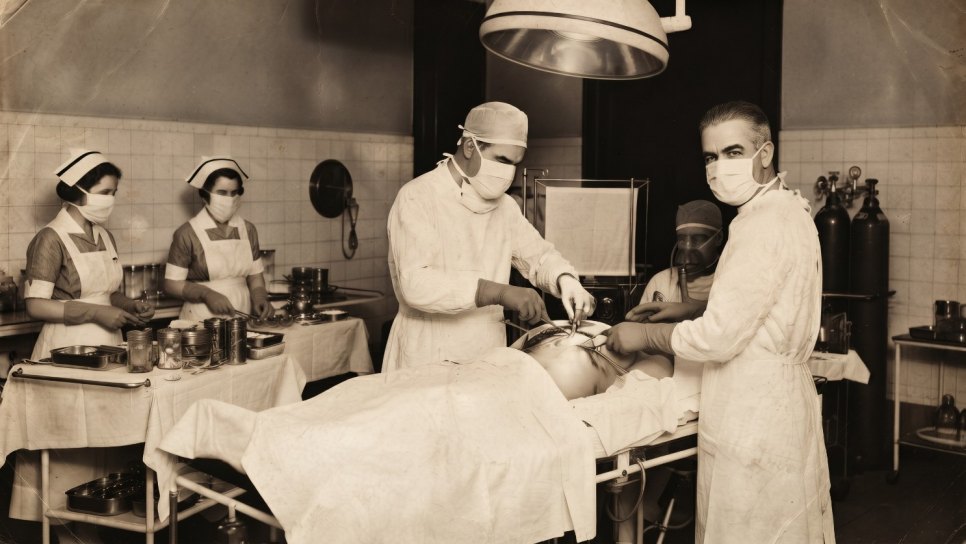
Before Al-Zahrawi, surgical instruments were not standardized; each blacksmith made things as he saw fit. Al-Zahrawi, however, in Kitab al-Tasrif's 30th volume, produced precise drawings of more than 200 instruments, each designed for a specific purpose. This was the first illustrated surgical atlas in medical history.
The "Blind Man" Warning
Al-Zahrawi had seen surgery turn into a weapon in ignorant hands. In the introduction to his book, he issues this stark warning:
He was among the first teachers to argue that surgery requires not merely "manual skill" but profound anatomical knowledge. He was firmly committed to the principle of "First, do no harm" and considered it a virtue to honestly refuse an operation he could not perform (such as surgery for advanced cancers).
DROZDOGAN Academy Commentary
It is fascinating to know that the instruments, sutures, and even the surgical discipline we use in an operating room today have roots laid down in Córdoba 1000 years ago. Al-Zahrawi demonstrated that a physician should be not only a "practitioner" but also an "inventor." His creativity, spanning an oud string and surgical thread, is beautiful evidence that medicine is intertwined not only with science but also with art and life.
Was this article helpful?
Your feedback helps us improve our content.


Reader comments
Share your comment
Your name and comment are published only after administrator approval. Your email address is never shown to visitors.
Be the first to comment.