
Caduceus, 1902 – The Medical Symbol of Two Snakes Around a Staff

For many people, the ancient symbol of two snakes entwined around a winged staff, the caduceus, represents medicine, medical care and medical personnel. Although its symbolism is known to have been associated with alchemy and wisdom as far back as the Renaissance, its current use probably arose through confusion with the similar-looking Rod of Asclepius.
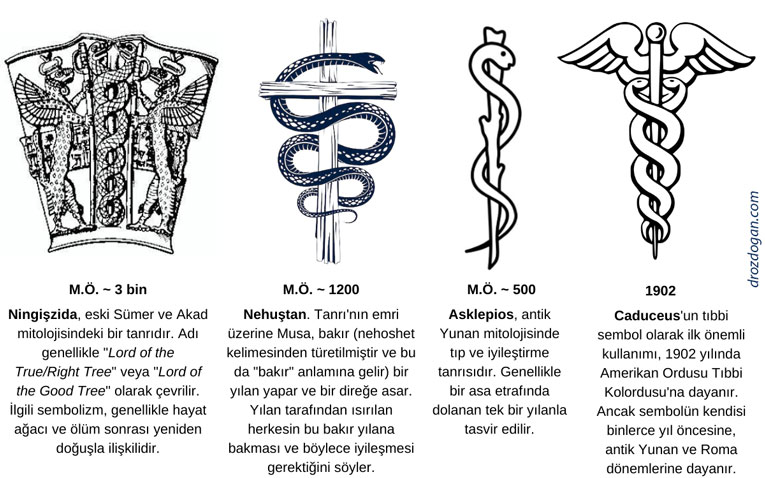
Asclepius was the Greek god of medicine and healing. His staff shows a single coiled snake and has no wings. In mythology, he was such a great healer that he could rescue people from the brink of death. The idea of human immortality, however, threatened Zeus’s power and angered Hades, god of the underworld. At Hades’ urging, Zeus killed Asclepius with a thunderbolt.
The caduceus originated in ancient Greek and Roman mythology as the staff of Hermes and Mercury. It was generally associated with diplomacy, trade, trickery and theft, without a direct connection to medicine. Its medical use probably stems from its resemblance to the Rod of Asclepius. Its first important medical adoption was by the US Army Medical Corps in 1902. Afterwards, especially in the United States, it became widely associated with medicine and healthcare. This use is generally considered a misunderstanding, and many medical institutions and organisations prefer the Rod of Asclepius.
Some argue, however, that the confusion arose because the caduceus was a more “attractive” symbol for medicine and pharmacy. Its wings and paired snakes add detail and movement compared with Asclepius’s simpler design, making it a more “artistic” or “aesthetic” symbol of the medical profession for some people.
Snakes have a long history of evoking healing because they shed their old skin in renewal. Nehushtan is a symbol described in the Old Testament’s Book of Numbers (21:4-9). The account describes God sending venomous snakes among the Israelites during their wanderings in the wilderness because they rebelled against him. People died from the bites, and the Israelites begged Moses for help.
At God’s command, Moses made a copper snake—the name derives from “nehoshet”, meaning copper—and placed it on a pole. He told those bitten to look at the copper snake so that they would be healed.
This story is the origin of the Nehushtan symbol, combining a snake and a staff. Its use as a medical symbol, however, is more closely associated with the Rod of Asclepius.
The oldest known representation of two snakes coiled around a vertical rod appears in depictions of the underworld god Ningishzida. His symbol predates the caduceus, the Rod of Asclepius and Nehushtan by centuries.
Sources
Was this article helpful?
Your feedback helps us improve our content.


Reader comments
Share your comment
Your name and comment are published only after administrator approval. Your email address is never shown to visitors.
Be the first to comment.