
Cancer Deaths Down 33% – US Cancer Statistics 2023

The American Cancer Society has published its report showing a 33% decline in cancer deaths since 1991, thanks to new treatments and advances in early diagnosis: Cancer Statistics 2023. This reduction is estimated to have prevented 3.8 million cancer deaths.
The report also shows that women receiving the HPV vaccine, aged 20-24, experienced a decline between 2012-2019 in cervical cancer incidence of 65%.
However, the report also shows a 3% annual increase in prostate cancer cases during 2014-2019, attributed to changes in recommendations for routine testing after age 50 using PSA. It highlights that prostate cancer mortality is two to four times higher in Black men than in other ethnic and racial groups, and that Black women have 40% higher mortality from breast and uterine cancer than White women.
Overall cancer incidence trends are more favourable in men than in women (see Figure 1). For example, rates of many cancers are falling in men, while breast and uterine cancer cases continue to increase in women. Liver cancer and melanoma (an aggressive skin cancer) have stabilised in men aged 50 and older but declined in younger men.
Cancer Statistics 2023 forecasts that the three most commonly diagnosed cancers in men this year will be prostate, lung and colon cancer, accounting for nearly half (48%) of all diagnoses in men. In women, the three most common will be breast, lung or colon cancer, making up just over half (52%) of diagnoses.
It is important to know that these 4 cancers—breast, lung, colorectal and prostate—which also account for most new cases worldwide, can be detected early through cancer screening tests.
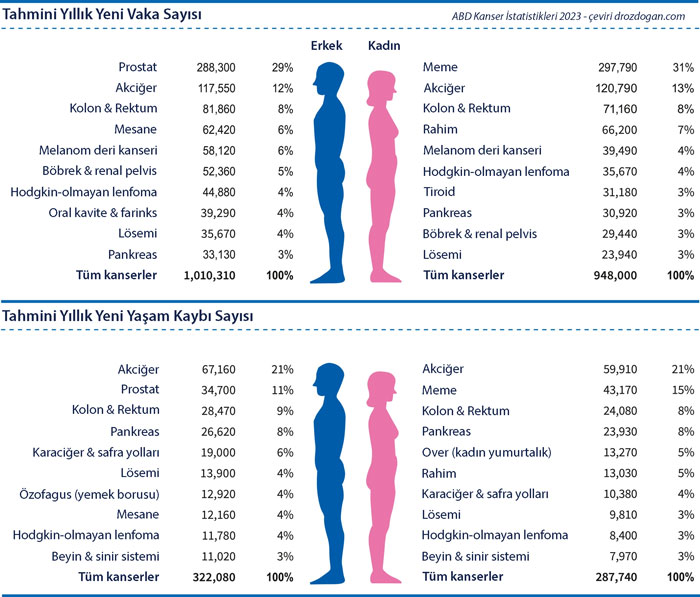
Figure 1. The 10 leading cancer types for estimated new cases and deaths by sex, US Cancer Statistics, 2023. Cases exclude non-melanoma skin cancers and in situ carcinomas other than bladder cancer.
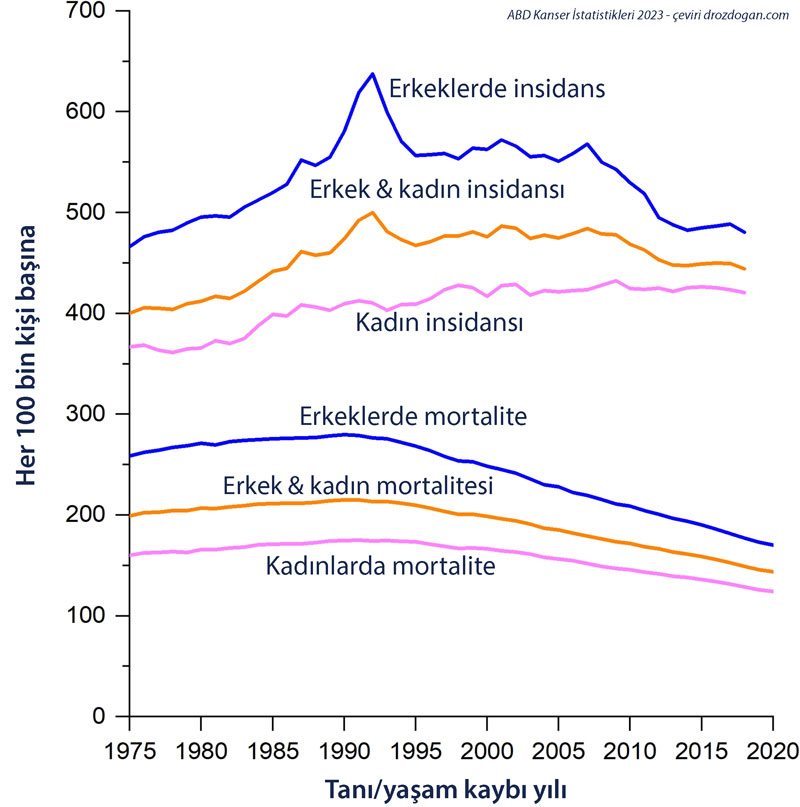
Figure 2. By sex: cancer incidence (new cases per 100 thousand people annually) (1975–2019) and mortality (deaths) (1975–2020) rate trends in the United States.

Figure 3. Incidence trends for selected cancers by sex, United States, 1975–2019.
Although the continuing decline in cancer deaths over the past 30 years is encouraging, the American Cancer Society reports that cancer remains the second leading cause of death after heart disease and is the leading cause of death in women aged 40 to 79 and men aged 60 to 79.
The American Cancer Society estimates that nearly 2 million new cancer cases will be diagnosed in the United States this year, resulting in about 610,000 deaths.
Sources
Was this article helpful?
Your feedback helps us improve our content.




Reader comments
Share your comment
Your name and comment are published only after administrator approval. Your email address is never shown to visitors.
Be the first to comment.