
Has the Link Between Depression and Gut Bacteria Been Established?

In this article
Two new studies demonstrated that patients with major depressive disorder (also known as depression) differed from healthy individuals in their gut microbiota, with significant differences being found. Researchers suggest that consuming probiotic foods (not supplements) may be important for improving stress and depression.
In one study, researchers compared stool samples from people with depression and healthy controls. The findings showed that, in addition to a substantial difference between the groups' bacterial profiles forming the microbiota, the difference was also important for treatment response. These data show how important a role gut microbiota plays in the development and course of major depressive disorder and in the response to antidepressant treatment.
The second study revealed the effects of nutrition on mental health. According to its data, people consuming foods supporting gut microbiota, such as fruit, vegetables and fermented foods (a psychobiotic diet), showed significant improvements in stress, anxiety and depression. Following these positive findings, the researchers said their next goal was to identify a new adjuvant (protective) treatment using a psychobiotic diet for people with major depressive disorder in whom medication is insufficient.
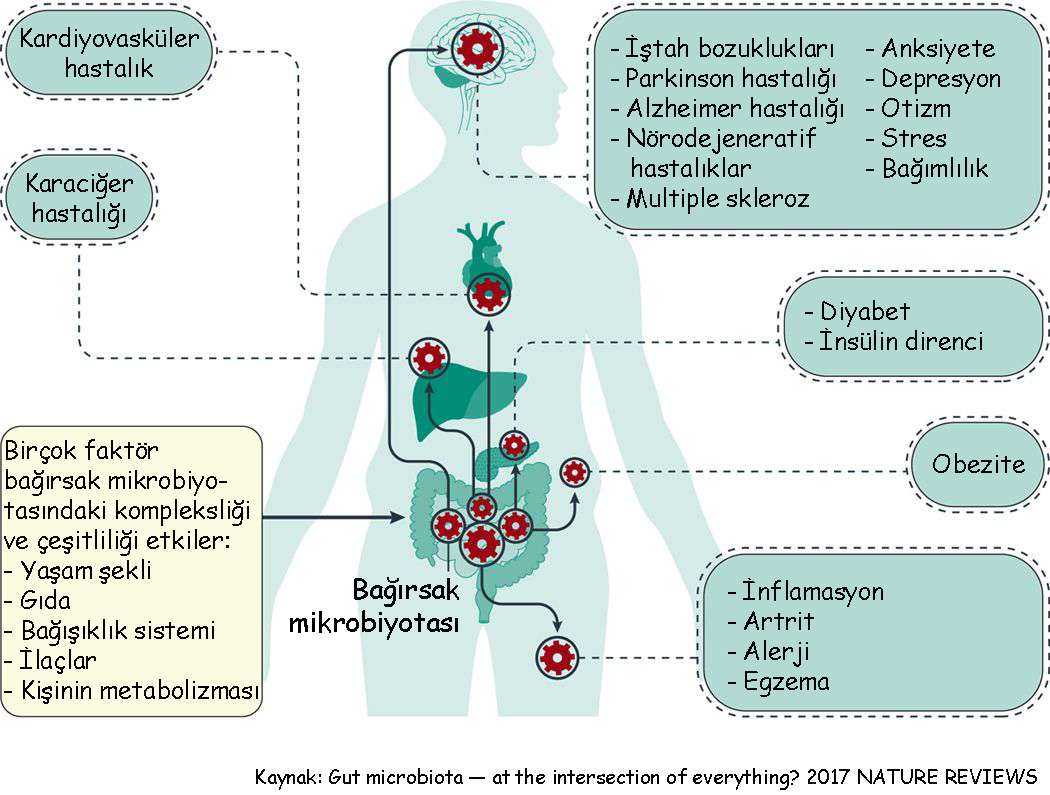
What Role Does Gut Microbiota Play in Depression?
Previous research shows changes in the natural gut microbiota of people with depression. Although antidepressants have antimicrobial properties, the relationship between gut microbiota composition and response to antidepressant use is not fully understood.
Researchers enrolled 34 patients diagnosed with depression, aged 18 to 70, and 20 healthy individuals as controls. An important criterion was that patients should have no other health problem affecting their gut microbiota. Genomic sequencing of bacteria in their stool samples showed differences, particularly at bacterial family, genus and species levels. Certain bacterial species were more commonly observed in depressed or healthy individuals, reportedly making it easy to distinguish the groups. Researchers also discovered that some species appeared only in treatment-resistant individuals, while others appeared only in those responding to treatment. This proves that gut microbiota is an important indicator of depression.
The Effects of a Psychobiotic Diet
To understand the effects of diet on mental health, researchers conducted another study. Healthy individuals were divided into two groups. One received a 4-week psychobiotic diet rich in prebiotics, including fiber-containing foods such as fruit, vegetables, whole grains and legumes, and fermented foods. The control group received healthy-eating education. At the end of the study, stress levels in both groups were assessed using the Perceived Stress Scale, and depression using the Beck Depression Scale. Fiber-rich food intake in the diet group was high, and by the end of the study both stress and depression levels had significantly decreased, while no effect was observed in the control group.
Conclusion and Summary
Although no significant effect of dietary habits on the acute stress response was identified, a diet targeting the microbiota can provide improvement in subjective feelings of stress and depression in healthy individuals. However, a deeper investigation of the microbiota-gut-brain axis is needed to understand the benefits of a psychobiotic diet for stress and anxiety more clearly.
While emphasizing the importance of the findings, scientists also stress the need for further studies and stronger evidence to identify which bacterial species affect emotional state, anxiety and stress.
Sources
Medscape.com September 2020
Was this article helpful?
Your feedback helps us improve our content.


Reader comments
Share your comment
Your name and comment are published only after administrator approval. Your email address is never shown to visitors.
Be the first to comment.