
Music Therapy Lightens the Burden of Cancer Treatment

In this article
A 72-year-old woman with cancer sings along to a song chosen by the music therapist and finally adds when two hearts beat like one.. as new lyrics at the end. Just then a nurse enters, smiles and waits to hear more, saying: she has not spoken this much for days.
This patient has recurrent lymphoma and other medically complicated health problems. Her doctors say they select music reminding patients of optimism, happy feelings and memories. Patients respond in varied, positive ways. For example, in one session the therapist played samba on guitar and patients joined with gentle dancing. One patient, helped by the therapist to get up and dance and accompany the music, spontaneously expressed: this feels wonderful
Music therapy can offer multifaceted benefits: increasing positive feelings, facilitating self-expression and encouraging physical activity. Music has affected the human spirit and been used for healing since ancient times; now called music therapy, it officially began in the United States in the 1940s. Avicenna ( 980-1037) also wrote praising musical treatment. At the hospital Sultan Bayezid II built in Edirne in 1488, water sounds and music were used for treatment, as described in traveler Evliya Çelebi's Travelogue: “The chief physician, with sufficient knowledge and experience of music's positive effects on the human spirit, first plays various musical modes for patients, observes whether heartbeats accelerate or slow, determines the appropriate melody benefiting them, and then starts treatment.”
Music is used in psychiatry, drug and alcohol rehabilitation, developmental ability, palliative care, general surgery and oncology, among other fields, with positive feedback. Guided by a music therapist, patients engage with lyrics, write new words, improvise accompaniment, compose or progress through other creative sound-based activities.
Music therapy aims to support mental and physical recovery in patients with mental or physical illnesses receiving treatment for their conditions.
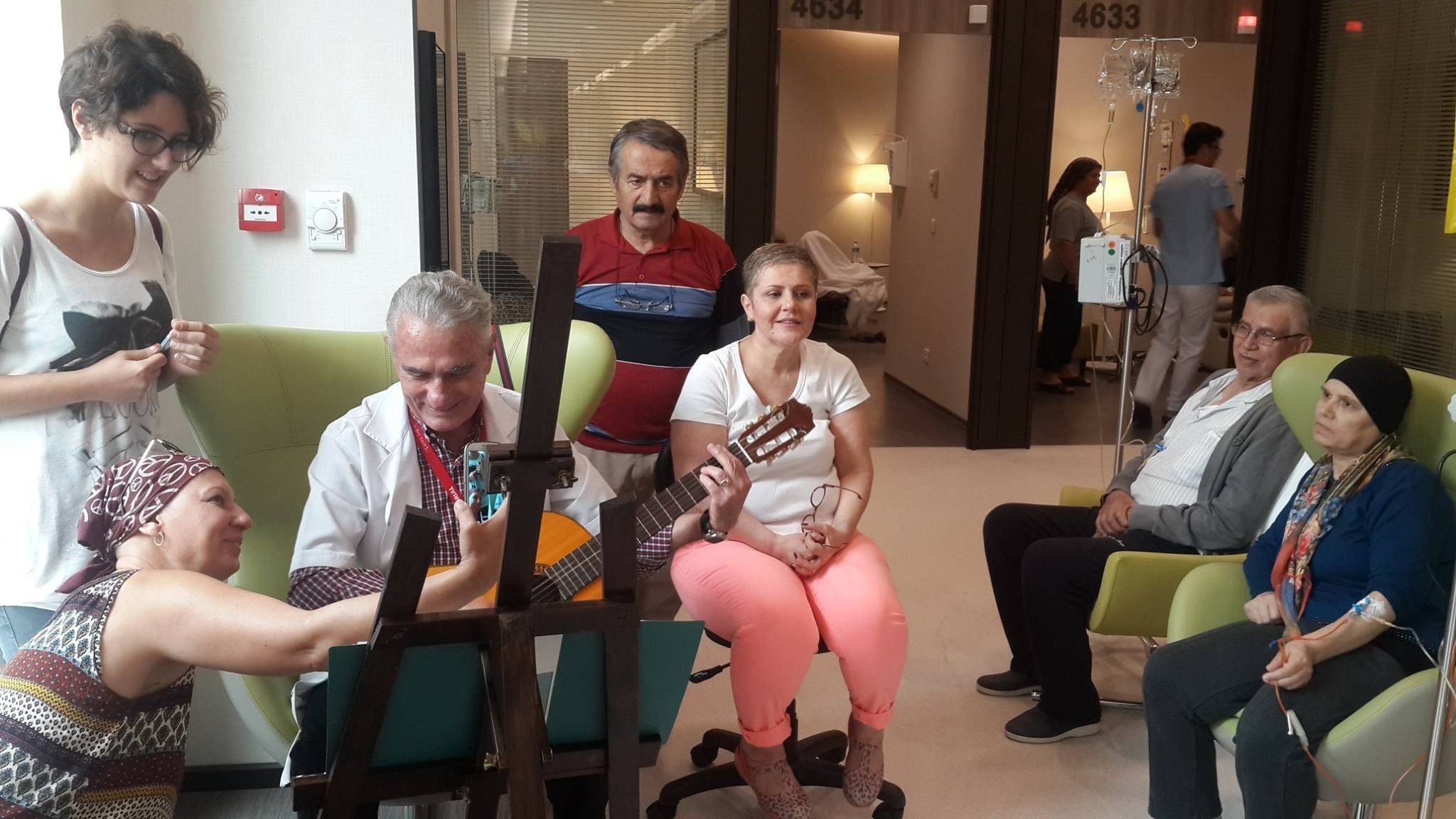
Music Therapy for Cancer Patients
Various studies have examined cancer patients' physical and mental improvement and relief of cancer signs and symptoms. Involving 3.731 patients, 52 clinical studies were reviewed, finding that music positively affected anxiety, weakness, heart rhythm, respiratory rate and blood pressure.
Stem cell transplantation patients with cancer reportedly experienced fewer psychological problems, improved coping ability and better social skills.
In 2015, breast cancer surgery patients chose songs for music therapy sessions, after which music effectively reduced anxiety. In another example, patients newly diagnosed with head and neck cancer or breast cancer listened to live or recorded music during radiotherapy, with significant reductions in anxiety and distress.
Music therapy also appears very beneficial in children. Particularly for children diagnosed with cancer and treated in hospital, it is described as a major aid in feeling more comfortable, reducing fears and improving psychological well-being.
It is also said to improve coping skills. A study involving children aged 4-7, totaling 83 receiving cancer treatment, reported these benefits from regular music therapy:
- Improved behavioral problems through active participation
- Improved coping skills
- Feeling happier
Although the mechanism behind music's benefits is not fully understood, studies to date show that music activates and regulates limbic and paralimbic brain regions. These include the ventral striatum, dorsomedial midbrain, amygdala and hippocampus. Music is thought to affect neuronal pathways associated with the underlying causes of pain, anxiety and depression.
Conclusion
Music therapy should be supported for all cancer patients alongside appropriate individualized medical treatment, as an inexpensive supportive method without side effects that helps mental and physical recovery.
Sources
By Karen Popkin, LCAT, MT-BC, and Jyothirmai Gubili, MS
July 25, 2017
Was this article helpful?
Your feedback helps us improve our content.




Reader comments
Share your comment
Your name and comment are published only after administrator approval. Your email address is never shown to visitors.
Be the first to comment.