
Natural Protein Tinagl1 May Prevent Breast Cancer Cell Growth and Metastasis

On 3 January 2019, Cancer Cell published a study attracting strong interest among scientists and oncology professionals. It discovered that a drug derived from the natural protein Tinagl1 prevented triple-negative breast cancer growth and metastasis . The drug targets EGFR and integrin / FAK , two cellular pathways important in cancer development.
Triple-negative breast cancer has aggressive biology and accounts for % 13-17 of all breast cancers. Its recurrence rate is higher, and treatment options are more limited than for other breast cancers.
Note: The figure below shows breast cancer types.

Researchers at Princeton University and Rutgers Cancer Institute of New Jersey in the United States examined Tinagl1’s effects on tumor growth and spread in specially prepared human and mouse tumor-cell models.
According to the research results;
In mouse models, high Tinagl1 activity slowed tumor growth and greatly inhibited metastasis. Tinagl1 inhibited two pathways driving aggressive growth and drug resistance in triple-negative breast cancer.
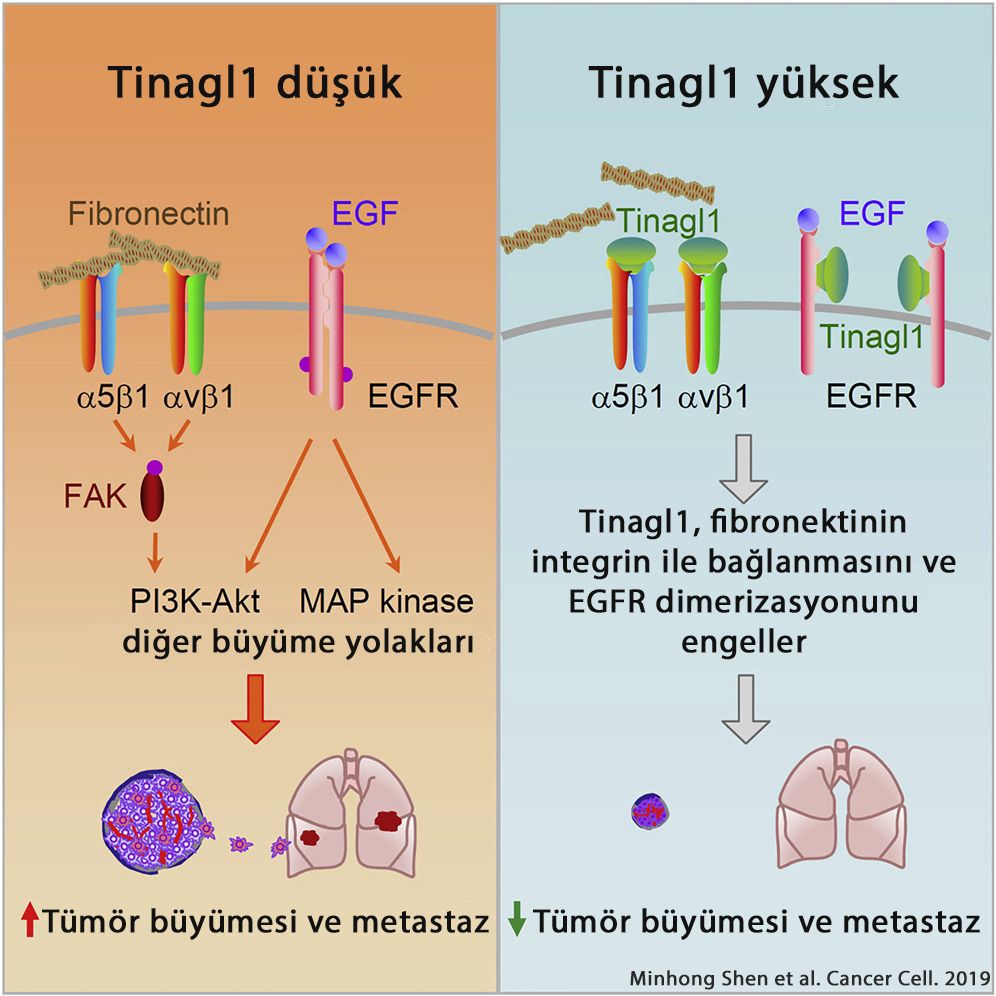
Tinagl1 was also injected into mice with breast tumors. After 7 weeks, tumor growth and metastasis were successfully inhibited, with no adverse effects. Tinagl1 also worked when begun immediately after metastasis started.
- Tinagl1, epidermal growth factor receptor (EGFR) gene activity is halted by it, preventing growth. Epidermal growth factor (EGF) promotes tumor growth. EGFR-targeted therapies have limited effectiveness, so Tinagl1 may offer a new, effective approach.
- Tinagl1 also affects integrins, important in cell migration to other tissues and organs. Tinagl1 suppresses this pathway by disrupting Focal Adhesion Kinase (FAK) activity.
Both pathways are molecularly linked and promote aggressive triple-negative breast cancer. Tinagl1 may therefore be an effective drug targeting two pathways.
Analyses of over 800 human tumor samples also found that low Tinagl1 gene activity was associated with advanced cancer and shorter survival. High Tinagl1 levels were linked to better outcomes, including in triple-negative patients.
What Does This Study Mean for Us?
- A potentially effective triple-negative breast cancer drug was developed. Unlike earlier approaches, it targets both growth and metastasis.
- By targeting both EGFR and integrin/FAK, Tinagl1 may offer an effective, safe treatment.
- The drug has been tested preclinically (in the laboratory). Human clinical trials must establish safety and efficacy before use.
- Immunotherapy Shown to Prolong Breast Cancer Survival for the First Time
Sources
Tinagl1 Suppresses Triple-Negative Breast Cancer Progression and Metastasis by Simultaneously Inhibiting Integrin/FAK and EGFR Signaling.
Cancer Cell, 3 January 2019.
Was this article helpful?
Your feedback helps us improve our content.




Reader comments
Share your comment
Your name and comment are published only after administrator approval. Your email address is never shown to visitors.
Be the first to comment.