
Ovarian Cancer Awareness: The Story of Victoria's Secret Angel Bianca Balti

In this article
Bianca Balti, known as a Victoria's Secret Angel, recently announced at the age of 40 that she had been diagnosed with ovarian cancer.
In an emotional message shared on social media, the famous model described what she had been through and her struggle with cancer. Balti said, "Last week, when I went to the emergency department because of lower abdominal pain, I learned that I had stage 3C ovarian cancer." Despite her fear, pain and tears, Balti emphasized that she had not lost hope or strength and shared her belief that she would overcome cancer.
Facing Hereditary Risks
This news is particularly important for raising awareness of ovarian cancer and early diagnosis. Inherited gene mutations, particularly mutations in BRCA1 and BRCA2, greatly increase women's risks of both breast and ovarian cancer. Bianca Balti is one of the women in this risk group. After undergoing genetic testing in 2022, the model learned that she carried a BRCA1 mutation, which gave her a 50% risk of breast cancer and a 30% risk of ovarian cancer. Based on this information, Balti underwent a preventive double mastectomy (surgical removal of both breasts) at the end of 2022 to reduce her breast cancer risk. Unfortunately, her risk of ovarian cancer also became a reality, and she is now fighting the disease.
The Importance of Hereditary Ovarian Cancer
Ovarian cancer is an insidious disease that often progresses without obvious symptoms, so it is frequently diagnosed at a late stage. Hereditary ovarian cancer is associated with a number of genetic changes, primarily BRCA1 and BRCA2 mutations, and accounts for approximately 10-15% of all ovarian cancers. Preventive surgery or regular medical checkups are vital for women with these mutations.
People with a family history of cancer or who develop cancer at a young age are advised to undergo genetic testing. These tests help doctors assess patients' risks and offer options such as preventive surgery or closer monitoring. For example, removing the ovaries (oophorectomy) or fallopian tubes can significantly reduce the risk of ovarian cancer. However, such procedures must be considered carefully, particularly for women who plan to become pregnant in the future.
Notable Facts About Ovarian Cancer
According to World Health Organization (WHO) data, ovarian cancer causes approximately 207 thousand deaths worldwide each year. Mortality rates are particularly high in low- and middle-income countries, where limited access to diagnosis and treatment means the disease is often detected at an advanced stage.
In Turkey, according to data from 2020, 4059 women were diagnosed with ovarian cancer and 2730 women died from the disease. These figures show that ovarian cancer is also an important women's health issue in Turkey.
The five-year survival rate for ovarian cancer diagnosed at an early stage (stage I) can reach 90%, but falls to around 30-40% in advanced stages (stages III-IV). Overall five-year survival across all stages is approximately 45%.
What Are the Symptoms of Ovarian Cancer?
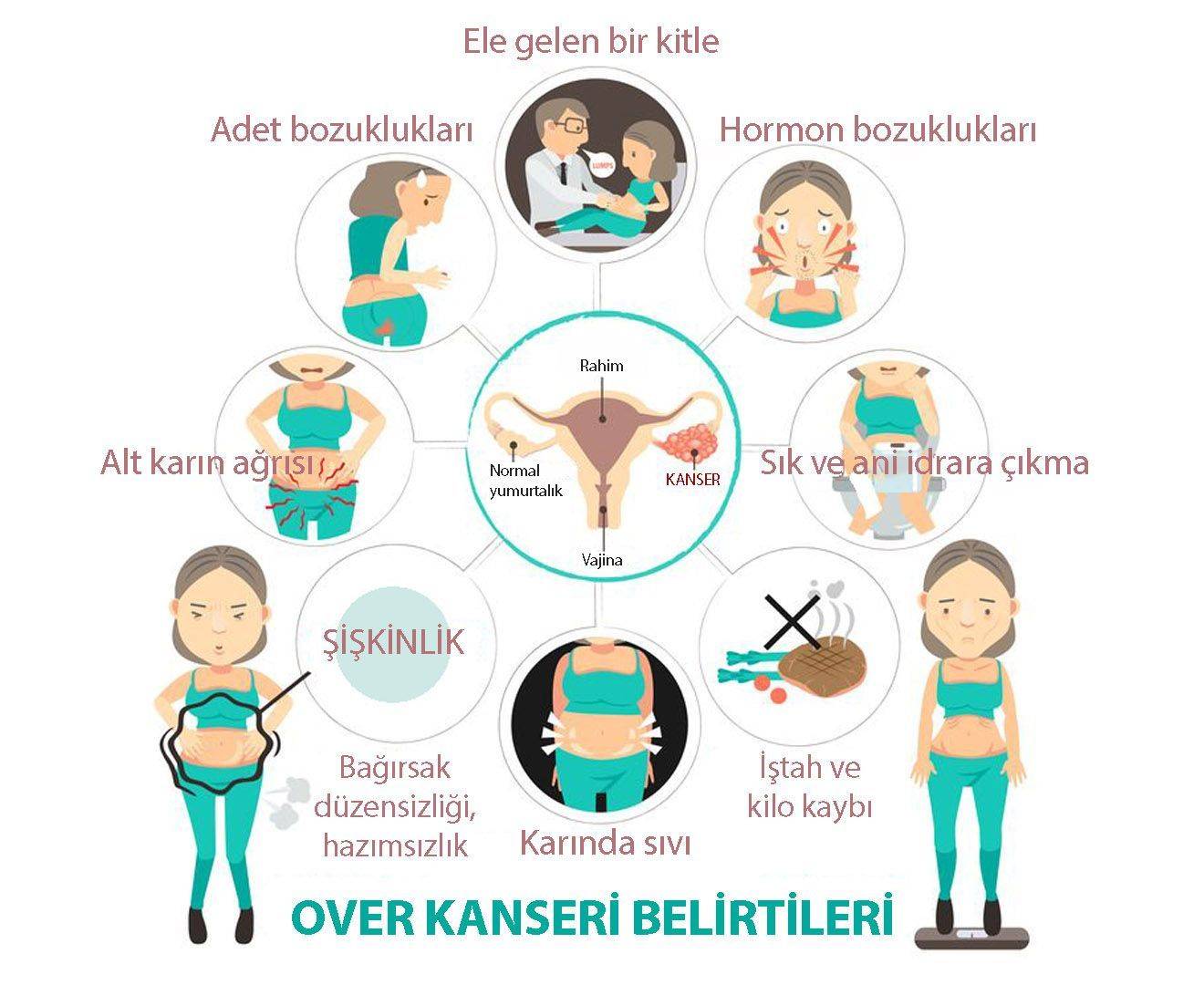
As Bianca Balti shared, abdominal and back pain are among the most common symptoms of ovarian cancer. However, the disease can cause a wide range of symptoms that are often mistaken for other common conditions. Common symptoms of ovarian cancer include:
- Abdominal and pelvic (groin) pain
- A frequent need to urinate or urinary problems
- Difficulty eating or feeling full quickly
- Abdominal bloating and discomfort
- Persistent constipation or digestive problems
- Weakness and fatigue
These symptoms can often be mistaken for common digestive or urinary conditions. If they recur frequently and last more than a few weeks, however, a doctor should always be consulted. Paying attention to these changes in the body is particularly important for detecting the disease at an early stage.
Why Is Early Diagnosis of Ovarian Cancer Important?
Bianca Balti was diagnosed with cancer at stage 3C, an advanced stage. Unfortunately, 70% of women with ovarian cancer are diagnosed when the disease has reached an advanced stage. The main reasons are the absence of clear, specific early symptoms and the lack of a screening test for this cancer at present. The United States Preventive Services Task Force has assigned ovarian cancer screening a "D grade," meaning routine screening is not recommended. This is because screening all women in the general population for ovarian cancer has not been shown to improve survival.
There Is No Screening Test, but There Are Things to Watch For
Although there is currently no approved screening test for ovarian cancer, women being alert to changes they notice in themselves can make a major difference. Women with a family history of breast or ovarian cancer, in particular, should be more aware of the risk of hereditary ovarian cancer and attend regular medical checkups. Genetic predisposition is an important risk factor, so women with BRCA1 and BRCA2 mutations are at greater risk. Those with a family history of breast or ovarian cancer can learn about their risk through genetic testing and develop better prevention strategies with their doctors.
Awareness Matters in the Fight Against Ovarian Cancer
Ovarian cancer can progress silently, but early diagnosis saves lives. If you or someone you love experiences the symptoms listed above, do not neglect to consult your doctor. Bianca Balti's experience is another reminder that this disease can affect anyone. We all share a responsibility to pay attention to the body's signals and raise awareness.
We can help increase awareness for a healthier life. Keep up with your regular medical checkups and be alert to changes in your body.
Was this article helpful?
Your feedback helps us improve our content.




Reader comments
Share your comment
Your name and comment are published only after administrator approval. Your email address is never shown to visitors.
Be the first to comment.