Patients Ask AI Their Health Questions: This Time 200,000 People Will Be Studied Scientifically
In this article
Patients Ask AI Their Health Questions: This Time 200,000 People Will Be Studied Scientifically
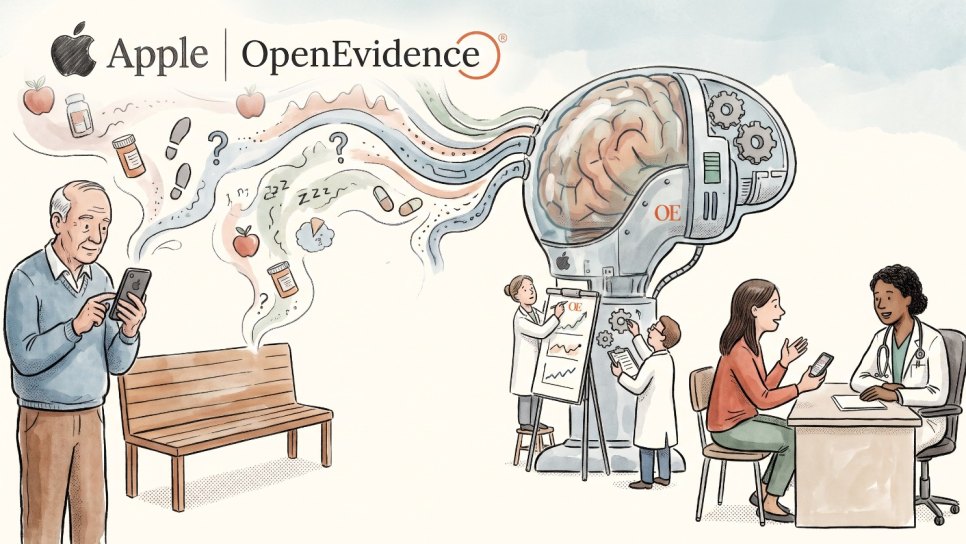
On 15 November 2026, Apple launched a large research study with the clinical AI company OpenEvidence to examine how people use artificial intelligence for their health questions. Up to 200,000 adults in the United States, aged 21 or older and using an eligible iPhone, can take part. For more than 12 months, the study will follow how well people understand AI answers, how much they trust them and how the answers affect health behaviors. This is not an announcement of results but the start of a study: clinical benefit and safety have not yet been shown. Still, when I think of the patients who come to my clinic every day with questions prepared with AI, I find it important that these questions are starting to be examined scientifically. In this article I explain what the study will measure, what it cannot measure and what to keep in mind today when using AI for health. I have covered the topic from the physician's side in how should a doctor respond when a patient comes with AI? (in Turkish).
- What has started? Apple Health AI Study: participants ask the app everyday health questions, receive plain-language answers based on peer-reviewed sources, rate the answers and complete monthly surveys. Those who wish can share heart rate, sleep, activity and lab data from the Health app.
- What will it examine? What determines trust in AI, how well the answers are understood, everyday health behaviors, and how much personal health data makes an answer more meaningful. Preparation for the doctor's visit will also be examined.
- Limits: A start, not a result. Diagnostic accuracy, disease outcomes and harms are not measured directly. Participation is limited to eligible iPhone users in the United States, which restricts how far the results can be generalized.
- Why is it needed? In an Oxford study published in 2026, the models alone identified the correct condition in 95% of cases, while people using the same models did so in at most 34.5%. The problem is not knowledge but the interaction between human and machine.
Why does this topic matter?
People now ask AI chat tools their health questions more often than they use search engines. OpenAI announced in early 2026 that ChatGPT receives more than 300 million health-related questions every week. Major AI companies have released health-focused products (AACR 2026 report and artificial intelligence, in Turkish). In my clinic I often see patients who have already assessed their lab results, pathology reports and treatment options with AI (understanding lab values, in Turkish). Used well, this can increase the patient's involvement in the process; used badly, it can create false confidence or unnecessary worry.
Until now, however, the evaluation of AI tools has mostly rested on how accurately a model answers exam questions or prepared cases. The more important question is a different one: when a real person asks their own health question, do they understand the answer, how much do they trust it and what do they do with the information? Clinical validation standards have begun to take shape for the diagnostic tools doctors use (AI in colonoscopy, AI that predicts response to immunotherapy, many diseases from a single blood sample; all in Turkish); for tools that patients use directly, this path is newer. The Apple-OpenEvidence study aims to examine exactly this question at scale (rules for AI in medical publishing, in Turkish).
What is the Apple Health AI Study?
The Apple Health AI Study is a virtual study run by Apple and OpenEvidence with up to 200,000 adults in the United States. Participants ask the app health questions, receive plain-language answers based on peer-reviewed sources and complete surveys. The aim is to examine how well AI answers are understood, trust and health behaviors.
OpenEvidence is a clinical AI platform widely used by doctors in the United States, whose answers are based on medical sources such as the New England Journal of Medicine, JAMA and Nature. In this study, the same medical foundation is being tested for people who are not specialists, in plain language and with a source link in every answer. To take part, you must live in the United States, be 21 or older and use an iPhone that supports Apple Intelligence (iPhone 15 Pro or later) with iOS 26.
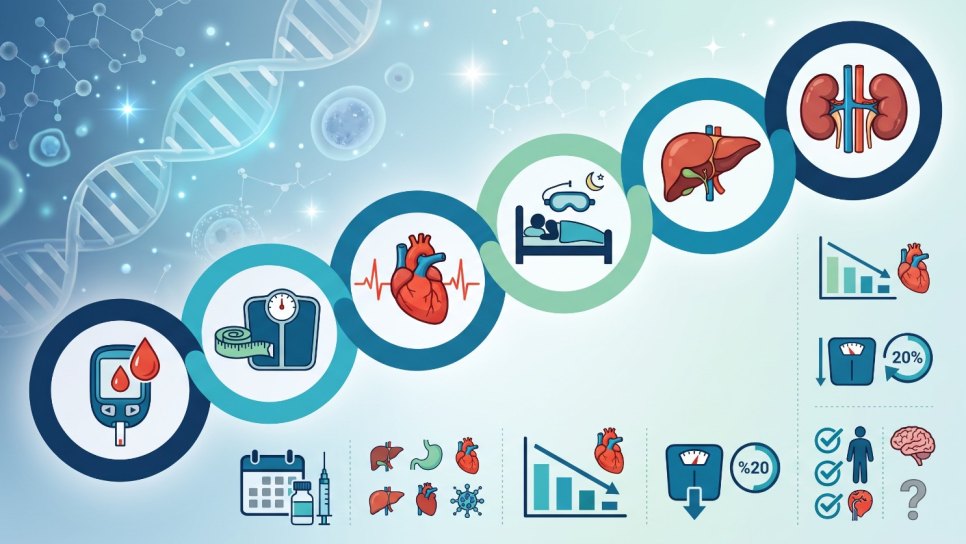
Figure 1 · The participant's journey
From question to data
What will the study examine?
- Trust: What determines whether users trust or distrust an AI answer? How do showing a source, plain language or the use of personal data affect trust?
- Understanding: When complex medical information is explained in plain language, is it really understood?
- Quality of the answer: How do users rate the answers?
- Behavior: How do the answers affect everyday health behaviors, such as activity, sleep or the decision to see a doctor?
- Personal data: Does sharing heart rate, sleep, activity and lab data make the answer more meaningful and understandable (resting heart rate, physical activity; both in Turkish)?
- Preparation for the doctor's visit: Does the app help a person go into the visit better prepared?
I think the last item is especially important. Some of my patients hesitate to ask about subjects such as sexuality or anxiety during the visit (topics people hesitate to ask about, in Turkish). A well-designed tool may help bring these questions into the visit. Whether that really happens will become clear only from studies like this one.
Why is a study like this needed?
The medical knowledge of AI models looks very high on exam questions and prepared cases. But an Oxford study published in Nature Medicine in 2026 showed that this success does not carry over to real use. A total of 1,298 people in the United Kingdom were given ten medical scenarios; they were randomly assigned to one of three AI models or to usual sources such as an internet search. The models alone identified the correct condition in 94.9% of cases, while people using the same models reached the correct condition in at most 34.5% and did no better than the control group. People often gave the model incomplete information; the models also sometimes produced misleading answers. The researchers concluded that current models are not ready for direct use in patient care.
The model succeeds alone, not together with people
Oxford study, 1,298 people, 10 medical scenarios (Nature Medicine, 2026); share of correct answers, %.
Participants who used the model did no better than the control group, which used usual sources such as an internet search. People often gave the model incomplete information; the models also sometimes produced misleading answers. A model's success is not the same as success together with people in real use.
This finding explains why the Apple-OpenEvidence study matters: the problem is often not knowledge but the interaction between human and machine. Asking the right question, giving the necessary information and interpreting the answer correctly are harder than they seem. I often see that misreading health information can go as far as leading cancer patients toward supplements without evidence or alternative practices (supplements without evidence, alternative medicine through a medical oncologist's eyes; both in Turkish).
Limits of the study
- A start, not a result. There are no data yet. Clinical benefit and safety have not been shown.
- Clinical outcomes are not measured. The stated aims are trust, understanding and self-reported behavior. Diagnostic accuracy, disease course, unnecessary visits and harms do not appear to be measured directly.
- Selected participants. Volunteers who live in the United States, are 21 or older, use a new and expensive iPhone and are comfortable with technology. Older adults, people with low income or low health literacy, who are the groups at highest risk of misunderstanding AI answers, may be underrepresented.
- The comparison group is unclear. The descriptions do not mention a control group that does not use AI; this makes it harder to establish causality (what is a clinical trial?, in Turkish).
- Run by a company. In health technology there are many examples where claims ran ahead of evidence (exaggeration and reality in science, in Turkish). Independent academic partners, the ethics committee process and a publication plan are not included in the announcement. Results, including negative findings, should be published transparently in peer-reviewed journals (evidence-based medicine, how to read research results correctly; both in Turkish).
Figure 2 · What can we learn from this study?
What it can and cannot measure
Privacy
Health data is the most sensitive personal data. Apple has stated that study data will not be used to train AI models, that data is transferred to a secure cloud provider after being anonymized, and that sharing Health app data is entirely optional. OpenEvidence also says it deletes question and answer data after 24 hours. These assurances matter, but every user should read the privacy terms before giving data to any health app.
What should you keep in mind when using AI for health?
While waiting for the results of this study, these are the five basic rules I recommend to patients who use AI for health questions:
Figure 3 · Five rules when asking a health question
AI is a helper, not a doctor
For patients receiving cancer treatment, these rules matter even more. Situations such as fever, shortness of breath or a new severe side effect should be reported to the oncology team without waiting for an AI assessment (emergencies during treatment, in Turkish). Herbal products or supplements suggested by AI may also interact with treatment (do supplements affect treatment?, food and drug interactions; both in Turkish).
The situation in Türkiye
The study is open only to participants in the United States; participation from Türkiye is not possible. In our country, patients ask general-purpose AI chat tools their health questions, and the accuracy of these tools' medical answers in Turkish still needs to be examined separately. The results of the study will therefore also be an indirect guide for users in our country. I have covered the questions of responsibility raised by uses of AI in health that extend to writing prescriptions in my article on the AI prescription pilot in Utah (in Turkish).
Questions you can ask your doctor
- Does this information I got from AI apply to my situation?
- Is the source this answer is based on reliable and up to date?
- I assessed my lab or imaging result with AI; what is your interpretation?
- With which symptoms should I call you or go to the emergency department right away?
- Is it safe for me to share my health data with an app?
- “Apple showed that AI is safe for health.” No. The study has only just started; there are no results yet.
- “If a model does well on exams, it will give me the right answer too.” Not always. In the Oxford study, the model's success alone did not carry over to users.
- “If it cites a source, the answer is correct.” A source is an important safeguard but not enough; whether the source fits your situation must be assessed separately.
- “AI can replace a doctor's examination.” No. An examination, a personal history and clinical judgment cannot be replaced; at best, AI is a helper in preparing for the visit.
- “I can take part in this study from Türkiye.” No. Participation is open only to eligible iPhone users in the United States.
Frequently Asked Questions
- What is the Apple and OpenEvidence health AI study?
- It is a virtual study launched by Apple and OpenEvidence on 15 November 2026, in which up to 200,000 adults in the United States can take part. Participants ask the app health questions and receive answers with sources. The study will examine how well the answers are understood, user trust and health behaviors for more than 12 months.
- Who can take part in this study?
- Adults living in the United States, aged 21 or older, who use an iPhone that supports Apple Intelligence (iPhone 15 Pro or later) and iOS 26. Participation from Türkiye is not possible.
- Is AI reliable for health questions?
- There is no firm answer yet. Models do very well on medical exams, but in a 2026 Oxford study people using a model reached the correct condition in at most 34.5% of cases and did no better than an internet search. AI answers should be shared with your doctor and should not be used in emergencies.
- What should I keep in mind when using AI for health?
- Check the source of the answer, share the answer with your doctor, go to the emergency department right away with urgent symptoms, do not change your medicine on your own and read the privacy terms before sharing your health data.
Glossary
- OpenEvidence
- A clinical AI platform widely used by doctors in the United States, whose answers are based on medical journals and guidelines.
- Large language model
- An AI model trained on very large amounts of text that can answer questions and generate text.
- Virtual clinical study
- Research in which participants take part by phone or internet without coming to a center.
- Consent
- A participant's voluntary agreement to take part in a study after understanding it.
- Health literacy
- The ability to find health information, understand it and use it to make sound decisions.
- HealthKit
- The infrastructure of the Health app on the iPhone that brings together data such as heart rate, sleep, activity and lab results.
- Self-reported outcome
- Information reported by the participant in a survey; it differs from an objective measurement.
- Generalizability
- The extent to which a study's results can be applied to other groups that did not take part in it.
- Control group
- A group of participants who do not use the method being studied, used for comparison.
- Anonymization
- Removing information that identifies a person from data.
DROZDOGAN Academy Commentary
Patients are already using AI; the real question is how well and how safely they use it. This study matters because it moves health AI from the question "how much does the model know?" to "how much does the person understand and what do they do?"
⚡ Why it matters
One of the first studies in which health AI is examined with real users, at large scale and over a long period. Its results may affect both the design of these tools and doctor-patient communication.
✅ Strengths
Large sample; use in real life; answers that cite sources; optional personal data; stated privacy assurances; examination of preparation for the doctor's visit as well.
⚠️ Limits
No results yet; clinical outcomes and harms are not measured; selected, technology-minded participants; unclear control group; run by a company.
🩺 In practice
I am glad to discuss, during the visit, the questions my patients prepare with AI. We assess the source of the answer together, and I explain whether it fits their personal situation. I particularly stress that with urgent symptoms and treatment changes they should turn to our team, not to AI.
❓ Open questions
Are answers with sources really better understood? Does AI use reduce or increase unnecessary doctor visits? Will older adults and people with low health literacy benefit from these tools to the same extent? Will the results be published independently and transparently?
Conclusion: The Apple-OpenEvidence study asks the right question to understand the effect of health AI on real people. But it is a start: until clinical benefit and safety are shown, AI should remain a helper used together with the doctor.
- This article was prepared in November 2026.
- The information about the study is based on Apple's announcement of 15 November 2026 and news reports. The study's ethics committee process, academic partners, control group and publication plan are not included in the announcement.
- For eligible iPhone models, Apple's own announcement was used as the basis; some reports give a different range of models.
- The diagrams are simplified. The Academy commentary is my own. This article is not medical advice; make your health decisions together with your doctor.
Sources
- Apple Newsroom. Apple launches research study to explore the use of AI for health (15 November 2026). apple.com
- TechCrunch. Apple launches new app to study how people use AI for health (15 November 2026). techcrunch.com
- Bean AM, Payne R, Mahdi A, et al. Reliability of LLMs as medical assistants for the general public: a randomized preregistered study. Nature Medicine 2026. scimex.org
- Perez MV, Mahaffey KW, Hedlin H, et al. Large-scale assessment of a smartwatch to identify atrial fibrillation (Apple Heart Study). N Engl J Med 2019;381:1909-1917. doi:10.1056/NEJMoa1901183. nejm.org
Was this article helpful?
Your feedback helps us improve our content.