
Scientific knowledge and evidence-based medicine! Science begins with the desire to know

In this article
Today, knowledge appears with different definitions in every field, but knowledge and science first begin with the desire to know . To try to define knowledge briefly; knowledge is the combination of data we obtain by seeing and recognizing surrounding events and living and nonliving things, blended with our experiences. Knowledge may concern the past, present or future. It is usable as long as it meets needs. Humanity first needed knowledge and science in order to survive and stay alive.
Knowledge is meaningful to the extent that it reduces uncertainties in a person's mind. Regarding its characteristics, knowledge should be accurate, timely, complete, concise, appropriate and inexpensive. Accuracy is the most important: the initial knowledge must be correct because subsequent knowledge accumulates and progresses on that basis. Although knowledge is sometimes perceived as unchanging, it can change as time and conditions change. We consider it unchanging because, when testing knowledge, we expect it to demonstrate all its characteristics in every field.
How is knowledge obtained?
- Individual experience: Unsystematic knowledge that people obtain through seeing, hearing, touching and similar experiences in ordinary life, without a basis in cause-and-effect relationships.
- Mystical / religious approach: Knowledge based on a belief system established by a supreme being is called religious knowledge. Religious knowledge is dogmatic, meaning that it cannot be questioned and is accepted.
- Authoritative approach: Knowledge obtained by drawing on people in society who are seen as experts in the relevant subject.
- Rational approach: Knowledge is acquired through this approach by using the mind's potential. Concepts such as deduction, induction and synthesis are used. Not every piece of knowledge obtained may be true.
- Scientific approach: The acquisition of systematic knowledge based on certain reliable methods and research. Knowledge obtained this way does not vary from person to person; it is universally valid, systematic and consistent.
Looking at the history of knowledge, it initially concerned philosophy more, but with the arrival of other scientific disciplines and the concept of scientific knowledge in our lives, it has increasingly occupied science. Scientific knowledge is obtained using valid and reliable methods. To understand its truth and quality, we need to know which characteristics scientific knowledge should have.
Scientific knowledge:
- Must have been obtained through reliable and valid research methods.
- Humanity should agree on it, meaning it should be accepted wherever we are in the world; however, this does not mean the knowledge is absolutely true.
- It progresses cumulatively.
- The subject being researched should be addressed comprehensively and holistically, ensuring that the knowledge is systematic and consistent.
- It has a defined scope and method, introducing us to the concept of the scientific method.
- It is objective.

Scientific knowledge also introduces us to certain concepts. To define them briefly;
- Phenomenon: Objects, situations or events in the universe that can be observed directly or indirectly.
- Concept: The form in which phenomena are represented in the mind.
- Theory: Ideas that emerge through examining phenomena in a particular field. If theories are tested, they can become laws.
- Scientific law: A way of expressing relationships between phenomena under certain conditions. Unlike theories, laws emerge through relationships between phenomena.
Over the centuries, humanity brought science into our lives by using reason in response to events, nature and objects, seeking to master them, wondering what they are and, fundamentally, wanting to know them. Although this does not fully encompass its definition, science is a body of knowledge that takes part of the universe or events and attempts to derive laws through experimental methods grounded in reality.
Science is a body of objective and systematic knowledge whose truth has been accepted.
The key point in science is to set subjectivity aside, remove oneself from the picture, and weigh, measure and investigate knowledge logically. There are concepts that should not be abandoned when doing science.
Science:
- Is factual, dealing with observed and measured phenomena.
- Is logical, with acquired knowledge being internally consistent.
- Is objective, allowing anyone to experiment under appropriate conditions and obtain the same results.
- Is critical, questioning every path it takes, with its advantages and disadvantages, so that the result becomes universal knowledge.
- Is generalizing , meaning exceptions do not greatly undermine the rule; it examines science through types of phenomena rather than individual phenomena. Classification is therefore an important method in science.
- Is selective: the universe contains infinite events and phenomena, while science selects things that can help the subject under investigation or test the theory.
- Can be verified, producing the same results when tested at different times.
- Filters knowledge, identifying incorrect information and replacing it with new information.
- It is also diverse, progressive and innovative.

We can divide science into normative and positive scientific disciplines
Is medicine a positive science? is a question debated by some people today. Positive science means science based on experiment, reason and concrete concepts. Positive sciences support everything through experiments and proof; this is the basis of their existence. In medicine too, we cannot explain anything or apply it to a patient without experimenting and discovering it or basing it on scientific research already conducted. Therefore, medicine is a positive science; indeed, among the positive sciences, it is the discipline that has served humanity most to date.
The method used by positive sciences is experimental research, consisting of four main headings;
- Formulating a hypothesis; observations first lead to an assumption ( hypothesis ) about what one wants to know.
- Experimentation; next comes the experimental stage, the most important point of experimental research, in which experiments are conducted under appropriate conditions.
- Explanation; events are then explained and defined, and their associated relationships are established.
- Conclusion; finally, a conclusion is obtained. Initially it is a theory; later, if all necessary experiments and research have been conducted and a definitive judgment reached, it can become a law, such as gravity.
Although some views still maintain today that medicine is not even a science, Hippocrates proved otherwise 2500 years ago. Medicine is a science, and a positive science at that. Hippocrates founded positive medical science; by basing medicine on experiment and observation, he stated that diseases have physical and realistic causes. He argued that people wishing to conduct medical investigations should collect information about the environment and the individual as a necessary step.

Examining the earliest examples of experimental and scientific studies in medicine can help us understand the concept of positive science more easily;
- John Graunt was an English mathematician and statistician who lived in the 1600s. His book published in 1662 included birth and death reports, and he discovered the concept of demography . Demography briefly means population science. Graunt's discovery also opened new doors for tackling a series of infectious diseases that devastated human communities. This was one of the earliest studies conducted by accumulating scientific data.
- James Lindconducted a study lasting 6 days in 12 people with scurvy, a disease particularly affecting sailors, to learn its cause; he gave 2 people cider, 2 people an elixir of vitriol, 2 people vinegar, 2 people an herbal poultice, 2 people oranges and lemons, and 2 people seawater, and observed them, finding that oranges and lemons helped. In other words, this disease in sailors was caused by lack of access to sources of vitamin c. The experimental method was used for the first time in this study.
- Edward Jenner , seeking treatment for smallpox, once a major scourge, applied fluid obtained from cows to the arms of 24 children and observed that they did not become ill. He introduced to medicine the idea that diseases could be treated with vaccination.
These experimental studies, with origins going back to Hippocrates, gained incredible momentum from the 18. century onward, contributing greatly to the health of all living things through the discovery of many new treatments. However, following the exponentially increasing knowledge and developments has also become very difficult. The quality and safety of knowledge are questioned daily in today's technological age. This rapidly growing volume of knowledge led to the emergence of evidence-based medicine as a concept.
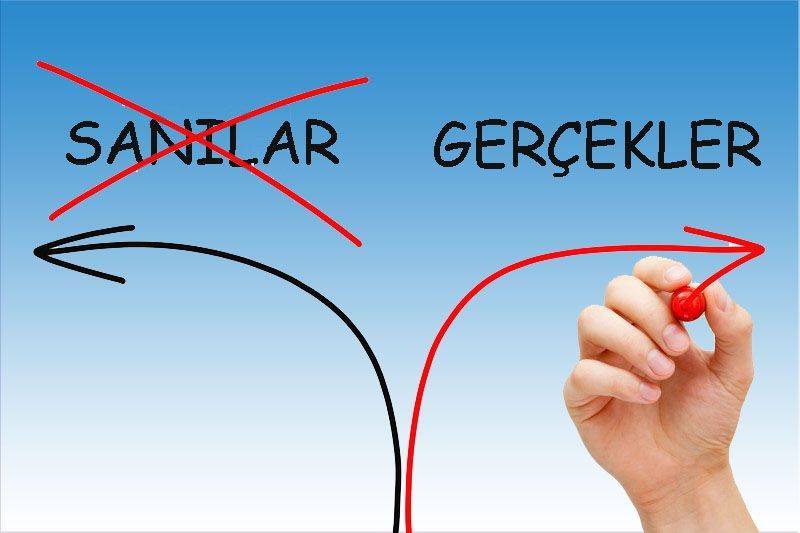
What is evidence-based medicine?
Evidence-based medicine first emerged in the 19. century in opposition to intuitive medicine, when Parisian physicians realized that different approaches and treatments did not all lead to the same outcome, and understood that conclusions could only be reached by calculating certain probabilities, that is, making them statistically meaningful.
In the medical literature, it was first used by David Eddy as Evidence Based Medicine in terminology.
In evidence-based medicine, clinical developments and physician experience are of no use separately; evidence-based medicine is the finest point at which they meet.
Apart from speaking without any data, it is also impossible to judge based on data alone. Data are the rawest form of information. Data need to be processed into information, and human intelligence and experience must be added to that information to create knowledge ( essential knowledge ). Thus, accurate and useful knowledge requires the sequence of data >> information >> knowledge ( essential knowledge ) in that order.
Available data show that only %15-40 of medical interventions are based on scientific evidence. Evidence-based medicine recognizes how difficult it is for physicians today to follow the hundreds of articles and scientific studies published daily, and offers a response. If we truly want to treat patients, we must be aware of developments worldwide and be sure that the information is accurate. Continuing solely with the knowledge learned at medical school can therefore be nothing more than a dream.
It is very difficult for physicians to follow scientific developments closely amid a busy working life. Even a physician wishing to do so must be highly motivated and trained to assess the accuracy of information. Solutions to time constraints include working with people specializing in medical librarianship or literature searches. Evidence-based medicine cannot exist without the patient, doctor and reliable knowledge.
How is evidence-based medicine practiced? David Scatt describes five steps;
- First, a question about the problem encountered should be formulated. A good question should be clear and directly focused on the problem.
- Evidence answering the question must be sought and the literature reviewed. How do we do this? Oral sources such as seminars and congresses can be used when searching for evidence, but time may again be a problem. Written sources (journals, books) can be used, but information takes a long time to reach print, while many new developments occur very quickly today. Using internet resources, currently the most commonly used sources, can be more useful. Online, scientific information can be researched easily through many available sites ( Medline, Pubmed, Cochrane Library ), making it easier to access the most current knowledge.
- Critical appraisal of evidence requires knowledge of statistics . The study method used to obtain the information and the process followed are important.
- Deciding and applying treatment by combining the best evidence with the patient's characteristics is one of the most attractive aspects of evidence-based medicine. Even if very suitable for the disease, treatment cannot be imposed while disregarding the patient; otherwise, what becomes of the inseparable trio of evidence-based medicine: the patient, quality knowledge and physician experience.
- For the process to work and be evaluated, we should always question what we do and look for ways to take it a step further.
As an example of evidence-based medical studies, numerous studies have investigated whether tanning beds or other devices emitting artificial ultraviolet light cause cancer. Some studies demonstrate this statistically, while others interpret the findings in the opposite direction; their use has even been banned in some places. To provide a definite answer, studies using different methods were examined, showing statistically that they increase melanoma risk below age 35, and their use was banned below age 18.
Conclusion
As explained above, there are many ways to access information, and very little of the information we encounter has the characteristics of scientific knowledge. Medicine approaches everything whose accuracy is unproven with greater skepticism, because our lives are ultimately at stake. To remain alert to the many true or false claims and the many people peddling false hope, we too should be curious, investigate, and try to verify what we find, and we should raise our children in this direction.
Sources
Kanıta Dayalı Tıp
Journal of Clinical and Analytical Medicine, 2014
2. Neşe Zayim
Sağlık Birimlerinde Araştırma Teknikleri
Akdeniz Üniversitesi, Tıbbi Bilişim ve Biyoistatistik Anabilim Dalı, 2017
3. Rabia Kahveci, Filiz Özyiğit.
Kanıta Dayalı Tıpta Beceri Edindirme Yöntemleri
TAF Preventive Medicine Bulletin, 2010
4. Bilgi nedir?
Erciyes Üniverstesi - İktasidi ve idari Bilimler Fakültesi erciyes.edu.tr
5. Nazan Özenç Uçak
Bilgi: Çok yüzlü bir kavram
Türk Kütüphaneciliği, 2010
6. Solaryumlar ve Kanser
Türkiye Halk Sağlığı Kurumu Kanser Daire Başkanlığı - Rapor: 12
7. M. Cemil Uğurlu
Hipokrat
Ankara Üniverstesi Tıp Fakültesi Dergisi, 1997
Was this article helpful?
Your feedback helps us improve our content.




Reader comments
Share your comment
Your name and comment are published only after administrator approval. Your email address is never shown to visitors.
Be the first to comment.